99 Million Year Old Amber Reveals Ancient Secret Behind How Lizards Escape Predators
A 99-million-year-old piece of amber from Myanmar reveals a mysterious, ancient pattern that still exists in nature today. Discover what scientists found.
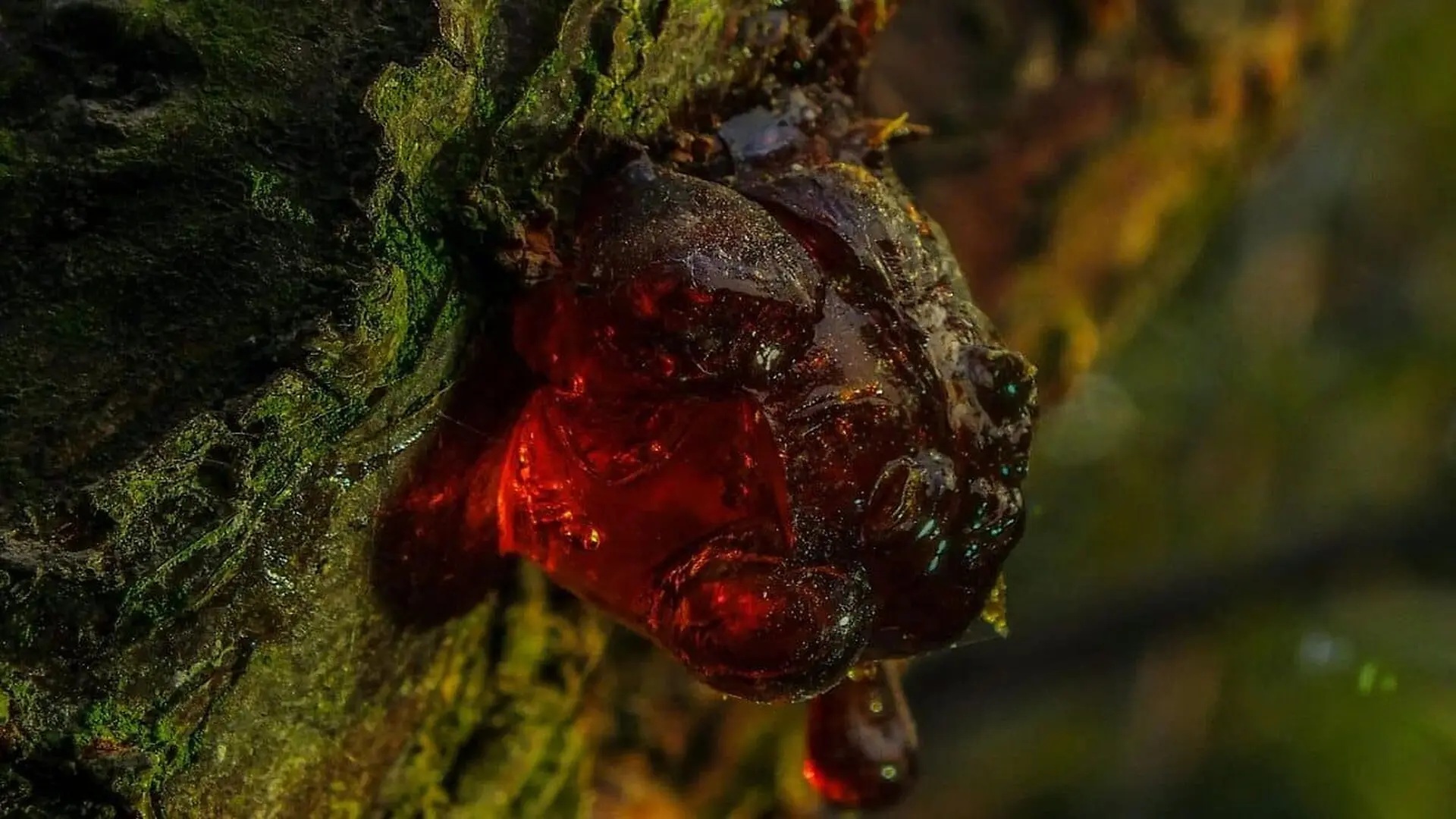
A remarkable discovery trapped in Burmese amber has provided scientists with a rare window into the deep-time origins of a survival tactic still employed by modern reptiles: the voluntary shedding of a tail to escape a threat.
For many lizards, autotomy—or the ability to detach a portion of their tail—is a vital defensive maneuver. By leaving behind a wriggling appendage, a lizard creates a distraction that allows it to flee from predators. While this strategy is highly effective, it imposes significant biological trade-offs, impacting the animal’s future growth, movement, reproduction, and social signaling. Despite its widespread nature, identifying the exact evolutionary timeline of this behavior has remained difficult due to the fragility of the biological structures involved.
A Fossilized Moment of Survival
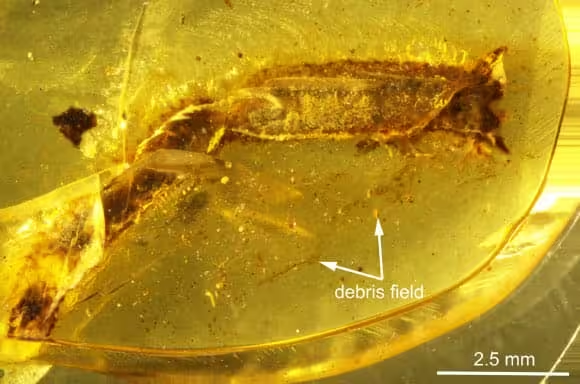
A new study published in the journal Palaeontologia Electronica, led by paleontologist Dolev Fabrikant of Tel Aviv University, presents a mid-Cretaceous specimen that provides definitive evidence of this behavior in action. The fossil, recovered from the Hukawng Valley in northern Myanmar, contains a remarkably well-preserved lizard tail, complete with distinct skin and muscle tissues.
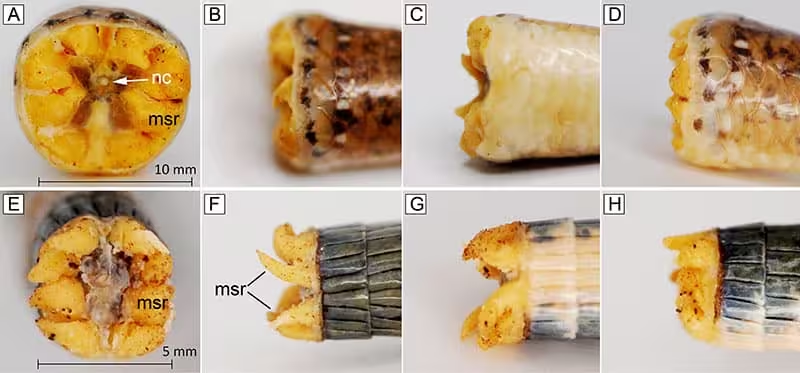
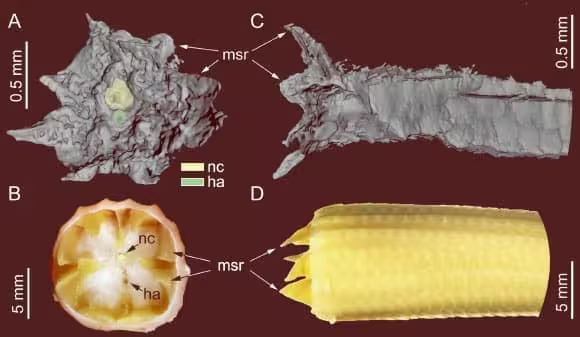
To analyze the specimen, which is now housed at the Steinhardt Museum of Natural History, the research team utilized X-ray micro-computed tomography. The scans revealed a specific, wedge-shaped arrangement of muscle tissue at the point of detachment—a configuration nearly identical to the muscle contractions observed in living lizards when they perform an active tail drop. The fossil is believed to be a relative of modern-day monitor lizards or lacertids.
Pinpointing Ancient Behavioral Patterns
The researchers propose two possible scenarios for how this relic ended up in resin: either a tree-dwelling lizard became entangled and discarded its tail to break free, or it was attacked by a predator, leaving the tail behind as it escaped. Regardless of the precise sequence, the fossil serves as a concrete “calibration point” for the evolution of squamate defense mechanisms.
This discovery has significant implications for our understanding of reptilian biology. Because the capacity for tail shedding is closely tied to the physiological ability to regenerate lost limbs, the find suggests that the complex genetic programs required for tail regeneration were already established at least 99 million years ago.
As the team noted, this study underscores the unique power of amber as a medium for paleontological research. By preserving discrete behavioral events rather than just skeletal anatomy, amber allows researchers to view functional responses in prehistoric animals, effectively widening the scope of the fossil record to include animal behavior from the deep past.
This article has been fact checked for accuracy, with information verified against reputable sources. Learn more about us and our editorial process.
Last reviewed on .
Article history
- Latest version
Reference(s)
- Fabrikant, Dolev. “First Fossil Evidence for a Dropped Lizard Tail.”, vol. 29, no. 3, October 8, 2026, pp. 1-13. Palaeontologia Electronica, doi: https://doi.org/10.26879/1706. <https://palaeo-electronica.org/content/2026/5967-first-fossil-evidence-for-a-dropped-lizard-tail>.
Cite this page:
- Posted by Hassan Raza