NASA’s Moon Rocket Rolls Back to the Hangar Again as New Technical Glitch Delays Astronaut Flight
After fixing hydrogen fuel leaks, NASA’s massive Artemis moon rocket developed a helium system problem, forcing another return to the hangar and delaying the first crewed lunar mission in over 50 years.
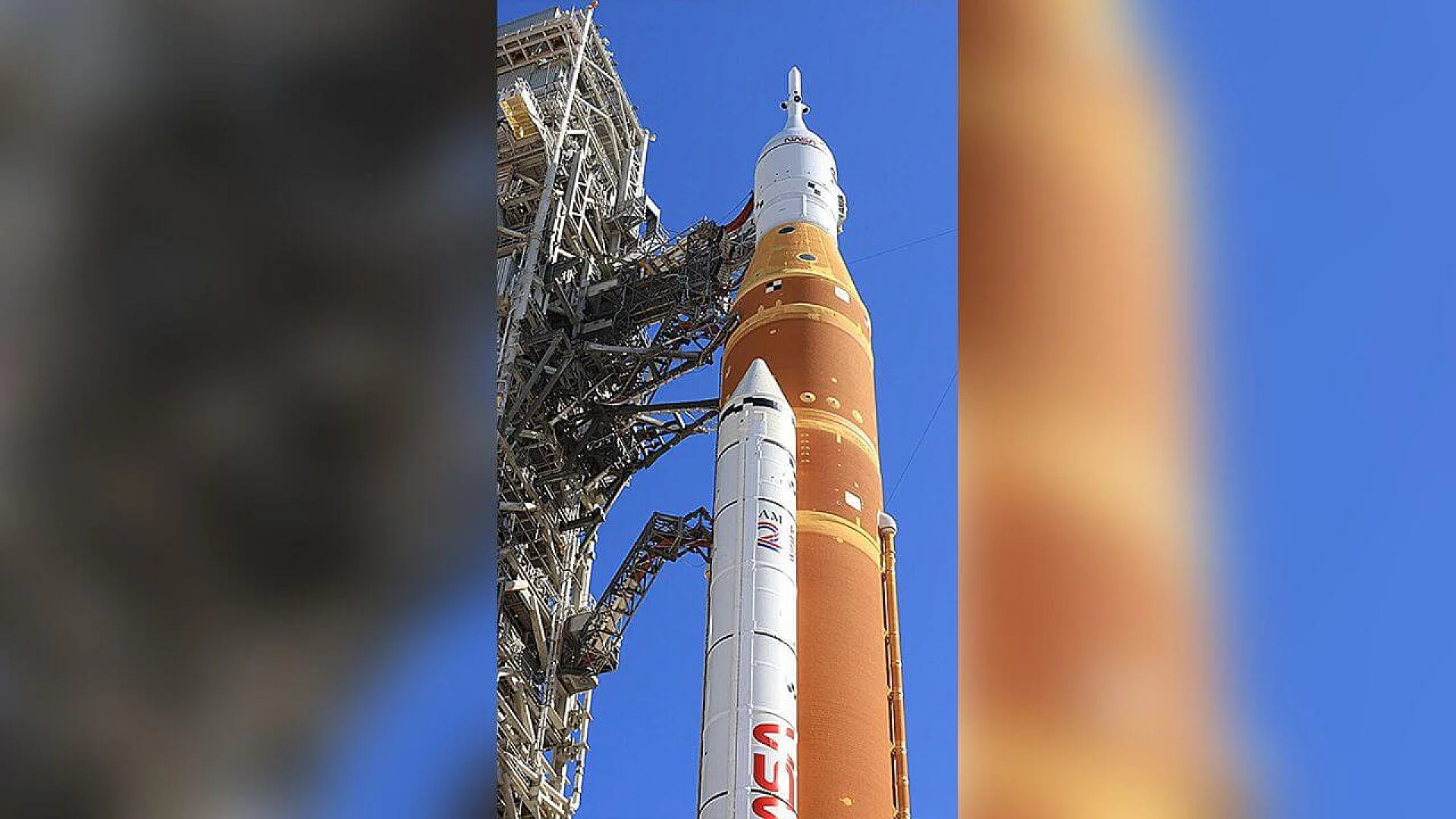
For the first time in more than half a century, astronauts are preparing to journey toward the Moon. The vehicle meant to carry them, however, is not quite ready.
NASA’s towering rocket, designed to send four astronauts looping around the Moon and back to Earth, is being rolled back to its assembly building for more repairs. The slow trip across Florida’s Kennedy Space Center marks yet another pause in a mission that represents one of the agency’s most symbolic and technically demanding efforts in decades.
Engineers had just cleared one major hurdle. Persistent hydrogen fuel leaks, which have plagued the rocket during previous fueling tests, appeared to be under control. Launch planners even penciled in an early March attempt. Then, almost immediately, another problem emerged.
This time, the issue involved helium, a critical gas in rocket operations. The discovery forced NASA to halt forward momentum and send the rocket back for closer inspection.
The setback underscores a central truth about deep space exploration. Even after years of preparation, testing, and refinement, complex systems can reveal new vulnerabilities at the last moment.
The Artemis II Mission: A Return to Lunar Orbit
The rocket at the center of this delay is part of NASA’s Artemis program, the agency’s effort to return humans to the Moon and eventually establish a sustained presence there.
Artemis II is designed as a crewed test flight. Four astronauts, three Americans and one Canadian, will travel around the Moon without landing, before returning to Earth. It will be the first time humans venture beyond low Earth orbit since the Apollo era.
Between 1968 and 1972, NASA’s Apollo program carried 24 astronauts to lunar orbit, with 12 of them walking on the Moon’s surface. That period marked an extraordinary chapter in space history. Since then, no human has traveled that far from Earth.
Artemis II is meant to open a new chapter.
The rocket assigned to this mission, the Space Launch System, stands taller than the Statue of Liberty. It generates more thrust at liftoff than the Saturn V rockets that powered Apollo missions. Its role is simple in concept but staggering in execution: propel a crewed spacecraft safely out of Earth’s gravity well and toward the Moon.
Every valve, seal, and line in that vehicle must perform flawlessly.
The Hydrogen Problem, and the New Helium Glitch
In the days leading up to the most recent delay, NASA teams had focused intensely on hydrogen leaks detected during fueling tests.
Liquid hydrogen is an efficient rocket fuel, but it is notoriously difficult to manage. It must be stored at extremely low temperatures and can escape through the tiniest imperfections. Even small leaks can pose serious safety risks.
Engineers conducted repeat fueling tests to ensure the system was sealed properly. According to NASA, those efforts appeared successful. The leaks were addressed, and the rocket was prepared for another launch window.
Then came a different anomaly.
The rocket’s helium system malfunctioned. Helium, though chemically inert and often associated with party balloons, plays a crucial technical role in rocketry. It is used to purge engines of residual propellants and to pressurize fuel tanks during flight. Without proper helium flow, engines cannot be conditioned safely, and propellant systems cannot function as designed.
NASA reported that helium flow to the rocket’s upper stage had been disrupted. Engineers must now determine why.
The only viable path forward is to return the vehicle to the Vehicle Assembly Building for detailed inspection and repair. On the surface, the rollback is a four-mile journey. In practical terms, it represents weeks of additional work.
Why Rolling Back Matters
Moving a rocket of this scale is not trivial.
The vehicle must be secured on a massive crawler-transporter that inches along at walking speed. Weather conditions must cooperate. Technicians coordinate carefully to ensure no new stress or damage occurs during the move.
Once inside the assembly building, engineers gain access to components that are difficult or impossible to reach at the launch pad. That access is essential for diagnosing the helium problem.
NASA has emphasized that the timing of the rollback is intended to preserve a potential April launch attempt. However, the agency also cautions that everything depends on what technicians uncover.
Launch opportunities to the Moon are limited. The alignment of Earth, Moon, and the spacecraft’s trajectory allows only a handful of viable days each month. Missing a window can mean waiting several more weeks.
In the context of crewed exploration, caution outweighs speed.
The Stakes of Artemis II
This mission is more than a technical milestone. It carries symbolic weight.
The Artemis program is named after the twin sister of Apollo in Greek mythology. The choice reflects NASA’s ambition to build on the achievements of the past while expanding who participates in lunar exploration.
The four astronauts assigned to Artemis II have been training for years. They remain on standby in Houston, awaiting the green light that will send them toward the Moon.
Their journey, when it happens, will test life-support systems, navigation protocols, communication links, and spacecraft performance in deep space conditions. Unlike missions to the International Space Station, which orbit just a few hundred kilometers above Earth, Artemis II will travel hundreds of thousands of kilometers away.
That distance introduces new challenges. Radiation exposure increases. Communication delays become noticeable. Emergency return options grow more limited.
Every subsystem on the rocket and spacecraft must function within narrow tolerances.
Engineering at the Edge of Possibility
Modern rockets are marvels of engineering, but they operate under extreme conditions.
Cryogenic fuels must remain stable at temperatures colder than Antarctica’s winter. Engines ignite with explosive force. Vibrations at liftoff ripple through the structure like a controlled earthquake.
Under those stresses, small imperfections can become mission-critical.
The hydrogen leaks and helium malfunction illustrate the layered complexity of launch systems. Solving one issue does not guarantee another will not surface. In fact, resolving one problem can sometimes reveal others that were previously masked.
NASA’s approach reflects decades of hard-earned experience. During the Apollo era, engineers faced similar technical setbacks. Launch dates slipped. Hardware was modified. Procedures were rewritten.
Safety protocols today are even more rigorous. Crewed missions demand redundancy, verification, and exhaustive testing.
Why This Delay Is Not Unusual
To the public, another delay may seem discouraging. To aerospace engineers, it is part of the process.
Large-scale space missions routinely face postponements. The combination of advanced technology, strict safety requirements, and environmental constraints makes flawless execution rare on the first attempt.
In many ways, the Artemis II delays demonstrate the system working as intended. An anomaly was detected before launch. Operations paused. The vehicle will be examined in controlled conditions.
Had the helium issue gone unnoticed, the consequences during flight could have been far more severe.
That cautious philosophy has guided NASA since the lessons of earlier tragedies reshaped its safety culture.
Looking Ahead to April and Beyond
NASA officials have indicated that an April launch attempt remains possible, depending on the outcome of repairs.
If technicians can identify and correct the helium system malfunction efficiently, the mission could proceed within weeks. If the issue proves more complex, further delays may follow.
Beyond Artemis II lies Artemis III, the mission intended to land astronauts on the lunar surface for the first time since the early 1970s. That future step depends on the success of this one.
Artemis II will validate systems in real deep space conditions. It will test how the spacecraft performs far from Earth’s protective magnetic field. It will assess how crews operate during extended missions beyond low Earth orbit.
In many respects, this flight is a proving ground.
Why This Matters
Human exploration of the Moon is not only about revisiting a familiar destination. It is about building capabilities for the future.
NASA and its international partners envision using the Moon as a staging ground for deeper missions, including journeys to Mars. Technologies tested in lunar orbit and on the lunar surface will inform those long-duration plans.
The Artemis program also represents a broad coalition of space agencies and private industry partners. A Canadian astronaut is part of Artemis II, underscoring the international dimension of modern exploration.
Delays, while frustrating, are small compared to the long arc of exploration. The difference between a March launch and an April launch is minor in historical terms. Ensuring the rocket is fully ready is not.
A Careful Return to the Moon
More than 50 years have passed since humans last traveled to lunar orbit. The world has changed dramatically since then. Technology has advanced. Expectations have shifted. The stakes are different.
Yet some aspects remain constant. Spaceflight demands patience. It demands precision. It demands respect for physics and engineering limits.
As the massive rocket makes its careful journey back to the assembly building, engineers will scrutinize every detail of the helium system. They will trace lines, test valves, and verify pressure readings.
When the rocket eventually rolls out again, it will do so only after teams are confident that both hydrogen and helium systems are performing as intended.
The road back to the Moon is not a straight line. It curves through setbacks, inspections, recalibrations, and renewed attempts.
But when Artemis II finally lifts off, carrying four astronauts toward lunar orbit, it will represent not only a technological achievement, but also the culmination of careful choices made during moments like this one.
This article has been fact checked for accuracy, with information verified against reputable sources. Learn more about us and our editorial process.
Last reviewed on .
Article history
- Latest version
Cite this page:
- Posted by John Williams