First Dinosaur Bone Found on Antarctica Reveals Lost Titanosaur History
A fossil from one of Earth’s toughest habitats, long overlooked, is now re‑examined and may turn out to be something completely unexpected.
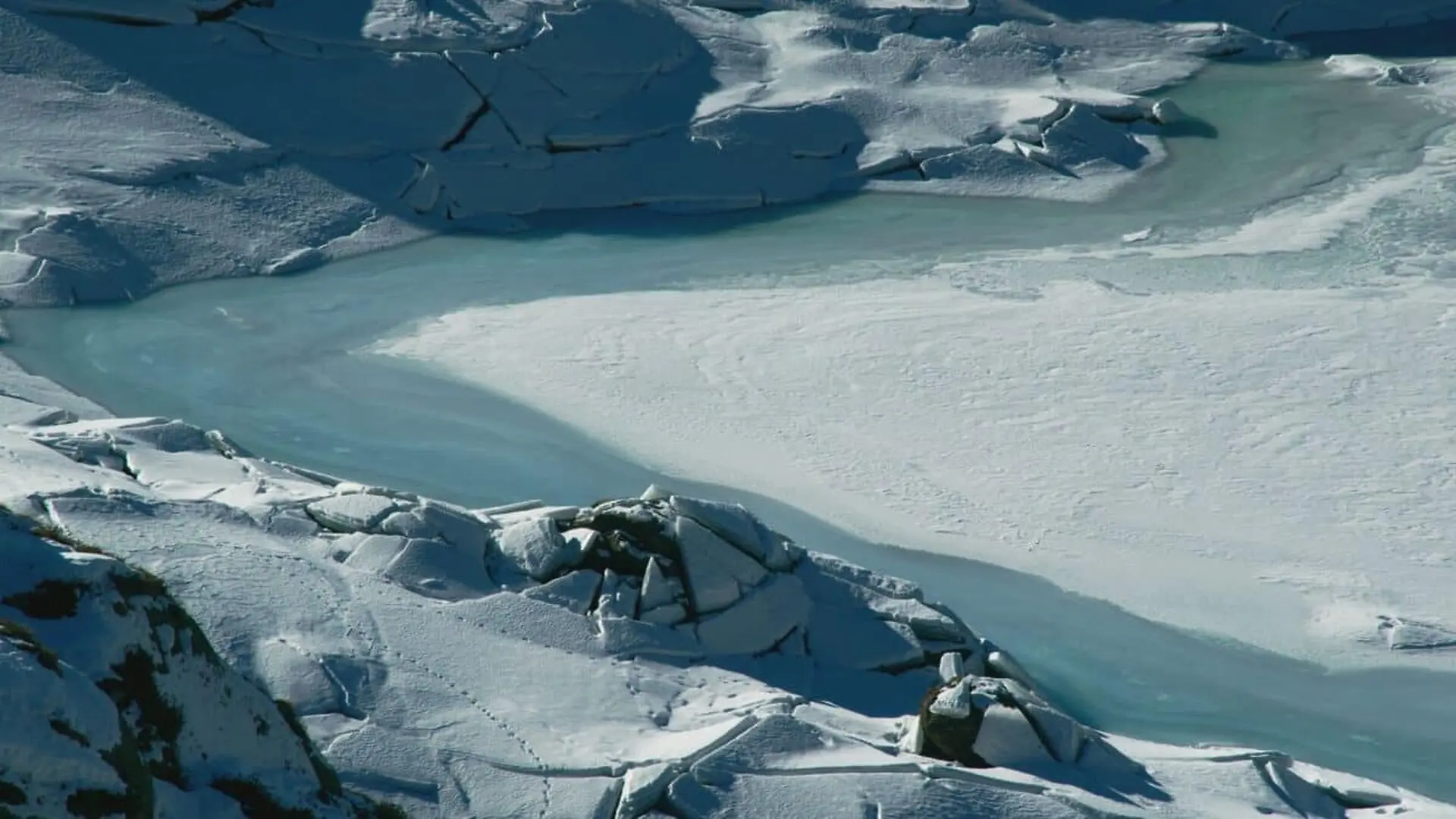
A fragment recovered from Antarctica four decades ago has been re‑identified as the continent’s first confirmed dinosaur bone. Detailed analysis shows the piece belongs to a titanosaur, a long‑necked sauropod, according to a study in Acta Palaeontologica Polonica.
The specimen originated from James Ross Island, close to the Antarctic Peninsula, an area that today is dominated by ice and inhospitable to large terrestrial animals. In the Late Cretaceous, however, this region formed part of a much warmer southern supercontinent, supporting dense forests and linking what are now South America and New Zealand.
A Long‑Overlooked Fossil Reveals a Dinosaur
Collected during a 1985 British Antarctic Survey expedition, the bone was initially filed with marine fossils because the surrounding strata are rich in ammonites and other sea creatures. Field notes recorded the find as a large reptile vertebra, a classification that went unchallenged for decades.
“Believe it or not, this is the first bit of dinosaur ever discovered on Antarctica,” he said. “It was overlooked because I think it was misidentified while under harsh field conditions, but it is a sauropod and it’s only the second sauropod bone from the entire continent.”
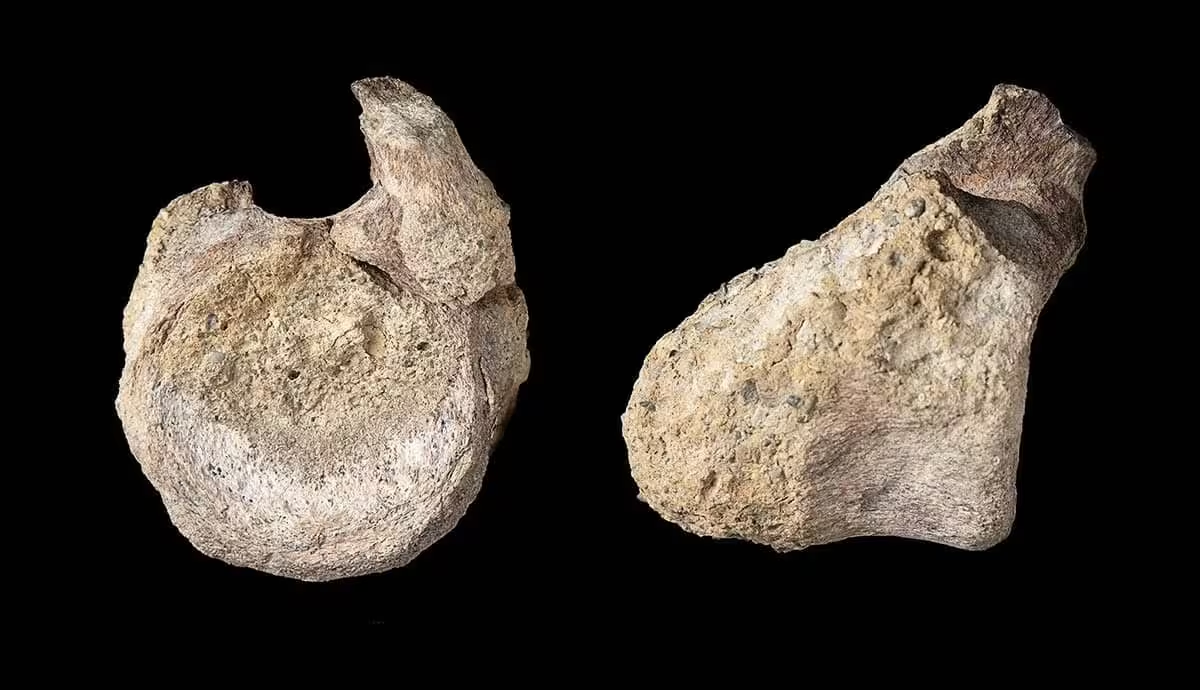
Although the find consists of a single vertebra, its morphology matches that of titanosaur sauropods. Size estimates suggest the animal measured roughly six to seven metres in length, though researchers cannot yet determine whether the bone belonged to a juvenile or a diminutive adult.
Antarctica’s Warm Past
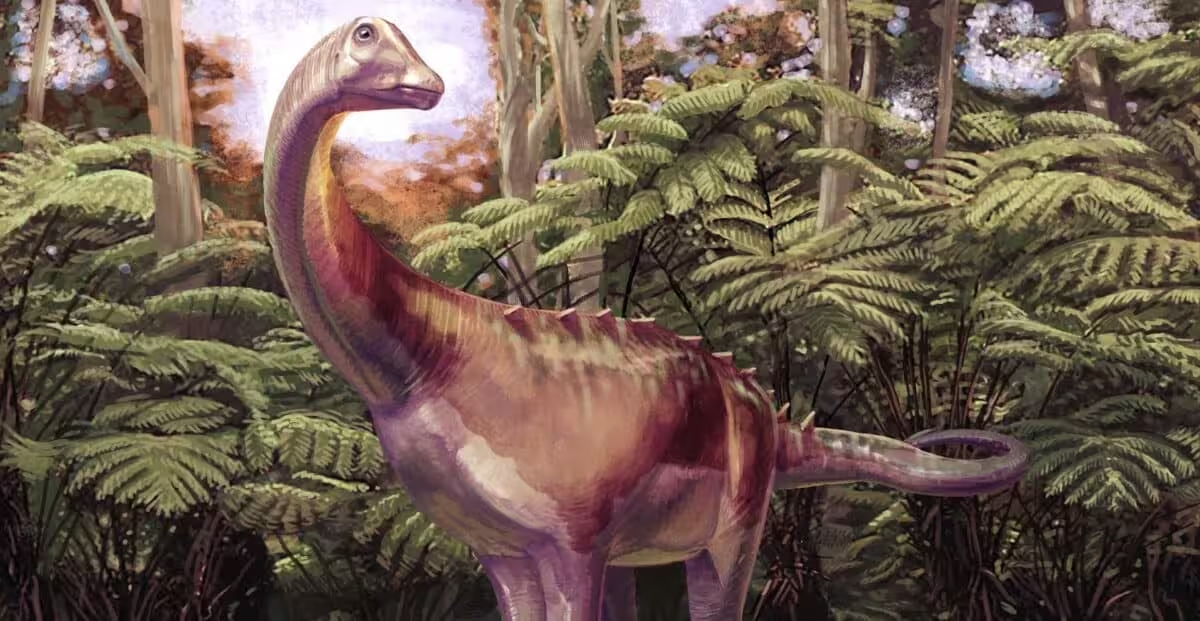
During the Late Cretaceous, Antarctica formed part of a contiguous southern landmass that supported temperate forests of ferns, conifers and palm‑like plants, according to Acta Palaeontologica Polonica. The continent’s extreme latitude still produced dramatic seasonal light cycles, with prolonged darkness in winter and continuous daylight in summer.
Fossil evidence from this era already includes a diverse dinosaur fauna: the small herbivore Morrosaurus, the armored ankylosaur Antarctopelta, the bipedal predator Imperobator, and early birds such as Vegavis. These discoveries underscore a surprisingly rich ecosystem despite the harsh polar conditions.

The Natural History Museum notes that Antarctic fossils are scarce and often fragmentary, implying that many species may never be documented in the rock record.
From Land to Sea: How the Bone Came to Rest in Marine Sediment
The vertebra was embedded in marine deposits abundant with ammonites, which allowed researchers to date the rock precisely to the early Campanian stage of the Late Cretaceous. The most plausible scenario is that the dinosaur died on land, its carcass was transported by river runoff, and the remains were finally buried on the seafloor.
This discovery also informs broader questions about dinosaur dispersal across Gondwanan continents. Titanosaurs are well documented in South America and New Zealand, but remain unconfirmed in Australia. The presence of a titanosaur in Antarctica supports the idea that the Antarctic Peninsula once functioned as a land bridge, facilitating faunal exchanges between now‑separated regions.
This article has been fact checked for accuracy, with information verified against reputable sources. Learn more about us and our editorial process.
Last reviewed on .
Article history
- Latest version
Reference(s)
- “A titanosaurian sauropod dinosaur from the Upper Cretaceous of Antarctica - Acta Palaeontologica Polonica.” <https://www.app.pan.pl/article/item/app013152025.html>.
Cite this page:
- Posted by Hassan Raza