UV Light Reveals 125-Million-Year-Old Crocodile Skin and Hidden Soft Tissues in Old Fossil
A 125‑million‑year‑old Spanish fossil preserves skin, cartilage and tail markings, giving an unprecedented glimpse of early crocodile ancestors.
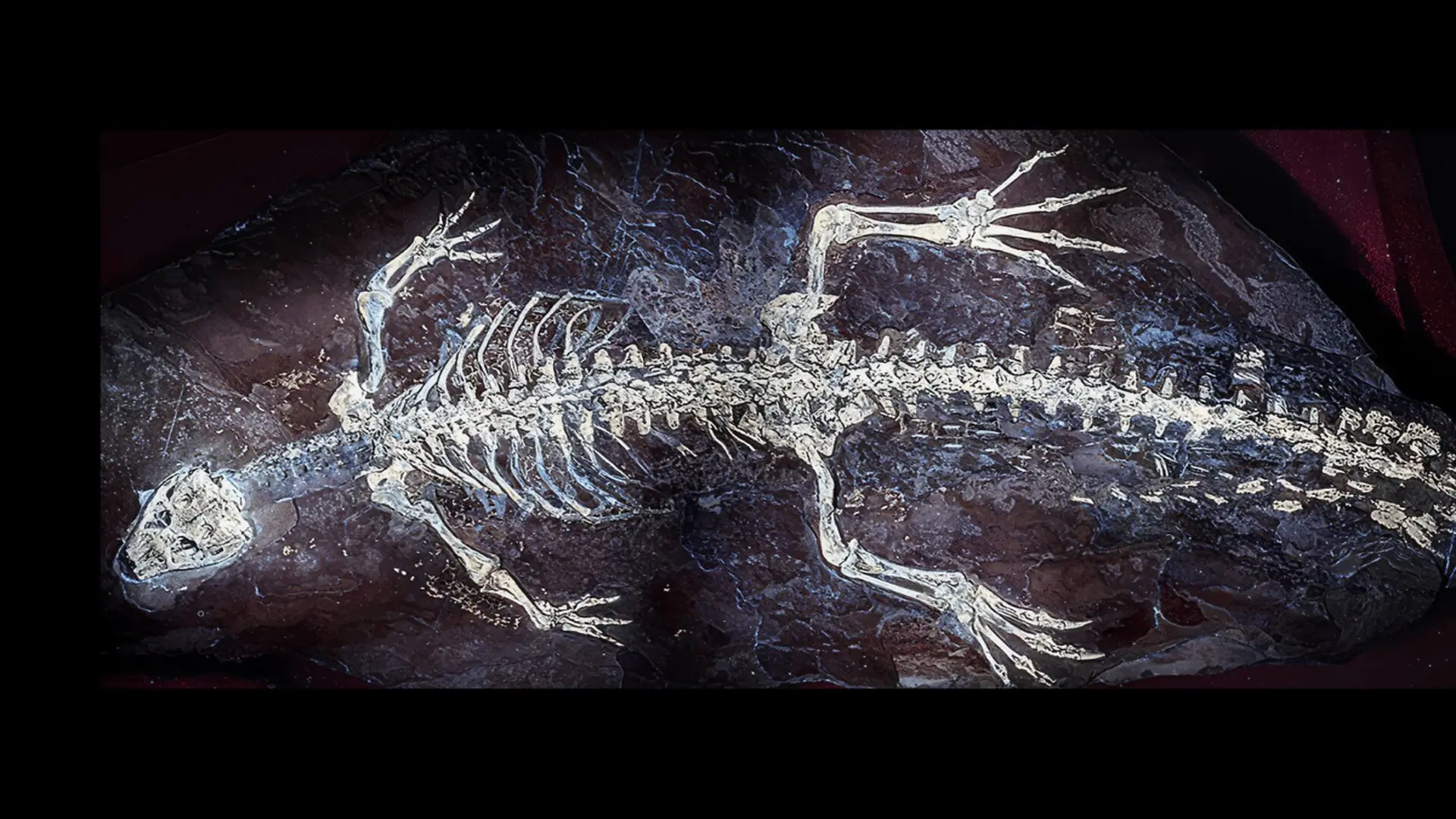
A specimen that spent more than a hundred years in a museum drawer has reshaped scientists’ view of early crocodilians after ultraviolet imaging revealed an extraordinary suite of soft‑tissue remnants. The fossil, detailed in the Zoological Journal of the Linnean Society, retains traces of skin, cartilage, claw sheaths and even faint tail markings, representing one of the most complete soft‑tissue records known for a basal crocodylomorph.
UV Imaging Uncovers Hidden Soft Tissues
The rock slab was first extracted from Catalonian limestone by geologist Lluís Marià Vidal in 1902, and for many decades it was regarded as a remarkably well‑preserved skeleton. The prevailing belief was that the specimen had already disclosed all its secrets. That perception shifted when a research team headed by Dr. Oscar Castillo‑Visa at the Catalan Institute of Paleontology Miquel Crusafont (ICP) applied ultraviolet illumination. The technique highlighted delicate soft‑tissue outlines invisible under ordinary light, revealing patches of skin on the limbs, torso and tail.
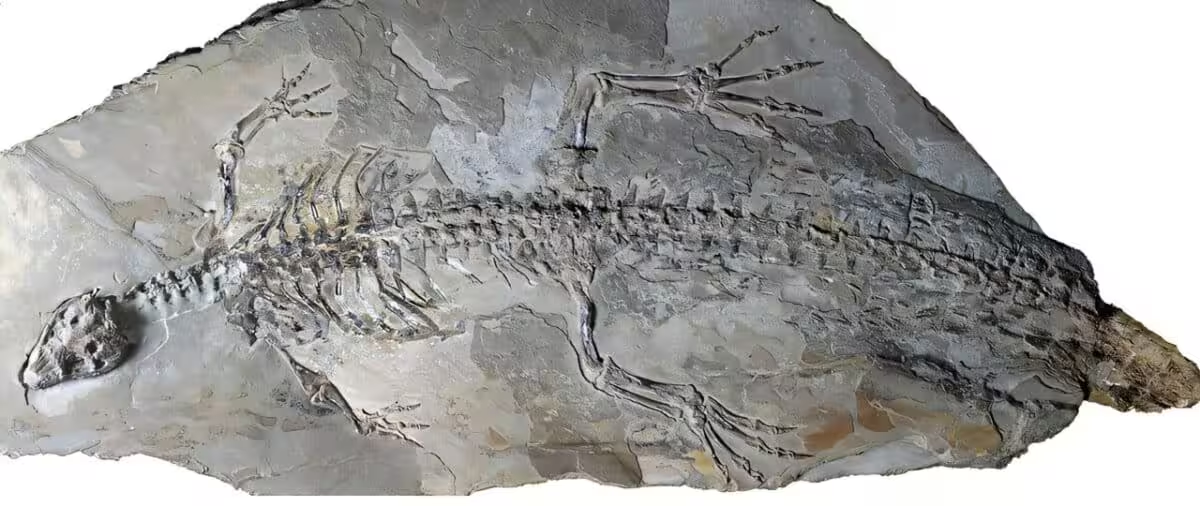
In addition to the skin, the investigators documented remnants of claw sheaths still attached to several digits and cartilage fragments preserving alongside the ribs—features that are exceptionally rare among crocodylomorph fossils. These observations underscore how modern imaging can revitalize long‑standing museum holdings, hinting that many archived specimens may still conceal anatomical information awaiting discovery.
Fossilized Skin Shows Modern Croc Features
The newly visualized integument offers an unprecedented glimpse of Montsecosuchus depereti, a diminutive crocodile relative that roamed the Earth roughly 125 million years ago during the Early Cretaceous. The scales appear rounded and pebble‑like, closely resembling those of present‑day crocodilians, suggesting that the iconic skin texture had already been established long before the dinosaurs vanished. While the overall pattern mirrors that of contemporary species, the researchers noted distinct deviations.
Unlike modern crocs, the ancient form lacked the pronounced fin‑like crest that runs along the tail of many extant species, and its limb scales were comparatively less armored. This mix of familiar and unique traits paints a portrait of an animal that had acquired many hallmark crocodylian characteristics while still retaining lineage‑specific adaptations. The study, published in the Zoological Journal of the Linnean Society, provides concrete evidence that crocodile skin design has remained remarkably stable for over a hundred million years.
Anatomical Clues Hint at Lifestyle of the Early Cretaceous Predator
Beyond the outer covering, the fossil preserves structures that shed light on how this reptile may have behaved in its watery habitat. Researchers identified specialized scales bordering the body that likely functioned as sensory receptors, akin to the mechanoreceptors found on modern crocodiles and alligators. In living species, such organs detect minute water disturbances generated by potential prey, granting them exceptional hunting efficiency even in turbid environments.
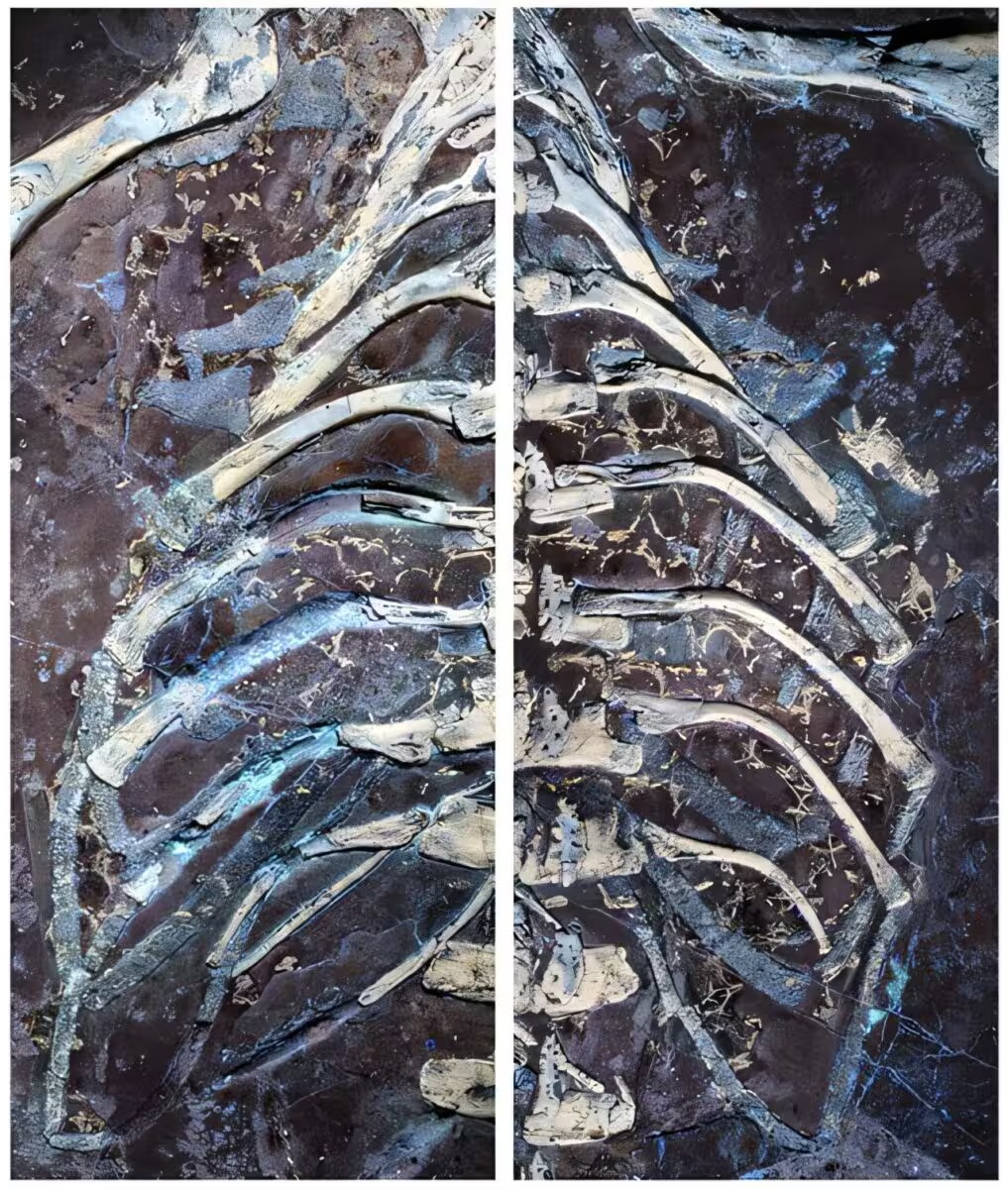
The limited distribution of these sensory patches in Montsecosuchus depereti suggests that the system was still in an evolutionary stage and had not yet expanded across the entire surface as seen in today’s crocodylians. The team also reported preserved cartilage linked to the rib cage, comparable to uncinate processes that enhance respiratory mechanics in birds. These features imply that the ancient crocodile relative may have combined a more active lifestyle with efficient breathing, adapting to a dynamic freshwater ecosystem.
Tail Bands Provide Earliest Record of Croc Coloration
The most striking revelation emerged from the tail region. Under UV light, alternating light and dark bands became apparent along the preserved scales, interpreted as the oldest known evidence of body patterning in a crocodile lineage. Although fossilization does not retain original pigments, the pattern mirrors the banded tails of many modern crocodylians, where contrasting markings serve as camouflage among vegetation and shallow water.
The finding pushes the direct record of crocodylian coloration back by roughly 125 million years, offering a rare visual window onto an animal that shared its world with dinosaurs. “At the moment we cannot say for sure what color the crocodile’s tail was,” explained Dr. Albert Sellés, a researcher with the ICP and the Museu de la Conca Dellà in Isona, Spain. “But it would be expected that it was not so different from current species, which also show different coloration patterns.” Even without precise hue information, the preserved banding suggests that camouflage likely played a crucial role in the animal’s survival, helping it blend into the complex Early Cretaceous aquatic landscape.
Centennial Specimen Highlights Untapped Potential in Museum Collections
The broader significance of this work extends beyond a single fossil. It demonstrates that historic specimens may still harbor biological data that earlier researchers could not access due to technological limitations. Ultraviolet imaging transformed what was once considered a routine skeleton into one of the richest archives of crocodylomorph soft tissues, preserving skin, cartilage, sensory structures, claw sheaths and ancient patterning within a single individual.
The study also reinforces the remarkable evolutionary continuity of crocodilians, showing that many external traits recognizable today were already present while dinosaurs dominated terrestrial ecosystems. As museums continue to apply advanced imaging techniques to long‑studied collections, breakthroughs like this suggest that some of paleontology’s most profound discoveries may arise not from new digs but from fossils patiently awaiting modern analytical tools.
This article has been fact checked for accuracy, with information verified against reputable sources. Learn more about us and our editorial process.
Last reviewed on .
Article history
- Latest version
Cite this page:
- Posted by Hassan Raza