Giant Megalodon Tooth Found 10,000 Feet Under Pacific – First Deep‑Sea In‑Situ Fossil
Ancient shark tooth discovered deep in unexplored Pacific Ocean reveals million-year-old secrets
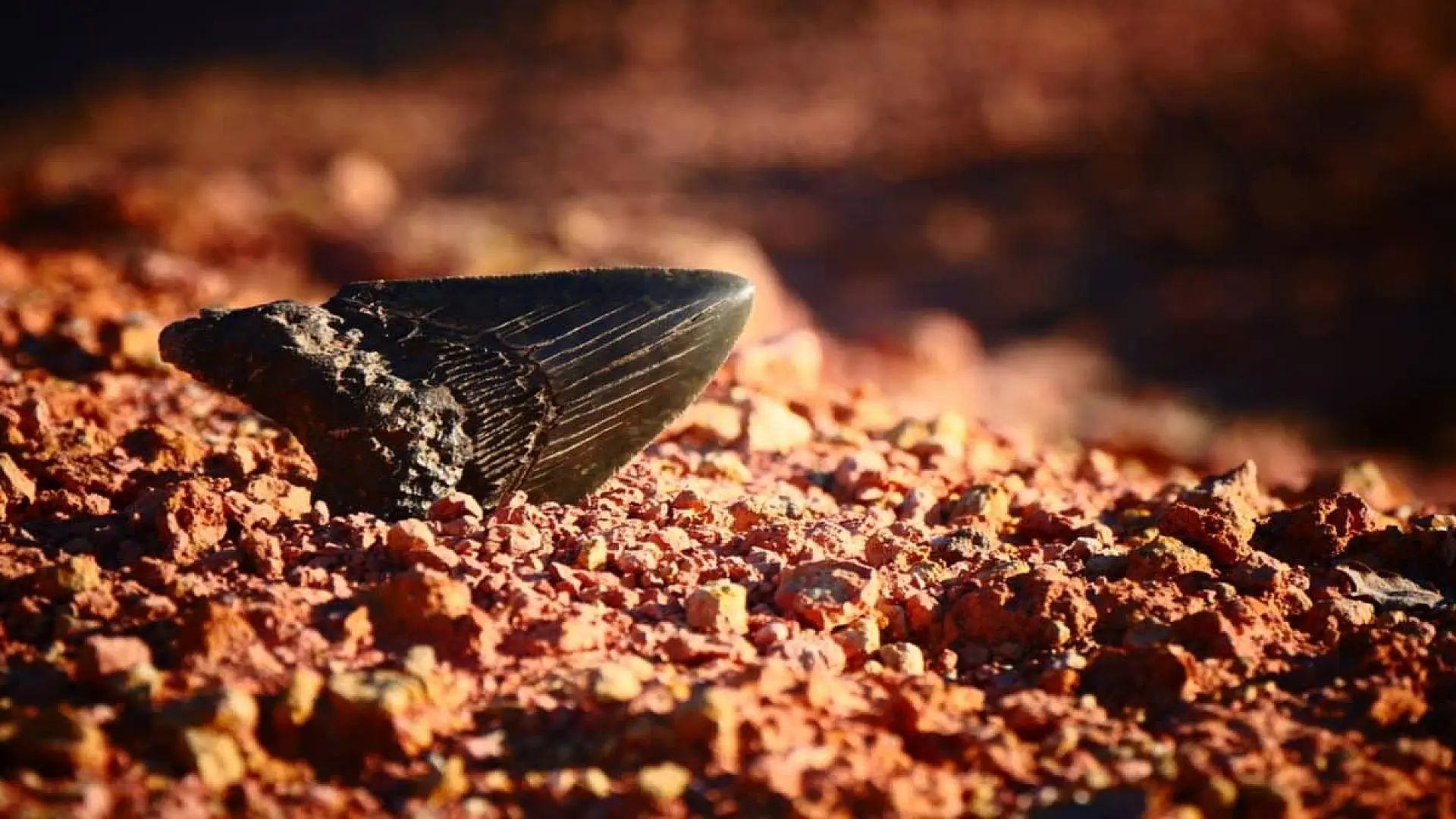
Researchers have recovered a fossilized megalodontooth from a depth exceeding 10,000 feet (3,090 meters) in the Pacific Ocean, marking the first time a specimen of this iconic shark has been documented and collected directly from its original seafloor setting.
The tooth was retrieved during a 2022 expedition organized by the Ocean Exploration Trust, which was charting an unstudied seamount within the Pacific Remote Islands Marine National Monument. Although megalodon teeth are routinely uncovered on land or in near‑shore sediments, finding one on the deep ocean floor is exceptionally rare.
What sets this specimen apart is that scientists were able to pinpoint its exact resting position before removal—a detail often absent from deep‑sea fossil finds that are typically gathered by trawling nets. The discovery was later detailed in the journal Historical Biology.
Deep‑Sea Survey Uncovers Unexpected Fossil
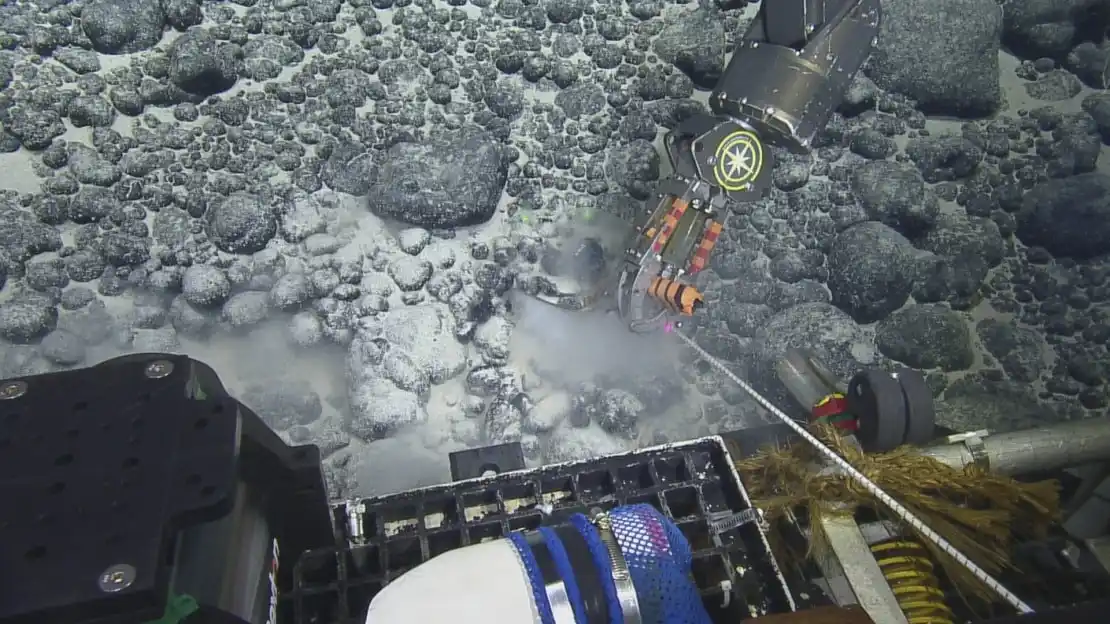
In June 2022, the research vessel Nautilus was conducting geological and biological surveys around Johnston Atoll, a remote outpost located roughly 800 miles (1,300 kilometers) south of Hawaii. To explore the seamount, the team deployed Hercules, a remotely operated vehicle capable of operating at extreme depths.
During a dive that reached more than 10,000 feet below the surface, Hercules collected several sediment samples. Back on the ship, the material was sent to the University of Rhode Island for analysis, where a gold‑colored tooth measuring 2.7 inches (6.8 centimeters) in length was identified.
The Ocean Exploration Trust quickly suspected that the fossil belonged to a megalodon. Confirmation came from shark specialist Dave Ebert of Moss Landing Marine Laboratories in California.
ROV Video Shows Tooth Embedded in Seafloor
After the identification, the team reviewed footage captured by Hercules during the mission. The video demonstrated that the tooth was protruding from the sediment before the vehicle retrieved it, providing rare visual confirmation of its in‑situ context.
In their article for Historical Biology, the authors described the find as the first recorded observation and sampling of a megalodon tooth on the deep‑sea floor, emphasizing that the specimen was seen in its natural setting prior to extraction.
Many deep‑sea fossils are obtained by dragging nets across the bottom, a technique that obscures the original location of the material. In this case, the researchers could directly associate the tooth with its surrounding environment.
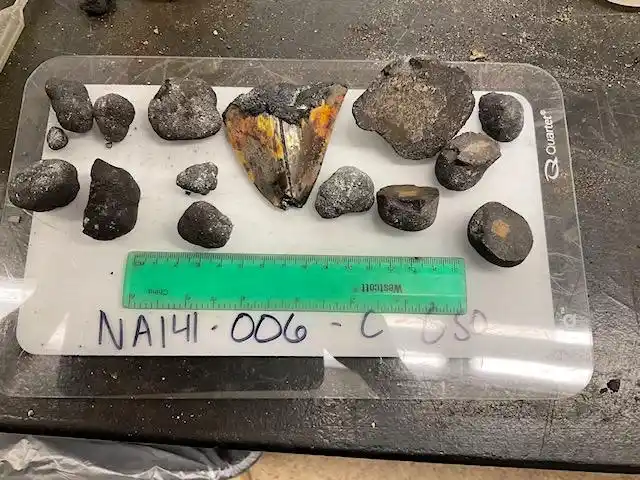
Co‑author Nicolas Straube of the University Museum of Bergen in Norway hailed the find as “amazing” in a statement issued by the Ocean Exploration Trust. He noted that the tooth’s partial manganese coating suggests shark teeth can serve as focal points for manganese accumulation in the deep sea.
“The fossil was discovered at a very remote deep‑sea locality from which megalodon fossils are rarely documented. Further, its partial encapsulation with manganese suggests that fossil shark teeth are an ideal basis for manganese accumulation.”
Revising Megalodon Habitat Models
The specimen offers fresh data on the geographic range of Otodus megalodon, the gigantic predator that ruled the oceans for millions of years. According to the study, the species persisted from roughly 20 million years ago until its extinction about 3.6 million years ago, achieving lengths of at least 49 feet (15 meters) and potentially reaching 65 feet (20 meters).
While megalodon teeth are relatively common in the fossil record—each individual possessed around 276 teeth and the species inhabited marine environments worldwide—most discoveries stem from coastal deposits, riverbeds, or ancient shoreline sediments rather than the abyssal zone.
Study author Jürgen Pollerspöck of the Bavarian State Collection of Zoology explained that the find “provides us with important insights into the distribution of megalodon.” He added that the evidence supports the notion that megalodon was “not a purely coastal species” and likely traversed ocean basins in a manner comparable to modern great white sharks.
“This fossil provides us with important insights into the distribution of megalodon.”
This article has been fact checked for accuracy, with information verified against reputable sources. Learn more about us and our editorial process.
Last reviewed on .
Article history
- Latest version
Reference(s)
- “Nautilus Live | Ocean Exploration Trust.” Nautilus Live <https://nautiluslive.org/>.
- “David A. Ebert – Moss Landing Marine Laboratories.” <https://mlml.sjsu.edu/research-faculty/david-ebert/>.
- Pollerspöck, Jürgen., et al. “First in situ documentation of a fossil tooth of the megatooth shark Otodus ( Megaselachus ) megalodon from the deep sea in the Pacific Ocean.” Historical Biology, vol. 37, no. 1, December 14, 2023, pp. 120-125. Informa UK Limited, doi: 10.1080/08912963.2023.2291771. <https://www.tandfonline.com/doi/full/10.1080/08912963.2023.2291771?fbclid=IwAR0r76WMstwkvEwy0l_u1CV-0_KMLPa1WOHJrjEHfm--W0nwjW9rBW8qTXM>.
- “Nicolas Straube | UiB.” <https://www4.uib.no/en/find-employees/nicolas.straube>.
- “New Study Documents First in-situ Discovery of Fossil Megalodon Tooth in Deep Pacific Ocean.”, January 9, 2024 Nautilus Live <https://nautiluslive.org/blog/2024/01/09/new-study-documents-first-situ-discovery-fossil-megalodon-tooth-deep-pacific-ocean>.
- <https://www.researchgate.net/profile/Juergen-Pollerspoeck>.
Cite this page:
- Posted by Hassan Raza