Inside the Giant Baobab That Holds 30,000 Liters of Water and Holds a World Record
Ancient baobabs with water-storing trunks face threats as record-holding giants fall
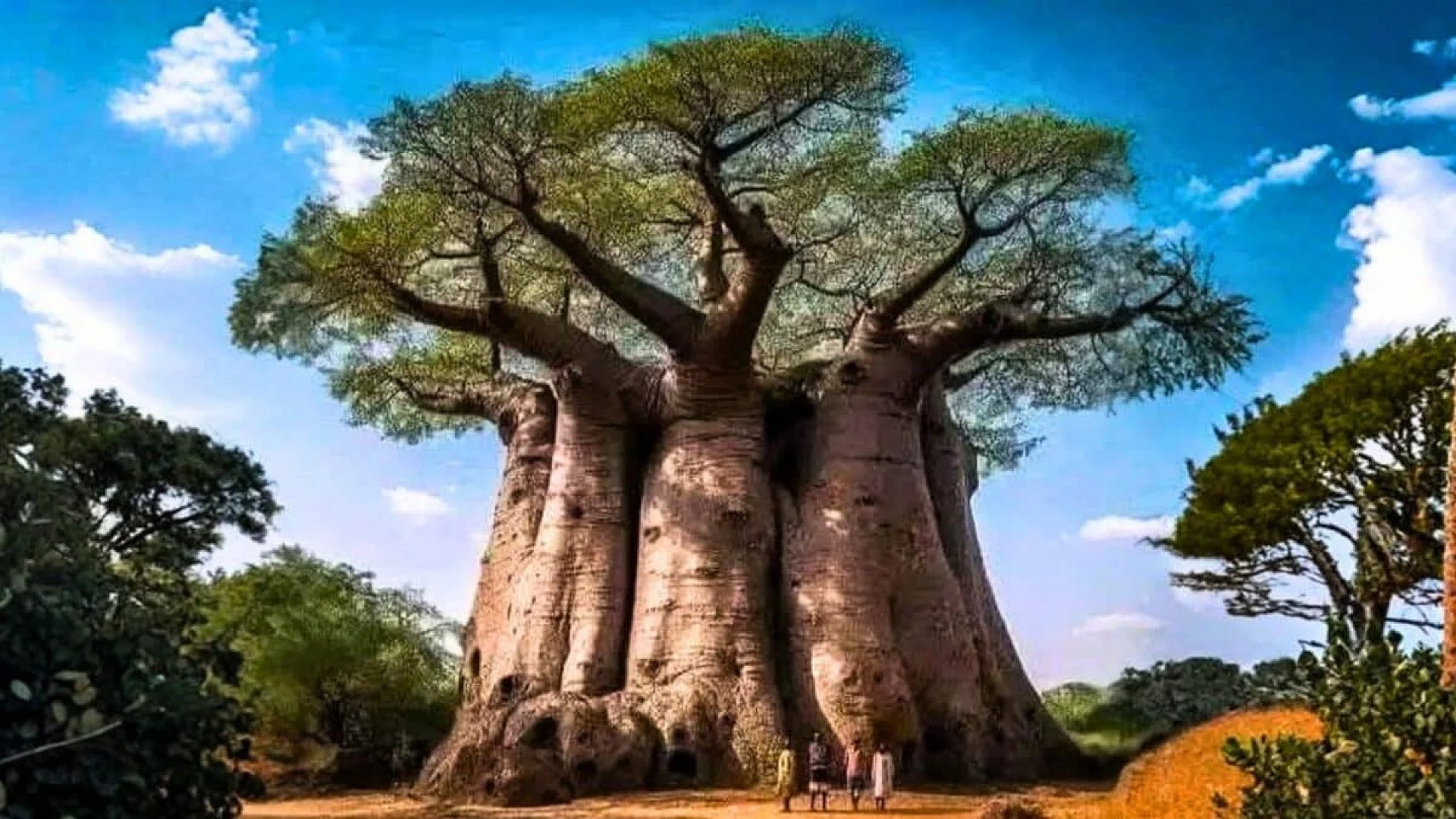
In the dry savannahs of Africa, a single tree can act as a living reservoir, swelling its massive trunk when rain arrives and shrinking during drought. This ability to hoard water has turned the baobab into a beacon of resilience where few other large plants can survive.
Members of the genus Adansonia are spread across Africa, Madagascar and a corner of Australia. Some African individuals are dated between 1,100 and 2,500 years old, underscoring a long history of adaptation. Their iconic, bulbous trunks are not merely decorative; they are functional storage organs that expand noticeably with the seasonal rains.
Water‑Holding Giants Across Continents
The most familiar species, Adansonia digitata, dominates the arid zones of 32 African nations. In these regions the tree’s colossal trunk serves as a landmark and a water bank, swelling each wet season. The family comprises eight species: six endemic to Madagascar, one native to north‑west Australia, and the widely distributed African baobab.
The Royal Botanic Gardens, Kew describes the giant baobab as a tree of dry habitats, a fitting label for a plant tightly linked to water‑scarce environments and seasonal stress.
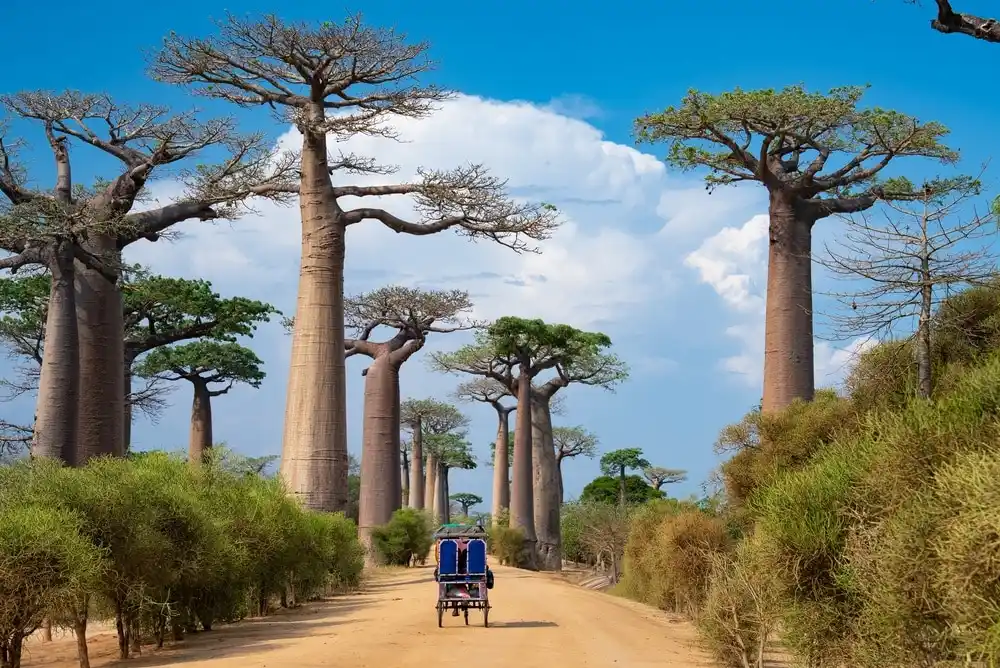
Mature specimens can tower up to 30 metres and measure as much as 50 metres around the trunk. Their swollen stems provide shelter, edible fruit and drinking water for wildlife and nearby communities, making them focal points for settlement in otherwise barren landscapes.
Archaeological evidence shows that baobabs often stand beside ancient mounds dating to the early medieval period or the Portuguese era, suggesting that people have long gathered around these trees for travel, trade or ritual.
Sagole: The Current Volume Champion
The title of biggest extant baobab now belongs to the Sagole Big Tree in Masisi, Vhembe, South Africa, close to the Zimbabwe border. Guinness World Records reports a base area of 60.6 square metres, a height of 19.8 metres and a combined wood‑and‑bark volume of 414 cubic metres.
Although its trunk is enormous, the tree’s above‑ground dry mass is estimated at roughly 54 tonnes, a modest figure for a tree of this size. The low weight reflects baobab wood’s unusually light density.
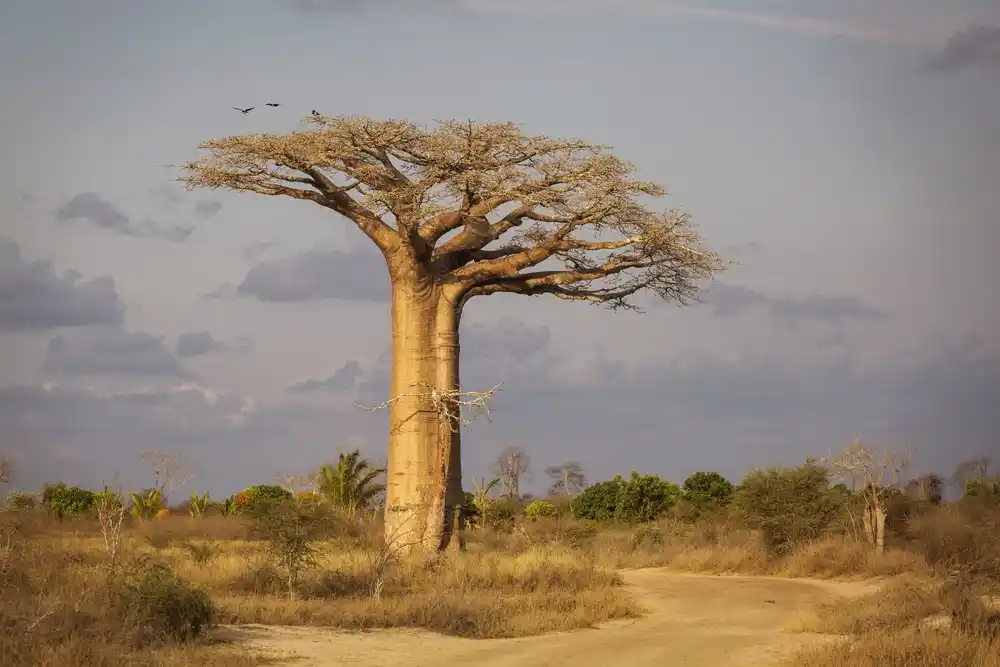
Sagole’s status as the leading volume holder is partly a consequence of recent losses among its peers. Several larger individuals have collapsed in the past decade, turning the record into a snapshot of which giants remain standing.
Former Giants and Their Collapse
Before Sagole, the title was held by the sacred Tsitakakoike Baobab, an endangered Adansonia grandidieri* specimen from the Ambiky Forest near Andombiro in southwestern Madagascar. Its trunk covered 59.6 square metres, and the whole tree reached a volume of 455 cubic metres, with a dry mass near 59 tonnes.
In February 2018, the tree suffered a partial break that left roughly 40 percent of its structure upright. Subsequent collapse was anticipated, and the loss of this specimen cleared the way for Sagole’s current ranking.
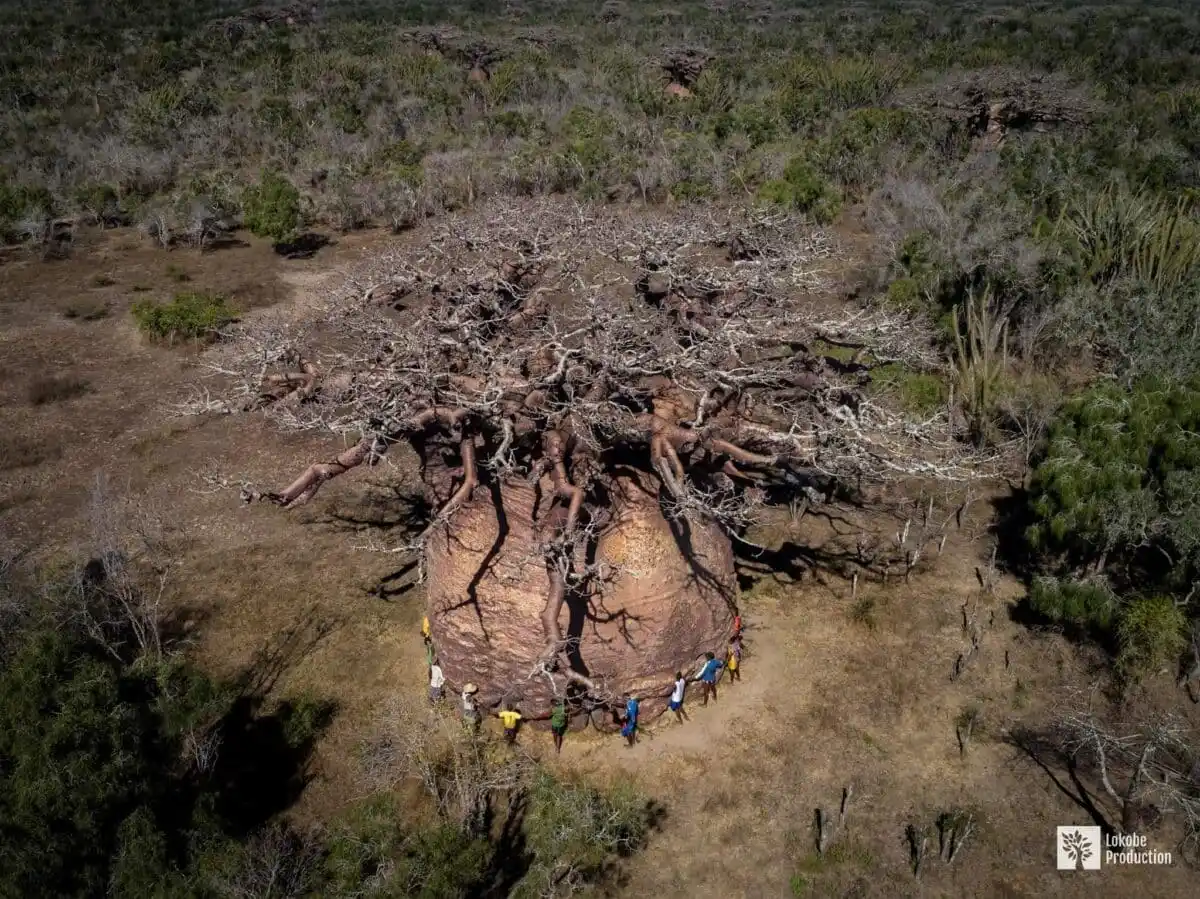
Another notable loss was the Platland Tree—also called the Sunland Tree—in Modjadjiskloof, South Africa. By the early 21st century it boasted a base area of 67.9 square metres and a volume of 448 cubic metres. A large portion fell in 2016, two years before the Tsitakakoike incident.
Feather‑Light Wood, Massive Form
Baobab timber is among the lightest of any tree species. While balsa wood—favoured by model‑airplane builders—has an average density of about 0.15 g cm⁻³, baobab wood averages roughly 0.13 g cm⁻³.
This low density explains why volume, rather than weight, is the key metric for the world’s biggest baobabs. The Platland specimen, for example, had an estimated dry mass of only 58 tonnes despite its massive trunk, and Tsitakakoike’s mass was similar at about 59 tonnes.
In contrast, Australia’s giant eucalypts achieve their record size through dense hardwood, underscoring that baobab size derives from a combination of swollen trunks, water storage capacity and a uniquely light wood structure.
Today, the Sagole Big Tree remains the largest living baobab by measured wood and bark volume, standing at 414 cubic metres.
This article has been fact checked for accuracy, with information verified against reputable sources. Learn more about us and our editorial process.
Last reviewed on .
Article history
- Latest version
Cite this page:
- Posted by Hassan Raza