83‑million‑year‑old sharp‑toothed reptile unearthed in France, named after the tiny village of Villeveyrac
Scientists reveal the true identity of a mysterious fossil from a tiny French village
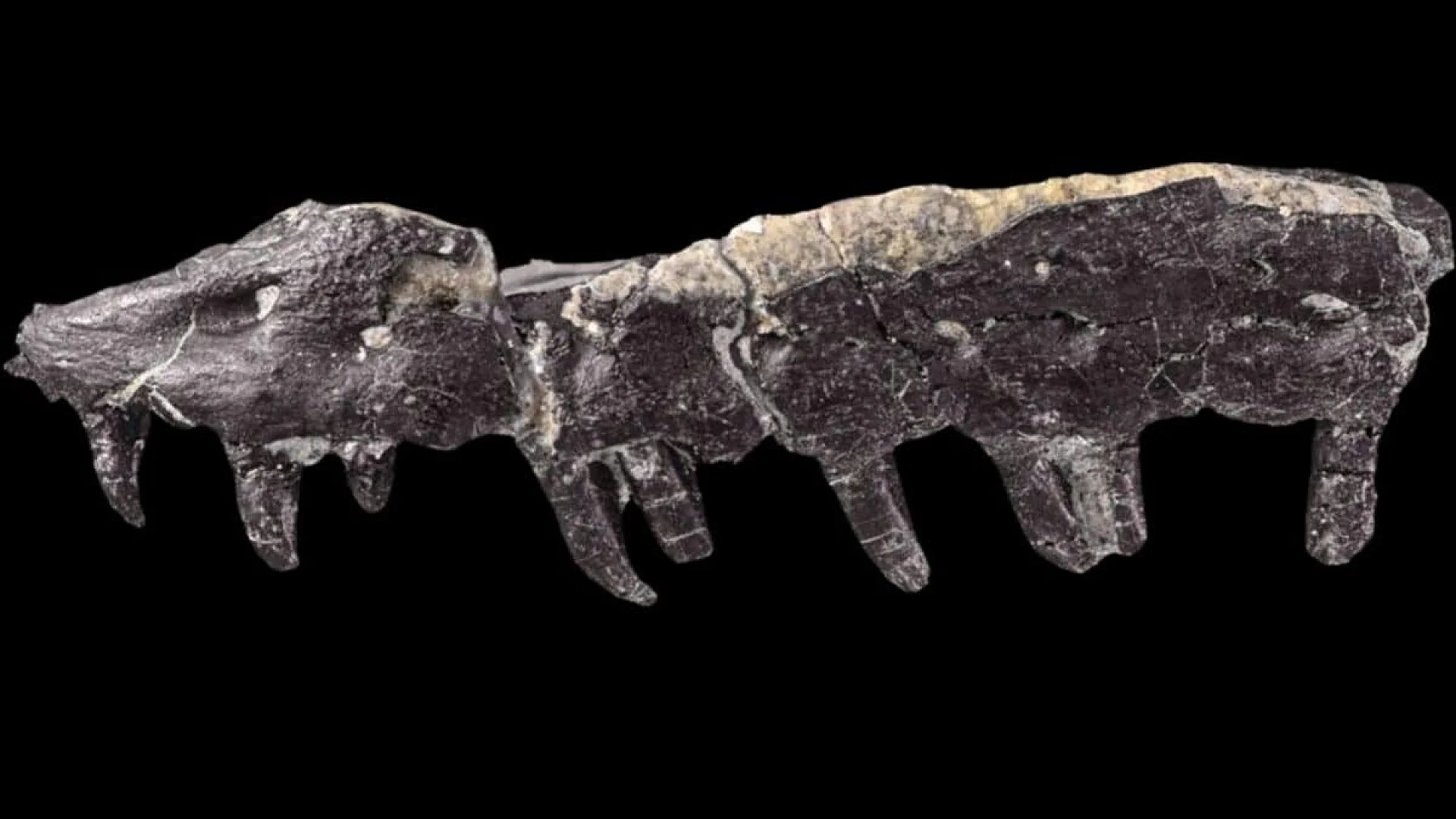
A fossil dating back 83 million years has been formally introduced as a new species, Acutodon villeveyracensis, honoring the small French village where it was uncovered. The specimen, recovered from the Cretaceous deposits of southern France, represents the sole known Upper Cretaceous crocodile‑lizard fossil from Europe.
Assigning a brand‑new name to a fossil is an uncommon milestone in paleontology, especially when the find bridges a gap in the evolutionary record. In this case, the designation also ties the scientific achievement to the community of Villeveyrac in the Hérault department.
After years of meticulous study, researchers have now released a detailed description that positions the specimen as a key clue for a poorly documented reptile group whose lineage remains only partially traced.
Three Decades of Investigation Lead to a Cretaceous Treasure
The fragment was first spotted in 1997 by paleontologist Xavier Valentin while excavating a former bauxite quarry near Villeveyrac. It consists of an upper‑jaw piece bearing five to six exceptionally sharp teeth, a morphology that Valentin likened to the dentition of snakes. As reported by Le Parisien, the name Acutodon villeveyracensis translates as “Sharp Tooth of Villeveyrac.”
“The fossil is a fragment of an upper jaw containing five to six extremely sharp teeth, similar in appearance to snake teeth.”
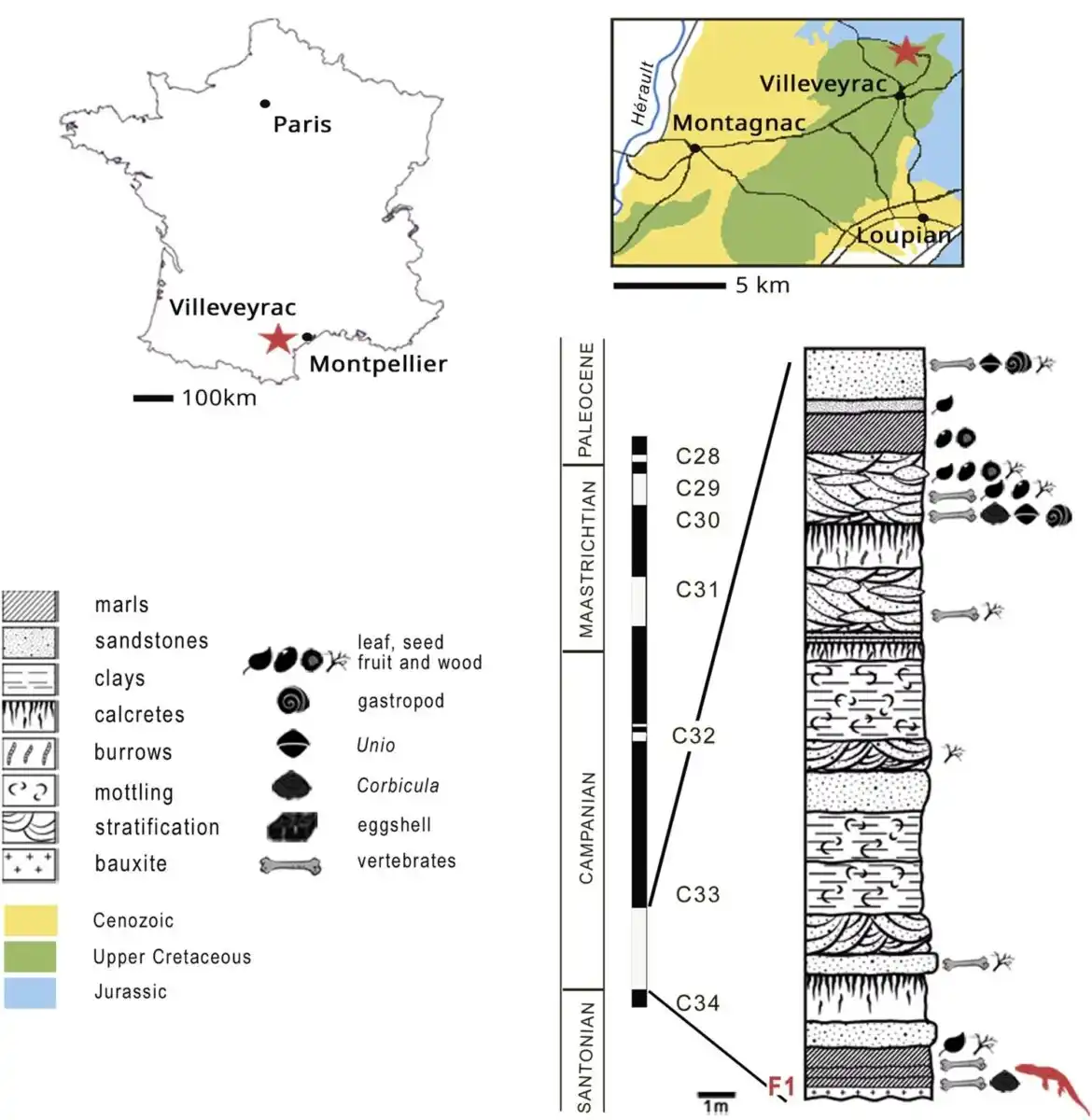
The analytical work was carried out by paleontologist Olivier Jansen, whose team published the formal description in May 2026 in the Journal of Vertebrate Paleontology. The decision to name the animal after the commune acknowledges the long‑standing support the locality has provided to fieldwork at the site.
A Glimpse into an Under‑Represented Reptile Lineage
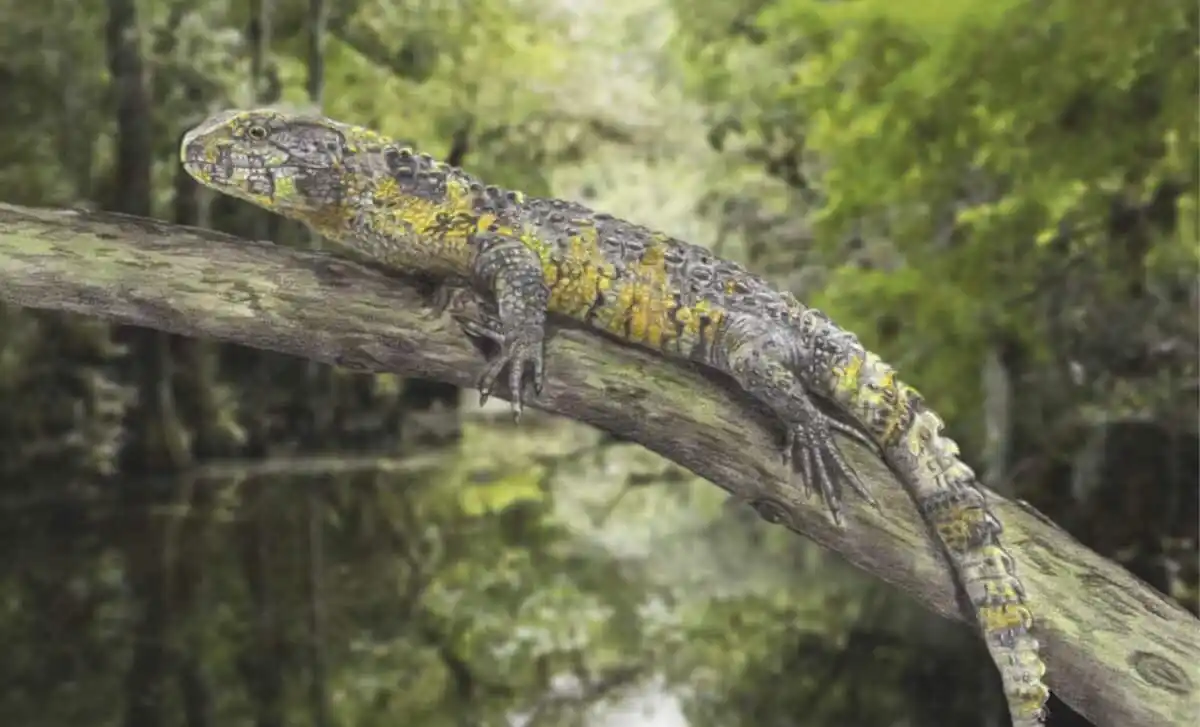
The researchers assigned the fossil to a crocodile‑lizard, a group that inhabited the humid tropical forests that once covered southern France during the Late Cretaceous. The authors note that the evolutionary history of this clade is still fragmentary, with only five fossil species and a handful of specimens documented so far.
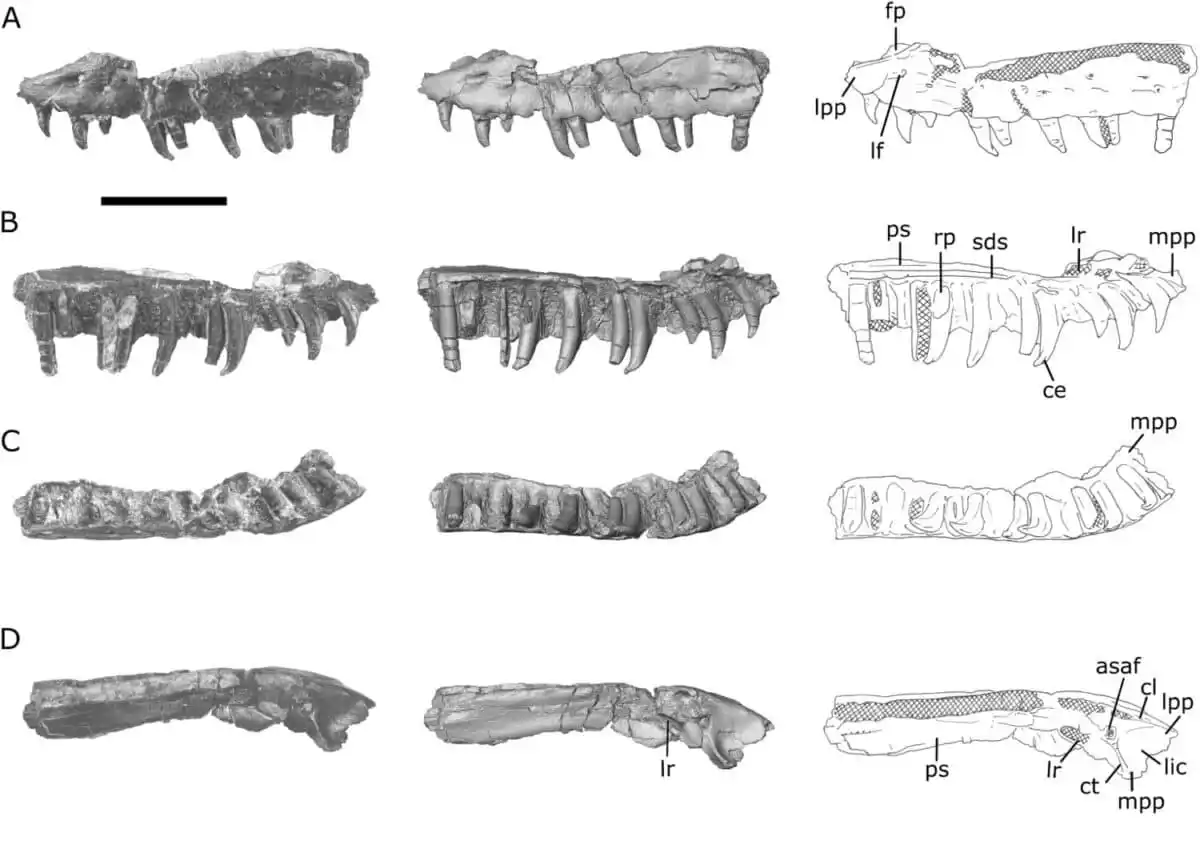
“Acutodon villeveyracensis is attributed to a pan‑shinisaur anguimorph based on a toothed maxilla sharing multiple characters with the living Chinese crocodile lizard and its fossil relatives,” said the authors.
Earlier discoveries of related forms have emerged from Early Cretaceous layers in China and from younger Cenozoic sites across Europe and North America, leaving a pronounced gap in the record that the Villeveyrac specimen helps to close.
Celebrating a Community‑Science Partnership
According to the authors, the fragment is the oldest known European example of pan‑shinisaur lizards, a broader group that includes crocodile‑lizards. Its age pushes back the appearance of this lineage on the continent by about 30 million years and raises fresh questions about the paleobiogeography of these reptiles.
“While this species is currently on the brink of extinction, the evolutionary history of this group remains poorly understood, and the species could disappear before we untangle the mysteries of its origins.”
This article has been fact checked for accuracy, with information verified against reputable sources. Learn more about us and our editorial process.
Last reviewed on .
Article history
- Latest version
Reference(s)
- “VALENTIN Xavier.” PALEVOPRIM <http://palevoprim.labo.univ-poitiers.fr/2018/06/26/valentin-xavier/>.
- <https://www.leparisien.fr/herault-34/un-fossile-de-lezard-crocodile-vieux-de-83-millions-dannees-baptise-du-nom-dune-commune-de-lherault-07-06-2026-VZNIDJM3RZG7RAOG3UYYDET5FA.php?shem=dsdf,sharefoc,agadiscoversdl,,sh/x/discover/m1/4>.
- “JANSEN Olivier.” PALEVOPRIM <http://palevoprim.labo.univ-poitiers.fr/language/en/2022/10/07/jansen-olivier/>.
- <https://www.tandfonline.com/doi/full/0.1080/02724634.2026.2636649>.
Cite this page:
- Posted by Hassan Raza