U.S. B-52 Crash Over Spain Spreads Plutonium, Missing Bomb Recovered After 80 Days
Four 1966 nuclear bombs dropped on Spain—one sank, two exploded, leaving lingering fallout that haunted a village and U.S. airmen for decades.
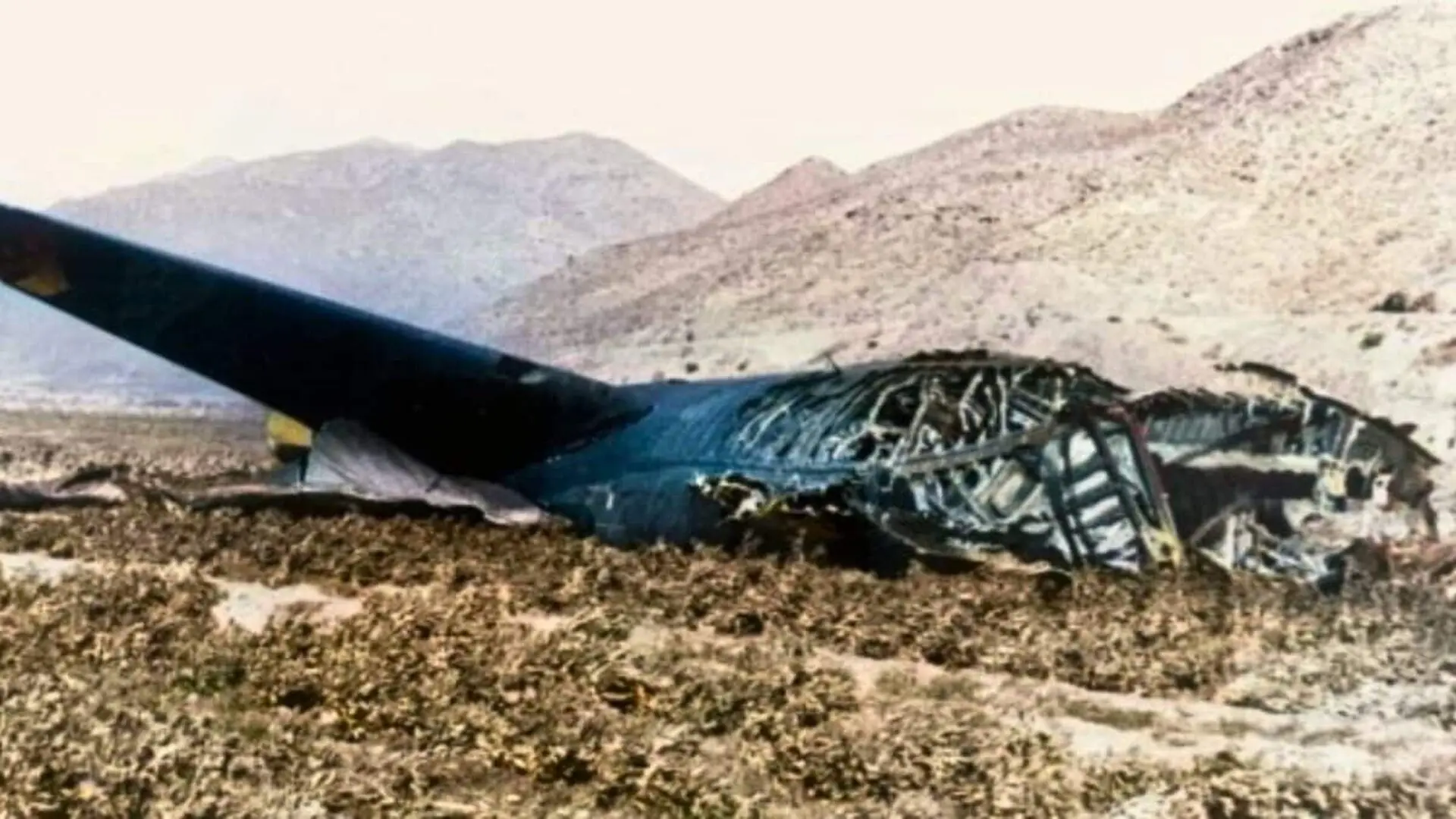
On 17 January 1966 a U.S. Air Force KC‑135 tanker disintegrated over the Mediterranean coast of Spain, sending fragments of a B‑52 bomber and its four nuclear weapons spiraling toward the small village of Palomades. Residents were in fields, schools and homes when debris rained down, turning an ordinary morning into a radiological emergency.
Mid‑air Collision Triggers a Chain of Failures
The B‑52G, call‑sign “Tea 16,” had departed Seymour Johnson Air Force Base the day before as part of the Cold‑War “Operation Chrome Dome,” which kept nuclear‑armed bombers aloft to guarantee a retaliatory strike. After completing two aerial refuelings and an over‑flight near Turkey, the bomber attempted a third rendezvous with a KC‑135 tanker. The aircraft approached the boom too fast, the boom struck the bomber’s left wing, and the wing separated, causing both aircraft to break apart. All four tanker crew members perished, as did three of the bomber’s seven crew; four bomber airmen survived the crash.
Three Bombs Scatter Plutonium Across the Countryside
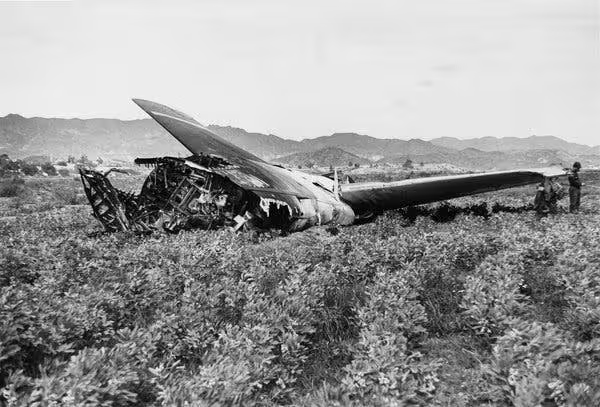
Two of the four thermonuclear weapons detonated their conventional explosives on impact, breaching their casings and contaminating the surrounding soil with plutonium. One bomb landed in a schoolyard, another fell on a beach, a third embedded itself in a tomato field, and a fourth struck near a cemetery. The metal poses a long‑term health risk when inhaled or ingested, because radioactive particles can remain lodged in the body.
Massive Cleanup Operation Removes Contaminated Soil
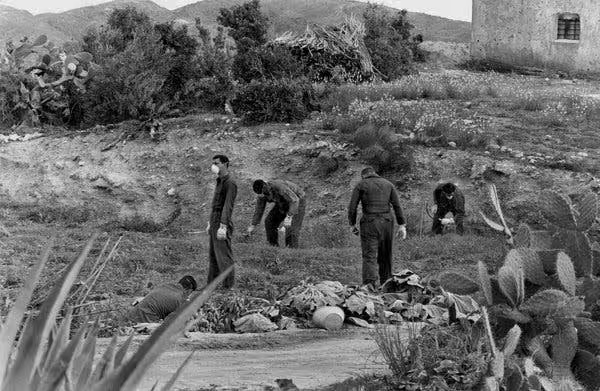
More than 1,600 Air Force personnel were mobilized to survey the crash site, monitor radiation levels, clear vegetation and excavate polluted earth. Approximately 1,400 tons of contaminated soil and plant material were packaged and shipped to the United States for disposal. The Air Force identified a subgroup of 26 individuals—known as the “High 26”—who may have received higher doses of plutonium, although later reviews recorded only low‑level exposure.
Lost Bomb Recovered After an 80‑Day Search
The fourth weapon slipped into the Mediterranean after the initial recovery attempts. Local fisherman Francisco Simó Orts reported seeing a parachuted object descend into the sea, guiding U.S. Navy search teams to the general area. More than 30 ships, roughly 3,000 sailors and the deep‑sea submersible Alvin scoured the seabed. The bomb was located on a steep slope at about 2,500 feet depth, but a cable failure caused it to tumble into a deeper canyon, where it remained hidden for nine days.
The USS Petrel finally hoisted the intact weapon aboard on 7 April 1966. Although its tail and nose were damaged, the safety switch remained engaged, allowing the bomb to be secured for transport back to the United States.
Legacy for Future Nuclear Accidents
The techniques and detection equipment developed after Palomares were later employed during the 1968 crash of a B‑52 near Thule Air Base in Greenland, an operation known as Operation Crested Ice.
Veterans Seek Health Care Recognition
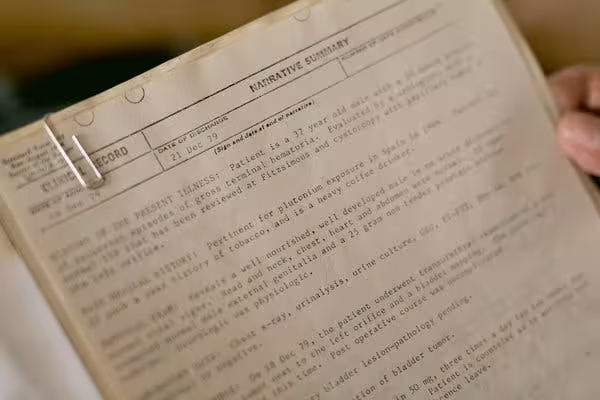
Decades after the cleanup, many former participants reported cancers, blood disorders and other serious illnesses. A New York Times investigation highlighted cases of workers who handled contaminated material without adequate protective gear. Because most service records indicated only low exposure, affected veterans faced hurdles proving a connection between their health conditions and the 1966 operation.
The 2022 PACT Act introduced presumptive coverage for qualifying Palomares veterans, allowing them to receive benefits without establishing a precise radiation dose. Representative Jahana Hayes noted that the legislation applies to roughly 1,600 service members who took part in the cleanup.
Ongoing Restrictions on Affected Land
Although the initial remediation removed the bulk of contaminated material, pockets of radioactive soil remain near Palomares, keeping sections of the area off‑limits. A 2015 bilateral agreement between Spain and the United States aimed to extract additional polluted earth, but a later BBC report indicated that the final disposal phase had yet to be completed.
This article has been fact checked for accuracy, with information verified against reputable sources. Learn more about us and our editorial process.
Last reviewed on .
Article history
- Latest version
Reference(s)
- “Operation Crested Ice | Science and Technology.” <https://st.llnl.gov/news/look-back/operation-crested-ice>.
- <https://www.nytimes.com/2016/06/20/us/decades-later-sickness-among-airmen-after-a-hydrogen-bomb-accident.html>.
- Burke, Myles. “'We thought it was the end of the world': How the US dropped four nuclear bombs on Spain in 1966.”, April 7, 2025 BBC <https://www.bbc.com/culture/article/20250404-how-the-us-dropped-nuclear-bombs-on-spain-in-1966>.
Cite this page:
- Posted by David Anderson