Scientists Identify a Molecular Switch That Helps Cancer Cells Rewire Their Energy Use
A new study shows that small molecules called polyamines can reprogram cancer cell metabolism by boosting a specific protein, eIF5A2, helping tumors grow faster by favoring glycolysis over normal mitochondrial energy production.
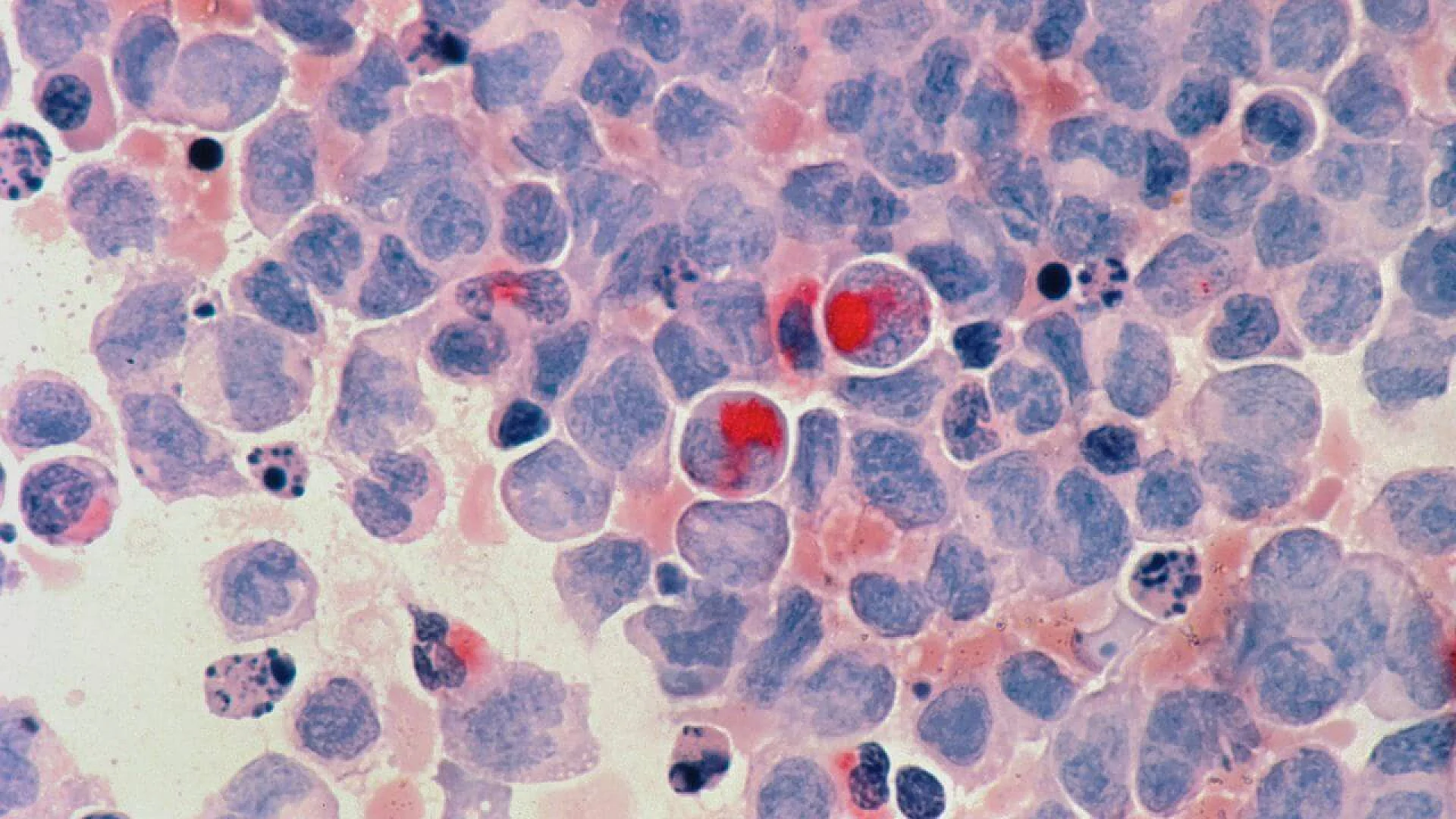
Cells need energy to survive, but they also need raw materials to divide and build new structures. In healthy tissues, most cells generate energy efficiently inside mitochondria, specialized compartments that convert nutrients into fuel through oxidative phosphorylation.
Cancer cells often behave differently.
Instead of relying heavily on mitochondria, many tumors shift toward glycolysis, a faster but less efficient process that converts glucose into lactate even when oxygen is available. This metabolic shift is commonly known as aerobic glycolysis or the Warburg effect.
Scientists have long known that this change supports rapid tumor growth. What has remained less clear is how cancer cells regulate the genes and proteins that drive this metabolic switch.
A new study now points to a molecular pathway involving polyamines and a protein called eIF5A2 that appears to play a central role.
The Small Molecules Present in Every Cell
Polyamines are small positively charged molecules found in all living organisms. Examples include spermidine, spermine, and putrescine.
These molecules participate in many cellular processes. They interact with DNA, RNA, and proteins, helping regulate gene activity, cell growth, and stress responses.
Previous research has shown that polyamine levels are often elevated in tumors. High levels are also associated with rapid cell proliferation, a defining feature of cancer.
Yet the exact molecular mechanisms linking polyamines to cancer metabolism have remained uncertain.
The new research explored how these molecules influence protein production and metabolic pathways in human cancer cells.
Two Similar Proteins With Different Roles
The investigators focused on two closely related proteins called eIF5A1 and eIF5A2.
Both proteins belong to a group of translation factors that help ribosomes assemble proteins from genetic instructions encoded in messenger RNA. Their role is especially important during the elongation stage of translation, when amino acids are joined together to form a growing protein chain.
Although eIF5A1 and eIF5A2 share about 84 percent of their amino acid sequence in humans, their biological roles are not identical.
eIF5A1 is widely expressed in many tissues and is essential for early development. In mice, complete loss of this gene causes embryonic death.
eIF5A2, in contrast, has a more limited expression pattern and is increasingly recognized as an oncogene, a gene that can contribute to cancer when overactive.
The researchers suspected that polyamines might selectively influence one of these proteins in ways that affect cancer cell metabolism.
Tracking How Polyamines Change Gene Activity
To test this idea, the scientists examined human HeLa S3 cancer cells under different polyamine conditions.
Using proteomic analysis, they measured thousands of proteins in the cells and compared how their levels changed when polyamine production was inhibited.
The results showed that roughly 5.3 percent of cellular genes were affected by polyamine levels.
More importantly, the affected genes were not random.
Many of them were linked to glycolysis, the metabolic pathway that converts glucose into energy outside the mitochondria.
This suggested that polyamines could be pushing cancer cells toward glycolysis rather than mitochondrial respiration.
A Metabolic Shift Toward Glycolysis
The research team then examined key metabolic proteins associated with glycolysis.
They observed that polyamines increased the expression of enzymes such as PDK1 and PKM, both of which play important roles in glycolysis-dependent cell growth.
PDK1 helps regulate how pyruvate, the end product of glycolysis, enters the mitochondria.
PKM participates in the final steps of glycolysis that generate energy-rich molecules.
When these enzymes become more active, cells rely more heavily on glycolysis rather than mitochondrial metabolism.
This metabolic configuration is common in many types of cancer and supports rapid cell division.
The Central Role of eIF5A2
Further experiments revealed that polyamines strongly stimulate the production of eIF5A2.
The effect occurs at the level of protein translation, meaning polyamines help cells produce more eIF5A2 protein from its messenger RNA.
When the researchers silenced the gene encoding eIF5A2, cancer cell growth dropped significantly.
Silencing the closely related eIF5A1 gene had a much smaller effect.
This difference suggested that eIF5A2, rather than eIF5A1, is the key mediator linking polyamines to cancer cell proliferation.
Measuring Cellular Energy Systems
To better understand how eIF5A2 influences metabolism, the team measured two indicators of cellular energy production.
One indicator was the oxygen consumption rate, which reflects mitochondrial respiration.
The other was the extracellular acidification rate, which reflects glycolysis.
Using specialized metabolic assays, they found that suppressing eIF5A2 altered both processes. Cells with reduced eIF5A2 showed changes in oxidative phosphorylation and glycolytic activity.
These observations confirmed that eIF5A2 helps regulate how cancer cells distribute their energy production.
Distinct Gene Programs for Two Similar Proteins
The scientists also compared the sets of proteins controlled by eIF5A1 and eIF5A2.
Despite their similarity, the two proteins influenced largely different groups of genes.
Proteomic analysis showed that many proteins increased by eIF5A2 were not affected by eIF5A1.
This finding helps explain why the two proteins have different effects on cell growth.
eIF5A2 appears to control a specific network of genes that supports metabolic changes associated with tumor development.
Ribosomal Proteins Linked to Tumor Progression
Another important discovery involved ribosomal proteins, the structural components of ribosomes that assemble new proteins.
Polyamines increased the production of several ribosomal proteins associated with cancer progression. These included RPS27A, RPL36A, and RPL22L1.
Some of these proteins have already been linked to malignancy in cancers such as colorectal, liver, and prostate tumors.
By increasing the synthesis of these components, polyamines may help cancer cells enhance their protein production machinery.
This allows rapidly dividing cells to generate large quantities of proteins needed for growth.
A Role for MicroRNA Control
The study also identified a regulatory layer involving microRNAs.
MicroRNAs are small RNA molecules that can suppress the translation of specific genes.
The researchers found that polyamines stimulate eIF5A2 synthesis partly by suppressing a microRNA called miR-6514-5p.
When this microRNA is active, it limits the production of eIF5A2. When polyamines reduce its effect, eIF5A2 levels rise.
This mechanism provides another route through which polyamines can influence cellular metabolism and growth.
Structural Clues From Molecular Simulations
To understand why eIF5A2 behaves differently from eIF5A1, the researchers examined structural differences between the two proteins.
Computer simulations suggested that variations in their C-terminal regions influence how they interact with ribosomal components.
The analysis showed that the two proteins bind differently to a ribosomal protein called RPL10A.
These subtle structural differences may explain why eIF5A2 participates in mRNA decoding in a distinct way during protein synthesis.
Understanding these interactions could help scientists identify specific targets for drugs that block cancer-related translation processes.
Evidence From Cancer Patient Data
The study also incorporated data from large cancer genomics databases.
Using the METABRIC dataset, which contains genetic information from thousands of breast cancer patients, the researchers examined how eIF5A gene expression correlates with disease outcomes.
Statistical analyses compared high and low expression groups and evaluated associations with survival.
These analyses helped confirm the clinical relevance of the molecular pathways observed in cell experiments.
Why This Pathway Matters
Cancer cells depend on a complex network of signals that regulate metabolism, gene expression, and protein production.
The new research highlights a pathway that connects several of these systems.
Polyamines influence translation factors.
Translation factors influence metabolic enzymes.
Metabolic enzymes determine how cells produce energy.
Together, these steps help cancer cells adopt the metabolic profile that supports rapid proliferation.
Potential Implications for Cancer Treatment
The findings also point to several possible therapeutic targets.
One approach involves blocking polyamine production. Drugs such as α-difluoromethylornithine already inhibit enzymes involved in polyamine synthesis.
Another strategy could focus on disrupting eIF5A2 activity or preventing its interaction with ribosomal proteins.
Because eIF5A2 appears to play a central role in cancer metabolism, targeting it might slow tumor growth while leaving the more essential eIF5A1 pathway intact.
Further research will be needed to test whether these approaches can be translated into clinical treatments.
Questions That Remain
Although the study provides important insights, several questions remain open.
Researchers still need to understand how polyamine levels are regulated in different types of cancer.
The precise mechanisms by which eIF5A2 controls translation of specific genes also require further investigation.
In addition, the role of ribosomal proteins such as RPL22L1 in cancer progression remains an active area of research.
Future studies will likely explore how these pathways interact with other metabolic and signaling networks inside tumors.
A Molecular View of Cancer Metabolism
The work adds another piece to the complex puzzle of cancer biology.
It shows that small molecules like polyamines can influence fundamental processes inside the cell, from RNA translation to metabolic reprogramming.
By identifying eIF5A2 as a key mediator of these effects, the study provides a clearer picture of how cancer cells coordinate growth and energy production.
Understanding these molecular systems may eventually help researchers design treatments that disrupt the metabolic flexibility tumors rely on.
The research was published in Journal of Biological Chemistry on July 03, 2025.
This content has been reviewed by subject-matter experts to ensure scientific accuracy. Learn more about us and our editorial process.
Last reviewed on .
Article history
- Latest version
Reference(s)
- Suzuki, Masato., et al. “Polyamines stimulate the protein synthesis of the translation initiation factor eIF5A2, participating in mRNA decoding, distinct from eIF5A1.” Journal of Biological Chemistry, vol. 301, no. 8, 03 July 2025 Elsevier, doi: 10.1016/j.jbc.2025.110453. <https://doi.org/10.1016/j.jbc.2025.110453>.
Cite this page:
- Posted by David Anderson