Lab-Grown Hair Follicles That Cycle Naturally Mark a Turning Point for Regenerative Medicine
Scientists identify a crucial third cell type that allows engineered mouse hair follicles to grow, attach to tissue, and regenerate through normal growth cycles in the lab.
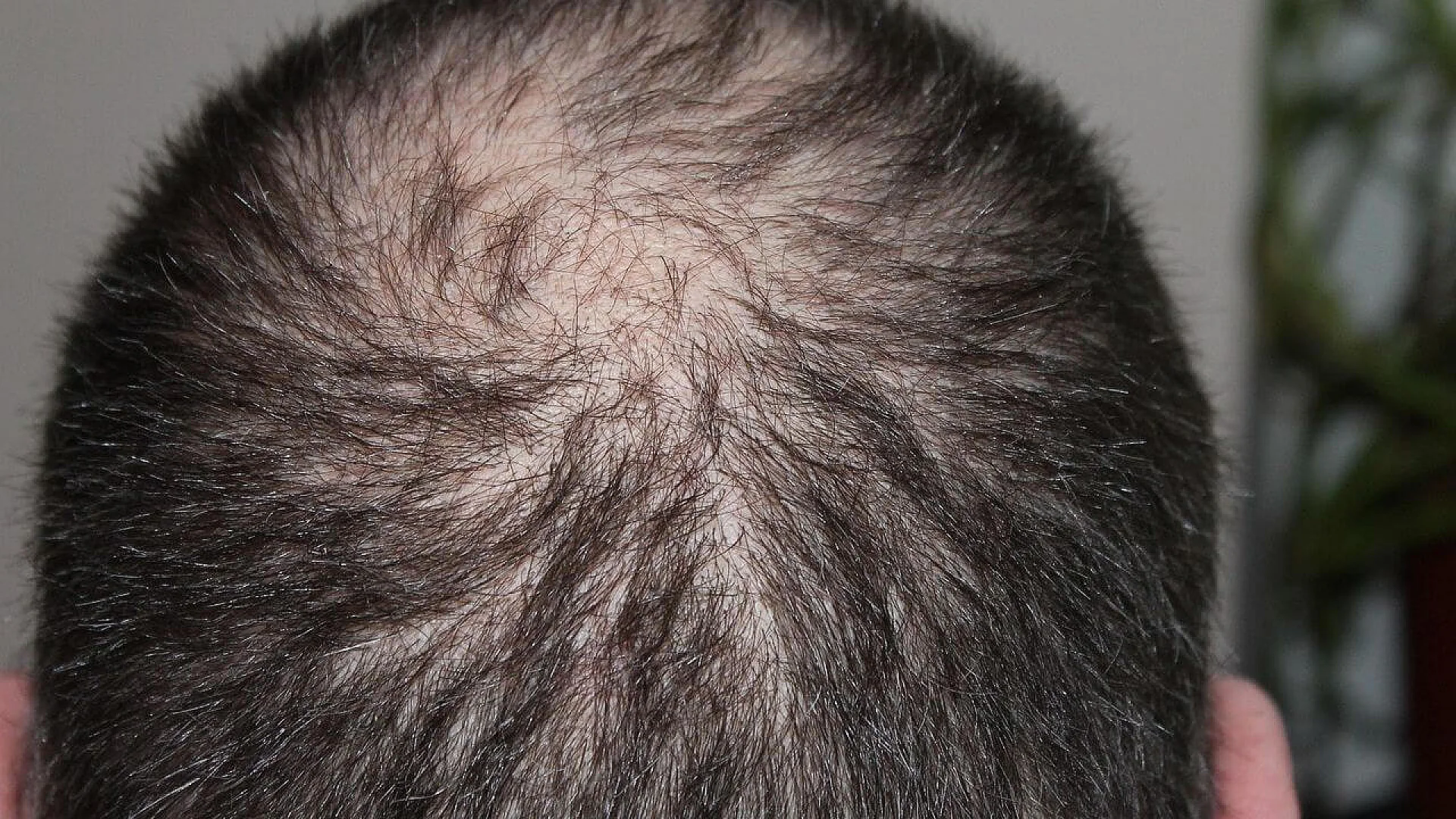
Hair seems simple. It grows, it falls out, and in most people it grows back again. But beneath the surface lies a remarkably complex micro-organ, one that depends on tightly coordinated interactions between different cell types embedded deep within the skin.
For years, scientists have tried to recreate that system in the lab. The goal is not cosmetic curiosity alone. Hair follicles offer a powerful model for understanding how organs form, regenerate, and cycle through periods of growth and rest. They are among the few mini-organs in mammals that naturally regenerate throughout life.
Yet despite decades of effort, lab-grown follicles have struggled to behave like their natural counterparts.
Now, researchers from the United States and Japan report a breakthrough. By identifying and incorporating a previously underappreciated supporting cell population, they have generated mouse hair follicles in vitro that not only form structurally, but also connect to surrounding tissue and cycle through natural growth phases.
The findings, published in Biochemical and Biophysical Research Communications, suggest scientists may have finally identified the minimal cellular recipe required to recreate a fully functional follicle in the lab.
A Persistent Problem in Hair Engineering
Hair follicles are built through intricate communication between two major cellular players.
The first are epithelial stem cells. These cells generate the hair shaft itself and form the outer structures of the follicle. The second are dermal papilla cells, specialized mesenchymal cells that sit at the base of the follicle and send the biochemical signals that trigger hair growth.
Previous experiments combining these two cell types successfully produced follicle-like structures. But there was a catch.
Those lab-assembled follicles rarely matured properly. They often failed to anchor to surrounding tissue. More importantly, they did not progress through the natural hair cycle, a repeating sequence of growth, regression, and rest that defines healthy follicles in living animals.
In most cases, the engineered follicles only behaved normally after being transplanted into live mouse skin. Something crucial was missing in the dish.
The new study sought to identify what that missing element might be.
The Third Cell That Changed the Outcome
The researchers focused on a less prominent but potentially critical group of cells associated with the follicle’s structural environment. These cells are known as accessory mesenchymal cells.
Within the natural follicle, these cells contribute to the dermal sheath, a supportive layer that surrounds the follicle, and are closely associated with the bulge region. The bulge is a niche, a protected microenvironment that houses epithelial stem cells and regulates their behavior during regeneration.
Rather than appearing as a main signaling hub like dermal papilla cells, accessory mesenchymal cells provide structural and mechanical support. They help maintain the architecture necessary for proper follicle development.
The team hypothesized that without this scaffolding component, lab-grown follicles might form but fail to organize correctly.
To test this idea, they introduced accessory mesenchymal cells alongside epithelial stem cells and dermal papilla cells at the earliest stages of follicle assembly.
The results were striking.
Follicles generated from this three-cell combination progressed through organized development in vitro. They established connections with underlying tissue-like structures and, crucially, demonstrated the ability to enter and exit growth phases.
For the first time, engineered mouse follicles cycled naturally outside the body.
Recreating the Hair Cycle in a Dish
The hair cycle consists of three main stages.
During anagen, the growth phase, the follicle actively produces hair. In catagen, growth stops and the lower portion of the follicle regresses. Finally, in telogen, the resting phase, the follicle remains dormant before reactivating.
This cyclical process is tightly regulated by interactions between epithelial stem cells and surrounding mesenchymal cells. Disruption in these signals can halt growth or prevent regeneration.
In the new experiments, adding accessory mesenchymal cells appeared to restore the microenvironment required for this coordination.
The engineered follicles did not simply sprout hair-like fibers. They behaved dynamically, entering and exiting growth phases in patterns resembling natural follicles in mice.
That functional cycling distinguishes this work from earlier attempts that produced static or incomplete structures.
Why Structure Matters in Organ Engineering
One of the most important lessons from this research is conceptual.
In regenerative medicine, scientists often focus on the most obvious or dominant stem cell populations when attempting to recreate tissues. But organs are ecosystems. Their function depends not just on signal-producing cells, but also on supportive niches that regulate spatial organization.
The accessory mesenchymal cells identified in this study appear to serve precisely that architectural role. By helping shape the bulge niche and dermal sheath, they enable proper epithelial-mesenchymal communication.
The study’s authors describe this as defining a foundational cellular configuration for functional follicle regeneration.
Rather than relying on trial and error, researchers now have a clearer blueprint of the minimum components required to engineer a working hair follicle.
From Mice to Humans, A Long Journey Ahead
As promising as the findings are, they remain firmly rooted in mouse biology.
Mouse hair follicles differ from human follicles in size, growth timing, and cycling dynamics. Translating this three-cell strategy into human systems will require extensive validation.
Human epithelial stem cells and dermal papilla cells may respond differently in vitro. Accessory mesenchymal populations in human skin may also have distinct properties.
The researchers note that future studies will aim to clarify the developmental lineage of bulge-associated mesenchymal cells and examine their roles in living organisms. Humanized experimental models will likely be a critical next step.
In other words, clinical applications remain distant.
Beyond Baldness: Broader Implications
Although hair restoration captures public imagination, the implications extend beyond cosmetic concerns.
Hair follicles are one of the few adult organs that naturally regenerate. Understanding how to rebuild them provides insight into broader principles of organ morphogenesis, the biological process by which tissues form and organize during development.
If accessory support cells prove essential in other organs as well, this work could influence strategies for engineering skin, glands, and potentially more complex tissues.
The study also highlights the importance of recreating cellular niches, not just cell types, when attempting organ-level regeneration.
In recent years, organoid research has surged, with scientists growing miniature versions of intestines, brains, and kidneys in the lab. But achieving full functional maturity remains challenging.
This research suggests that overlooked supporting cell populations may be part of the missing puzzle.
Commercial and Research Applications
Some members of the research team are affiliated with a biotechnology company focused on organ-level regenerative strategies. The company partially funded the study and aims to further develop in vitro hair follicle production.
In the near term, lab-grown functional follicles could serve as testing platforms. Instead of experimenting directly on animals or human volunteers, researchers could study hair growth dynamics, drug responses, and disease mechanisms in controlled laboratory systems.
Such platforms may accelerate screening of therapies for hair loss conditions and improve understanding of why hair growth starts and stops.
Why This Matters
Hair loss affects millions of people worldwide, but its biological roots are complex. Current treatments often target hormonal pathways or attempt to slow follicle shrinkage. Few approaches directly rebuild fully functional follicles.
By identifying a minimal three-cell configuration capable of producing cycling follicles in vitro, this study offers a clearer mechanistic framework for regeneration.
More broadly, it reinforces a central principle of regenerative medicine: restoring organ function requires rebuilding not just cells, but their ecological relationships.
If that principle holds across tissues, the impact could extend well beyond dermatology.
The Limits of the Breakthrough
Despite its promise, several limitations remain.
First, the work was performed in mice. Human translation is uncertain.
Second, while follicles cycled in vitro, scaling production to clinically meaningful numbers presents a major engineering challenge.
Third, long-term stability and safety have not been evaluated in human systems.
Finally, hair growth involves vascularization, immune interactions, and hormonal influences that are difficult to replicate fully outside the body.
The study answers one foundational question, but many practical hurdles remain.
A Step Toward Organ-Level Regeneration
Even with those caveats, the achievement represents a meaningful advance.
For years, the inability to sustain proper follicle cycling in vitro suggested that researchers were missing a key component of the biological system. By identifying accessory mesenchymal cells as that missing link, the team has provided a clearer map of how epithelial and mesenchymal interactions drive regeneration.
In doing so, they have nudged the field closer to building not just tissues, but living, dynamic organs in the laboratory.
Whether that eventually translates into therapies for hair loss or informs broader regenerative strategies, the study underscores a recurring lesson in biology. Sometimes, the cells that matter most are not the most obvious ones.
The research was published in Biochemical and Biophysical Research Communications on February 20, 2026.
This content has been reviewed by subject-matter experts to ensure scientific accuracy. Learn more about us and our editorial process.
Last reviewed on .
Article history
- Latest version
Reference(s)
- Toyoshima, Koh-ei., et al. “Fully functional hair follicle organ regeneration using organ-inductive potential stem cells with an accessory mesenchymal cell population in an in vitro culture system.” Biochemical and Biophysical Research Communications, vol. 810, 20 February 2026, doi: 10.1016/j.bbrc.2026.153459. <https://doi.org/10.1016/j.bbrc.2026.153459>.
Cite this page:
- Posted by Zara Tariq