Giant 10-Metre Jurassic Sea Dragon Unearthed at Rutland Water, Britain’s Largest Fossil Reptile
A routine lagoon drain revealed a giant Jurassic dinosaur skull in Britain, so massive it was almost impossible to lift.
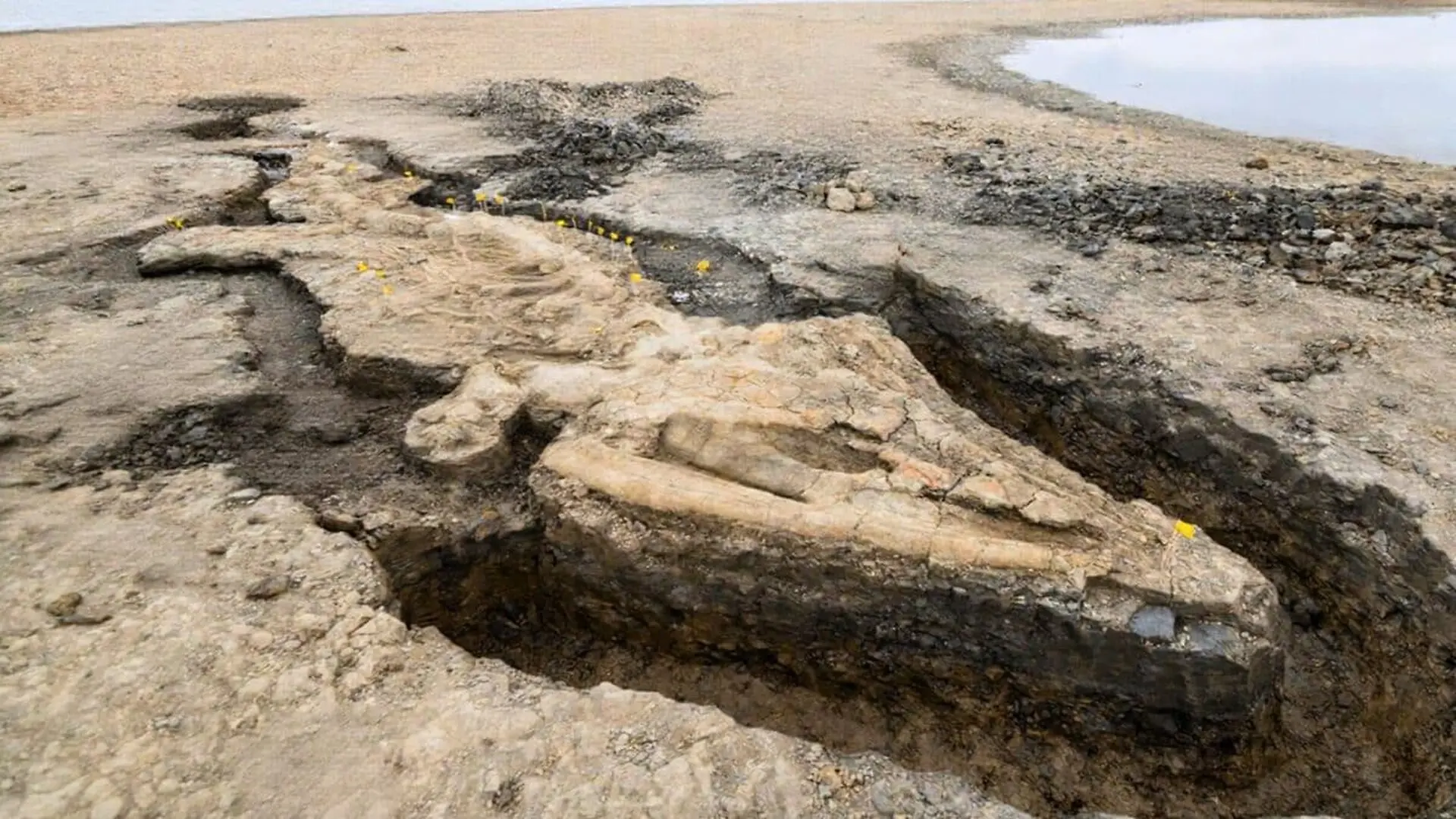
While draining a lagoon island at Rutland Water Nature Reserve in February 2021, conservation manager Joe Davis spotted an unusual protrusion in the clay. Having previously recovered marine mammal skeletons, Davis recognised the shape as reminiscent of a large marine reptile and alerted palaeontologists. Their subsequent investigation confirmed the discovery of one of the United Kingdom’s most important fossil finds.
The fossil measures just over 10 metres from snout to tail, with a skull alone weighing around a tonne. Preliminary analysis suggests it belongs to Temnodontosaurus trigonodon, a species previously documented mainly from German and French sites. If the identification is upheld after full preparation, this would represent the first confirmed British example of the species, extending its known range across the ancient Jurassic seaway.
The find sparked rapid interest among experts. Paul Barrett of the Natural History Museum in London called the Rutland specimen “probably one of the largest fossil reptiles ever uncovered, rivaling even the biggest dinosaurs.” Lead excavator Dr. Dean Lomax, an ichthyosaur specialist, described it as “one of the most remarkable discoveries in the history of British palaeontology.”
Jurassic Sea Predators: Life and Ecology
Ichthyosaurs were a group of marine reptiles that thrived alongside the dinosaurs, first appearing about 250 million years ago in the Triassic and persisting until roughly 90 million years ago. Though their bodies resembled modern dolphins, they were unrelated to any living marine mammal. Like whales, ichthyosaurs descended from terrestrial ancestors and retained the need to breathe air, surfacing regularly.
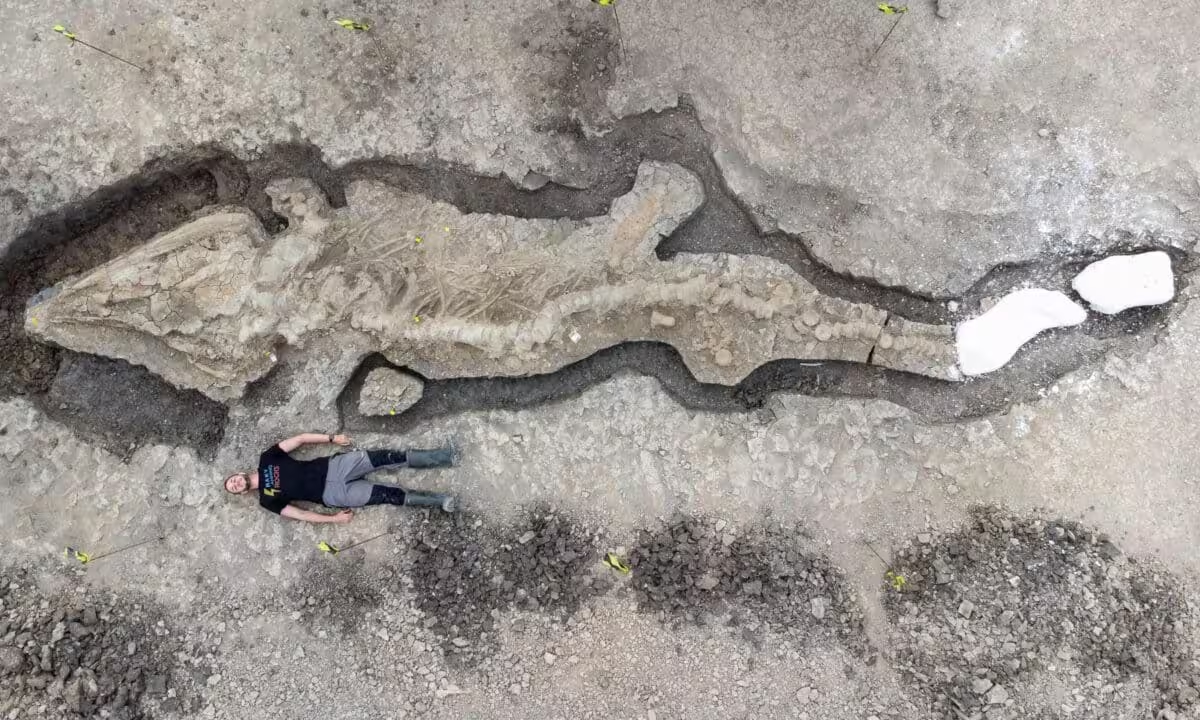
Evidence suggests ichthyosaurs were warm‑blooded predators capable of inhabiting both coastal shallows and open‑ocean environments. Stomach‑content fossils reveal a diet dominated by fish and cephalopods. While the largest known members, such as Temnodontosaurus, could exceed 12 metres, some species are estimated to have reached 25 metres, placing them among the most formidable marine hunters of their time.
Microfossil analysis of the surrounding clay, conducted by University of Birmingham researchers, dates the Rutland specimen to between 181.5 and 182 million years ago. This situates the animal in the Toarcian stage of the Early Jurassic, a period when a warm, shallow sea covered much of present‑day central England. Britain’s ichthyosaur record stretches back over two centuries, beginning with Mary Anning’s pioneering finds along the Jurassic Coast, yet none have approached the sheer scale of this recent discovery.
Excavation and Transport: From Mud to Lab
The initial exposure occurred as Davis’s team drained the lagoon for routine landscaping. He documented the exposed vertebrae and a possible jaw fragment before notifying specialists, who verified the remains as those of a giant ichthyosaur. A coordinated excavation took place in August and September 2021, involving Anglian Water, Rutland County Council, and the Leicestershire and Rutland Wildlife Trust.
The operation was led by Dr. Dean Lomax, a visiting scholar at the University of Manchester with a track record of naming five new ichthyosaur species. He was supported by palaeontological conservator Nigel Larkin and marine‑reptile expert Dr. Mark Evans, alongside collaborators from the Horniman Museum, Peterborough Museum, and the Open University. Together they carefully uncovered a nearly complete skeleton embedded in Jurassic clay.
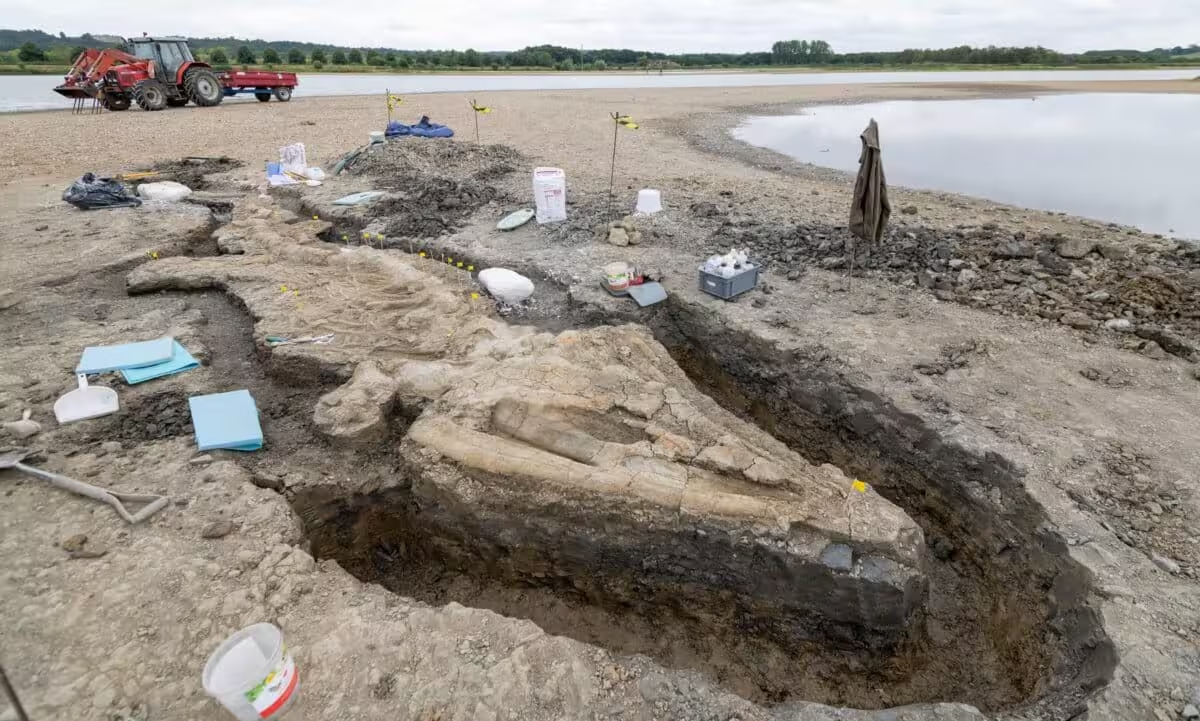
To extract the remains, the team encased the bones in wooden splints and plaster‑of‑Paris jackets, then lifted the fossil in sections. The two‑metre skull block, together with its surrounding matrix, tipped the scales at just under a tonne, while the torso added another one and a half tonnes. The complete assembly therefore exceeds two tonnes in weight.
These dimensions dwarf the two fragmentary ichthyosaurs recovered during the reservoir’s construction in the 1970s. After extraction, the specimen was shipped to a conservation facility where Nigel Larkin oversees ongoing preparation and stabilization work.
Why This Ichthyosaur Redefines Britain’s Fossil Record
According to the Natural History Museum, the Rutland find is the most complete skeleton of any large prehistoric reptile ever uncovered in the UK, surpassing even the most complete dinosaur specimens. Its combination of size and preservation places it in a unique category among Britain’s fossil vertebrates.
A follow‑up field survey in August 2022 recovered additional material, including ammonites, belemnites, nautiloids, and vertebrae from other ichthyosaurs. The team also identified the first remains of a thalattosuchian crocodylomorph at the site, informally dubbed the “Rutland Crocodile.” The excavation report published in ScienceDirect notes that microfossil evidence points to at least three distinct Jurassic ichthyosaur species preserved within the reserve’s sediments.
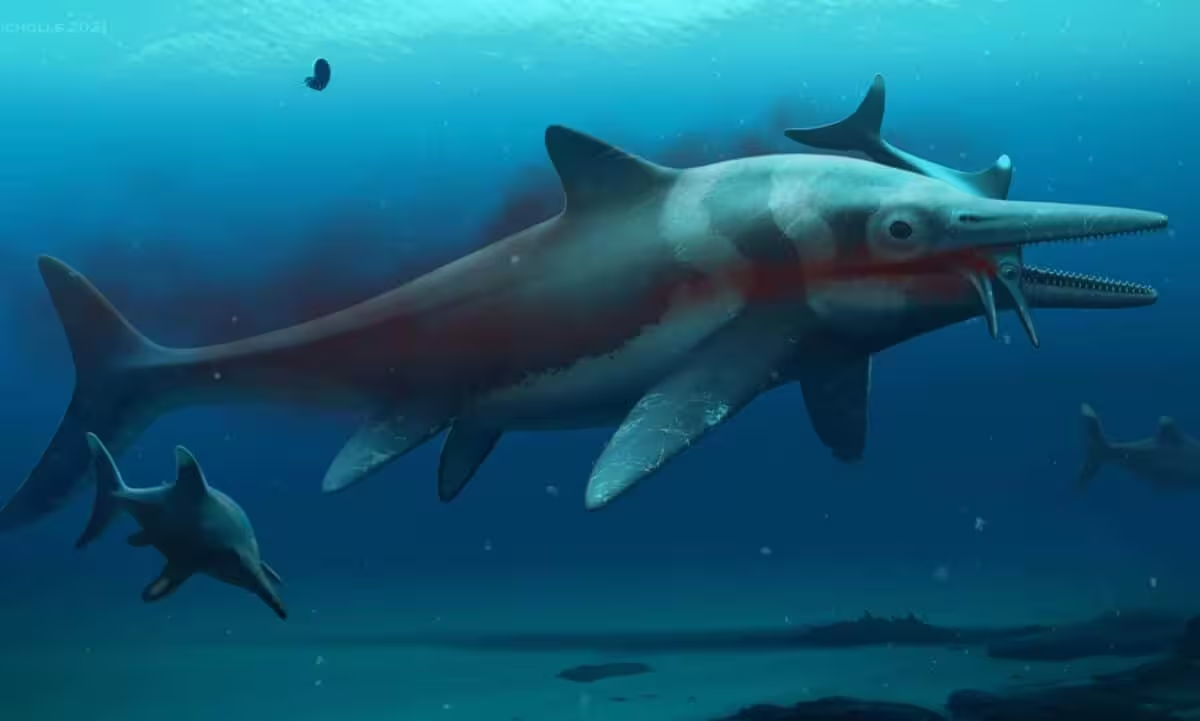
The concentration of marine fossils suggests Rutland Water overlies a biologically rich zone of the Early Jurassic, when a warm sea covered the region. Ongoing analyses of the associated invertebrate fauna aim to reconstruct the broader ecosystem that supported these apex predators. Biostratigraphic data narrow the ichthyosaur’s age to a roughly one‑million‑year window between 181.5 and 182.5 million years ago, placing it firmly in the latest early Toarcian.
The next stage of the project seeks funding for a 24‑ to 36‑month programme to remove the plaster jackets, complete preparation, and ultimately mount the skeleton for permanent exhibition. Anglian Water and its partners are pursuing heritage grants to ensure the fossil remains on display in Rutland, where it lay undisturbed for 180 million years before its discovery.
This article has been fact checked for accuracy, with information verified against reputable sources. Learn more about us and our editorial process.
Last reviewed on .
Article history
- Latest version
Reference(s)
- “Britain’s largest ‘Sea Dragon’ discovered in UK’s smallest county | Leicestershire and Rutland Wildlife Trust.”, January 10, 2022 <https://www.lrwt.org.uk/seadragon>.
- “Britain's largest ever ichthyosaur is discovered in Rutland Water | Natural History Museum.” <https://www.nhm.ac.uk/discover/news/2022/january/britains-largest-ever-ichthyosaur-is-discovered-rutland-water.html>.
- Larkin, Nigel R.., et al. “Excavating the ‘Rutland Sea Dragon’: The largest ichthyosaur skeleton ever found in the UK (Whitby Mudstone Formation, Toarcian, Lower Jurassic).” Proceedings of the Geologists' Association, vol. 134, no. 5-6, October 1, 2023, pp. 627-640. Elsevier BV, doi: 10.1016/j.pgeola.2023.09.003. <https://www.sciencedirect.com/science/article/pii/S0016787823000767>.
Cite this page:
- Posted by Linda Wilson