Tortoises Turn the Desert Green: How 500 Burrowing Giants Revived Sahel Soil
After a giant tortoise vanished from the Sahel, the return of 500 individuals sparked mysterious green scars across the desert floor.
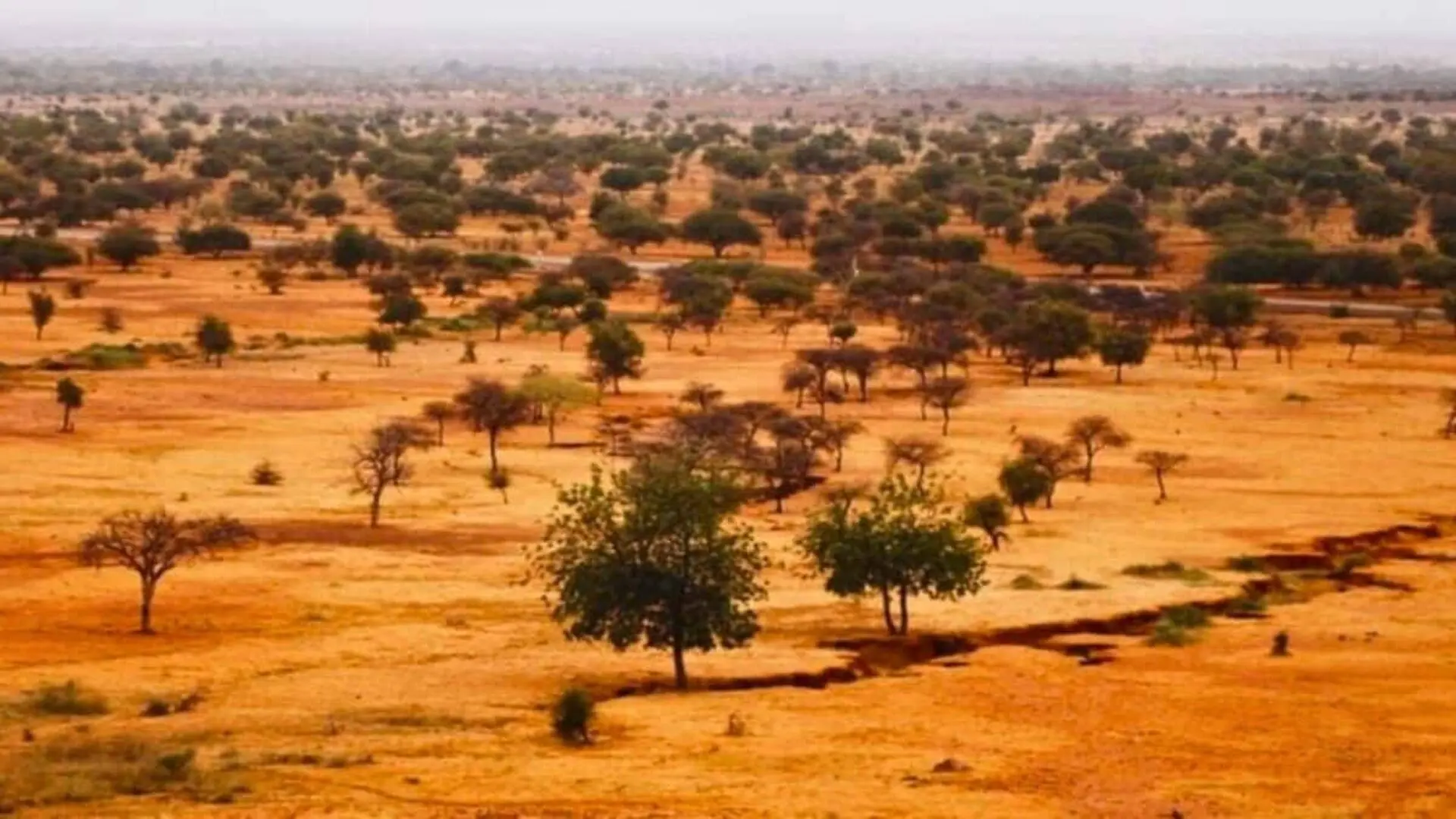
A recent field study in the Sahel shows that the return of a single native species may trigger a cascade of ecological benefits simply by breaking compacted soil. In 2021, conservationists released 500 African spurred tortoises along the Sahara’s southern fringe, and subsequent satellite monitoring revealed isolated green spots emerging where the animals had been active.
The greening was attributed to the tortoises’ digging rather than any planting effort. As the reptiles traversed the arid terrain, they fractured the hardened crust and excavated shallow depressions that retained moisture longer after rainfall, providing a more favorable environment for seed germination.
The species at the heart of the project, Centrochelys sulcata, possesses the physical strength needed to reshape the ground. According to a 2020 species assessment by the IUCN/SSC Tortoise and Freshwater Turtle Specialist Group, the African spurred tortoise is the largest continental tortoise, with adult males exceeding 100 kilograms, a mass that enables substantial soil disturbance.
Tortoise Burrows Help Water Penetrate Dry Soil
In many dryland ecosystems, the first obstacle to water infiltration is a compacted or crusted surface that forces rain to run off. Seeds that lie dormant in the soil or arrive on the wind need moisture, shade, and a looser substrate to sprout.
Project findings indicate that tortoise activity creates exactly those conditions. Their burrows and the paths they disturb loosen the topsoil, allowing rainwater to seep more readily. The resulting vegetation patches were modest—localized rather than expansive forest recovery—but clearly linked to the areas where the animals altered the ground.
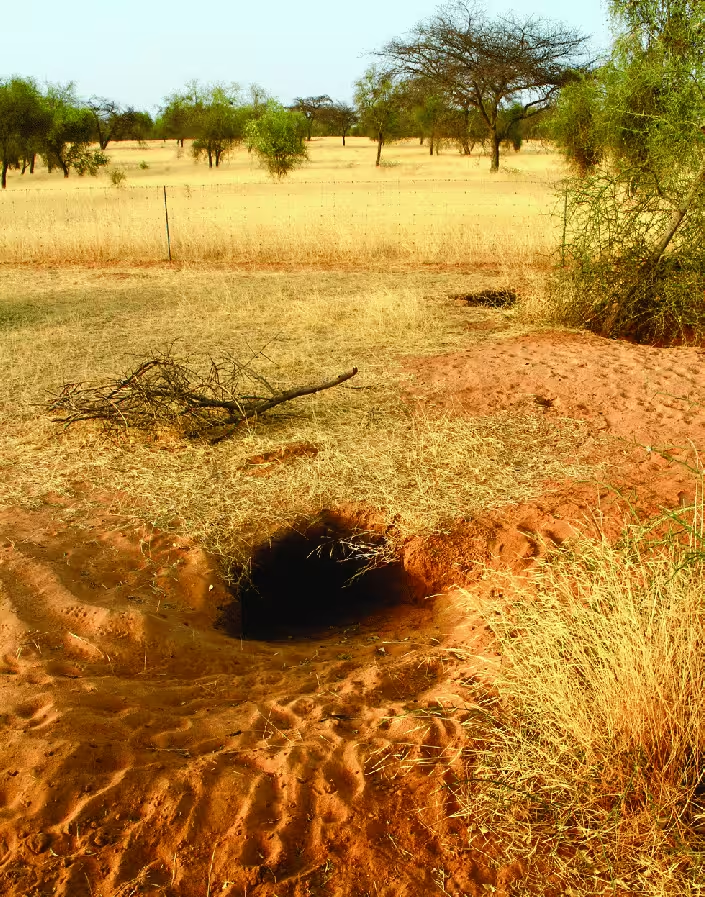
The IUCN account notes that these tortoises construct underground tunnels up to 15 meters deep to escape extreme heat and seasonal stress. While the primary function of the burrows is shelter, they also generate shaded, disturbed micro‑habitats that influence how water, seeds, and soil interact after a rain event.
How a Single Species Influences a Patchy Landscape
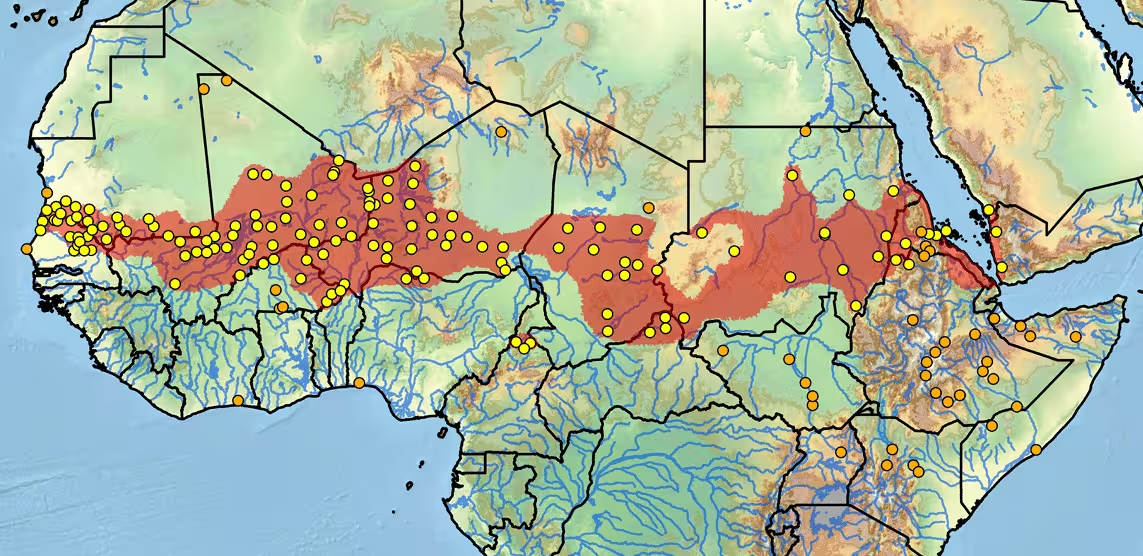
African spurred tortoises inhabit the Sahelian savannah, a region marked by fragmented dunes, hills, shrublands, and intermittent streams. Their presence is tied to environments shaped by high temperatures, brief wet periods, and irregular water availability.
In such settings, modest alterations can have outsized effects. An entrance to a burrow casts shade; loosened soil retains moisture differently than a sealed crust; a disturbed patch offers a foothold for seeds. The tortoise does not need to sow plants to influence vegetation recovery.
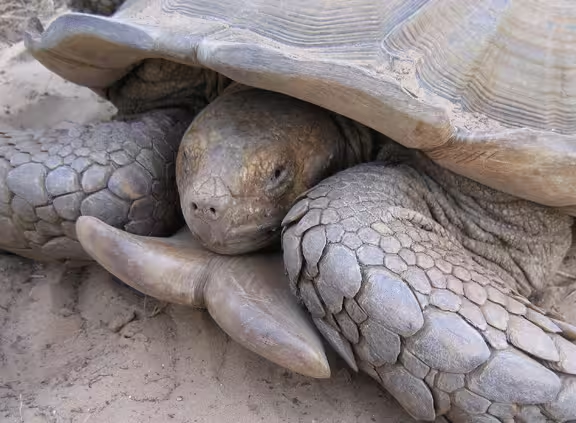
A 2017 review in Frontiers in Ecology and Evolution highlighted the tortoise’s roles in grazing, browsing, trampling, burrowing, and seed dispersal. These routine behaviors can gradually reshape habitat structure, especially where plant growth hinges on brief moisture windows.
Reintroduction Restores a Missing Ecological Function
Tortoise reintroduction programs are already underway in parts of West Africa. The IUCN documentation cites efforts in Senegal, including projects near North Ferlo and the Village des Tortues in Noflaye, and reports survival rates above 80 percent for radio‑tracked individuals over a four‑year period.
High survival is critical because the ecological impact of a single tortoise accumulates slowly. One burrow may affect a limited zone, but the combined activity of many individuals—moving, feeding, digging, and revisiting burrow networks—creates repeated disturbance across a broader landscape, linking conservation goals with dry‑land restoration.
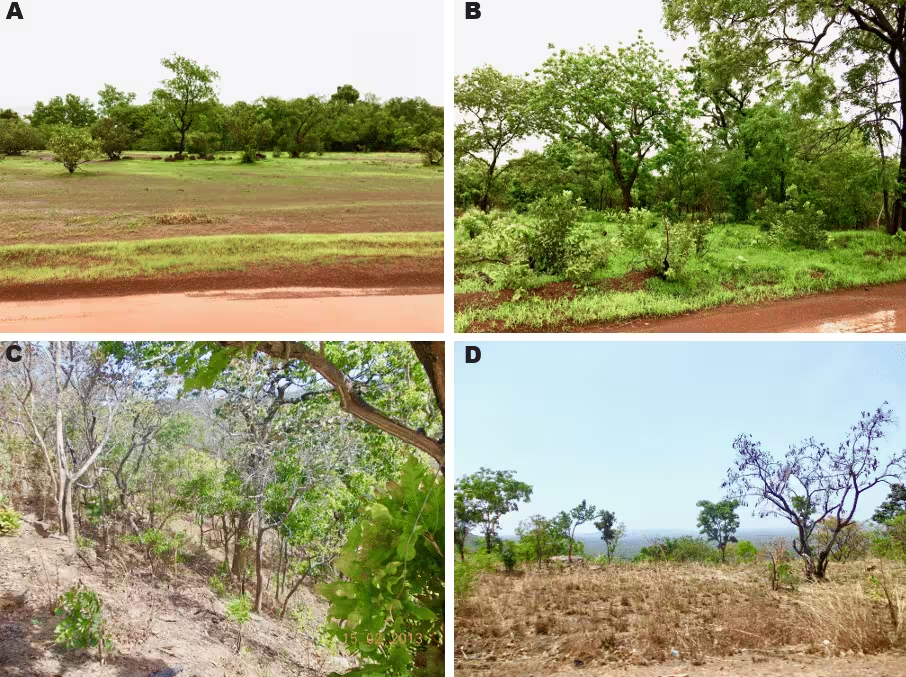
The same IUCN source warns that the species faces rapid declines due to habitat loss, exploitation for eggs and meat, the international pet trade, and climate change. While the 2020 IUCN Red List classifies it as Vulnerable, the Tortoise and Freshwater Turtle Specialist Group’s provisional assessment lists it as Endangered. Additional pressures stem from cattle grazing and seasonal fires that degrade suitable habitat.
Soil Disturbance as a Restoration Tool
The Sahel tortoise project underscores a recovery pathway that begins with soil structure rather than seed sowing or irrigation. When a large native animal breaks through a hard crust, it creates micro‑depressions that hold rainwater longer and reduce stress on germinating seeds.
Thus, the African spurred tortoise matters not only for its size or conservation status but also for its everyday actions that modify the ground beneath it. Those modifications may explain the emergence of vegetation in the disturbed patches observed after the reintroduction effort. In arid environments, successful regeneration often hinges on whether water can infiltrate the soil before it evaporates.
This article has been fact checked for accuracy, with information verified against reputable sources. Learn more about us and our editorial process.
Last reviewed on .
Article history
- Latest version
Reference(s)
- “Crm.5.110.sulcata.v1.2020.” <https://iucn-tftsg.org/wp-content/uploads/crm.5.110.sulcata.v1.2020.pdf>.
- Miranda, Everton. “The Plight of Reptiles as Ecological Actors in the Tropics.” Frontiers in Ecology and Evolution, vol. 5, December 15, 2017, pp. 309533 Frontiers, doi: 10.3389/fevo.2017.00159/full. <https://www.frontiersin.org/journals/ecology-and-evolution/articles/10.3389/fevo.2017.00159/full>.
Cite this page:
- Posted by Linda Wilson