JWST Finds Earliest Black Hole Star A Clue to Early Supermassive Black Holes
Newly found object 660 million years post‑Big Bang could explain the rapid growth of the universe’s earliest supermassive black holes.
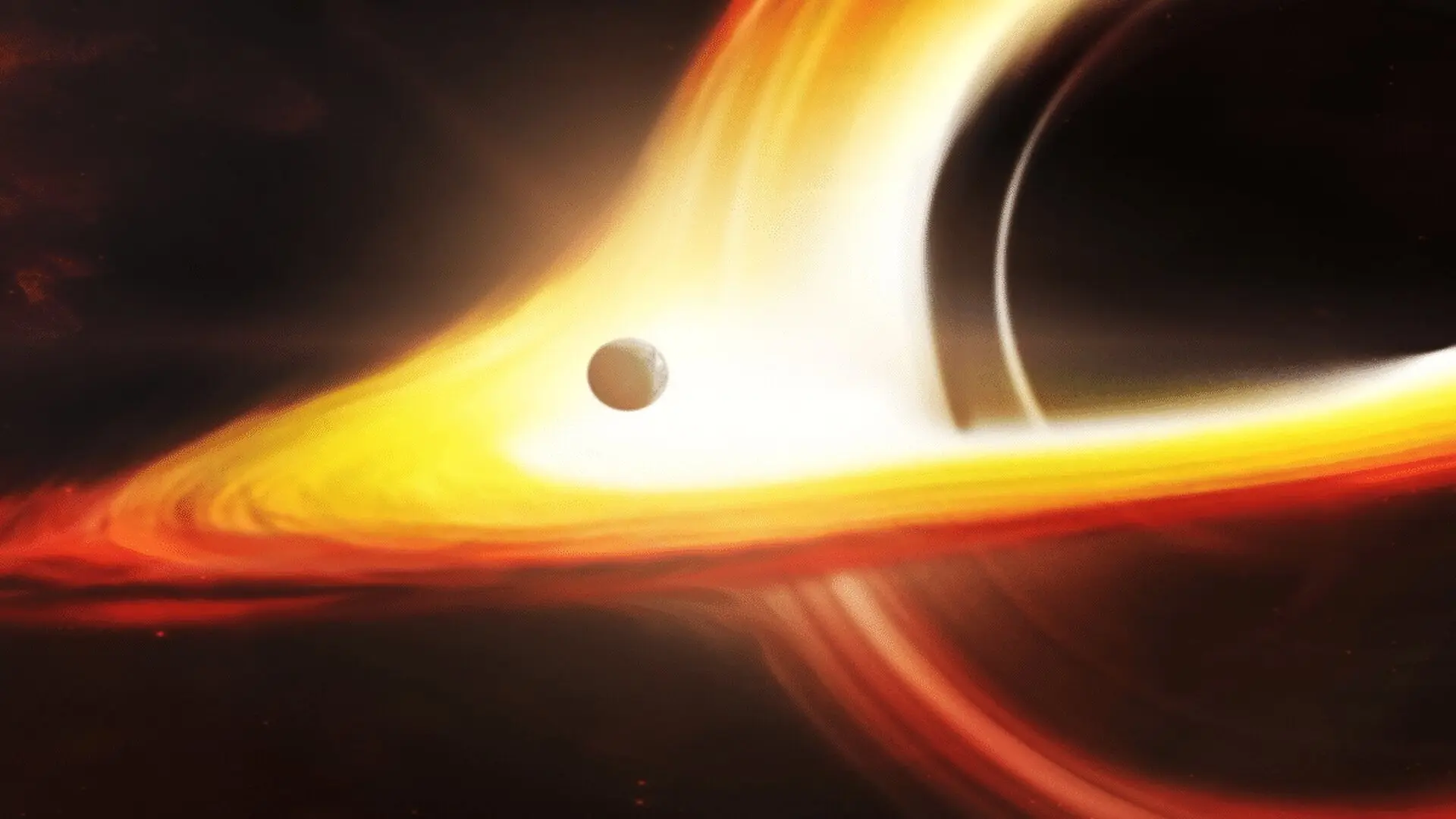
A team of astronomers has reported what may represent the earliest example of a “black‑hole star,” a compact system where a fast‑growing black hole is enveloped by an unusually dense, dust‑free gas shell. Detected at a time when the universe was only 660 million years old, the object offers a fresh perspective on the rapid emergence of massive black holes in the first billion years after the Big Bang. The findings, published in Nature, also hint at a link between this source and the enigmatic “little red dots” repeatedly uncovered by the James Webb Space Telescope.
A Primeval Black Hole Illuminated by JWST
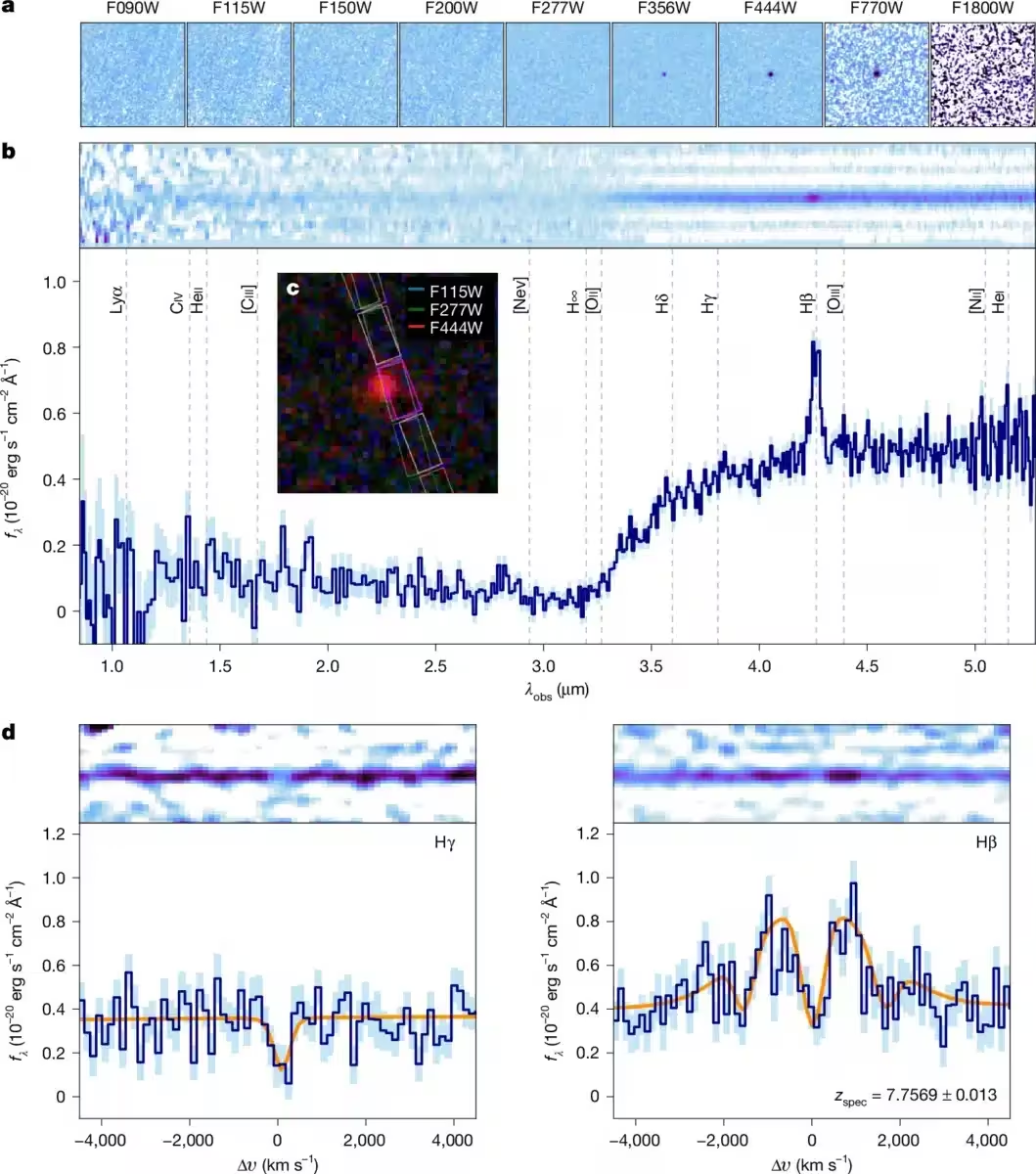
Designated MoM‑BH-1, the source emerged from the international Mirage (or Miracle) survey, which targets unconventional objects in early‑universe JWST fields. Light from the object has travelled roughly 13 billion years before reaching Earth, allowing researchers to probe an epoch when the cosmos was still forming its first massive structures.
Central to the interpretation is a black hole that is actively accreting material while being cloaked in a compact, dust‑free gaseous envelope. This configuration modifies the observed colors and spectral features, providing a relatively unobscured view of the central engine compared with typical observations that must separate black‑hole emission from that of a surrounding host galaxy.
The discovery tackles a long‑standing puzzle: quasars identified at very early cosmic times host black holes with masses of millions to billions of solar masses, despite the universe being less than a billion years old when their light was emitted. Conventional growth pathways struggle to account for such rapid mass accumulation.
“Until now, we have known very little about how these supermassive black holes formed. In addition, some quasars found in the early universe seemed far too massive to exist, which led astronomers to call them ‘problematic quasars,’” says Jorryt Matthee, assistant professor at the Institute of Science and Technology Austria.
While the single observation does not definitively resolve the origin of the first supermassive black holes, it provides a tangible example of an early black hole embedded in an environment that could sustain exceptionally fast accretion. Consequently, MoM‑BH-1 may serve as a natural laboratory for testing formation scenarios at cosmic dawn.
Spectral Signatures That Reveal the Nature of the Source
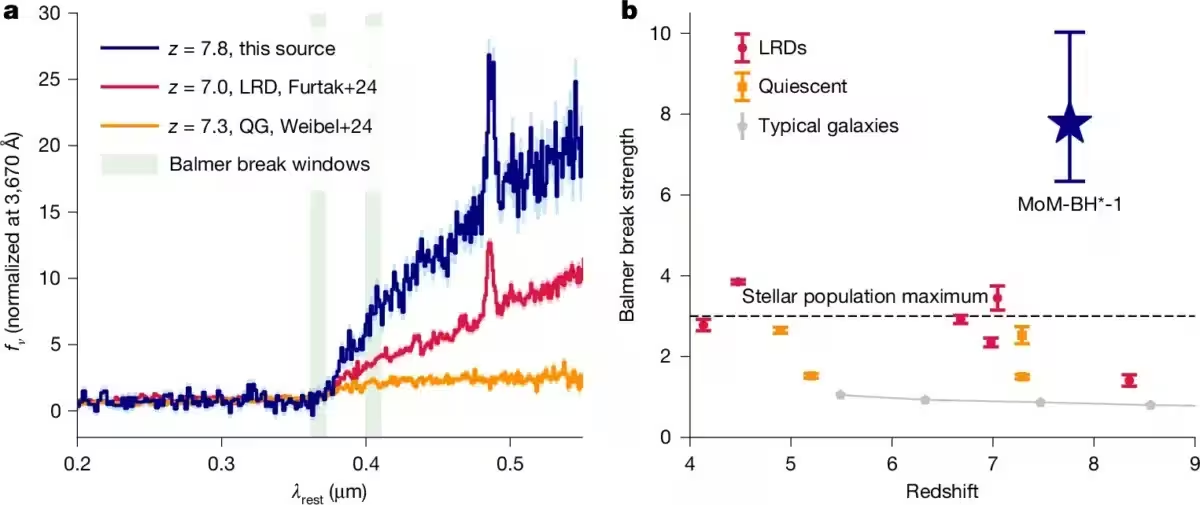
The most compelling evidence stems from the object’s spectrum, which displays traits of both an active black hole and a stellar population. A pronounced Balmer break—typically a hallmark of mature stars—appears far stronger than in ordinary star‑forming galaxies or in previously identified little red dots.
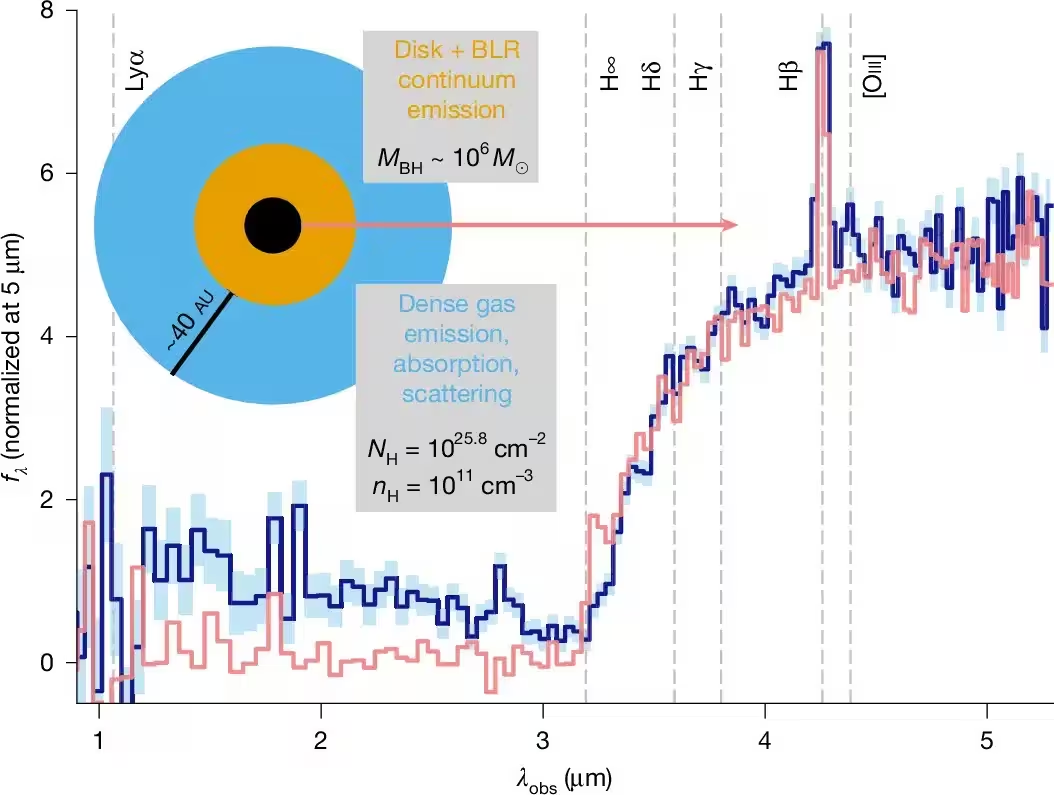
The coexistence of a powerful accretion signature with a stellar‑like Balmer jump underpins the researchers’ classification of the object as a “black‑hole star.” The terminology does not imply that the black hole itself is a star; rather, it denotes an early evolutionary stage in which a growing black hole resides within a compact, dense gas envelope that imparts a star‑like spectral appearance.
Modeling suggests the system resembles a scaled‑down version of a nascent supermassive black hole surrounded by turbulent gas. Under favorable conditions, theoretical work allows black holes to ingest matter at rates exceeding the classical Eddington limit—a regime known as super‑Eddington accretion. Such accelerated feeding could dramatically shorten the time required for a modest seed black hole to attain the masses observed in early quasars.
“Astronomers have never lacked imagination: since the discovery of quasars, there has been no dearth of theories to explain how these black holes grew so massive so fast,” says Rohan Naidu, assistant professor at the University of Hawai‘i’s Institute for Astronomy. “Something spectacular must have happened in the early universe. Now with JWST, we can directly observe this era and see for ourselves which scenarios actually occur.”
Thus, the spectrum delivers empirical evidence from the precise epoch when the first generation of massive black holes was taking shape, offering a benchmark for theoretical models.
Linking the New Object to the “Little Red Dots” Mystery
Since JWST began surveying the distant universe, astronomers have catalogued hundreds of compact, unusually red sources dubbed “little red dots.” Their nature has remained uncertain because emission from a potential active black hole can be blended with that of a surrounding galaxy.
In the case of MoM‑BH-1, the data indicate that the majority of the observed light originates from the central source itself, with only a modest contribution from a neighboring galaxy. This dominance simplifies the interpretation of the spectrum and reduces the ambiguity that hampers many little red dot analyses.
The red hue of the object does not appear to stem from heavy dust obscuration. Instead, the dense gas envelope scatters and absorbs radiation, shifting the emergent light toward longer wavelengths while still permitting detection of the underlying black‑hole emission.
The team explored a scenario in which a black‑hole star resides within a brighter galaxy. Simulations suggest that the two components could merge within roughly 100 million years. When the spectra of the two systems are combined, the resulting profile closely mimics the characteristic appearance of the little red dots.
This outcome offers a concrete physical mechanism for at least a subset of the red‑dot population: a central black‑hole star supplying the bulk of the emission, with additional light contributed by the host galaxy. While not every little red dot may share this origin, the model provides a testable framework for future JWST observations.
“The Mirage or Miracle survey was designed specifically to target sources considered ‘risky,’ meaning they could either be amazing discoveries or just interlopers, such as some cold nearby stars that look like distant galaxies. The survey also yielded the most distant galaxy ever confirmed, MoM‑z14,” Matthee explains.
Published in Nature, the study adds to a growing body of work aimed at deciphering both the nature of the little red dots and the formation pathways of the universe’s earliest massive black holes.
This article has been fact checked for accuracy, with information verified against reputable sources. Learn more about us and our editorial process.
Last reviewed on .
Article history
- Latest version
Cite this page:
- Posted by Aisha Ahmed