Pluto’s Atmosphere Shrinks 16% As It Drifts Away From The Sun, New Study Shows
New data shows Pluto’s atmosphere is shifting unexpectedly, sparking fresh investigations into the dwarf planet’s evolving climate.
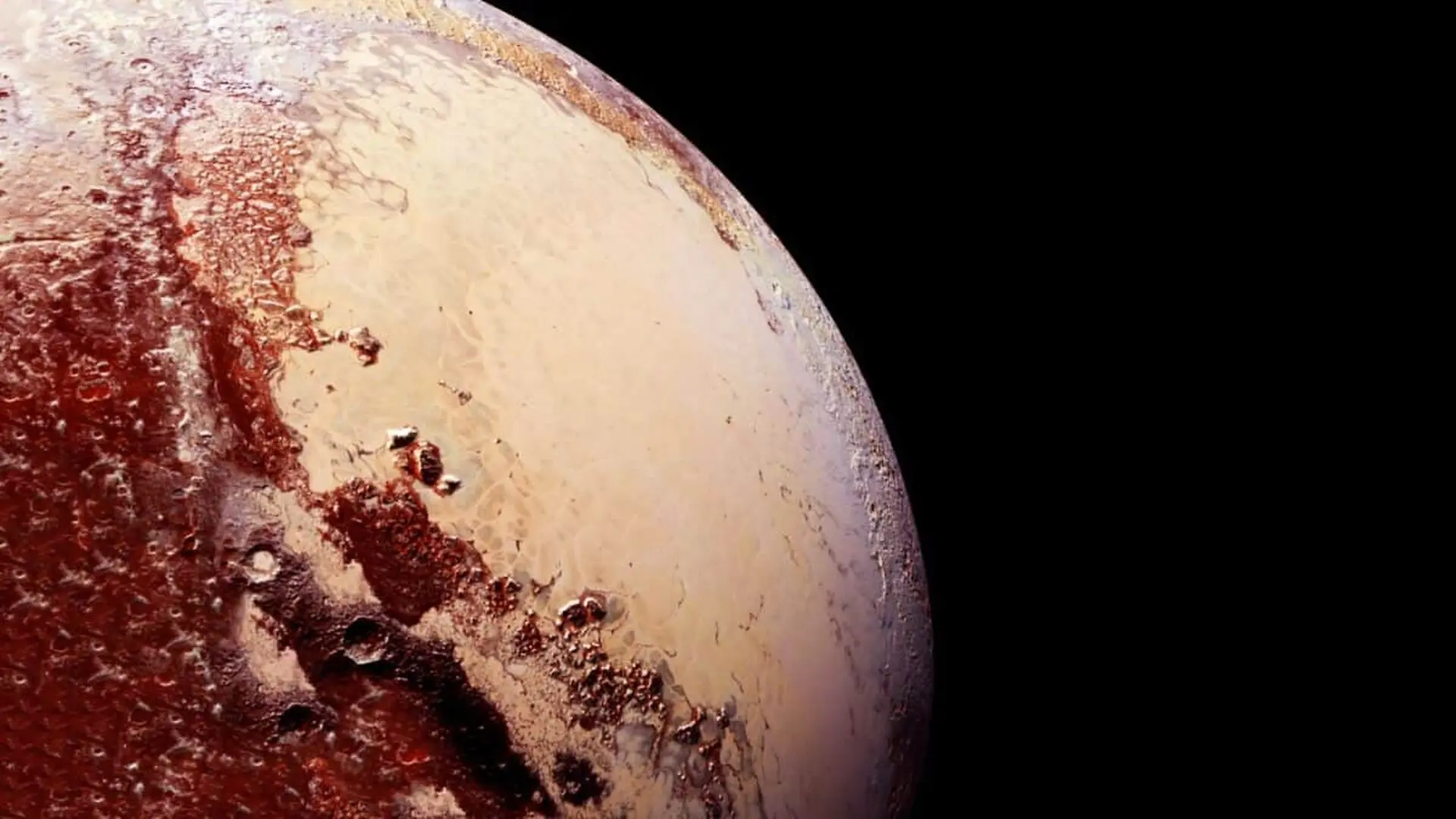
New observations suggest Pluto’s tenuous atmosphere is beginning to thin as the dwarf planet drifts farther from the Sun, with measurements indicating a roughly 16% drop in surface pressure between 2021 and 2023.
The result comes from a study led by Amanda Sickafoose of the Planetary Science Institute, who examined stellar occultation data collected from 2017 through 2023. The work, appearing in The Planetary Science Journal, follows up on the baseline set by NASA’s New Horizons flyby in 2015.
Pluto has been moving away from its perihelion—reached in 1989—and is now traversing the colder sector of its 248‑year orbit. Researchers are keen to see how the planet’s atmosphere, which is largely nitrogen, responds to the diminishing solar heat.
How Astronomers Probe Distant Worlds Using Starlight
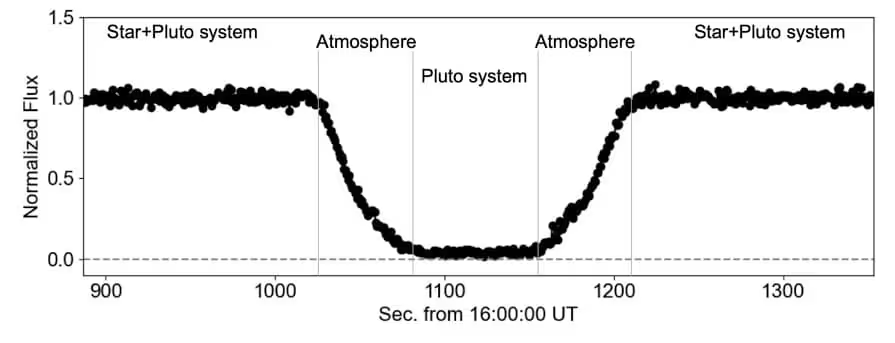
No spacecraft is currently positioned to study Pluto up close, and the dwarf planet’s faint glow makes direct imaging of its atmosphere impractical from Earth. Instead, scientists rely on stellar occultations: moments when Pluto passes in front of a distant star, briefly dimming the star’s light.
When starlight traverses Pluto’s gaseous envelope, it is refracted and scattered, producing a characteristic dimming and brightening pattern. By modeling this light curve, scientists can infer the density and pressure of the intervening atmosphere.
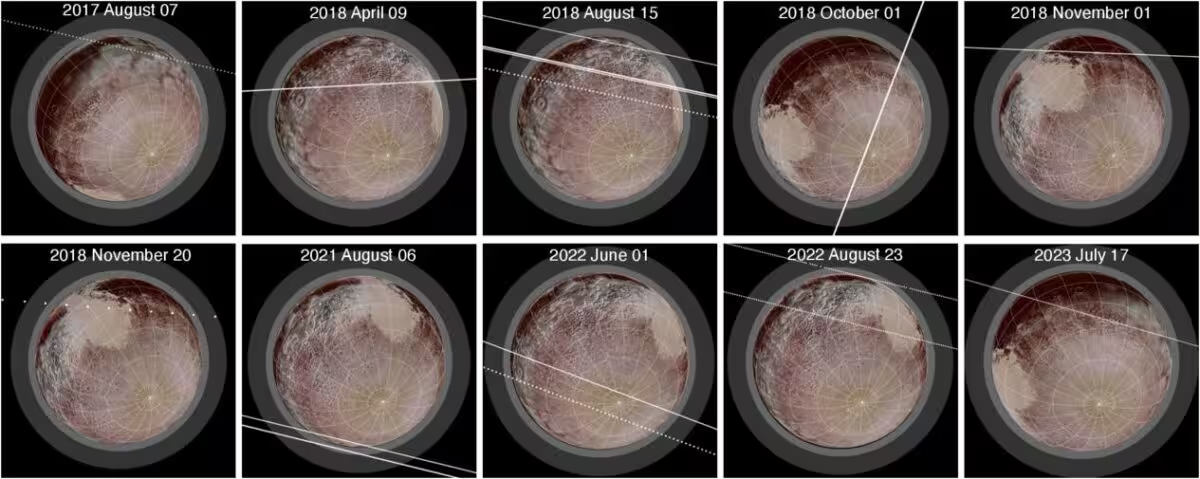
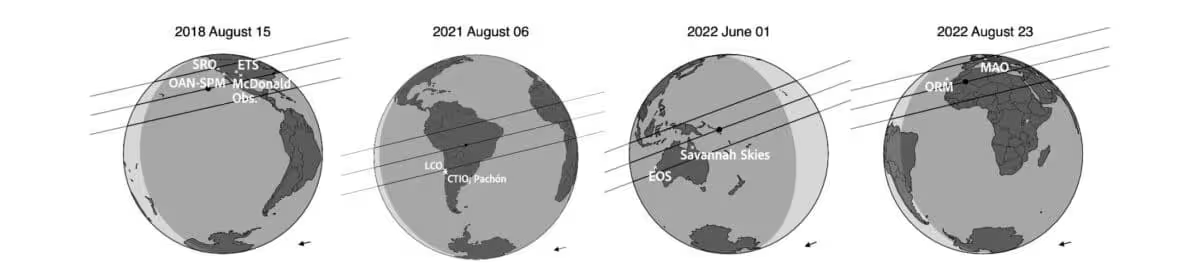
Sickafoose’s team analyzed ten occultation events over the six‑year span, four of which were captured from multiple ground stations, allowing cross‑validation of the pressure estimates.
Potential Fading of Pluto’s Haze Layers
Pluto’s atmosphere consists mainly of nitrogen, with trace amounts of methane and carbon monoxide. Photochemical reactions among these gases generate the hazy layers first visualized by New Horizons. The new models incorporate these hazes because they affect how starlight propagates through the atmosphere.
If the observed pressure decline persists, the haze layers are expected to become less dense and settle closer to the surface, altering the visual appearance of Pluto’s sky.
The study, linked here, emphasizes the tight coupling between surface ices and atmospheric gases, a relationship that complicates long‑term climate predictions for distant solar‑system bodies.
“I’m constantly amazed at how the simple technique of watching starlight dim and reappear allows us to study a thin atmosphere—a few millionths of Earth’s—on a world two-thirds the size of our moon and 30 times farther from the sun,” said Sickafoose.
Future Observations Will Clarify Long‑Term Trends
The pressure reduction marks a notable deviation from the relatively stable conditions recorded shortly after the 2015 flyby, but additional occultation data are needed to determine whether this is the onset of a sustained decline or a temporary fluctuation.
Sickafoose anticipates that continued monitoring over the next decades will either confirm the downward trajectory or reveal a rebound, offering deeper insight into how Pluto’s climate evolves as it proceeds through its orbit.
“We’re at a particularly interesting point for Pluto,” Sickafoose explained. “Our work suggests that the atmosphere has recently started decreasing in pressure. I am hopeful that we’ll be able to get more data in the coming years to decades to specifically confirm or refute this trend.”
This article has been fact checked for accuracy, with information verified against reputable sources. Learn more about us and our editorial process.
Last reviewed on .
Article history
- Latest version
Reference(s)
- Sickafoose, Amanda A.., et al. “Changes in Pluto’s Atmosphere Based on Stellar Occultation Data from 2017 to 2023.” The Planetary Science Journal, vol. 7, no. 7, July 31, 2026, pp. 180 American Astronomical Society, doi: 10.3847/PSJ/ae6cdd. <https://iopscience.iop.org/article/10.3847/PSJ/ae6cdd>.
Cite this page:
- Posted by Aisha Ahmed