Crescent Moon Meets Mars at Dawn: How to Spot the Rare August 9 Sky Pairing
Spot a slender crescent moon alongside a bright Mars before sunrise on Aug 9 – a stunning early‑morning view for skywatchers.
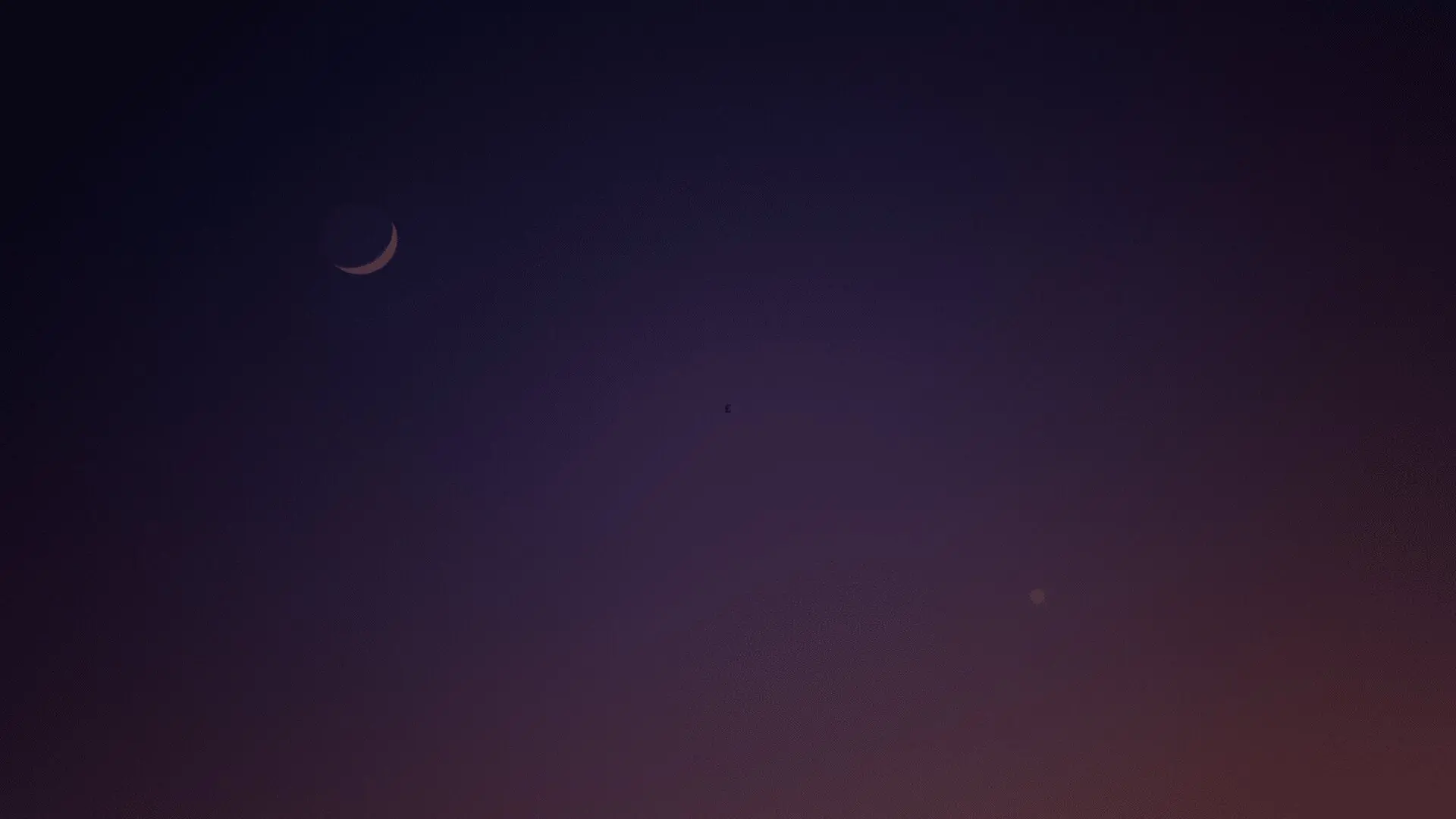
Before sunrise on August 9, a thin crescent Moon will rise just before the Sun and sit less than five degrees away from Mars in the eastern sky. The two bodies will share the backdrop of Taurus, letting anyone with a clear view spot the Red Planet beside Earth’s satellite without any special gear.
Early‑Morning Pairing of Moon and Mars
The Moon will be illuminated by about 17 percent and appear above the horizon around 2 a.m. for observers on the U.S. East Coast, roughly four hours before dawn. Mars will show up as a steady reddish speck positioned to the lower right of the crescent, a separation narrow enough that 10×50 binoculars can capture both objects in a single field of view.
Because the event occurs in the predawn hours, it does not require telescopes or cameras—just a dark, unobstructed eastern horizon and clear skies.
Earthshine Illuminates the Lunar Night Side
During the encounter, the thin crescent will also display earthshine, a faint glow caused by sunlight reflected off Earth onto the Moon’s dark portion. Binocular observers may notice a ghostly illumination outlining lunar plains that are otherwise hidden in shadow.
Earth’s clouds, oceans and land scatter enough light back toward the Moon to make this subtle effect visible, adding a delicate contrast to the brighter crescent and the reddish hue of Mars.
A Prelude to a Total Solar Eclipse
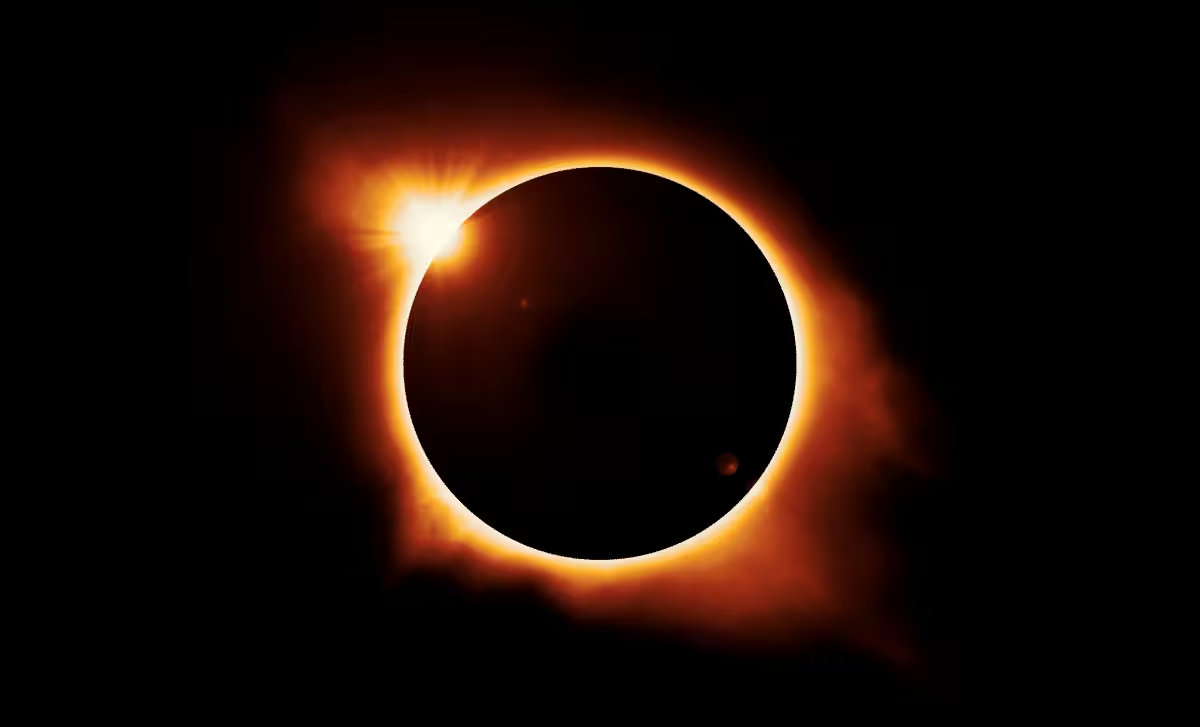
The August 9 display arrives just days before the Moon reaches new‑moon phase on August 12, when it will cross the Sun’s disk and produce a total solar eclipse visible from parts of Greenland, Iceland and Spain. The eclipse link was reported by Daily Galaxy.
Skywatchers can thus enjoy a final glimpse of the Moon’s illuminated crescent before it disappears behind the Sun, offering a natural buildup to the dramatic eclipse event.
How to Catch the Dawn Alignment
Find a spot with an open view toward the east, away from city lights that can wash out faint stars. The Moon’s brightness makes it easy to locate, and Mars appears as a small reddish dot nearby. Using a pair of binoculars will enhance detail on the lunar surface and bring Mars into sharper focus.
Begin observations well before sunrise; as the sky brightens, fainter background stars will fade, but the Moon and Mars remain visible until daylight fully takes over.
This simple, early‑morning event underscores how planetary motions and lunar phases continue to provide accessible, awe‑inspiring experiences for anyone who looks upward.
This article has been fact checked for accuracy, with information verified against reputable sources. Learn more about us and our editorial process.
Last reviewed on .
Article history
- Latest version
Cite this page:
- Posted by Aisha Ahmed