Miniature Light Sail Probes Could Reach a Nearby Star Within a Human Lifetime
A tiny light‑powered spacecraft could soon launch humanity’s first instruments toward another star system, opening a new era of interstellar exploration.
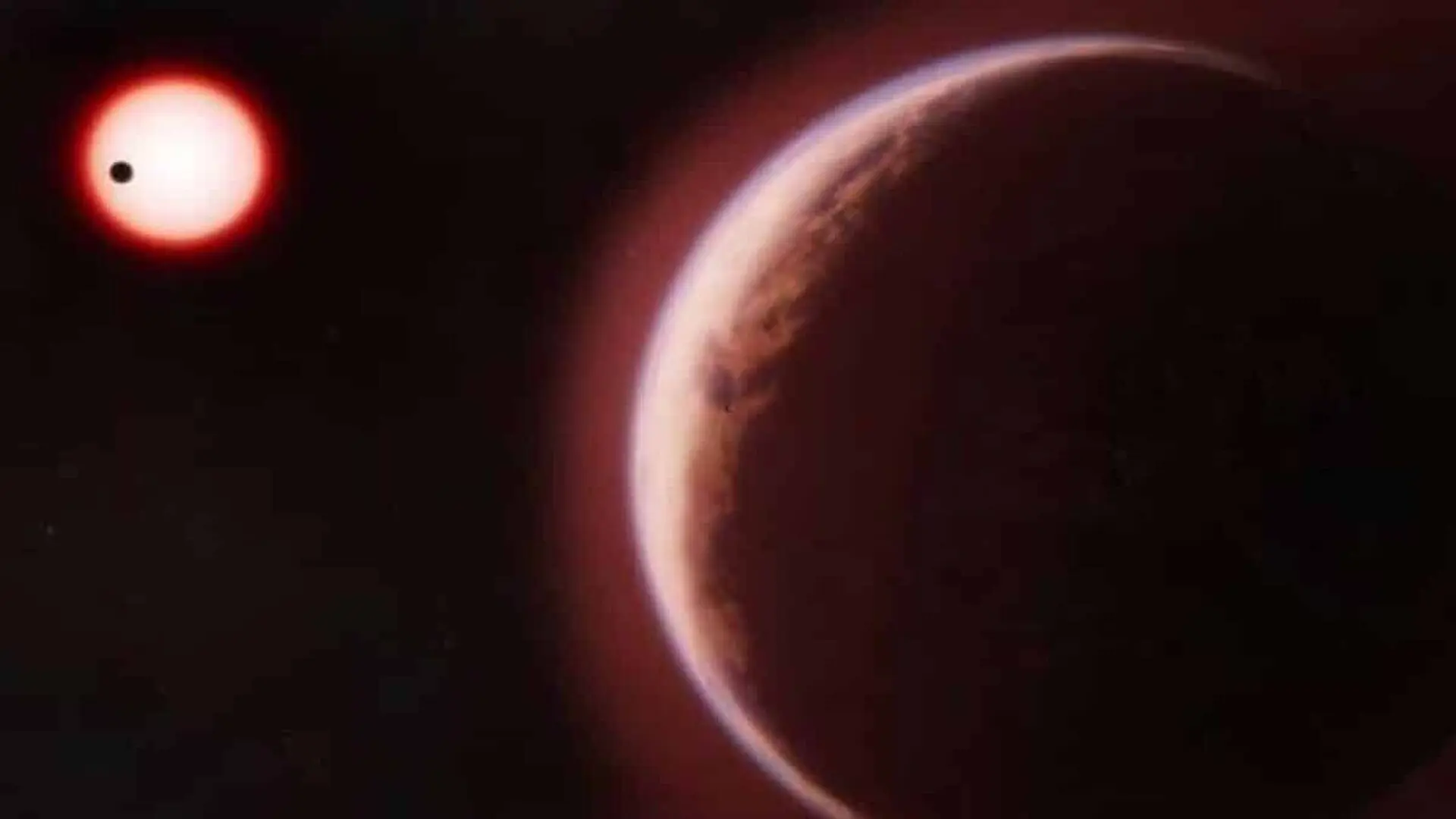
The recent detection of an atmosphere on the rocky world LHS 1140b has sparked renewed debate over a question once relegated to speculative fiction: might humanity ever dispatch a probe to another star? An analysis featured in The Conversation highlights how breakthroughs in ultra‑compact sensors, artificial intelligence, and photon‑based thrust are moving the concept of interstellar travel from imagination toward scientific feasibility.
Located roughly 48 light‑years from our planet, LHS 1140b circles a red dwarf within the star’s temperate zone, where conditions could permit liquid water on its surface. Although contemporary launch systems cannot yet bridge such a gulf, researchers are exploring concepts that could dispatch diminutive robotic explorers across interstellar distances within a human lifetime.
Why In‑Situ Exploration Is the Next Frontier
Astronomers have become adept at probing exoplanetary atmospheres from afar, yet many planetary characteristics remain beyond the reach of remote spectroscopy. A probe that penetrates a distant system could perform close‑range measurements, capture direct imagery of planets, and relay data back to Earth, filling gaps that telescopic observations leave open.
From Smart Dust to Interstellar Scouts
Rapid advances in electronics have yielded sensors that occupy volumes comparable to a grain of sand while delivering performance once reserved for laboratory‑size instruments. Modern smartphones illustrate how cameras, processors, and communication modules can be miniaturized without sacrificing capability. Building on this trend, scientists have designed “smart dust” platforms—tiny devices capable of monitoring temperature, light, and chemical signatures—that could serve as the core of future interstellar probes.
Instead of launching a traditional spacecraft laden with fuel, an interstellar mission might deploy a feather‑light probe equipped only with essential instrumentation. The objective would not be to enter orbit around a distant planet but to fly through a remote system, gather a snapshot of its environment, and beam the findings across the interstellar void.
Reaching Stellar Neighbors at a Fraction of Light Speed
To arrive at a nearby star within decades rather than centuries, a probe would need to cruise at roughly 10 %–20 % of light speed. One promising avenue involves a light sail—a ultra‑thin, reflective membrane that can be accelerated by a focused beam of photons. Though the pressure exerted by individual photons is minuscule, a coordinated array of high‑power lasers could impart sufficient momentum to propel an ultralight vehicle to the required velocity.
This approach offloads the bulk of the propulsion system to a ground‑based laser infrastructure, allowing the spacecraft itself to remain exceptionally small. The concept is a centerpiece of the privately funded Breakthrough Starshot initiative, which is evaluating the engineering, communication, and navigation challenges associated with kilometer‑scale laser arrays and gram‑scale probes.
A key limitation of the sail‑driven strategy is that a probe traveling at such speeds would most likely execute a rapid flyby of its target system, affording only a brief window to collect data before continuing into interstellar space.
Solar Sails Demonstrate Near‑Term Propulsion
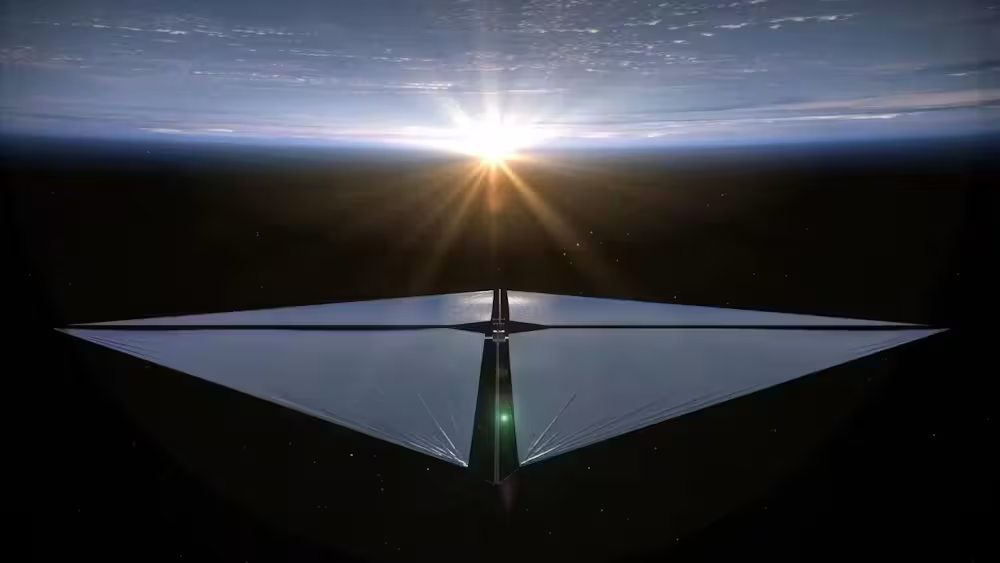
While laser‑driven sails remain a long‑range prospect, the related technology of solar sailing is already being validated in Earth orbit. Solar sails harness the continuous pressure of sunlight, eliminating the need for onboard propellant. An analysis published by The Conversation argues that this method could serve as an intermediate step toward full‑scale interstellar probes.
A series of small‑scale solar‑sail missions have already demonstrated how lightweight, reflective membranes behave under solar radiation. By exploiting the gentle but persistent thrust generated by photons, these spacecraft can maintain prolonged trajectories without expending fuel, opening pathways to missions that would be impractical with conventional propulsion.
Bridging Solar System Exploration and Interstellar Ambitions
The convergence of solar‑sail testing, laser‑driven sail concepts, and ultra‑miniaturized electronics creates a plausible roadmap from present‑day solar system missions to future voyages beyond the Sun’s gravitational domain. Small, autonomous probes could become the first objects to venture toward another star.
The enthusiasm surrounding LHS 1140b underscores why such technologies matter: identifying a potentially habitable world is only the opening act; reaching it will demand decades of coordinated engineering, international collaboration, and sustained investment.
Autonomy Required for Deep‑Space Voyagers
Because communication delays across interstellar distances render real‑time control impossible, forthcoming probes must rely on sophisticated onboard AI to make navigation and scientific decisions independently. A self‑sufficient probe equipped with intelligent sensors could spend many decades traversing the void before executing a brief observational pass through a distant planetary system.
Data returned from such a flyby would offer unprecedented insight into the composition, atmosphere, and potential habitability of worlds that are currently only observable from afar.
At present, interstellar travel remains a long‑range objective rather than an imminent mission profile. Nonetheless, the synergy of miniature spacecraft, powerful laser arrays, and solar‑sail propulsion suggests that humanity’s first steps toward another star may be taken by devices far smaller than any spacecraft ever launched.
This article has been fact checked for accuracy, with information verified against reputable sources. Learn more about us and our editorial process.
Last reviewed on .
Article history
- Latest version
Reference(s)
- McInnes, Colin. “We might soon have the technology to reach other star systems.”, August 6, 2026 The Conversation, doi: 10.64628/AB.rw4vqjgjm. <https://theconversation.com/we-might-soon-have-the-technology-to-reach-other-star-systems-288331>.
Cite this page:
- Posted by Aisha Ahmed