Astronomers Spot First Confirmed Exomoon Orbiting a Brown Dwarf in a Weird Triple System
Astronomers may have discovered a mysterious exomoon that defies known satellite behavior, marking a potential breakthrough after decades of searching.
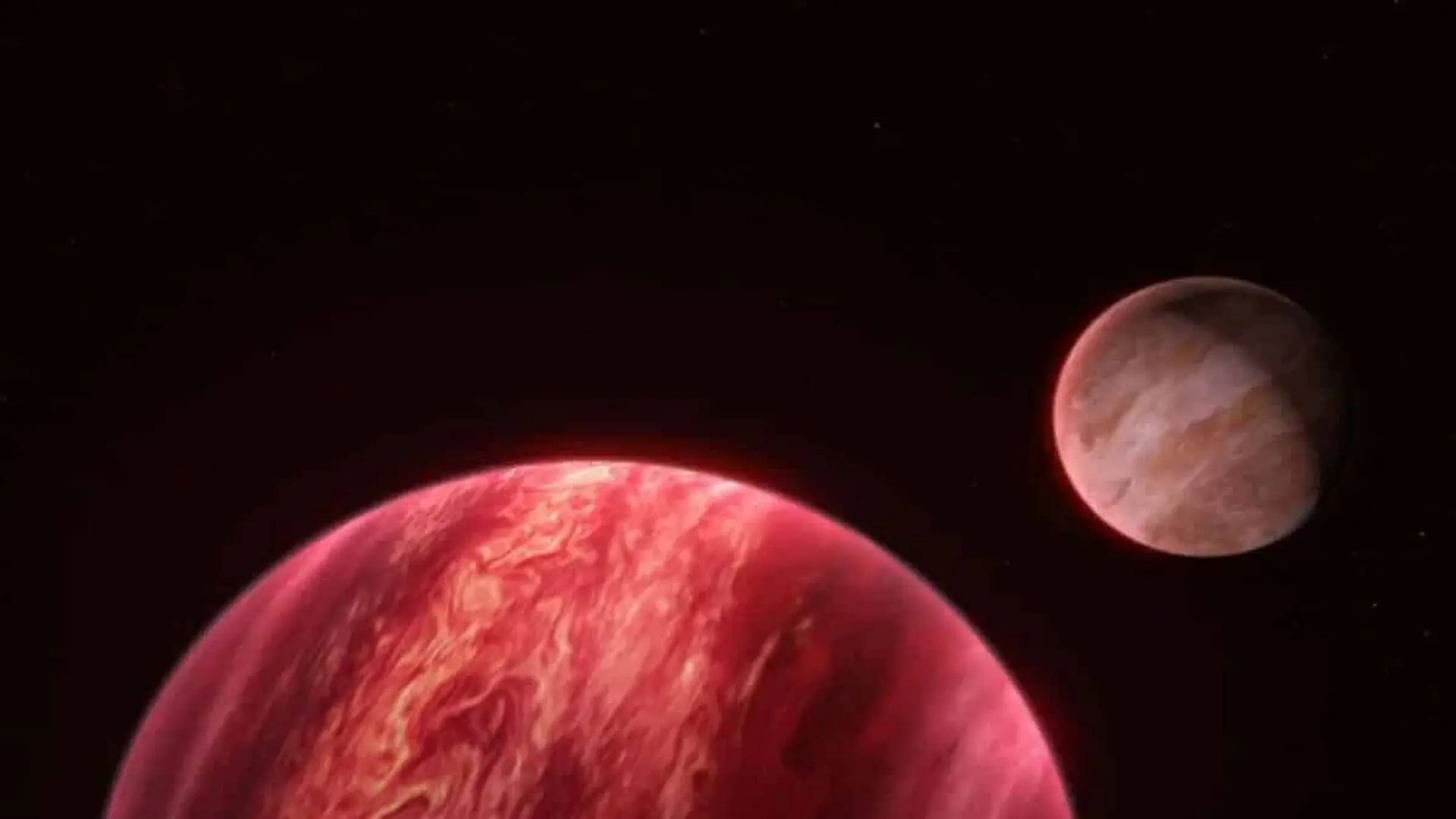
Astronomers have identified a massive object, comparable to Jupiter, that appears to circle a brown dwarf within the CD‑35 2722 system – a configuration that could represent the first confirmed exosatellite outside our Solar System.
The detection relied on data collected with the European Southern Observatory’s Very Large Telescope. By tracing the subtle gravitational tug on the brown dwarf, the team uncovered a companion that does not fit the classic planet‑moon hierarchy.
CD‑35 2722 hosts a star roughly half the Sun’s mass. A brown dwarf, an intermediate body too light for sustained hydrogen fusion yet far heavier than typical planets, orbits this star, and the newly spotted companion appears to revolve around the brown dwarf itself.
The findings were published in Nature and led by ESO graduate researcher Kevin Hoy of Universidad Diego Portales and the Millennium Nucleus of Young Exoplanets and their Moons (YEMS). Hoy described the architecture as “super weird,” noting its departure from familiar Solar System patterns.
A Giant Companion Defies Conventional Moon Labels
The candidate exosatellite weighs at least as much as Jupiter, while its brown‑dwarf host exceeds thirty Jupiter masses. Such extreme proportions blur the line between what astronomers traditionally call a planet and a satellite.
Kevin Hoy explained that the object’s mass would qualify it as a planet, yet its orbit around a brown dwarf rather than directly around a star raises classification challenges. He likens it to a moon‑like companion, even though it bears little resemblance to any moon observed in our own system.
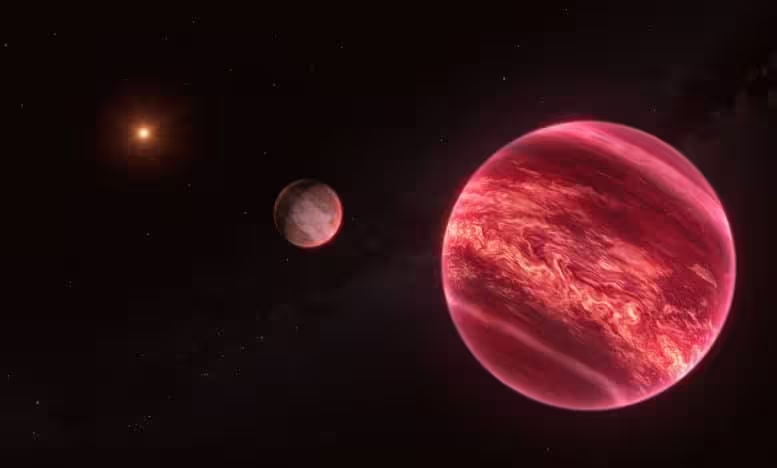
The authors propose the term “exosatellite” to denote a natural satellite residing outside the confines of our Solar System, emphasizing how distant planetary systems can host arrangements that defy traditional categories.
Alice Zurlo, director of YEMS and astrophysicist at Universidad Diego Portales, described the object as a massive gaseous body bound to an unusually heavy companion. She remarked:
“In the Solar System we have a clear separation between planets and the Sun, making moon definitions straightforward. In CD‑35 2722, where the boundaries between stars, planets and moons blur, describing the system becomes far more complex.”
Brown Dwarf’s Tiny Wobble Reveals a Hidden Companion
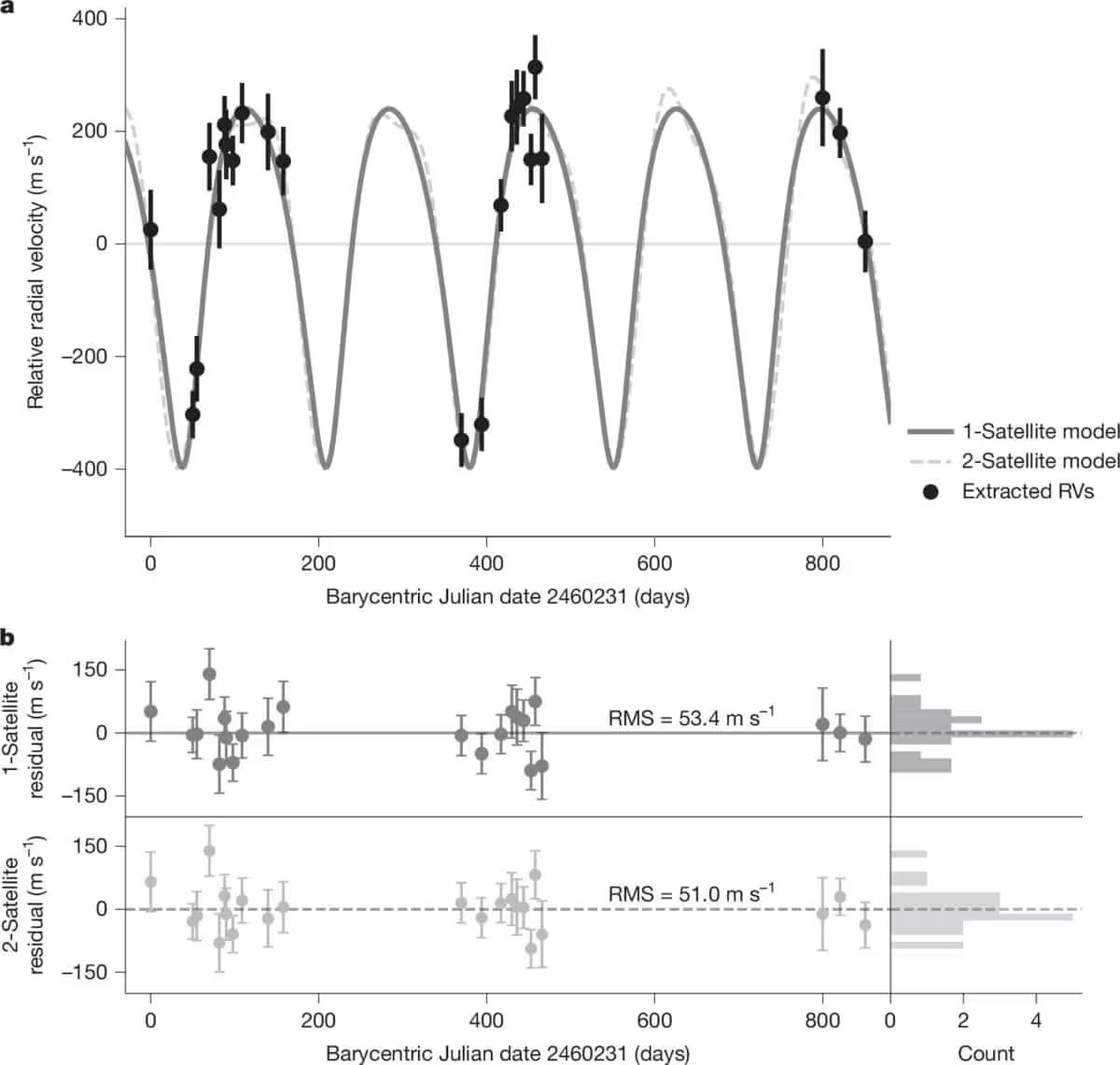
The research team detected the companion by analyzing minute shifts in the brown dwarf’s motion using the CRIRES+ spectrograph on ESO’s Very Large Telescope. The radial‑velocity technique, which measures Doppler‑induced stellar wobble, enabled the identification of the unseen object.
Historically, this method has uncovered many of the first exoplanets around Sun‑like stars. In the CD‑35 2722 case, the team observed a consistent, low‑amplitude wobble that they attribute to the gravitational influence of the massive satellite.
The Nature paper emphasizes that this signal adds to a growing, yet still sparse, inventory of exomoon candidates. To date, more than 6,000 exoplanets have been catalogued, but only a handful of moon‑like objects have been suggested, none with definitive confirmation.
An earlier investigation of the HD 206893 system by Quentin Kral employed the ESO Very Large Telescope Interferometer and hinted at a similar satellite, though the evidence fell short of a conclusive detection.
Next‑Generation Telescopes Promise Deeper Moon Searches
Confirming a satellite beyond our Solar System would shed light on formation pathways and evolutionary histories in environments starkly different from Earth’s neighborhood. The authors argue that CD‑35 2722 exemplifies the difficulty of applying familiar labels when planets, brown dwarfs, and moons intermingle.
The forthcoming Extremely Large Telescope (ELT) – a 39‑meter aperture instrument under construction by ESO – is expected to boost sensitivity to smaller exomoons around distant bodies, broadening the scope of satellite studies and probing whether moons can thrive in a variety of stellar settings.
This article has been fact checked for accuracy, with information verified against reputable sources. Learn more about us and our editorial process.
Last reviewed on .
Article history
- Latest version
Reference(s)
- “Kevin Hoy – IEA.” <https://astronomia.udp.cl/en/researcher/kevin-hoy/>.
- “Alice Zurlo – IEA.” <https://astronomia.udp.cl/en/researcher/alice-zurlo/>.
- Hoy, Kevin. “Planetary-mass exosatellite detected around the substellar companion of a star - Nature.”, vol. 655, no. 8124, pp. 865-869. Nature, doi: 10.1038/s41586-026-10751-w. <https://www.nature.com/articles/s41586-026-10751-w>.
Cite this page:
- Posted by Aisha Ahmed