Archaeologists Discover What Could Be the World’s Oldest Anchor Off the Coast of Norway
Researchers exploring an ancient Norwegian quarry may have discovered the world’s oldest anchor, but one final piece of evidence is needed for certainty.
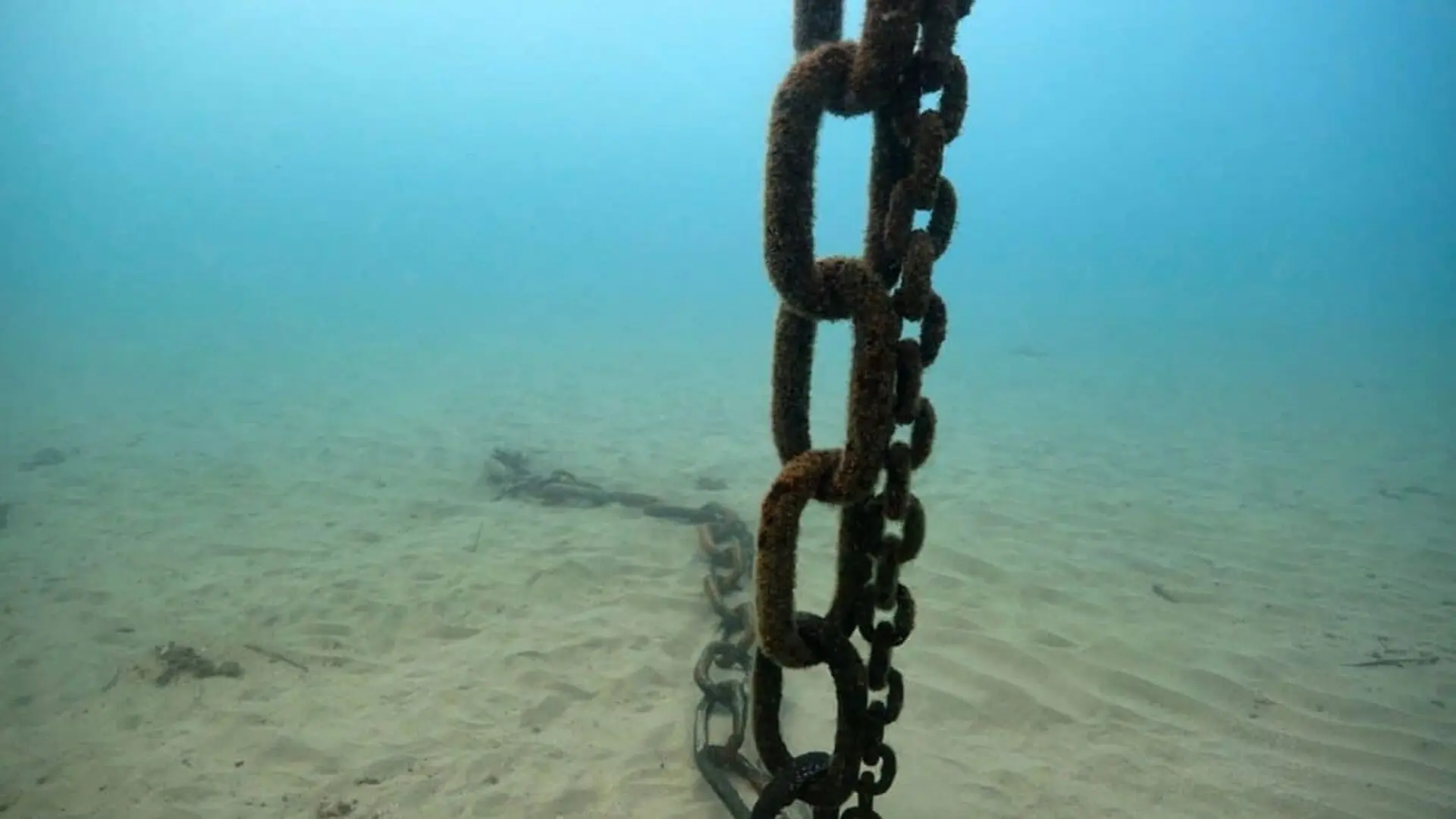
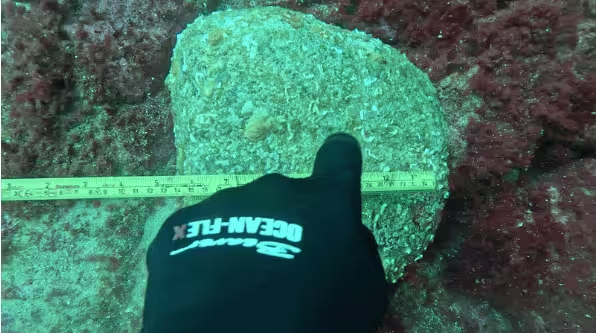
Archaeologists working off the Norwegian coast have recovered a 66-pound, deliberately shaped stone that may rewrite maritime history. Discovered 65 feet underwater at the site of a prehistoric greenstone quarry, the artifact features a distinct groove running its circumference, leading experts to suggest it functioned as a functional ship anchor—a find that could predate the current Bronze Age record-holders by thousands of years.
The discovery occurred at Hespriholmen, an uninhabited rocky islet that served as a critical resource hub for Stone Age societies between 5,000 and 9,000 years ago. While the site has been known to researchers since 1923 for its significant output of greenstone, which was fashioned into ceremonial axes, the 2015 underwater survey revealed this unique, balanced stone sitting within a waste heap of mining debris.

Challenging Historical Assumptions
The existence of an anchor from this era is theoretically unexpected. Traditional archaeological understanding holds that Stone Age vessels were small, rudimentary craft typically beached upon arrival rather than moored offshore. However, the treacherous waters surrounding Hespriholmen provide a logical explanation for this innovation. Archaeologist Arild Skjaeveland Vivas of the Stavanger Maritime Museum noted that the site was accessible only during exceptionally calm weather, suggesting the anchor was essential for stabilizing boats while workers extracted massive quantities of stone from the sea floor.
Leif Inge Astveit of the University Museum of Bergen expressed strong confidence in the classification of the object. He noted that while a grooved stone might be ambiguous in other contexts, its discovery within the specific debris field of a prehistoric quarry makes its purpose as a stabilizer highly probable. Researchers estimate that the site yielded as much as 15,000 cubic feet of greenstone—a massive extraction effort that would have required sophisticated logistical support.
Verification and Future Analysis
While the team remains optimistic, the discovery is currently undergoing rigorous academic scrutiny. Vivas emphasized that the findings must undergo formal peer review before the claim of being the world’s oldest anchor is officially solidified. Independent experts, including Hein Bierck, professor emeritus at the NTNU University Museum, have weighed in, describing the find as highly unusual and compelling based on its specific stratigraphic location.
Questions regarding the type of vessel that carried the anchor remain open. Because hollowed-log boats, common in Denmark during the Stone Age, are not documented in this region and would have been ill-suited for the Hespriholmen environment, researchers suspect the use of rafts or skin-covered boats, similar to those utilized by northern indigenous cultures.

This article has been fact checked for accuracy, with information verified against reputable sources. Learn more about us and our editorial process.
Last reviewed on .
Article history
- Latest version
Reference(s)
- “Vivås, Arild Skjæveland.” <https://digitaltmuseum.org/0210311616989/vivas-arild-skjaeveland>.
Cite this page:
- Posted by Vikram Desai