Scientists Reconstructed the Sounds of Insects That Sang 165 Million Years Ago
Scientists have reconstructed the prehistoric songs of Jurassic insects, revealing a mysterious soundscape preserved in ancient fossilized wings for eons.
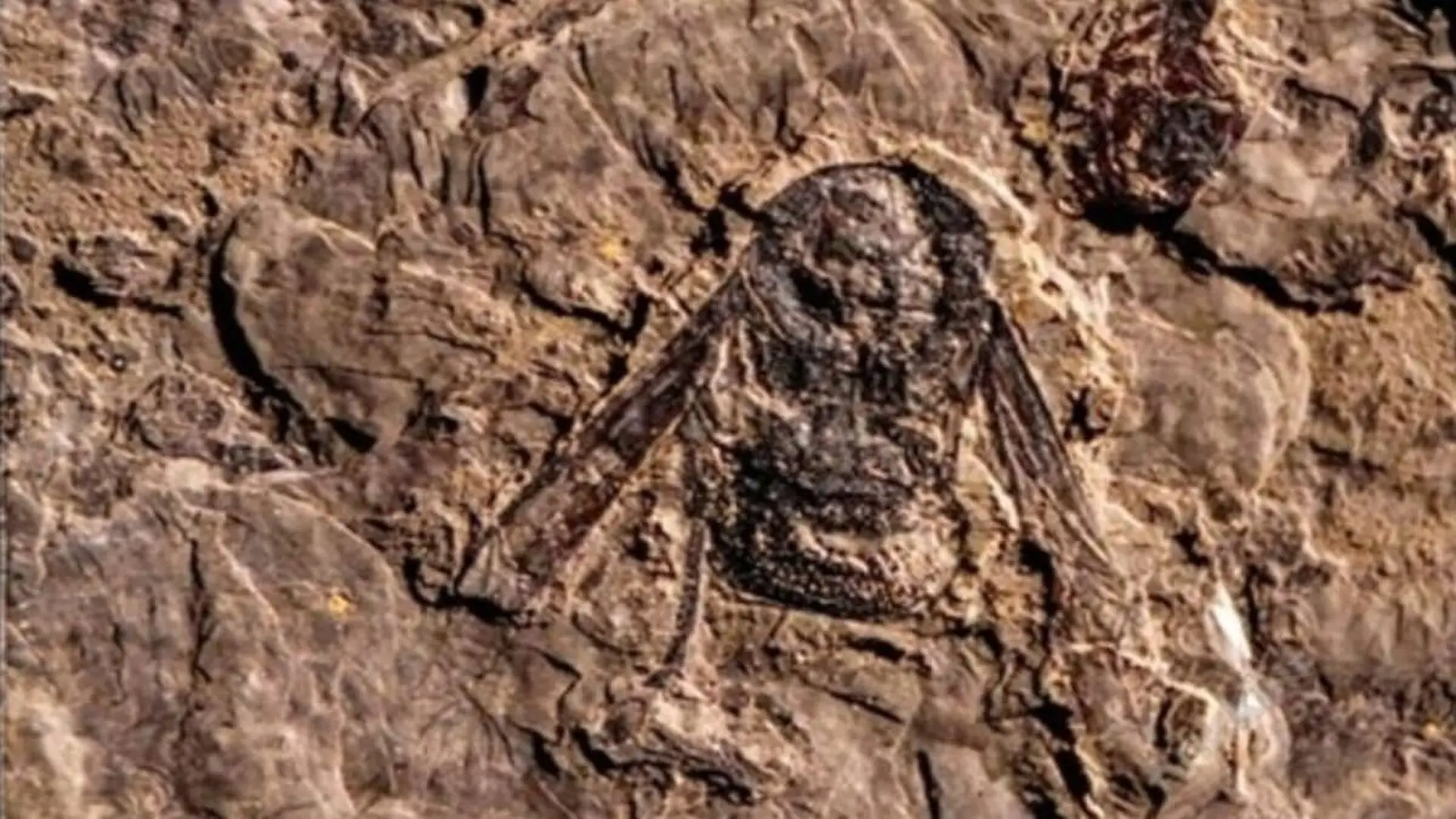
Scientists have successfully reconstructed the auditory world of the Jurassic period, recovering the ancient songs of insects that buzzed through forests 165 million years ago. By analyzing exceptionally well-preserved wing fragments discovered in China, researchers have determined that some of these prehistoric creatures communicated at frequencies beyond the range of human hearing, a discovery that upends long-standing theories regarding the origins of ultrasonic signaling in the animal kingdom.
While the vocalizations of dinosaurs and other charismatic vertebrates from the Mesozoic Era remain largely a mystery due to the fragility of their soft-tissue vocal organs, insects offer a different, more durable record. The hardened, sclerotized cuticles of their sound-producing structures frequently fossilize, providing a clear map of their acoustic capabilities. A research team led by Dr. Jun-Jie Gu of Sichuan Agricultural University utilized these remnants to map the soundscapes of the past, with their findings published in the Proceedings of the National Academy of Sciences.
Decoding the Acoustic Fingerprint of Jurassic Insects
The study focused on 20 fossilized specimens of ensiferan insects—a group that includes crickets and katydids—sourced from the Middle Jurassic Jiulongshan Formation in Inner Mongolia. These insects generated sound through stridulation, a process where one wing is rubbed against the other to produce vibrations. Because the file and plectrum—the essential components of this mechanism—remained intact on the fossilized forewings, the team was able to reconstruct the specific acoustic signals these insects emitted.
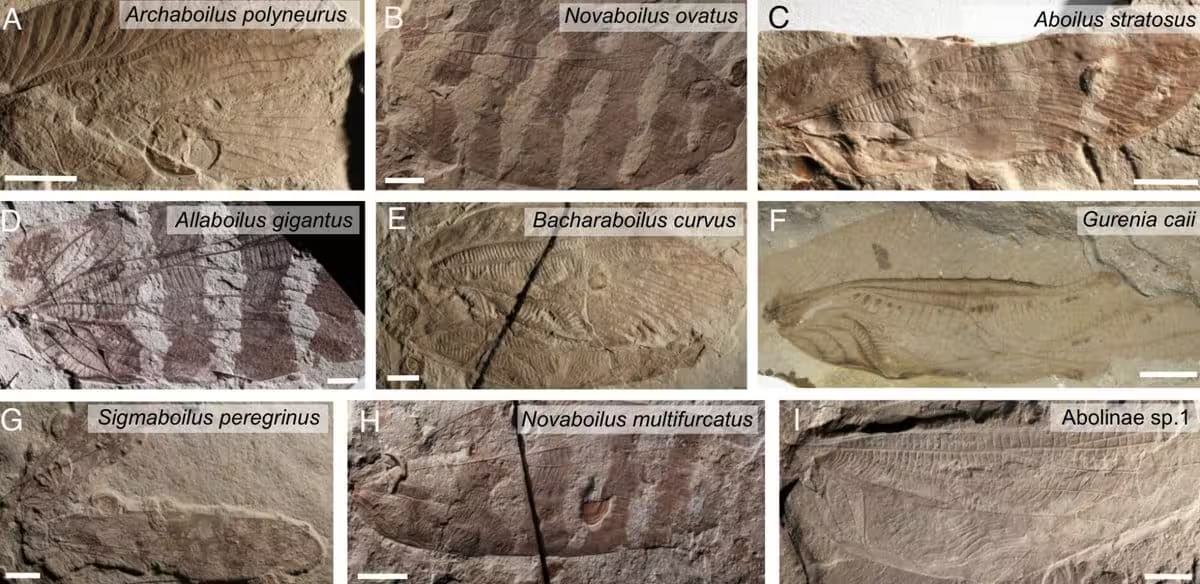
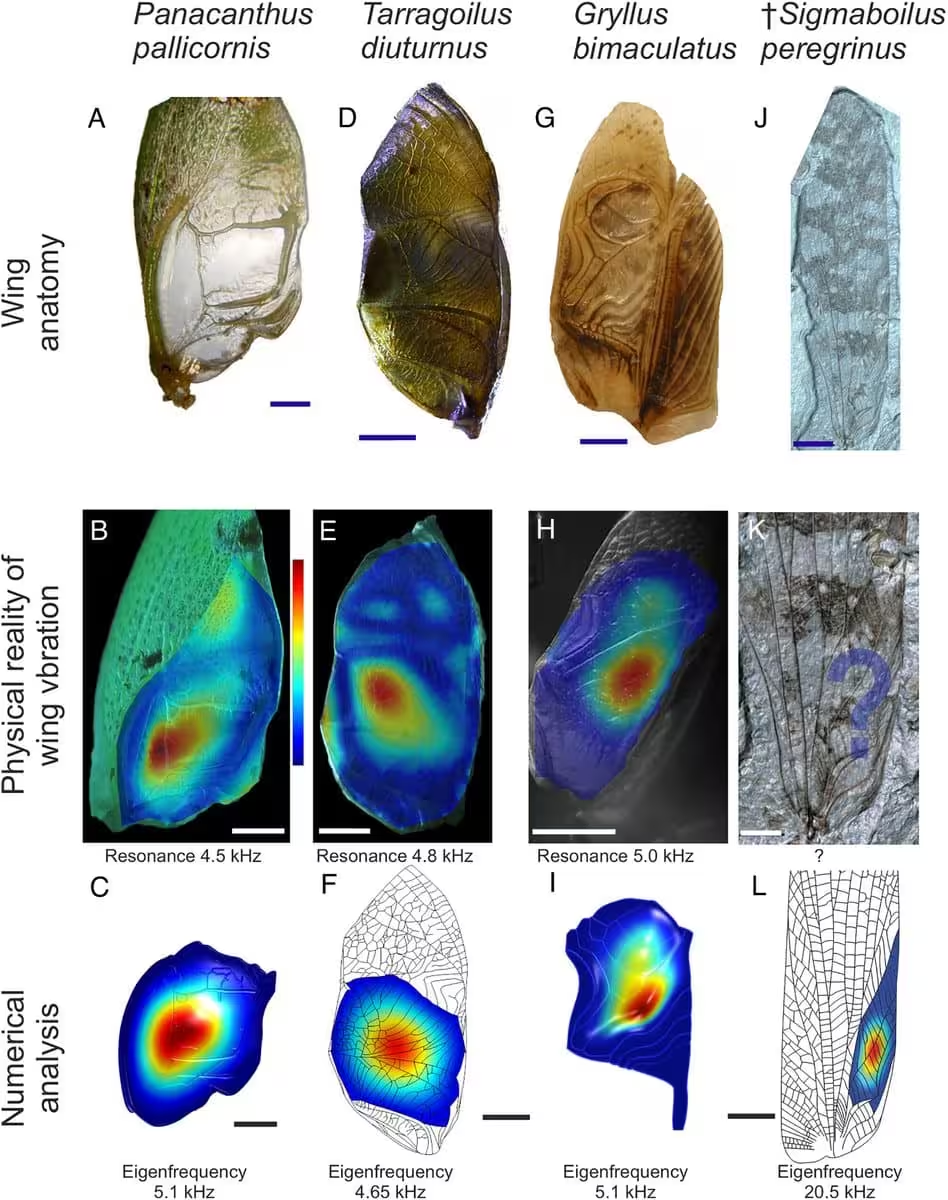
To interpret these biological fingerprints, the researchers employed a multi-disciplinary approach, combining laser vibrometry on modern insect wings, computer simulations of ancient wing movement, and machine-learning models trained to predict acoustic patterns based on morphology. Their analysis revealed a remarkably sophisticated soundscape. While the majority of the nine species examined produced pure-tone calls at roughly 5 kHz, one species, Sigmaboilus peregrinus, sang in the ultrasonic register, emitting sounds above 20 kHz.
Challenging the Bat-Centric Evolution Theory
For decades, the prevailing consensus held that ultrasonic communication in insects evolved primarily as an evasive maneuver against echolocating bats. However, the discovery that these insects were utilizing ultrasound 165 million years ago—nearly 55 million years before the arrival of bats—effectively debunks the notion that bats were the sole evolutionary catalyst for these high-frequency calls.
The research suggests that early mammals and other non-mammalian predators may have been sensitive to these frequencies, forcing insects to adapt their signaling strategies long before bats took to the sky. Furthermore, the authors propose that acoustic niche partitioning—where species evolve to occupy different frequency bands to minimize competition—played a significant role in this early diversification. By the time bats eventually evolved, they did not create the ultrasonic environment; rather, they emerged into a world already saturated with a complex, high-frequency soundscape.
This article has been fact checked for accuracy, with information verified against reputable sources. Learn more about us and our editorial process.
Last reviewed on .
Article history
- Latest version
Reference(s)
- Gu, Jun-Jie., et al. “Reconstruction of an extinct soundscape reveals ultrasonic communication in the Jurassic.” Proceedings of the National Academy of Sciences, vol. 123, no. 36, August 25, 2026 National Academy of Sciences, doi: 10.1073/pnas.2615107123. <https://www.pnas.org/doi/10.1073/pnas.2615107123>.
Cite this page:
- Posted by Hassan Raza