Scientists Use Simple Brush To Unlock DNA From Centuries‑Old Manuscripts Without Harm
Researchers unveil a safe method to unlock a 1,300‑year‑old secret hidden in the world’s oldest manuscripts.
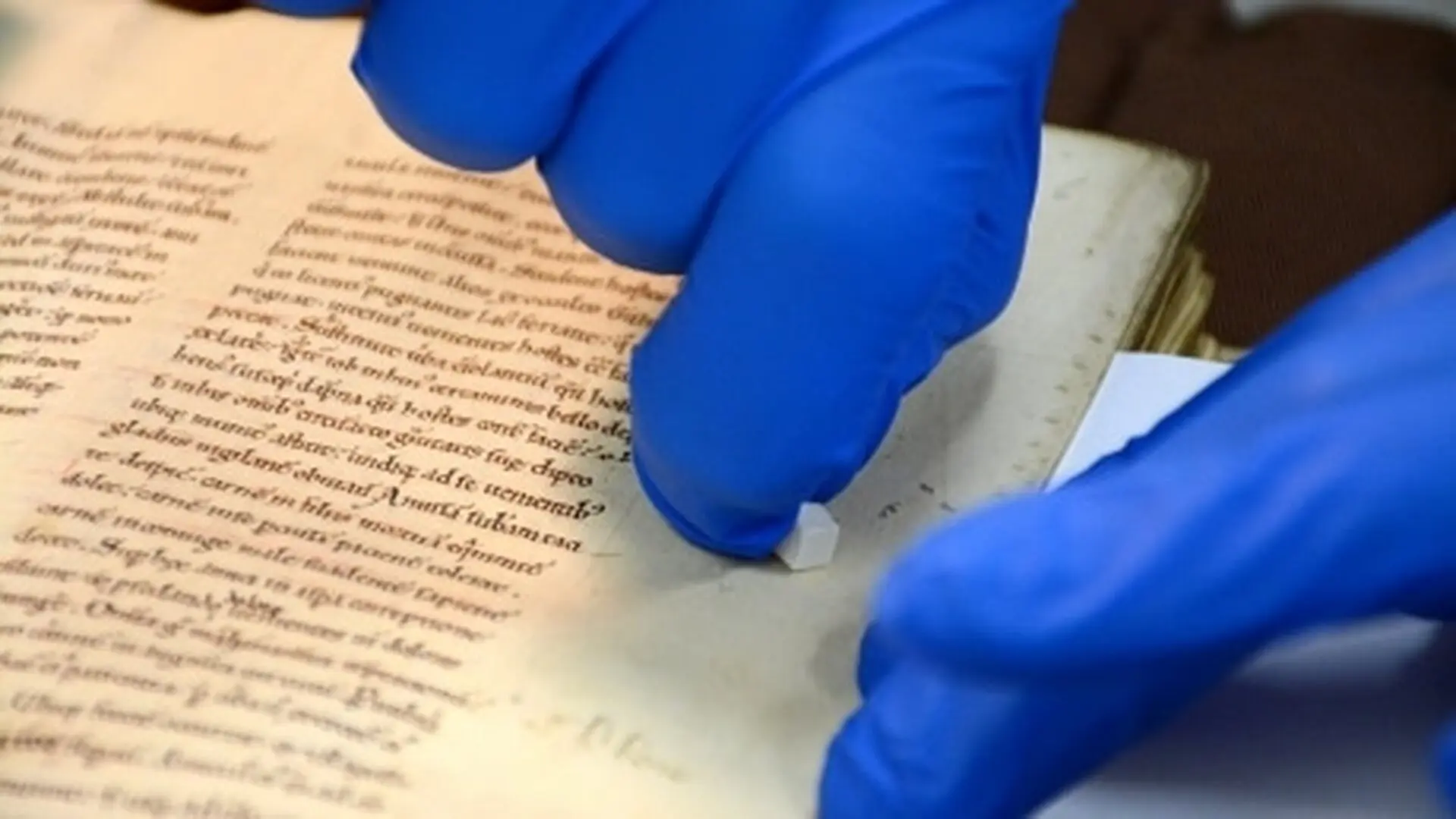
Beyond the ink and marginalia, centuries‑old parchment pages hold a genetic record of the animals whose skins were transformed into writing material. New research shows that this concealed biological archive can be accessed with modern DNA techniques, offering historians a fresh source of information while leaving the physical artifacts untouched.
The investigation focused on 91 historic codices housed in the Rubenstein Library at Duke University. These documents span a wide geographic range—from England to Ethiopia—and date from the late eighth century through the early twentieth century. Instead of cutting or scraping the vellum, the team employed a dry cytology brush, the same tool used in routine Pap‑smear collections, to sweep the surface and gather microscopic cells without harming the parchment.
Non‑Invasive Sampling with a Simple Brush
The brush‑based approach proved gentle enough to preserve the integrity of each manuscript while still capturing sufficient cellular material for downstream analysis. As co‑author Matthew Breen explained:
“Cytology brushes can be used when dry and do an excellent job of harvesting cellular material without damaging the integrity of the artifact being sampled.”
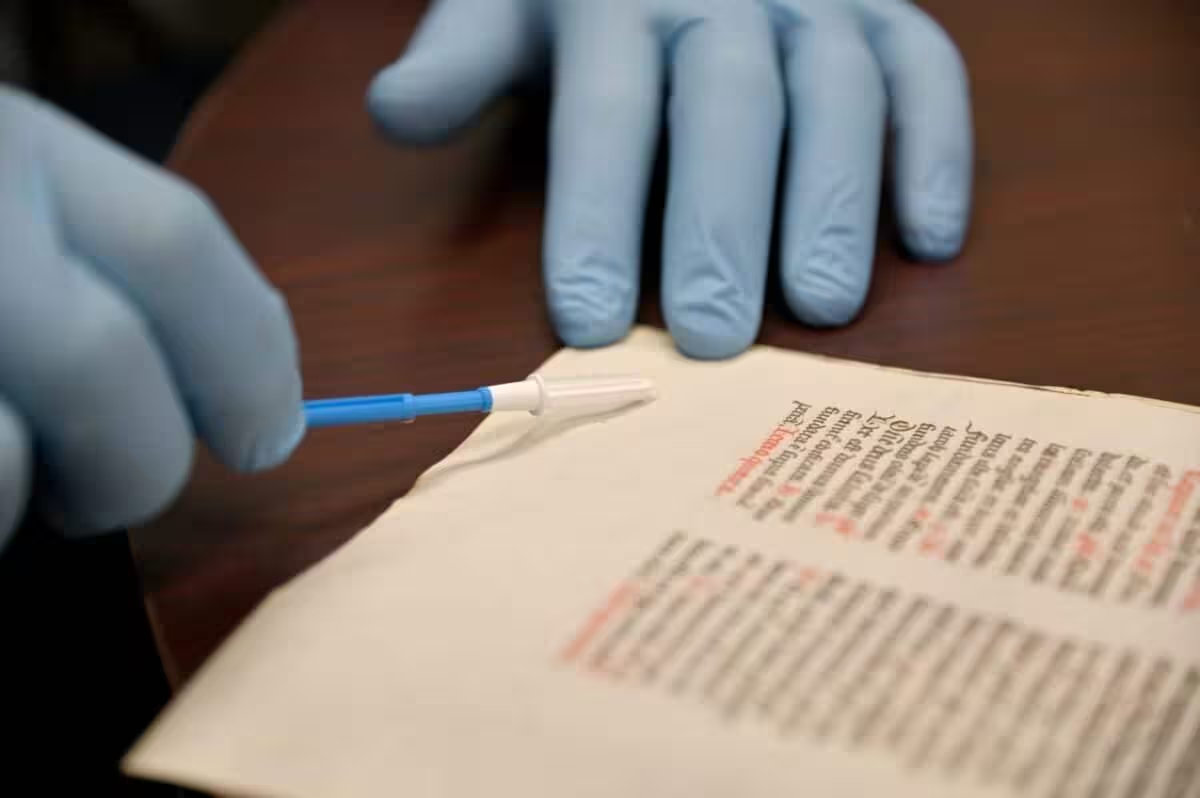
After sampling, the researchers extracted DNA and applied forensic‑grade next‑generation sequencing. The technique recovered and amplified genetic fragments suitable for detailed study, all while leaving the parchment unchanged.
Genetic Clues Embedded in Medieval Vellum
Because parchment originates from animal skin, it retains traces of the donor’s genome. As highlighted in Manuscript Studies: A Journal of the Schoenberg Institute for Manuscript Studies, these genetic traces can illuminate the provenance, production date, and even the breeds of livestock used centuries ago. “That genetic information, in turn, offers us a window into the past, answering questions about things such as when and where a manuscript was made,” said Tim Stinson, the study’s corresponding author and an associate professor of English at North Carolina State University.
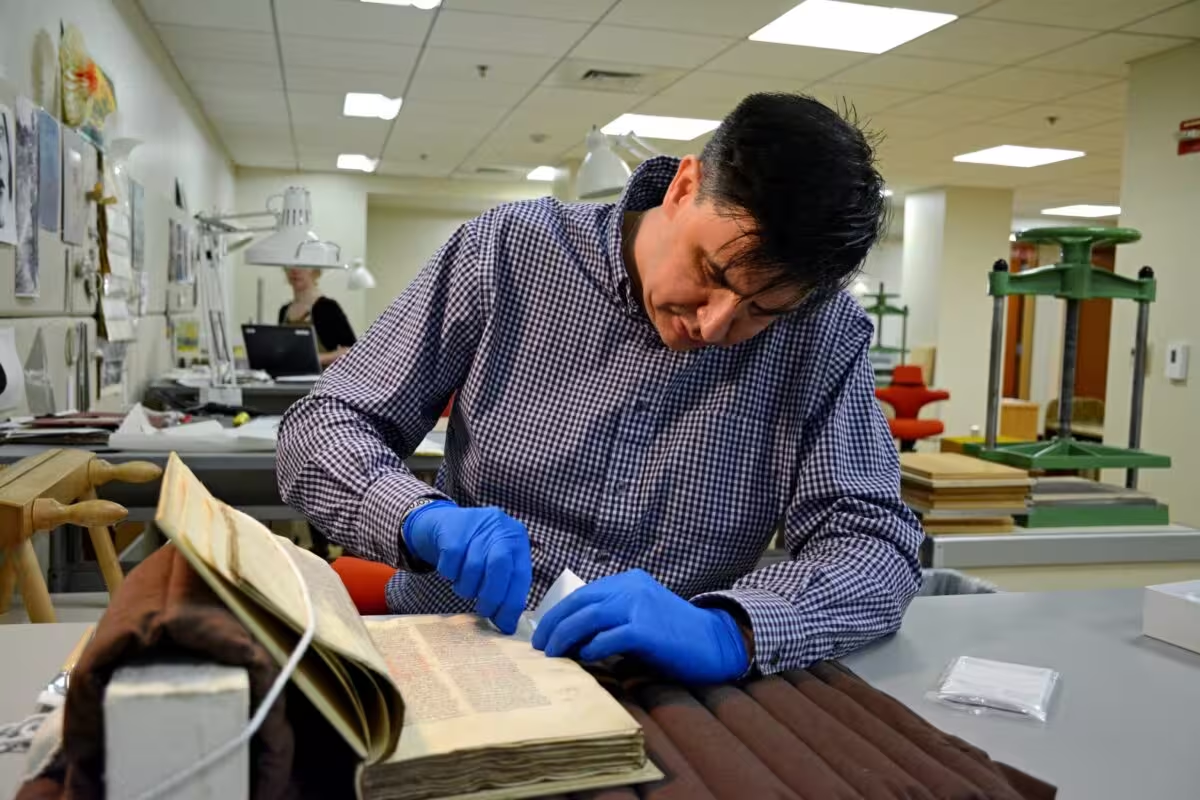
Beyond shedding light on individual codices, the preserved DNA can inform broader questions about animal husbandry, breed development, and disease transmission across centuries, according to a press release from NC State University. By pairing genetic data with textual analysis, scholars can construct a more nuanced picture of the cultural and material contexts in which these manuscripts were created.
Opening New Pathways for Archival Research
Historically, institutions have been hesitant to permit invasive sampling of rare parchments for fear of damage. The current study demonstrates that a simple, dry brush can retrieve valuable genetic material without compromising the artifact, a breakthrough that could build confidence among libraries, archives, and museums.
“We’ve shown that we’re able to extract a tremendous amount of new information from these parchments without harming them,” said Breen. “This will hopefully engender trust with those organizations that are responsible for preserving these historic documents.”
The researchers stress that the field is still in its infancy. Stinson indicated that additional funding will be sought to explore what he described as “a vast, untapped source of historical information.” He added, “We have a remarkable opportunity here. It is essentially a whole new field, bringing together a truly interdisciplinary range of expertise spanning fields from genetics to medieval history.”
This article has been fact checked for accuracy, with information verified against reputable sources. Learn more about us and our editorial process.
Last reviewed on .
Article history
- Latest version
Reference(s)
- “Matthew Breen PhD.” College of Veterinary Medicine <https://cvm.ncsu.edu/people/mbreen3/>.
- “Timothy Stinson.” College of Humanities and Social Sciences <https://chass.ncsu.edu/people/tlstinso/>.
- “NC State English Professor Extracts Biological Clues from Ancient Books.”, November 14, 2018 <https://web.ncsu.edu/accolades-magazine/2018/11/14/english-professor-extracts-biological-clues-from-ancient-books/index.html>.
Cite this page:
- Posted by Hassan Raza