James Webb Telescope Reveals Hidden Star‑Forming Secrets Inside the Lion Nebula
NASA’s Webb telescope uncovers hidden structures in the Lion Nebula, revealing fresh details of this stellar nursery.
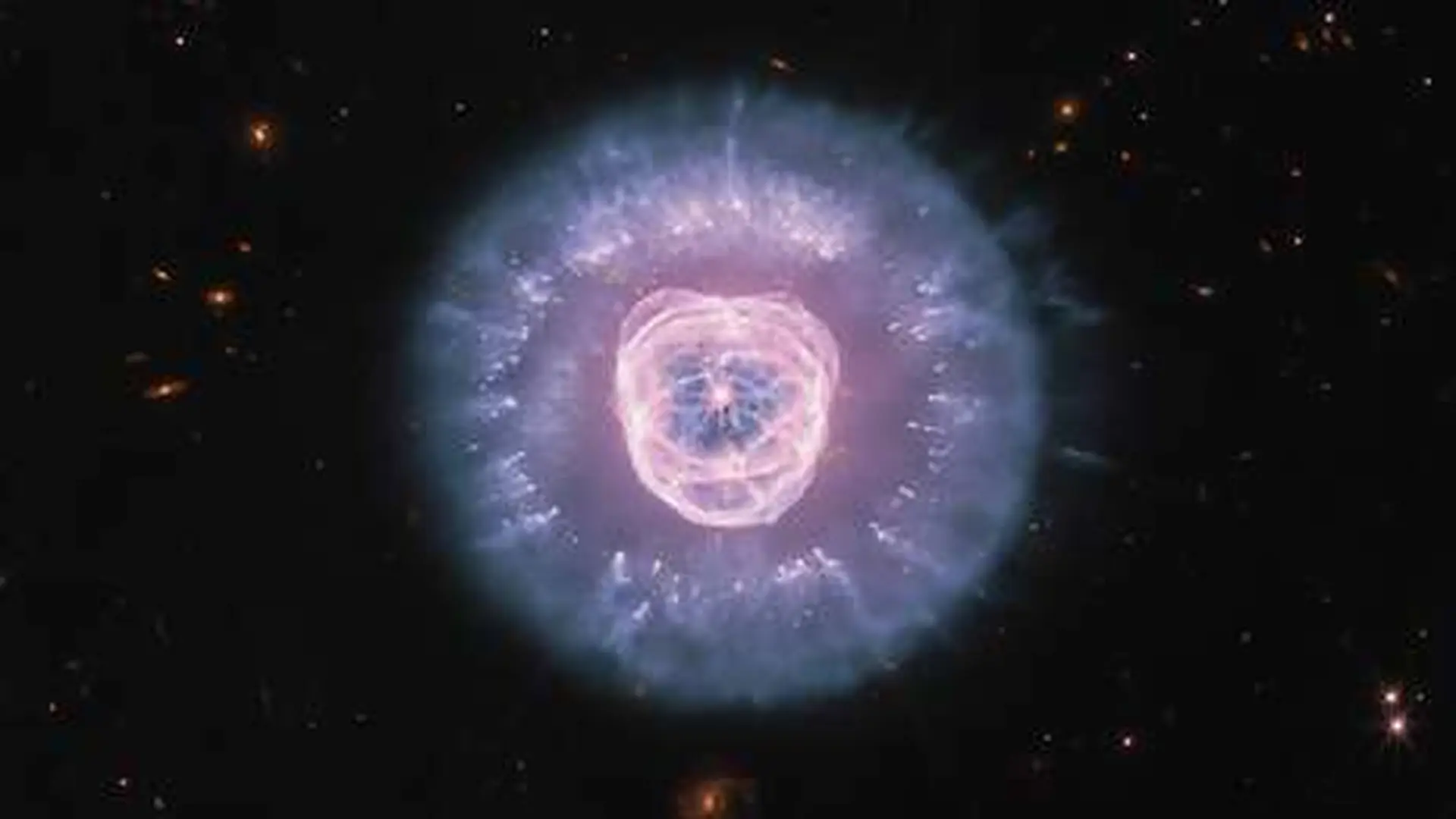
NASA has unveiled a fresh infrared snapshot captured by the James Webb Space Telescope that focuses on the Lion Nebula, a sprawling star‑forming complex where gas, dust and nascent stars interact across an extensive cosmic canvas. The picture exposes features that were previously concealed, granting researchers a more detailed perspective on the mechanisms that drive successive generations of stars.
New JWST Image Sheds Light on the Lion Nebula’s Intricate Architecture
Also cataloged as Sharpless 132, the Lion Nebula is an expansive emission nebula situated within the Milky Way. In such nebulae, clouds of gas glow when energized by the intense radiation emitted by nearby massive, young stars. The unprecedented resolution provided by the James Webb Space Telescope now permits astronomers to dissect these glowing structures with clarity that earlier observatories could not achieve.
The new view highlights delicate filaments and dense gas pockets sculpted by stellar winds and radiation pressure. These patterns illustrate a dynamic environment where material continuously shifts, interacts, and reshapes itself over astronomical timescales.
Infrared Vision Uncovers Hidden Star‑Forming Nurseries
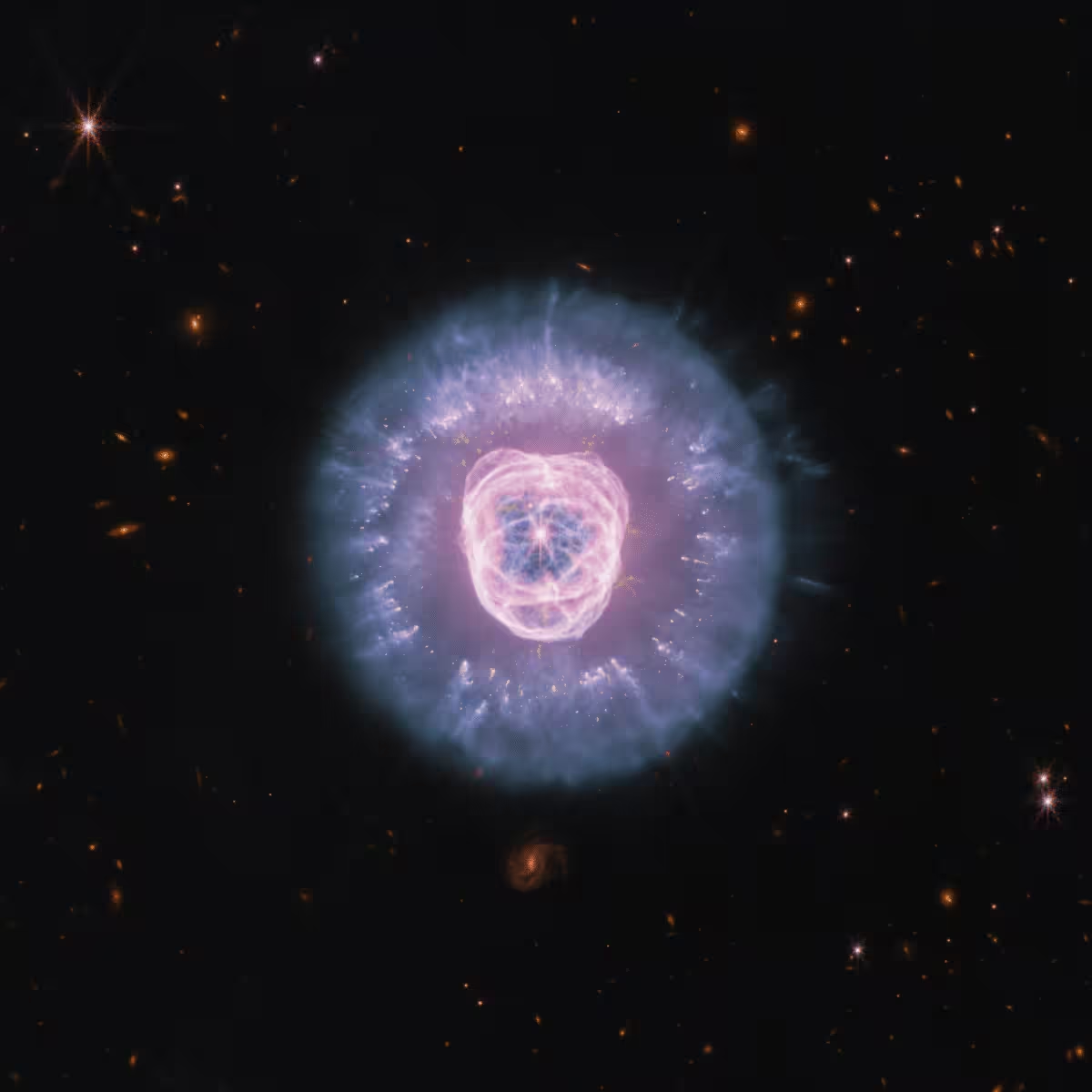
Webb’s infrared sensors can pierce the opaque dust layers that block visible‑light observations, exposing regions where embryonic stars are likely coalescing inside dense molecular clouds. By capturing a range of infrared wavelengths, the telescope reveals the nebula’s concealed architecture and offers a more comprehensive picture of ongoing activity.
According to NASA, such observations illuminate the interplay between newly formed stars and their surrounding material. Massive stars emit powerful radiation and particle streams that remodel adjacent gas clouds, thereby influencing subsequent rounds of star formation within the region.
Chemical Fingerprints of Interstellar Matter
Beyond its visual splendor, the dataset enables scientists to probe the nebula’s molecular composition. Infrared spectra identify signatures from various molecules and dust grains that serve as the building blocks for future stars and planetary systems.
Gravity gradually draws these ingredients together, forming dense pockets that may eventually collapse into new stellar objects. The surrounding environment regulates how quickly gas moves and how efficiently these regions evolve.
What This Means for Future Astronomical Surveys
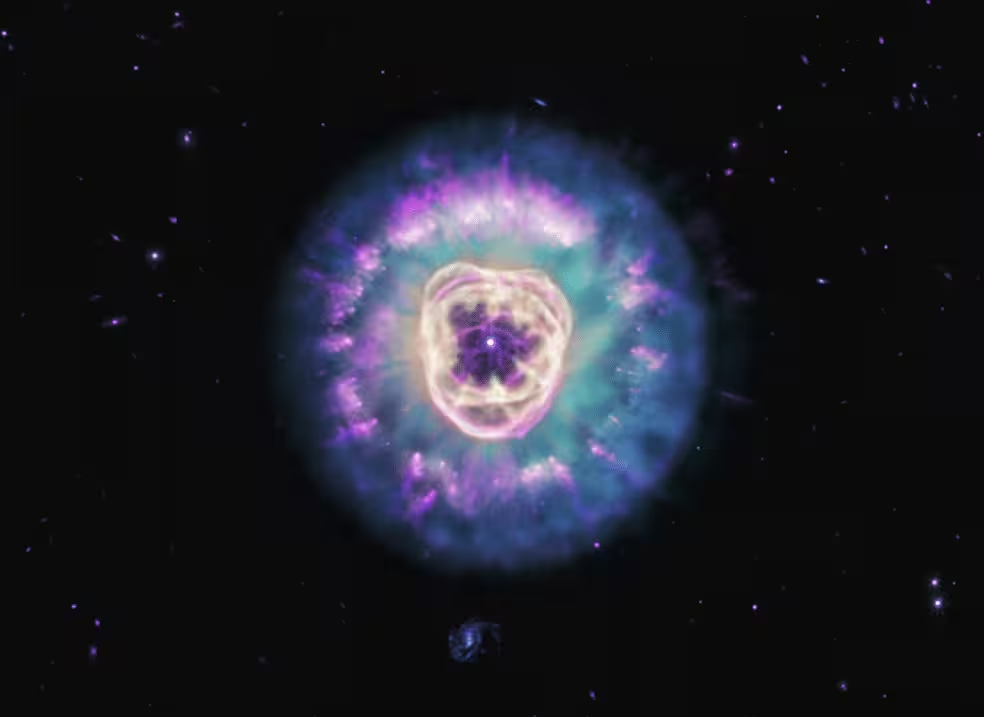
The Lion Nebula snapshot exemplifies how modern infrared astronomy is redefining our perception of nebular environments. Researchers can now examine internal structures, chemical inventories, and dynamic processes rather than treating nebulae as uniform glowing clouds.
Ongoing and upcoming Webb observations will broaden the comparative study of stellar nurseries across the galaxy, helping to construct a more detailed chronology of star formation. By linking these insights with data from complementary instruments, astronomers aim to refine models of how planetary systems emerge from primordial gas and dust.
As the scientific community continues to mine Webb’s rich dataset, the Lion Nebula will remain a focal point for unraveling the life cycle of stars and the evolution of cosmic ecosystems.
This article has been fact checked for accuracy, with information verified against reputable sources. Learn more about us and our editorial process.
Last reviewed on .
Article history
- Latest version
Reference(s)
- McCoy, Marty. “Lion Nebula Roars to Life With NASA’s Webb - NASA Science.”, August 10, 2026 NASA <https://science.nasa.gov/missions/webb/lion-nebula-roars-to-life-with-nasas-webb/>.
Cite this page:
- Posted by Bilal Abbasi