Secret Ancient Ocean Life Found Alive Under Antarctica’s Blood Falls
Scientists probe Antarctica’s Blood Falls, the mysterious red water, revealing clues about ancient life trapped beneath the ice for millions of years.
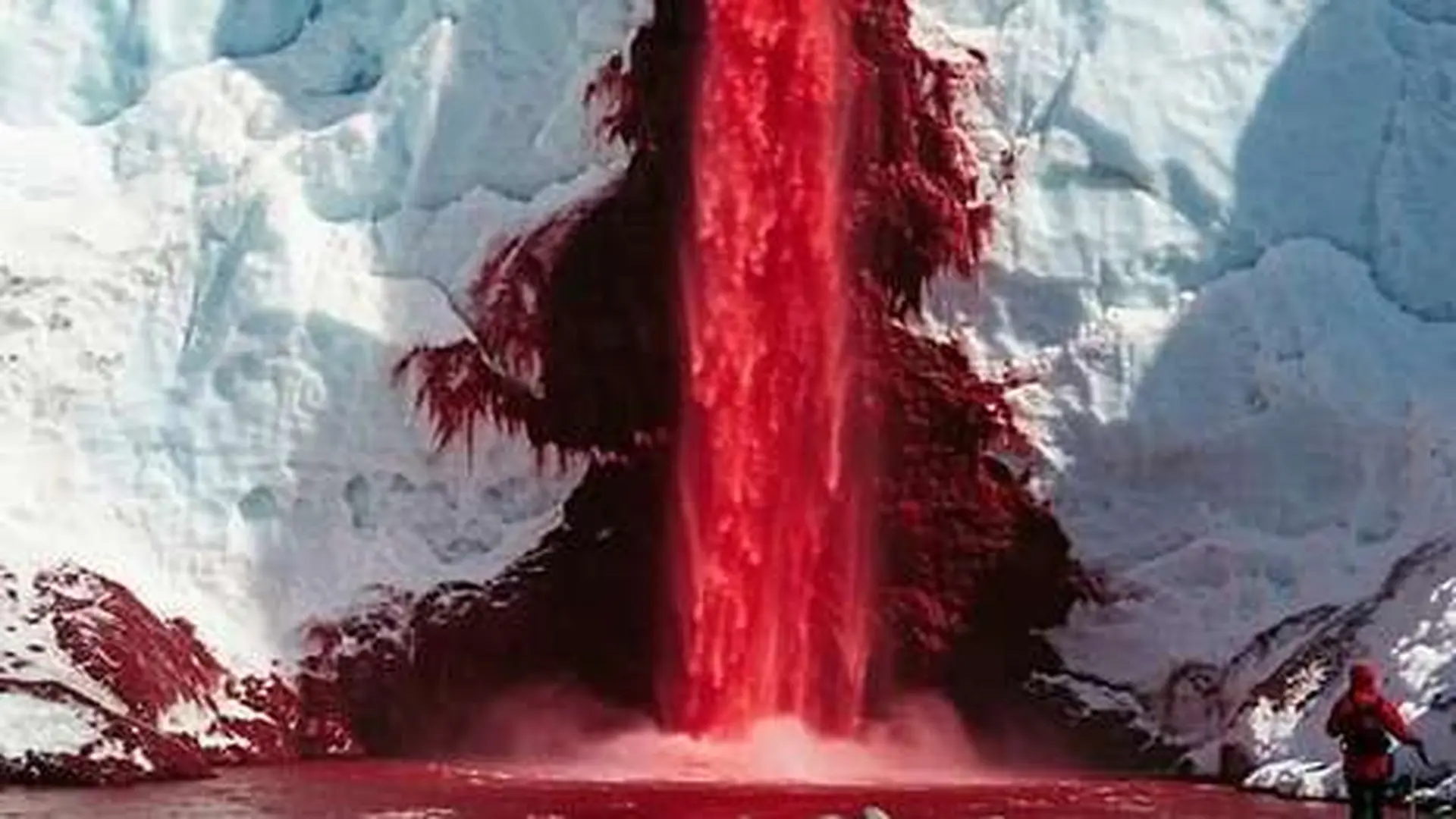
Red-colored runoff emerging from the base of Taylor Glacier in Antarctica has turned out to be more than a striking visual phenomenon. Recent research shows that the flow, known as Blood Falls, hosts a thriving assemblage of ancient microorganisms, hinting that the site preserves remnants of a marine ecosystem isolated for millions of years.
The findings, detailed in Nature Geoscience, demonstrate that the vivid stream is not solely iron‑laden meltwater escaping from beneath the glacier. It also provides a niche for microscopic life that has persisted in a region cut off from external influences.
When Australian geologist Thomas Griffith Taylor first documented the phenomenon during his 1911 expedition, the crimson discharge into Lake Bonney was assumed to be algae‑driven. Subsequent investigations have replaced that hypothesis with a more complex explanation involving hidden microbial residents.
Eukaryotic Microbes Unearthed Beneath the Ice
The new investigation targeted a relatively overlooked component of Blood Falls: its eukaryotic microorganisms. Unlike the well‑studied bacteria and archaea, eukaryotic microbes possess larger, more intricate cells and encompass organisms such as microscopic algae and other single‑celled life forms.
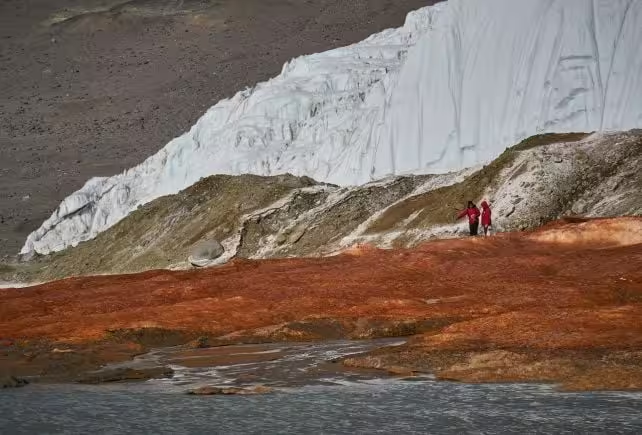
Lead researcher Angela Zoumplis, a microbiologist at the University of California, San Diego, set out to determine whether these eukaryotes inhabited the ancient brine and what they could reveal about the subsurface environment’s history.
“This is an environment that looks almost completely cut off from the ocean today,” Zoumplis explained in a release from Scripps Institution of Oceanography. “But when we looked at the molecular signatures of the organisms living in the red mud and sediment around Blood Falls, we saw a surprisingly strong marine signal. That tells us this place may be preserving traces of an older connection between the Dry Valleys and the sea.”
The team gathered 167 samples from Blood Falls, the surrounding McMurdo Dry Valleys, and adjacent marine locales. By extracting environmental RNA, they identified living organisms rather than mere remnants of dead cells.
“That activity is what makes the finding especially exciting,” added Zoumplis. “We are not simply seeing genetic leftovers. We are seeing evidence of organisms responding to a harsh, changing environment — freezing, thawing, salt stress, iron exposure, and long periods of inactivity.”
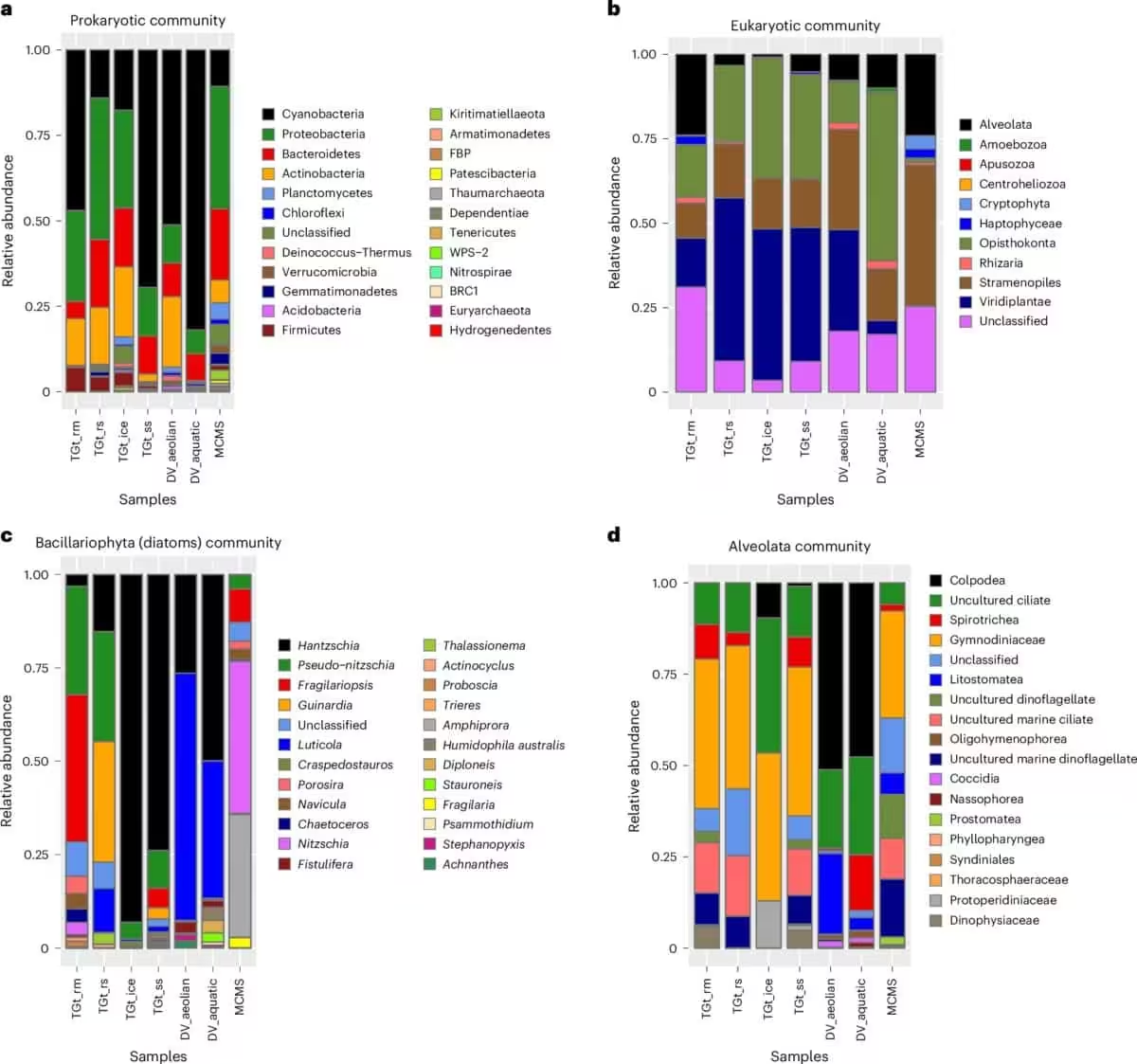
Analyses revealed a distinctive suite of marine‑associated microbes, including diatoms, dinoflagellates, haptophytes and ciliates, groups typically linked to oceanic habitats.
Clues to a Lost Antarctic Ocean
A central question was whether these organisms originated in situ or were recent arrivals transported inland by wind. The data did not support a simple transport scenario.
“These results point to persistence, not just delivery,” Andrew E. Allen, professor at JCVI and Scripps Oceanography, noted. “The molecular signatures we detected point to a localized community shaped by the unusual chemistry and history of Blood Falls. That gives us a biological window into past Antarctic ocean‑ice‑land connections.”
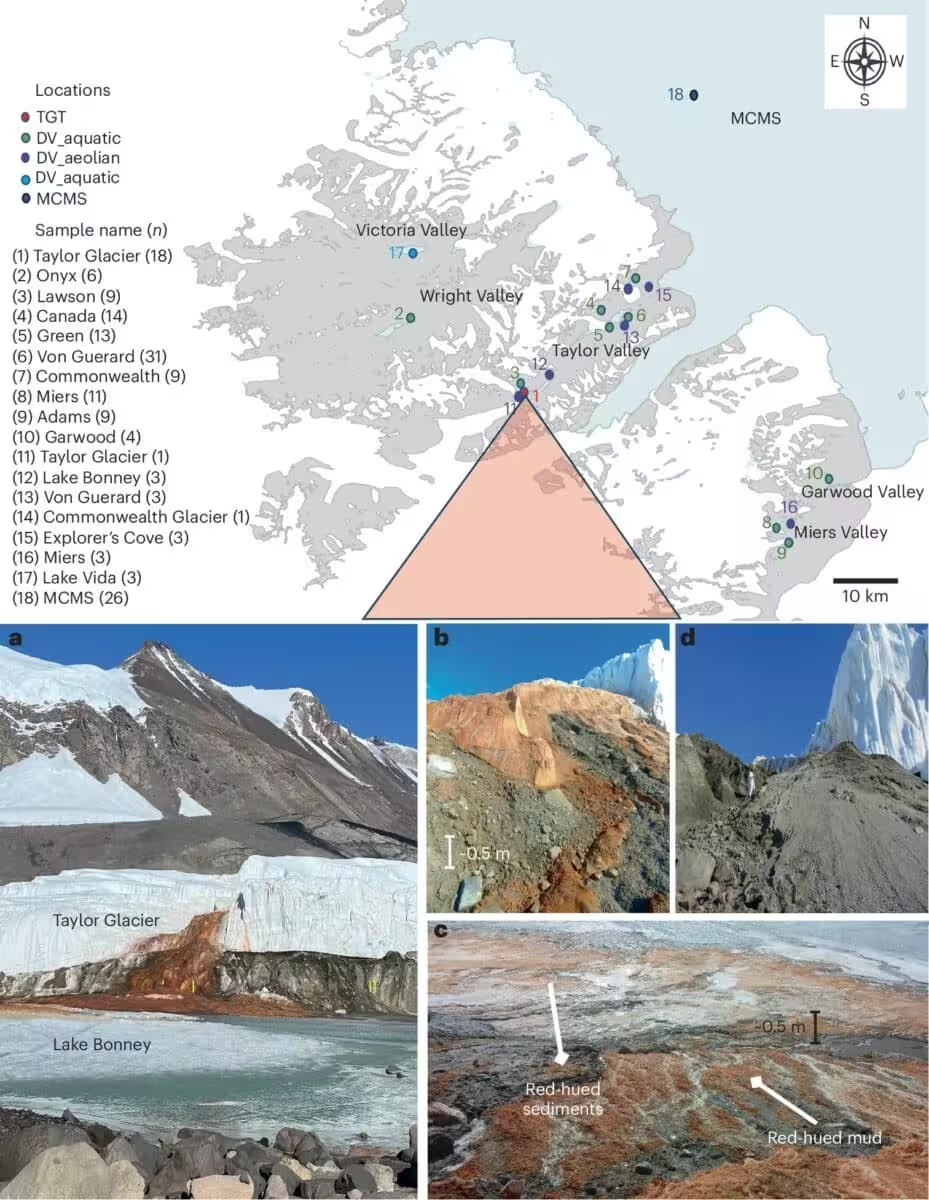
The marine microbes were heavily concentrated around Blood Falls, with several lineages displaying notable genetic divergence from contemporary relatives. This pattern suggests a prolonged period of isolation, likely stemming from an ancient seawater incursion that became sealed as the modern Antarctic ice sheet developed.
The brine beneath the glacier may have acted as a refuge as the continent cooled and desiccated. Persistent liquid water, maintained by high salinity, created niches where select organisms could survive, either by evolving salt‑tolerance mechanisms or by entering dormant states during extended freeze‑thaw cycles.
What Blood Falls Tells Us About Antarctica’s History
The hidden microbial community offers a rare window into a living ecosystem that bridges Antarctica’s distant past and present. Rather than relying solely on fossil records or geochemical proxies, researchers can now examine organisms that may still carry molecular signatures from an ancient marine environment.
“In highlighting this area as a unique refuge of ancient lineages,” the authors wrote, “this study establishes a foundation for future work on how relict ecosystems illuminate past environmental change and future polar vulnerability.”
This article has been fact checked for accuracy, with information verified against reputable sources. Learn more about us and our editorial process.
Last reviewed on .
Article history
- Latest version
Reference(s)
- Zoumplis, Angela. “Molecular evidence for a relict marine community in an Antarctic Dry Valleys subglacial brine-fed system - Nature Geoscience.”, August 3, 2026, pp. 1-10. Nature, doi: 10.1038/s41561-026-02054-6. <https://www.nature.com/articles/s41561-026-02054-6>.
- “Angela Zoumplis Phd Student.” <https://allenlab.ucsd.edu/people/angela-zoumplis-phd-student/>.
- “Ancient Marine Life May Be Hiding Antarcticas Blood Falls.” <https://scripps.ucsd.edu/news/ancient-marine-life-may-be-hiding-antarcticas-blood-falls>.
- “Andrew Allen.” J. Craig Venter Institute <https://www.jcvi.org/about/andrew-allen>.
Cite this page:
- Posted by Bilal Abbasi