Martian Meteorite Contains Rare Andradite Garnet, Suggesting Gemstone Formation on Mars
Scientists discover unexpected feature inside a Martian meteorite, shedding light on the planet’s formation processes.
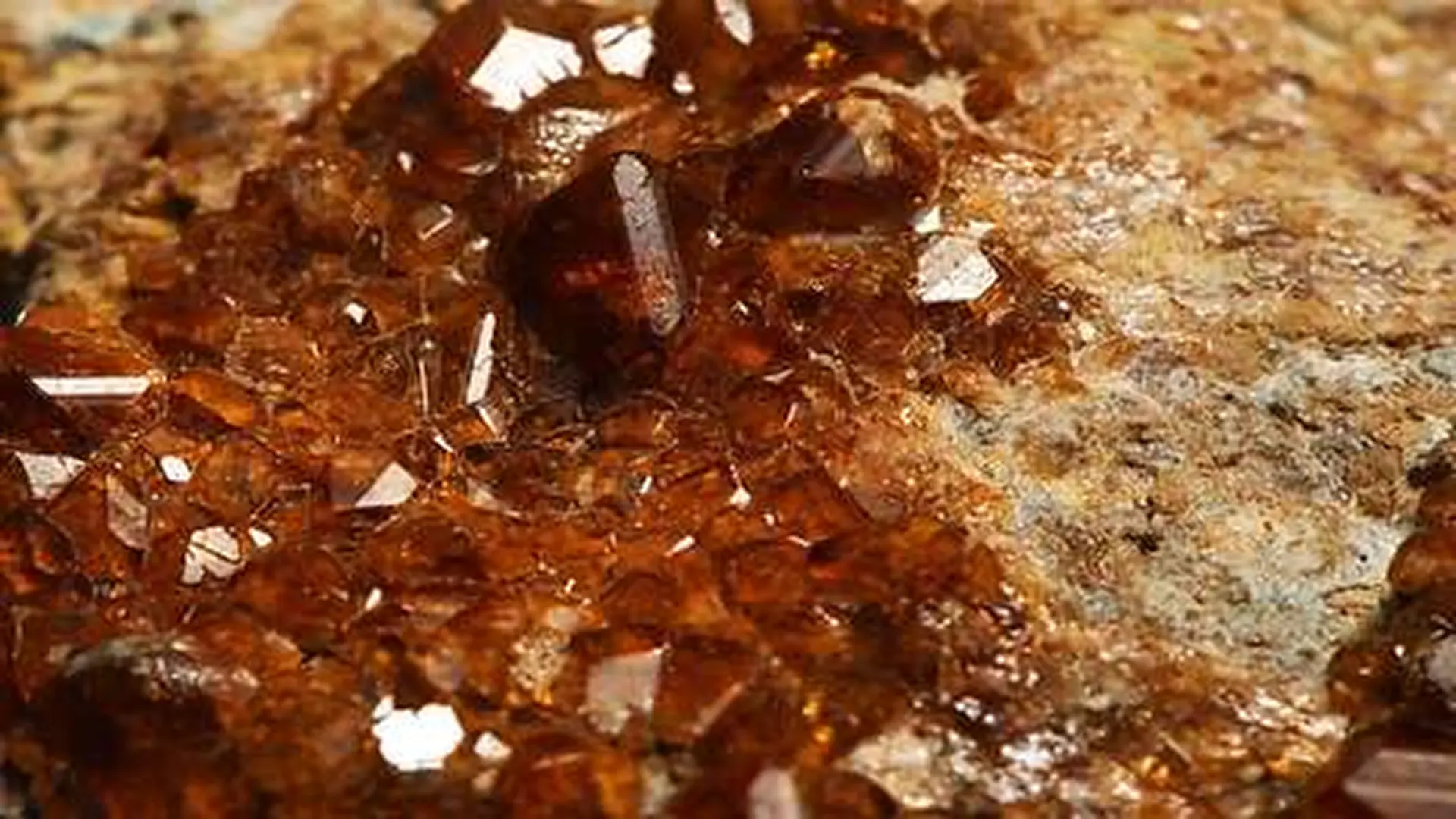
A fragment rich in the mineral andradite garnet has been identified inside a Martian meteorite recovered from the Sahara Desert in 2013, offering fresh insight into the Red Planet’s deep‑seated geological history.
While orbiters and rovers have mapped Mars from afar, meteorites that survive the journey to Earth let scientists examine Martian material directly in laboratory settings, revealing processes that are otherwise inaccessible.
The presence of garnet, a mineral whose chemistry records the pressure and temperature conditions of rock formation, suggests that parts of Mars may have undergone metamorphic events previously undocumented in the planet’s crust.
Andradite Garnet Unearthed in a Martian Sample
On our own planet, garnet is prized both as a vibrant gemstone and as a geochemical tracer; its composition can pinpoint the environment in which it crystallized. The mineral identified in the NWA 8171 specimen belongs to the andradite subgroup, a variety that can appear yellow or green and is sometimes cut as the gemstone demantoid. Other common garnet species include almandine, pyrope and grossular.
Earthly Formation Settings vs. Martian Context
Andradite typically emerges in skarn deposits, where hot, mineral‑laden fluids alter pre‑existing rocks under conditions tied to active plate tectonics. Mars lacks large‑scale tectonic plates, making the detection of this mineral on the planet especially intriguing and prompting researchers to explore alternative formation pathways.
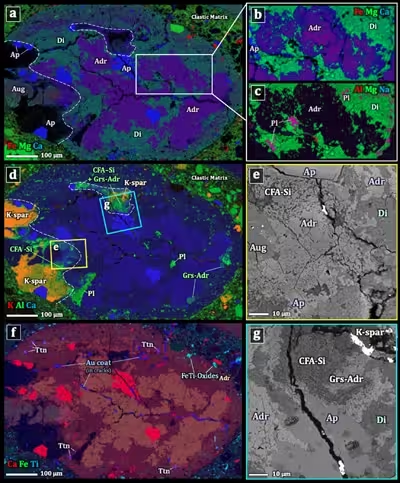
The research team, whose findings appear in Geochemical Perspectives Letters, proposes that the garnet‑bearing fragment could be the product of a previously unrecognized Martian metamorphic process, or perhaps an exotic volcanic rock generated by ancient magma flows [source].
NWA 8171: A Polymict Breccia From Mars
Classified as a Martian polymict regolith breccia, the NWA 8171 meteorite consists of numerous fragments that were shattered and later reassembled after ancient impacts on the planet’s surface.
Multiple lines of evidence confirm its Martian provenance: trapped noble gases match the composition of the Martian atmosphere, while mineral chemistry and oxygen‑isotope ratios align with established Martian signatures.
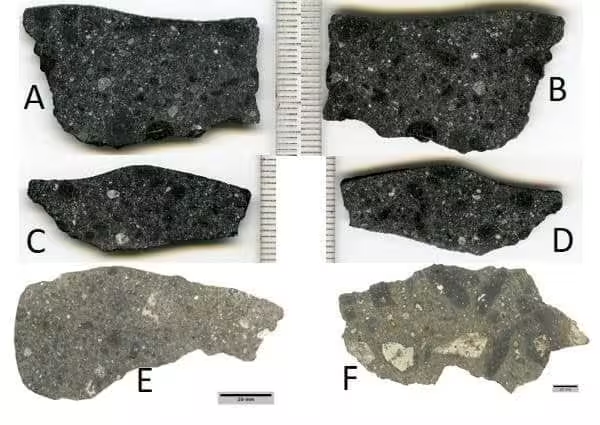
Oxygen isotopes act like fingerprints, allowing scientists to trace the rock’s origin. NWA 8171 is one of 18 fragments linked to the same fall, sharing a lineage with the well‑known NWA 7034 specimen, colloquially called Black Beauty [source].
The brecciated nature of the meteorite adds complexity to the interpretation, as each incorporated piece may carry a distinct history that must be untangled through careful analysis.
Assessing the Fragment’s Martian Signature
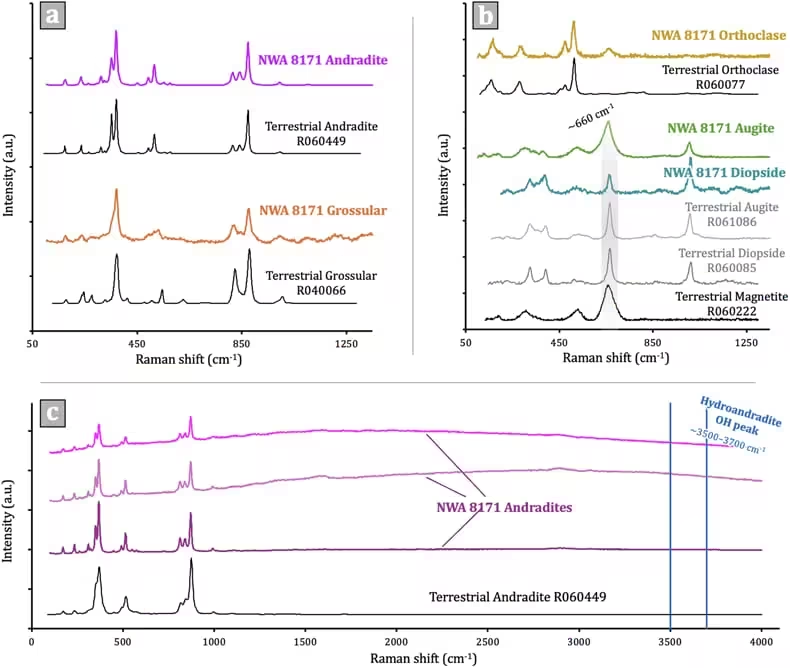
Chemical profiles of pyroxene grains intergrown with the garnet align with known Martian mineralogy, and the fragment’s texture mirrors other sections of NWA 8171, reinforcing the likelihood of a Martian source.
Nevertheless, the team cautions that regolith breccia meteorites can host material from diverse origins, including rare rocks from elsewhere in the Solar System.
A definitive test would involve measuring the fragment’s oxygen‑isotope composition directly, but that procedure requires extracting a portion of the sample. The researchers therefore plan to continue characterizing the meteorite before undertaking this invasive analysis.
This article has been fact checked for accuracy, with information verified against reputable sources. Learn more about us and our editorial process.
Last reviewed on .
Article history
- Latest version
Reference(s)
- T.V. Kizovski, L.F.. “Expanding Mars’ lithologic diversity: discovery of a garnet-bearing clast in NWA 8171.”, vol. 40, no. 40, pp. 30-37. <https://www.geochemicalperspectivesletters.org/article2619/>.
Cite this page:
- Posted by Bilal Abbasi