Curiosity Rover Uncovers Vast Honeycomb Polygon Field On Mars Raising New Geological Questions
No article content to summarize.
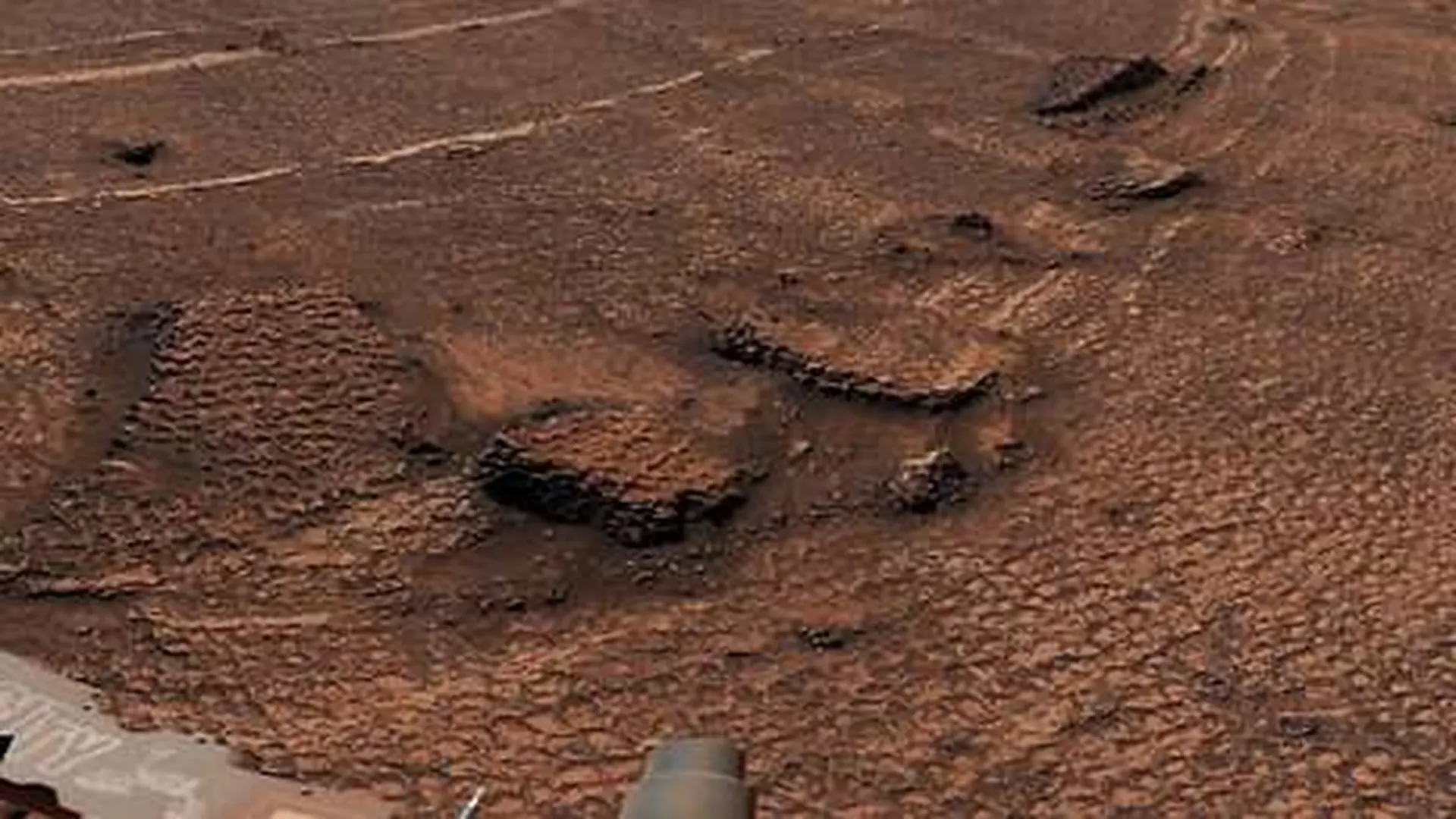
During a recent ascent through Valle Grande on the lower slopes of Mount Sharp, NASA’s Curiosity rover captured an extensive field of polygonal fractures that stretch across the Martian terrain like a honeycomb, surpassing any similar features recorded by the mission to date.
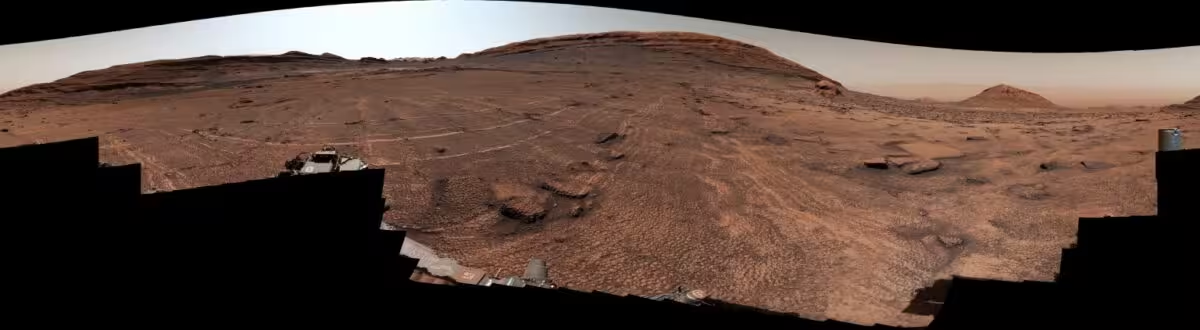
Panoramic Survey Reveals Massive Polygon Network
The rover’s 360‑degree panorama, taken on June 19‑20 2026 during its 4,930th and 4,931st sols, shows geometric patterns extending as far as its cameras can see. The images, acquired while Curiosity climbed the valley, highlight a continuous expanse of polygons each measuring roughly 1.5–3 inches (4–8 cm) across.
Miraflores Butte Anchors the Fracture Field
Among the most striking landmarks within the patterned landscape is the six‑meter‑high butte named Miraflores, capped with a thick sand layer. The polygonal textures wrap around the butte’s sides, offering a natural laboratory for comparing surface features.
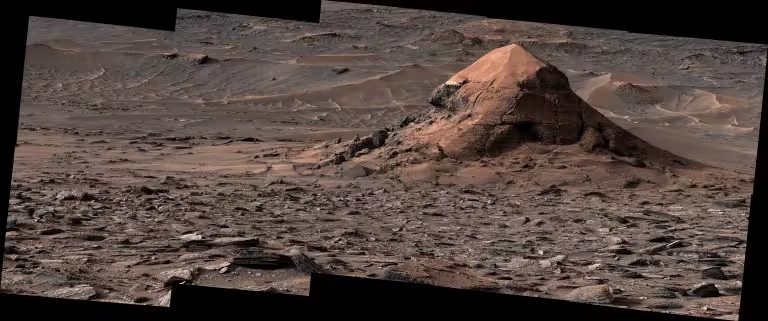
The butte itself stands about 20 feet (6 meters) tall, its sand‑covered summit providing a contrasting reference point amid the intricate fracture network.
“We’ve seen a lot of fascinating landscapes through Curiosity’s eyes, but this sea of polygons took our breath away,” said Ashwin Vasavada, Curiosity’s project scientist at NASA’s Jet Propulsion Laboratory in Southern California. “We measured their shapes and chemistry carefully and are hopeful there are clues in the data as to how these features formed.”
Researchers are now cross‑referencing these formations with polygonal structures identified elsewhere on Mars to assess whether a shared genesis is plausible.
Potential Origins of the Martian Polygons
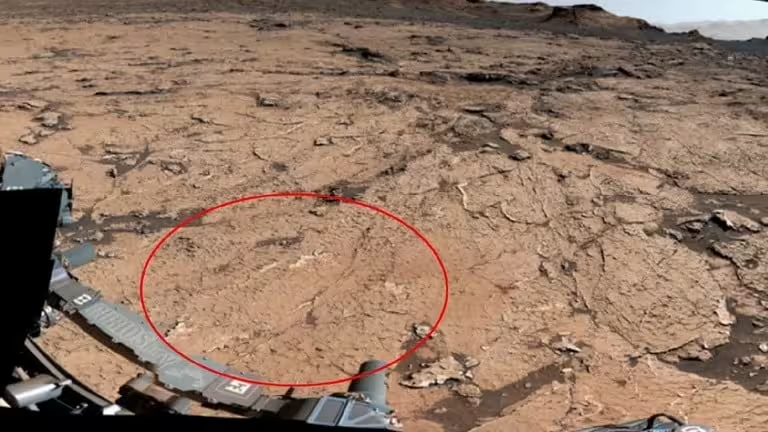
The mechanisms behind the newly observed patterns remain under investigation. Polygonal fractures on Mars can arise from several processes, including ancient mud cracks that develop when wet sediment dries and contracts, thermal stresses caused by repeated heating and cooling cycles, or the release of subsurface water due to pressure from overlying sediments.
Detailed measurements of the polygons’ shape, size, and chemical signatures are being compiled to narrow down which of these processes dominated the region’s geological history. Understanding these features contributes to the broader mission of tracing Mars’ transition from a water‑rich world to the arid planet observed today.
Context Within Curiosity’s Decade‑Long Exploration
Since its landing on August 5 2012, Curiosity has traversed Gale Crater and the lower flanks of Mount Sharp, uncovering evidence of ancient lakes, streams, and a suite of chemical elements that could have supported microbial life. The rover has also detected sulfur crystals, unusual meteorites, and carbon‑based organic molecules preserved in Martian rocks—compounds that serve as fundamental building blocks for life, though they can form through both biological and abiotic pathways.
These organic detections, discussed by NASA scientists, illustrate that ancient Mars possessed the chemical ingredients necessary for environments where life might have arisen, even if the presence of the molecules does not confirm past biology.
As Curiosity continues its ascent, the newly mapped polygon field offers a fresh dataset for scientists seeking to decode the climatic and geological forces that shaped early Mars, bringing the mission closer to answering long‑standing questions about the planet’s habitability.
This article has been fact checked for accuracy, with information verified against reputable sources. Learn more about us and our editorial process.
Last reviewed on .
Article history
- Latest version
Reference(s)
- Team, NASA. “Ashwin Vasavada.”, June 29, 2018 NASA Science <https://science.nasa.gov/people/ashwin-vasavada/>.
- Carney, Stephen. “NASA’s Curiosity Mars Rover Discovers Field of Honeycomb Textures - NASA.”, July 29, 2026 NASA <https://www.nasa.gov/missions/mars-science-laboratory/curiosity-rover/nasas-curiosity-mars-rover-discovers-field-of-honeycomb-textures/>.
Cite this page:
- Posted by Bilal Abbasi