James Webb Telescope Reveals Hidden Interiors of Neptune’s Tiny Moons From Catastrophic Capture
Webb data hint Neptune’s tiniest moons could be relics of an ancient satellite system shattered by a violent cosmic event billions of years ago.
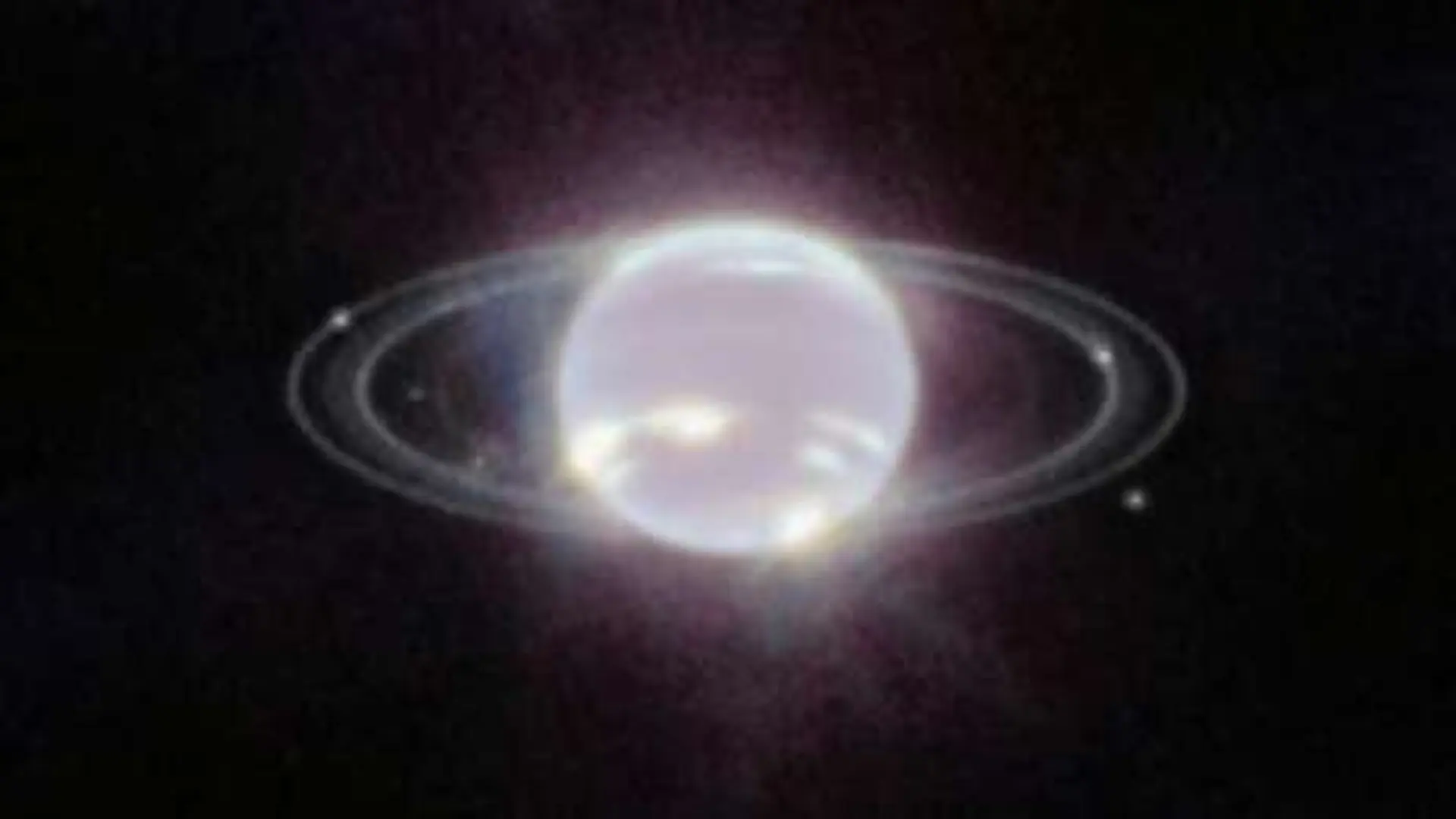
New observations from the James Webb Space Telescope indicate that the tiny inner moons of Neptune may be the shattered remnants of a once‑larger satellite family that was destroyed when the captured moon Triton entered the planet’s orbit. The findings, detailed in a paper in Science Advances, suggest that these diminutive bodies retain chemical fingerprints of ancient icy worlds that have otherwise vanished.
JWST Infrared Spectra Reveal Unexpected Mineralogy
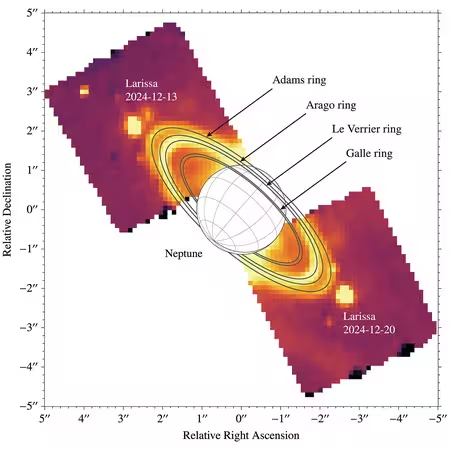
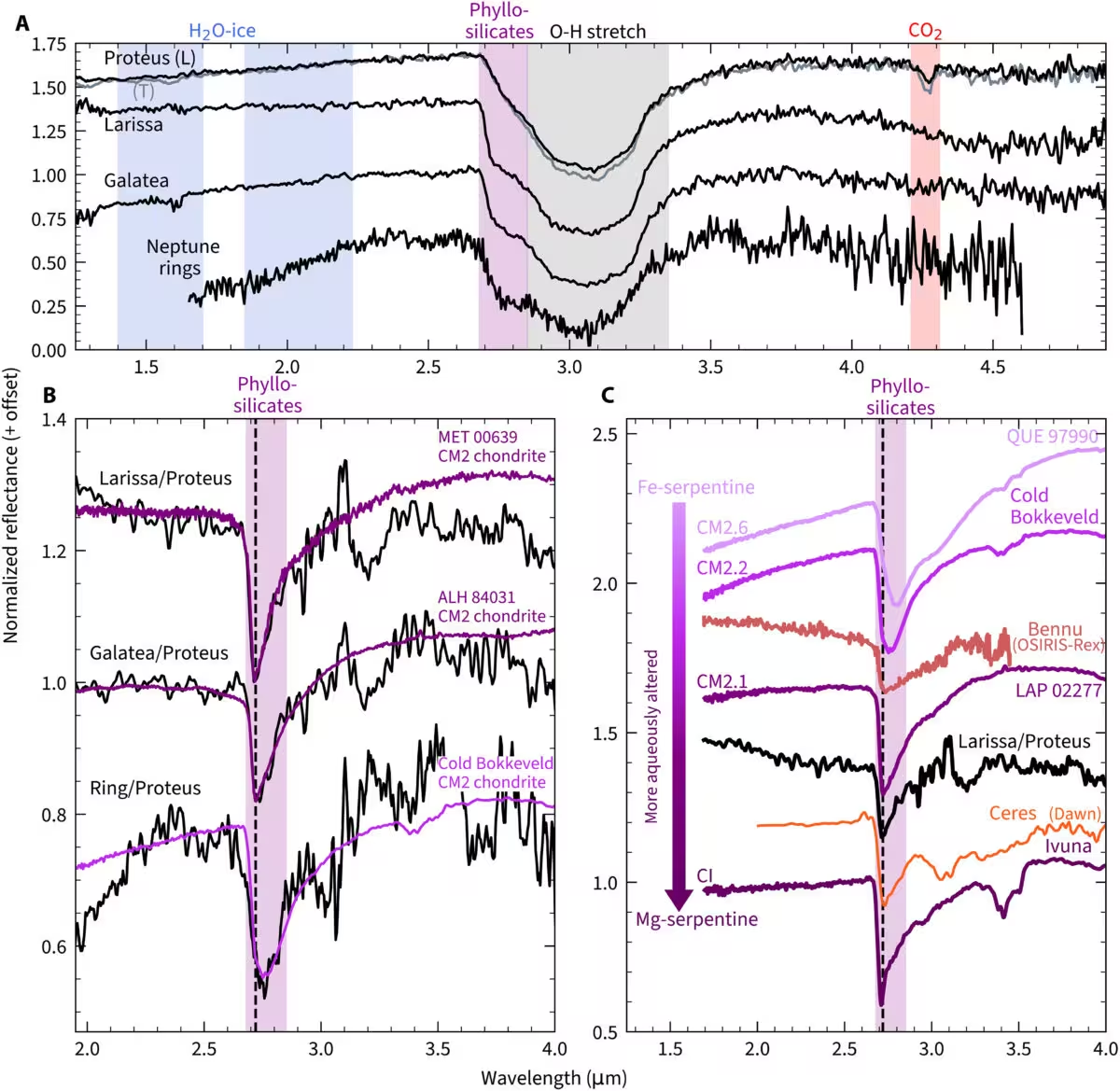
A team of astronomers from Caltech analyzed near‑infrared data from JWST for three inner satellites—Larissa, Galatea, and Proteus. The extreme distance and faintness of these moons have long hindered detailed compositional studies, but the new spectra exposed mineral signatures that differ markedly from typical outer‑solar‑system material.
Among the surprises were strong absorptions consistent with magnesium‑rich phyllosilicates, a class of clay that forms only when liquid water interacts with rock. Such minerals have never been detected beyond Jupiter, making their presence on Neptune’s tiny moons particularly striking.
“If Neptune once had a system of moons that looked something like what we see on Uranus today, we expect it would’ve been completely destroyed by the process of Triton getting captured,” says former Caltech graduate student Ryleigh Davis (PhD ’26), lead author of the paper.
“This is exciting new evidence that something catastrophic happened at Neptune that completely destroyed its original satellites, and we’re getting to see the fingerprints left behind by that process.”
Clues Point to a Catastrophic Capture Event
The researchers propose that Triton—originally a Kuiper‑belt object—was snared by Neptune’s gravity early in the planet’s history, an encounter that would have ripped apart any pre‑existing moon system. The resulting debris field could have re‑accreted into the small moons and rings we observe today.
“Phyllosilicates had never been detected anywhere in the outer solar system beyond Jupiter, so that was not on our list of things to look for,” notes Davis, now a postdoctoral fellow at UC San Diego. “We were shocked to find the observed clays, which had to come from objects that were much, much bigger than Neptune’s small inner ring moons.”
An Unidentified Hydrated Component
Beyond the clay signatures, the spectra also display a broad absorption feature that does not correspond to any known mineral in existing spectral libraries. The team suspects it represents another hydrated compound, perhaps originating from the deep interiors of the progenitor bodies.
“We see something that doesn’t really look like anything else we’ve identified in the solar system; it doesn’t match anything we have in our spectral libraries,” Davis explains. “We assume it’s some form of hydrated rock from the moons as well, but there’s still a lot of mystery.”
Implications for Planetary Evolution
If the inner moons are indeed fragments of larger, once‑existing satellites, they provide a rare laboratory for probing the internal composition of icy worlds that are otherwise inaccessible. Normally, scientists must infer such interiors from indirect measurements or models; here, a violent event has exposed the buried material directly.
“Either way, what we’re seeing on these moons had to come from deep inside something much larger,” says Davis. “Neptune’s inner moons are the only place in the solar system where we can look directly at the deep interior composition of a large icy world.”
Future investigations will aim to reconstruct the debris dynamics following Triton’s capture and to estimate how much of the original satellite mass survived. Determining the size and composition of Neptune’s first‑generation moons could illuminate how planetary systems remodel themselves after dramatic gravitational encounters.
This article has been fact checked for accuracy, with information verified against reputable sources. Learn more about us and our editorial process.
Last reviewed on .
Article history
- Latest version
Reference(s)
- “Neptune's Inner Moons May Be Shattered Remains of Ancient Icy Worlds.”, July 29, 2026 California Institute of Technology <https://www.caltech.edu/about/news/neptunes-inner-moons-may-be-shattered-remains-of-ancient-icy-worlds>.
Cite this page:
- Posted by Bilal Abbasi