Rare Clay Layer Reveals Asteroid Impact Caused Sudden Ocean Acidification, Not Gradual Decline
A rare rock layer reveals a hidden chapter of Earth’s biggest asteroid impact, shedding new light on the long‑forgotten aftermath.
A recent analysis of microscopic marine fossils indicates that the asteroid strike 66 million years ago was the primary trigger of the Cretaceous‑Paleogene extinction, with no sign of a pre‑existing trend toward ocean acidification.
For decades scientists have debated whether massive volcanism or the Chicxulub impact drove the loss of non‑avian dinosaurs and many other species. The new study, appearing in Proceedings of the National Academy of Sciences (PNAS), supports the impact‑first scenario.
Researchers measured boron isotope ratios in the shells of fossil foraminifera—tiny planktonic organisms that archive seawater chemistry. The isotopic record reveals a sudden spike in acidity right after the impact, while earlier intervals show stable conditions.
New Fossil Data Pinpoint Ocean Shock After Impact
“Our data speak against a gradual deterioration in environmental conditions 66 million years ago,” lead author Michael Henehan said, according to the GFZ Helmholtz Centre for Geosciences. He added that the team found no evidence of increasing ocean acidification before the impact event.

The results align with other extinction markers, including the well‑known Chicxulub crater in the Gulf of Mexico and a global iridium layer that dates to the same horizon.
Rapid Acidification Reshaped Marine Ecosystems
By integrating deep‑sea drill cores with contemporaneous rock samples, the GFZ team showed that sulfur‑rich material vaporized by the impact fell back to Earth as sulfuric acid, driving the abrupt drop in seawater pH.
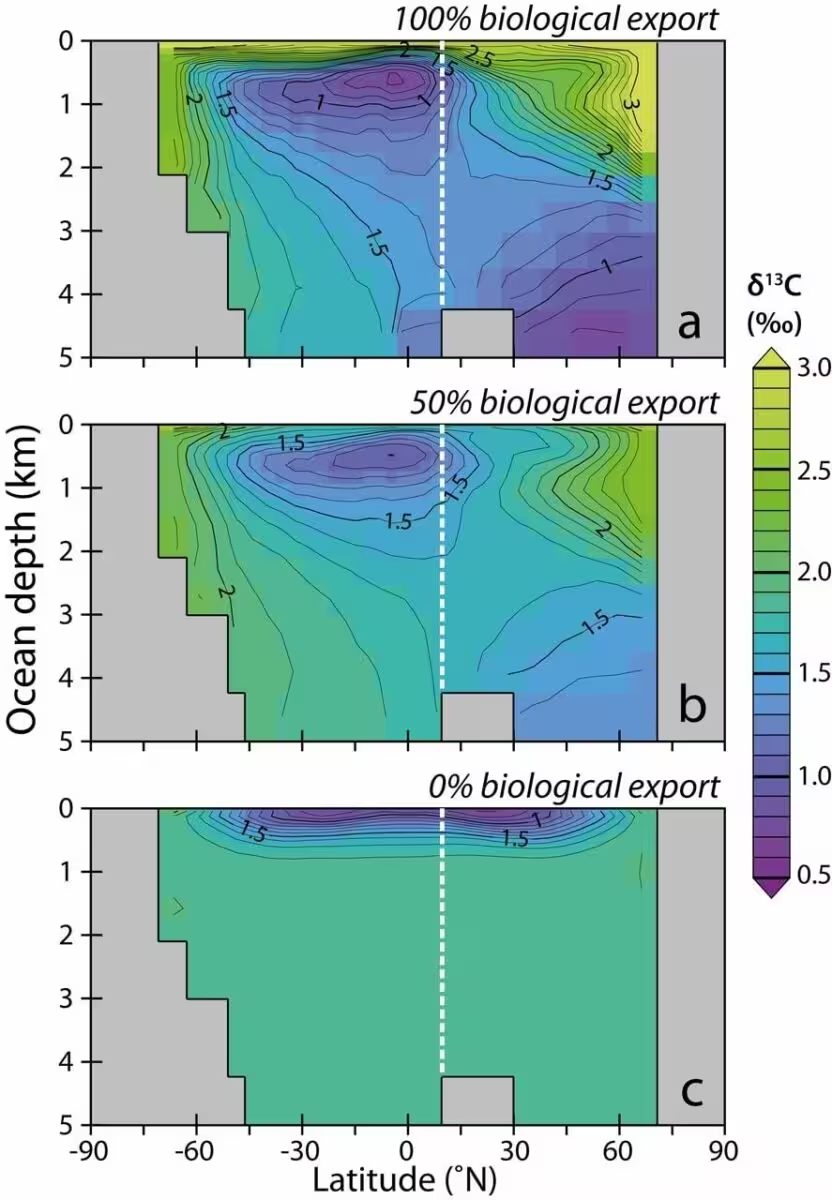
This sudden shift jeopardized organisms that construct calcium‑carbonate shells, causing a steep decline in surface‑water biodiversity and cutting oceanic photosynthesis roughly in half.
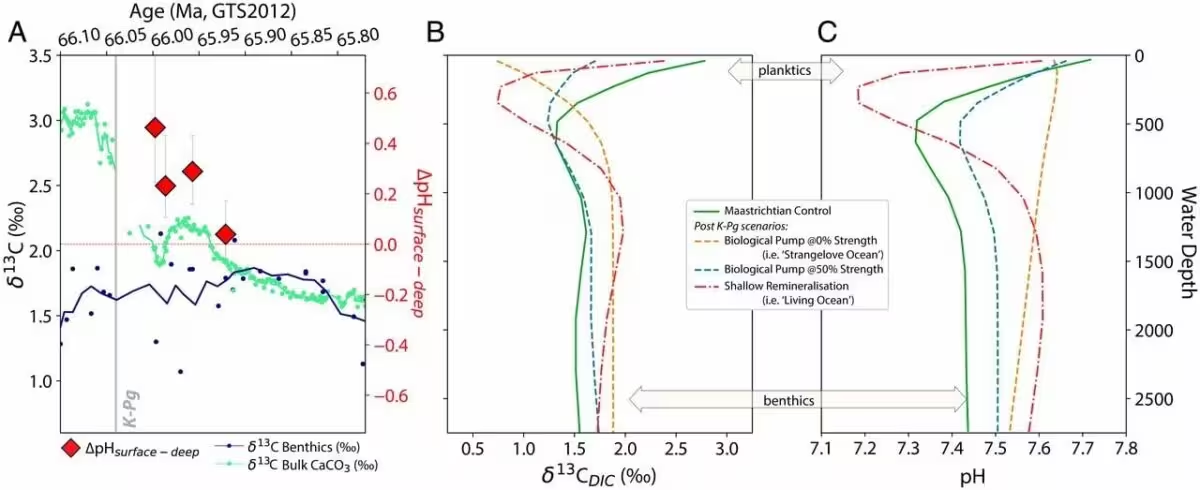
Recovery was prolonged: photosynthetic activity remained low for tens of thousands of years, and it took several million years for calcareous algae to repopulate and for the carbon cycle to stabilize.
Exceptional Clay Deposit Captures Immediate Aftermath
A key component of the study came from a thick clay horizon uncovered in a Dutch cave. Such deposits are rare because sedimentation usually proceeds too slowly to preserve rapid, impact‑related events.
“In this cave, an especially thick layer of clay from the immediate aftermath of the impact accumulated, which is really quite rare,” Henehan said.
The abundant fossils within this clay slab allowed the team, led by researchers formerly at Yale University and now at the GFZ Helmholtz Centre, to resolve the extinction interval with unprecedented precision. Using the HELGES laboratory’s femtosecond laser, they measured chemical signatures in minute samples, paving the way for high‑resolution reconstructions of Earth‑system disturbances even in low‑sedimentation settings.
“This will in the future enable us to reconstruct disturbances in the Earth‑climate system at really high resolution in time, even from locations with very low sedimentation rates.”
This article has been fact checked for accuracy, with information verified against reputable sources. Learn more about us and our editorial process.
Last reviewed on .
Article history
- Latest version
Reference(s)
- “Michael J. Henehan.” <https://www.michaelhenehan.science/>.
- jz, Created. “It really was the asteroid.”, October 22, 2019 <https://www.gfz.de/en/press/news/details/it-really-was-the-asteroid>.
Cite this page:
- Posted by Bilal Abbasi