China’s 3,000‑Km Green Belt Turns Desert Edge Into a Carbon Sink
The 3,046‑km Taklamakan green belt now absorbs more CO2 than the desert releases, turning the arid landscape into a carbon sink.
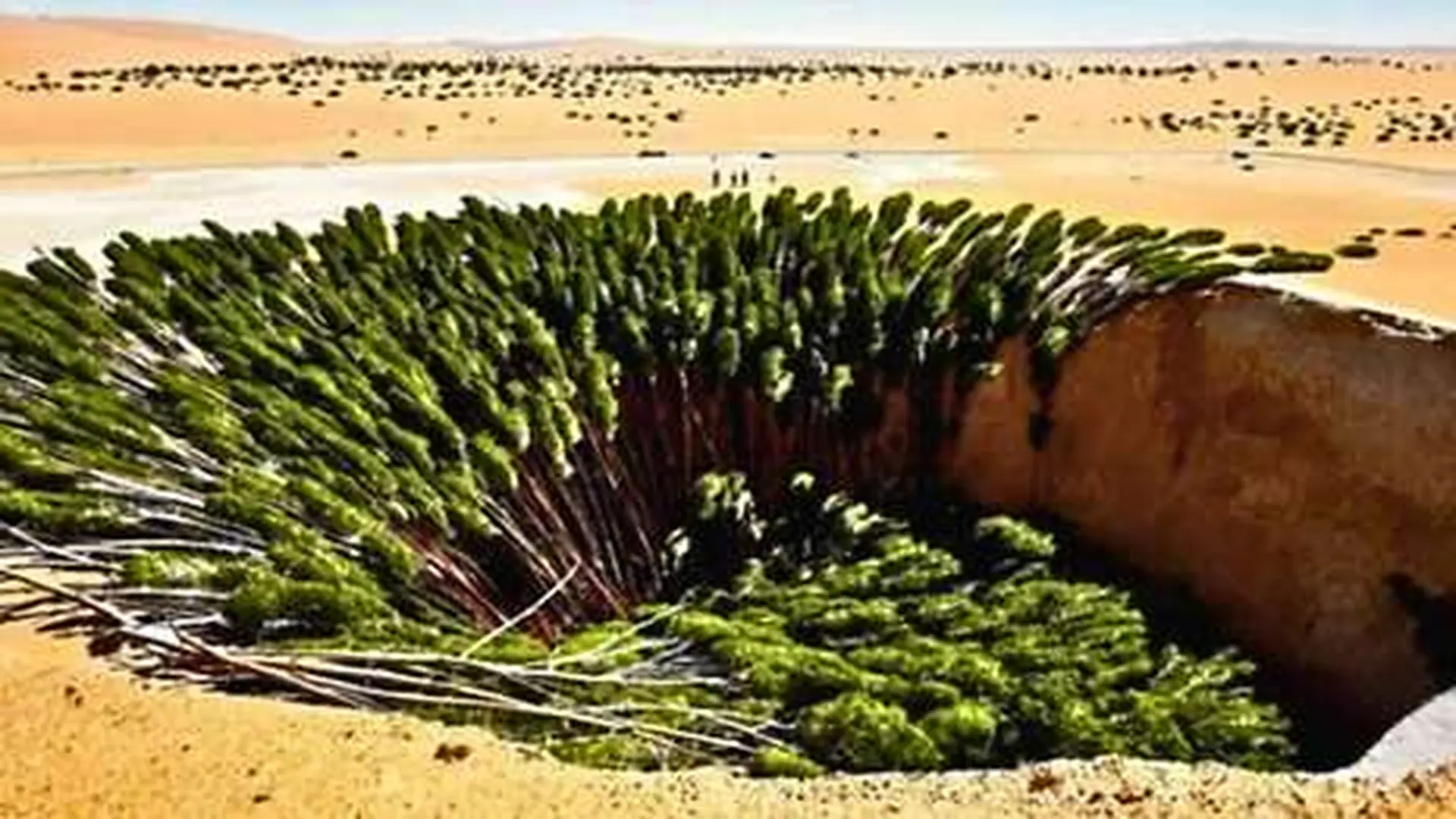
On 28 November 2024, crews working along the southern margin of the Taklamakan Desert laid the last 100 metres of vegetation, sealing a 3,046‑kilometre strip of greenery that encircles one of the planet’s most inhospitable deserts. The project, carried out in China’s Xinjiang region, marks the culmination of decades of incremental tree‑planting along the desert’s edge.
A study released in January 2026 in PNAS reveals an unexpected benefit: the vegetated fringe now absorbs more atmospheric carbon dioxide than the desert itself emits, turning the rim into a net carbon sink.
Spanning roughly 337,000 square kilometres—slightly larger than the U.S. state of Montana—over 95 % of the Taklamakan is composed of shifting sand. Bordered by high mountains that block moisture for most of the year, the basin has long been regarded as a barren expanse with little native vegetation.
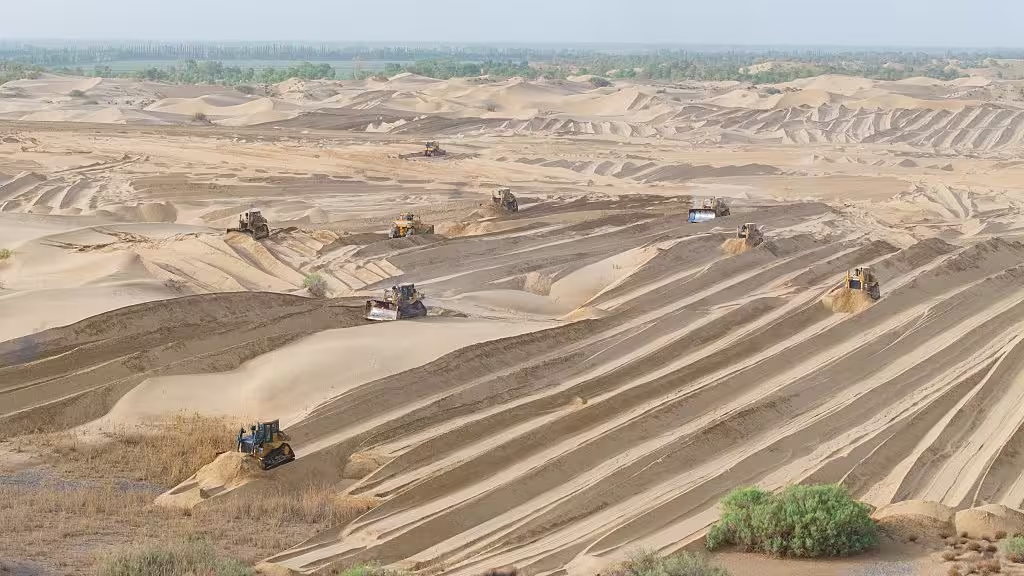
The belt was originally conceived as a protective shield for roads, farms and settlements against encroaching dunes, not as a climate‑mitigation tool. The carbon‑sequestration insight emerged after 25 years of satellite monitoring and on‑the‑ground surveys.
Roots in the Three‑North Shelterbelt Initiative
The Taklamakan ring is a prominent segment of China’s Three‑North Shelterbelt Program, launched in 1978 and popularly known abroad as the Great Green Wall. The scheme set out to plant billions of trees across the country’s arid north to curb desertification—a process that intensified following extensive land conversion for agriculture and urban development after the 1950s.
To date, the initiative has resulted in more than 66 billion trees across northern China, boosting national forest cover from roughly 10 % in 1949 to over 25 % today.
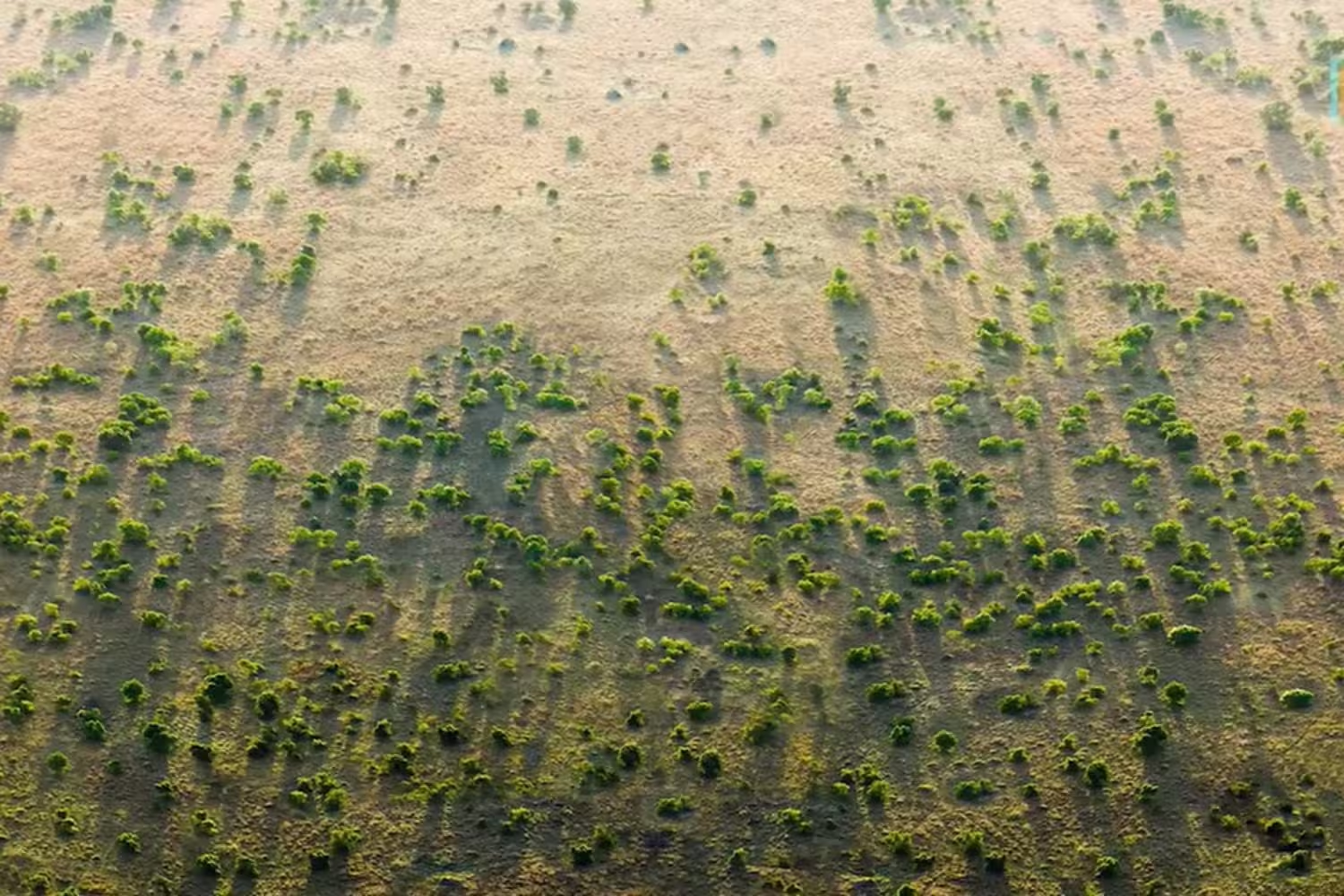
By the close of 2023, about 2,761 kilometres of the belt were already in place, leaving a final 285‑kilometre segment described by Chinese state media as the most difficult portion. That stretch, situated where dunes shift most rapidly, had required continuous repair work before the ultimate closure.
In the most exposed zones, water scarcity and moving sand often cause newly planted saplings to perish within their first year.
Monsoon‑Driven Growth Powers the Carbon Signal
Researchers focused on the brief but reliable wet season that runs from July to September, during which monthly precipitation averages around 16 mm—about two‑and‑a‑half times the dry‑season amount. This modest moisture boost triggers heightened photosynthetic activity among the shrubs and trees lining the green belt.
Correspondingly, atmospheric CO₂ concentrations over the desert fell from 416 ppm in the dry period to 413 ppm during the wet months, mirroring the spatial extent of the planted strip.
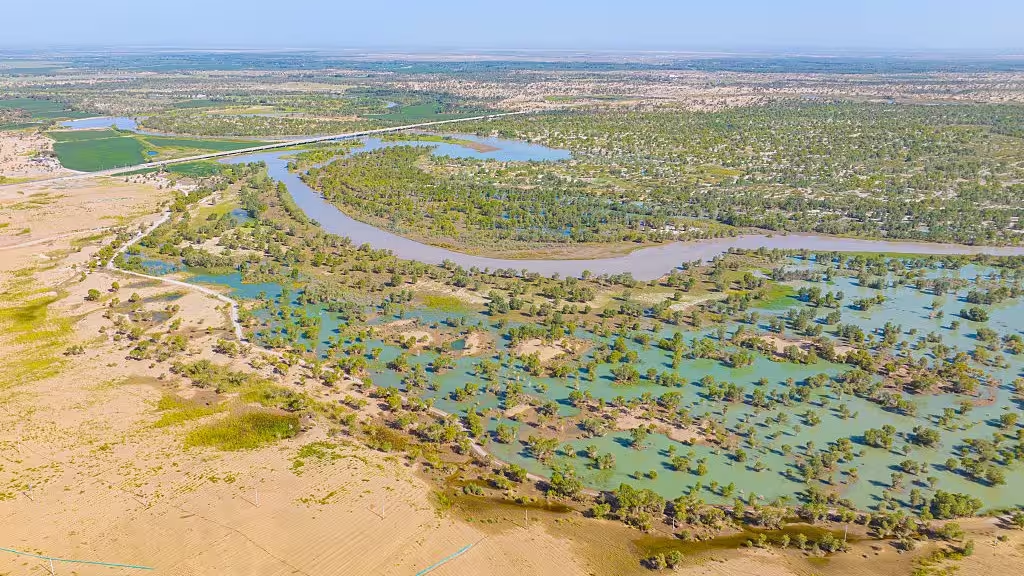
To verify the pattern, the team combined remote‑sensing observations, field measurements across various vegetation types, and NOAA’s Carbon Tracker model, which maps global CO₂ sources and sinks. The carbon‑drawdown signal remained consistent throughout the 25‑year record, especially where the green belt is densest.
Biological Uptake, Not Soil Chemistry, Drives the Effect
The authors distinguish their results from earlier work on abiotic carbon absorption, a chemical process by which dry soils can trap CO₂ without plant involvement. Prior studies suggested that desert sands might store carbon in this way, yet rising temperatures can cause the trapped gas to be released back into the atmosphere.
Instead, the new research attributes the observed sink to living vegetation along the perimeter. Co‑author Yuk L. Yung, a Caltech planetary‑science professor and senior researcher at NASA’s Jet Propulsion Laboratory, explained to Live Science that “human‑led intervention can effectively enhance carbon sequestration in even the most extreme arid landscapes, demonstrating the potential to transform a desert into a carbon sink and halt desertification.”
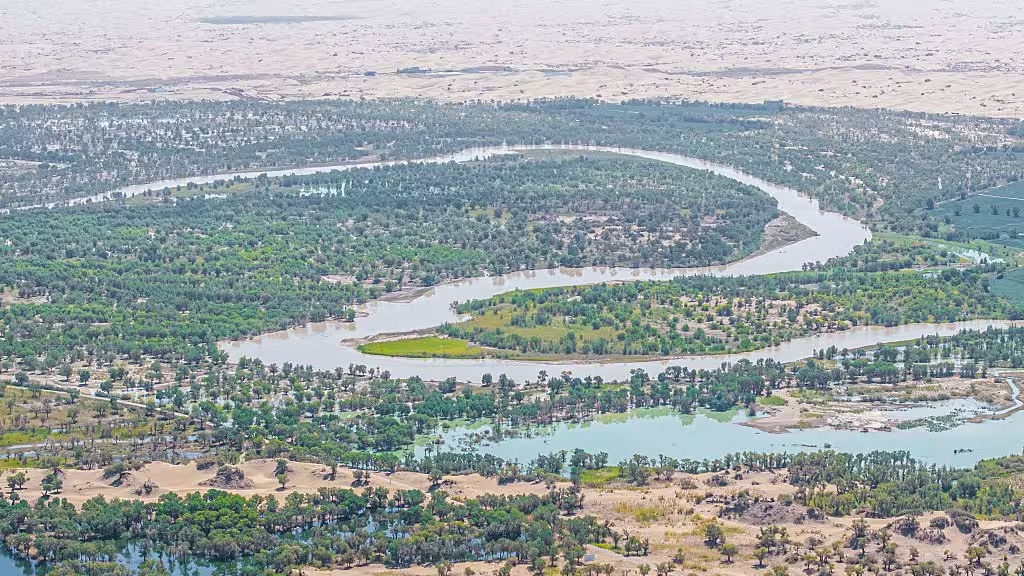
Yung emphasized that the carbon‑sink effect is confined to the rim, not the interior dunes, and suggested it could serve as a model for other desert regions. Atmospheric scientist King‑Fai Li, also involved in the study, warned that tree‑planting alone cannot resolve the broader climate crisis.
Water Diversion Sustains the Green Perimeter
Long‑term viability of the belt depends on water supply far beyond the limited seasonal rains. Most of the Taklamakan basin receives insufficient precipitation to maintain vegetation without active irrigation, especially in sections distant from river networks.
Reuters reported that Chinese authorities intend to keep expanding planting and restoration along the edge, including flood‑water diversion projects aimed at reviving poplar forests on the northern side—the operational core of what appears as a simple “wall of trees.”
Implementing such hydrological engineering highlights the scaling challenge: in a region where rivers flow only part of the year and groundwater is already strained by agriculture and settlements, allocating water to the planted line involves difficult trade‑offs.
This article has been fact checked for accuracy, with information verified against reputable sources. Learn more about us and our editorial process.
Last reviewed on .
Article history
- Latest version
Reference(s)
- Noor, Salma., et al. “Human-induced biospheric carbon sink: Impact from the Taklamakan Afforestation Project.” Proceedings of the National Academy of Sciences, vol. 123, no. 4, January 20, 2026 National Academy of Sciences, doi: 10.1073/pnas.2523388123. <https://www.pnas.org/doi/10.1073/pnas.2523388123>.
- Pare, Sascha. “China has planted so many trees around the Taklamakan Desert that it's turned this 'biological void' into a carbon sink.”, February 11, 2026 Live Science <https://www.livescience.com/planet-earth/plants/china-has-planted-so-many-trees-around-the-taklamakan-desert-that-its-turned-this-biological-void-into-a-carbon-sink>.
- <https://www.reuters.com/world/china/china-completes-3000-km-green-belt-around-its-biggest-desert-state-media-says-2024-11-29/>.
Cite this page:
- Posted by Bilal Abbasi