Ancient Magma Pathways Uncovered Beneath the World’s Largest Ocean Plateau
Scientists uncover the hidden tale of a massive, ancient underwater volcano that formed one of Earth’s largest marine structures.
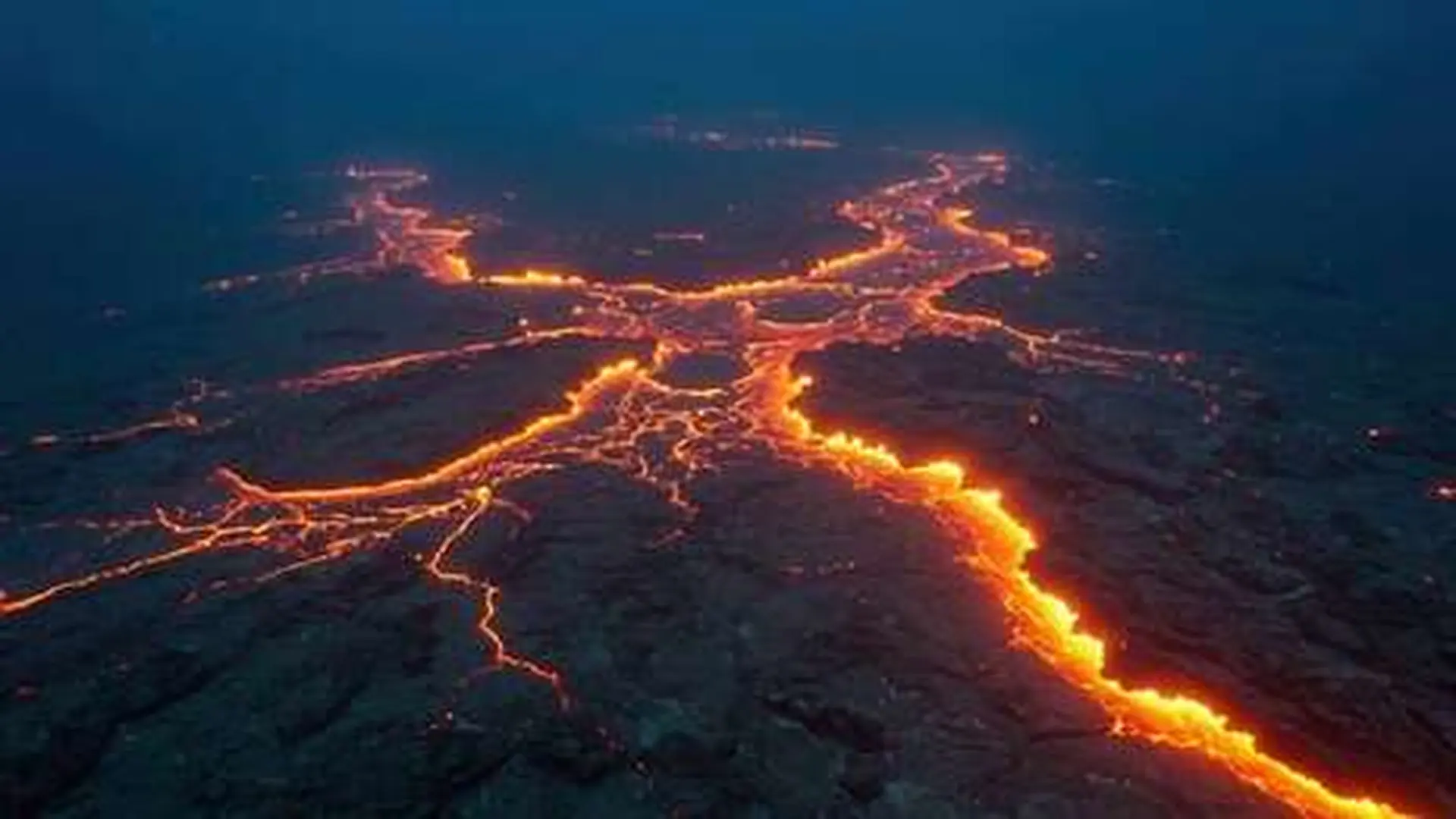
A colossal eruption that created the Ontong Java Plateau also restructured the oceanic plate beneath it, altering both its architecture and chemistry, researchers report.
The findings demonstrate that massive volcanic events can imprint deep, lasting changes on the Earth’s crust, with magma forcing its way through existing plates and reshaping them from within rather than merely coating the seafloor with lava.
Formed roughly 110–120 million years ago during one of the most extensive periods of submarine volcanism, the Ontong Java Plateau (OJP) is the planet’s largest oceanic plateau and has long intrigued scientists for its potential effects on ocean chemistry, climate, and marine life.
A research team led by Lecturer Azusa Shito of Okayama University of Science, together with Associate Professor Akira Ishikawa from the Institute of Science Tokyo and Professor Masako Yoshikawa of Hiroshima University, probed the plate’s interior to uncover what lies beneath the massive structure.
Uncovering an Unexpected Sub‑Plateau Landscape
The investigators analyzed high‑frequency seismic signals known as Po and So waves, which travel through oceanic lithosphere and reveal subsurface features by variations in velocity and amplitude.
Their study, appearing in Geophysical Research Letters, showed that Po waves propagated relatively unimpeded beneath the Ontong Java Plateau, whereas So waves experienced a marked attenuation, a pattern that deviates from typical oceanic plate behavior.
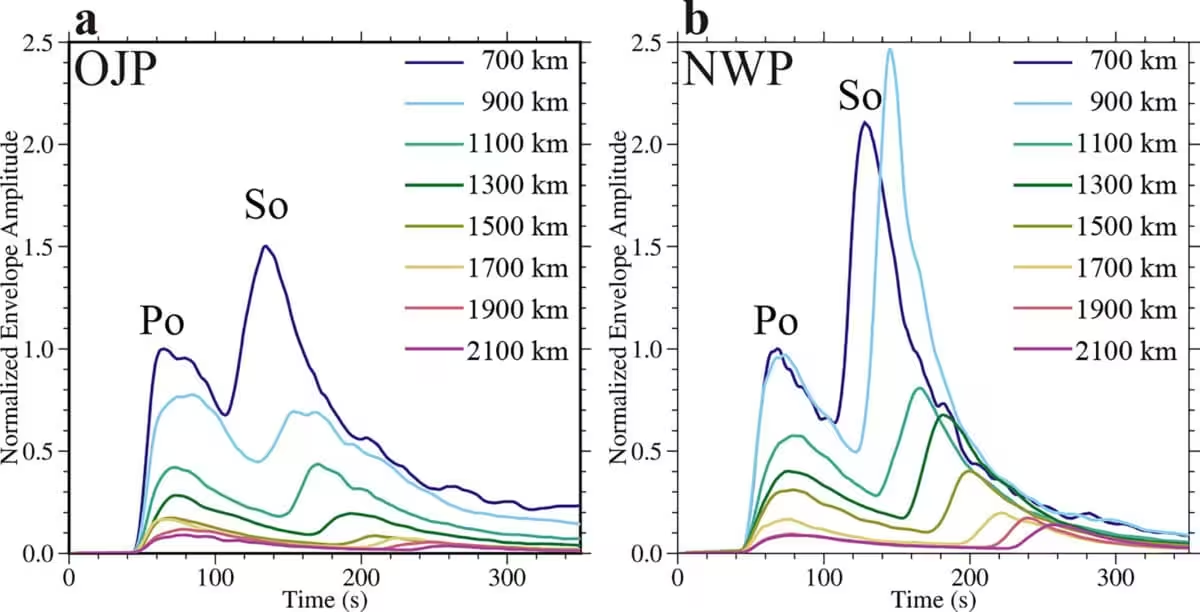
These seismic anomalies point to a complex interior comprising horizontal stratifications intersected by numerous vertical conduits created by ancient magma migration.
Data were gathered from ocean‑bottom seismometers deployed around the plateau and from instruments stationed on nearby islands, enabling the team to map the concealed structures.
A Hidden Network of Magma Channels
The analysis identified extensive vertical intrusions, or dike swarms, formed when molten rock forced its way through fractures before solidifying.
This evidence suggests that, during the plateau’s formation, deep‑seated magma penetrated the pre‑existing oceanic plate, establishing an internal lattice of pathways rather than restricting activity to the surface.
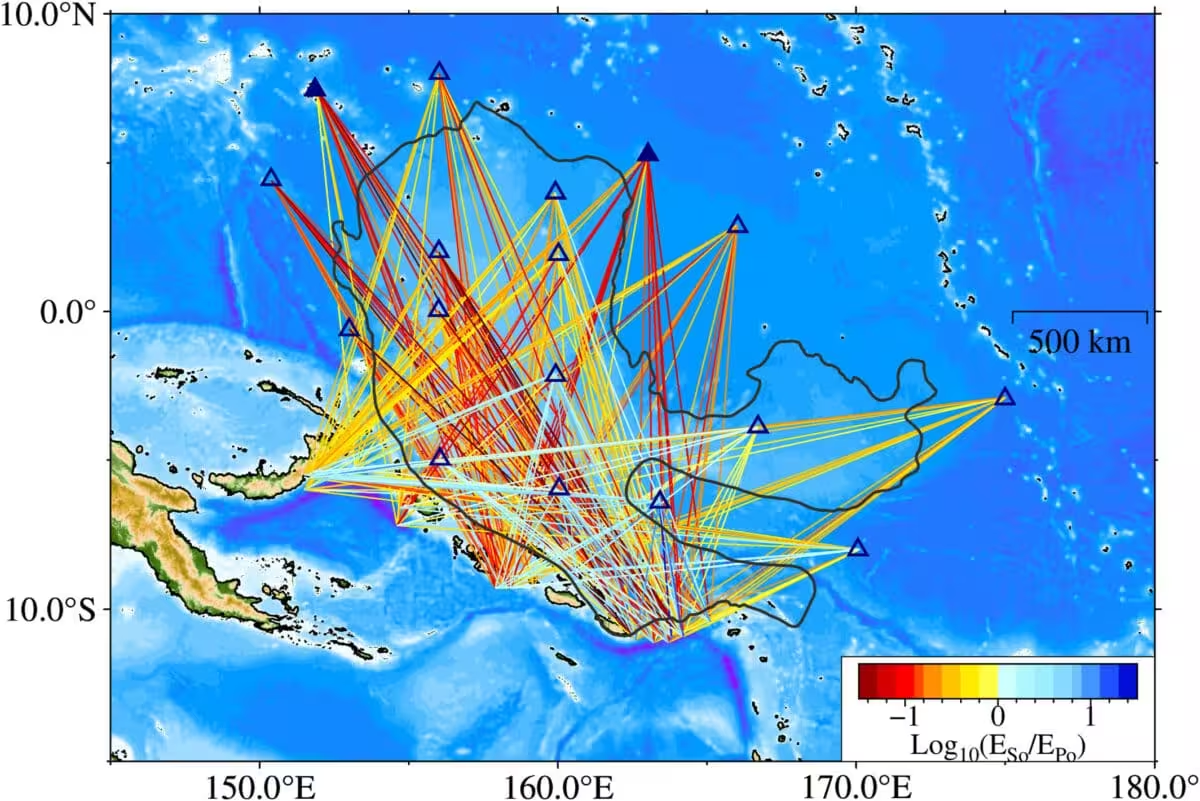
The coexistence of layered strata and vertical dike swarms accounts for the divergent behavior of Po and So waves: some waveforms traversed the orderly layers, while others were disrupted by the intrusive channels.
These observations provide a fresh perspective on the construction of colossal volcanic provinces, revealing that the massive underwater plateau retains a sophisticated internal architecture millions of years after its creation.
Chemical Transformation of the Underlying Mantle
Seismic velocities beneath the Ontong Java Plateau are slower than those typical of normal oceanic crust, indicating that the underlying rocks have been altered.
The researchers argue that the slowdown cannot be explained solely by fracturing; instead, they propose that a thermochemical mantle plume interacted with surrounding mantle material, a process known as refertilization.
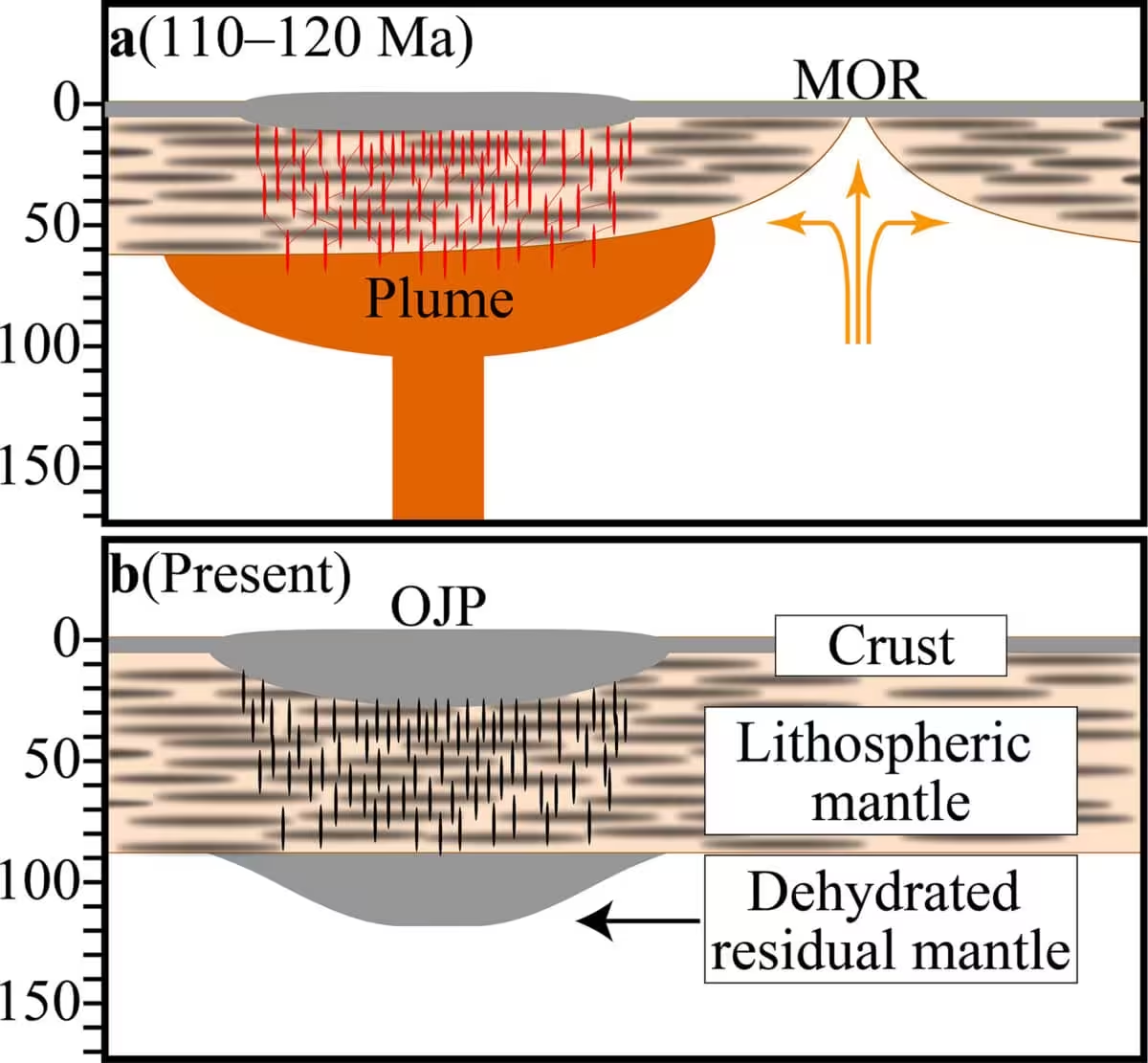
Refertilization involves the addition of magma‑derived chemical components to mantle rocks that had previously lost them during partial melting, thereby modifying mineral composition and physical properties.
This article has been fact checked for accuracy, with information verified against reputable sources. Learn more about us and our editorial process.
Last reviewed on .
Article history
- Latest version
Reference(s)
- “Azusa Shito.” <https://scholar.google.com/citations?user=zzJWlBAAAAAJ&hl=ja>.
- <https://www.researchgate.net/profile/Akira-Ishikawa-6>.
- <https://www.researchgate.net/profile/Masako-Yoshikawa>.
- Shito, Azusa., et al. “Dike Swarms in the Oceanic Lithosphere Beneath the Ontong Java Plateau.” Geophysical Research Letters, vol. 52, no. 19, September 30, 2025 American Geophysical Union (AGU), doi: 10.1029/2025GL115219. <https://agupubs.onlinelibrary.wiley.com/doi/10.1029/2025GL115219>.
Cite this page:
- Posted by Bilal Abbasi