Curiosity Rover Uncovers Pure Sulfur Inside Cracked Martian Rock
Curiosity rover discovers sulfur‑rich terrain on Mars, shedding fresh light on the planet’s geological past and fueling new exploration hopes.
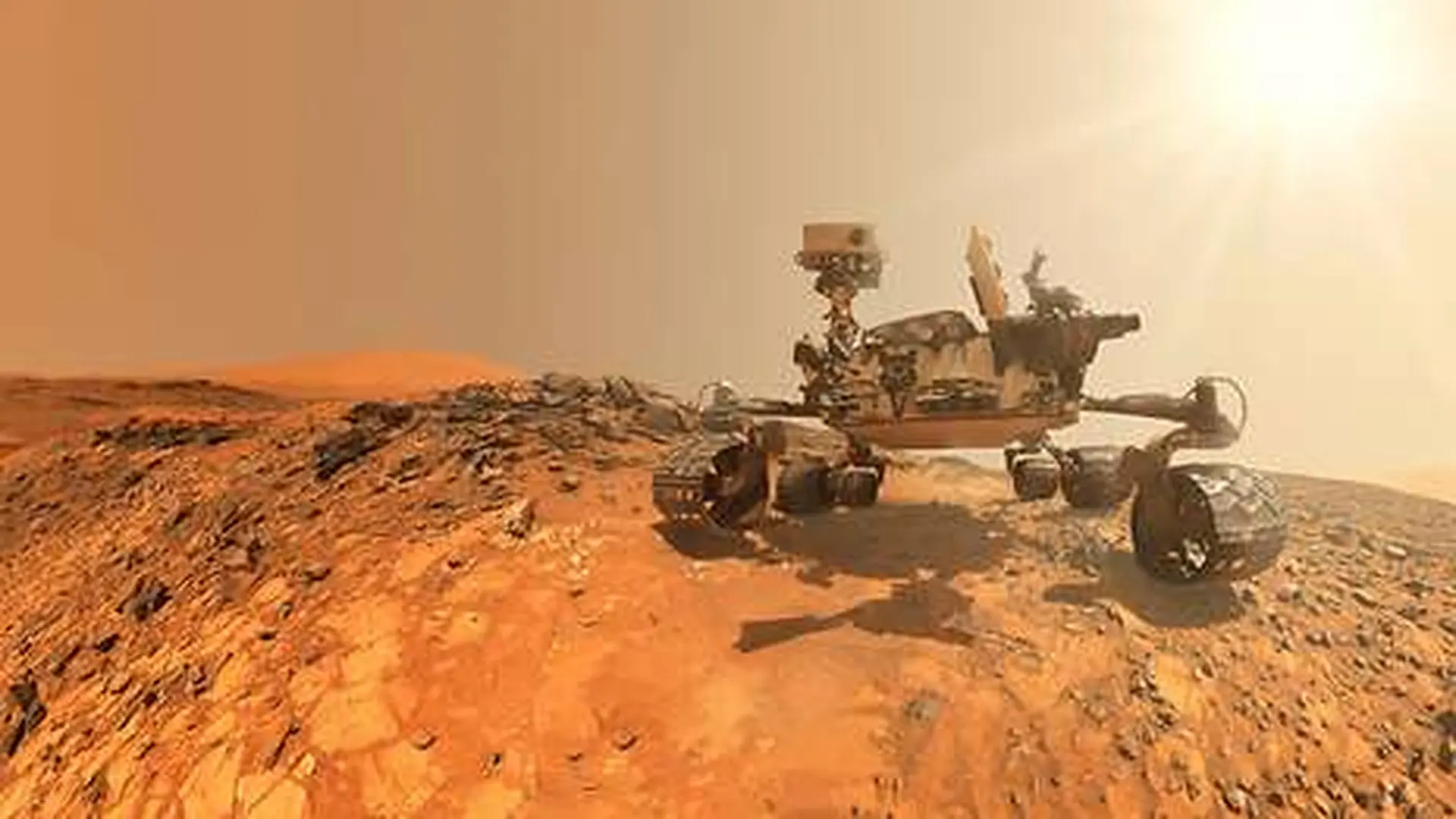
NASA’s Curiosity rover has identified bright yellow crystals of elemental sulfur on the Martian surface, a finding that challenges existing models of the planet’s geology and opens a new window onto its ancient environment.
A Routine Traverse Reveals Unexpected Sulfur Crystals
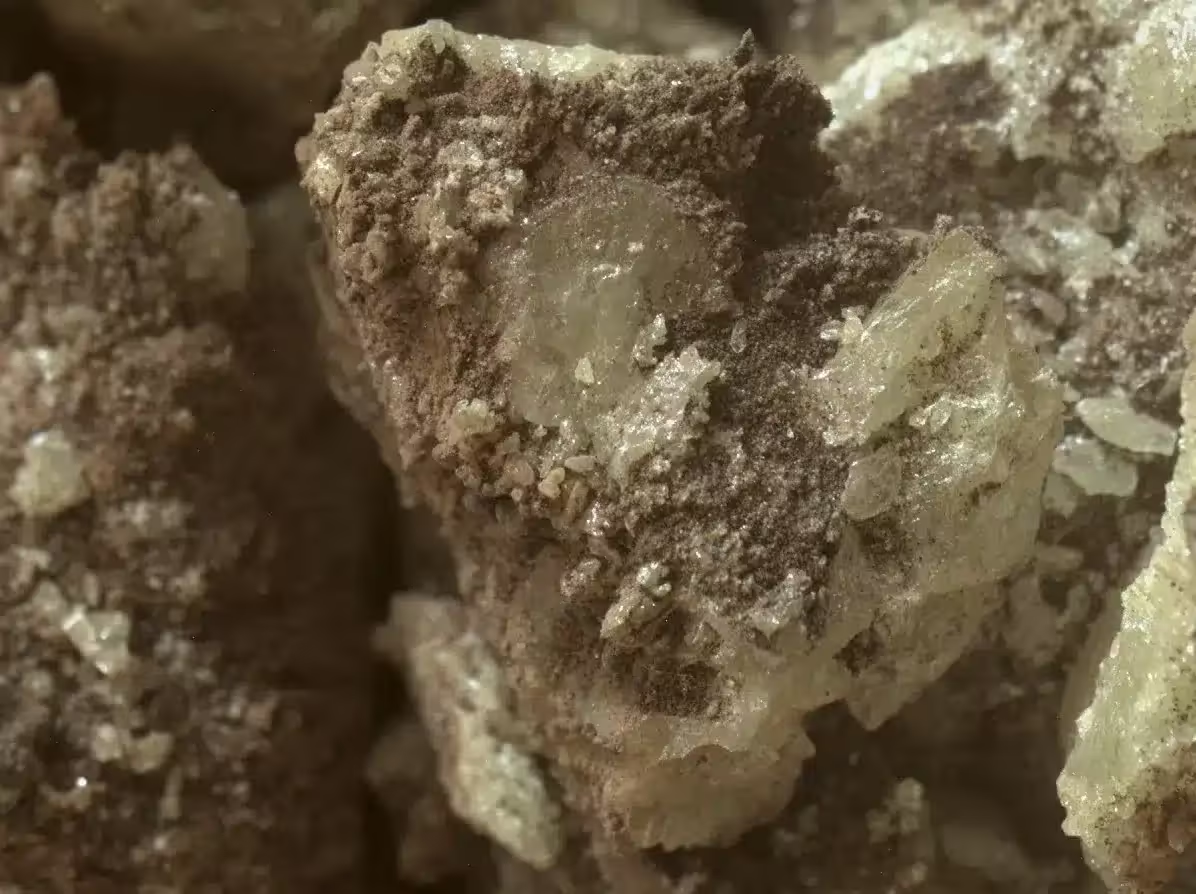
While navigating the lower slopes of Mount Sharp inside Gale Crater, Curiosity’s wheels pressed a rock that fractured under its weight, exposing a patch of pure sulfur. The mineral’s vivid hue contrasted sharply with the surrounding basaltic material, prompting immediate attention from the mission’s science team.
Previous Mars missions have frequently detected sulfate minerals, which form in the presence of water and volcanic activity over long timescales. In contrast, elemental sulfur requires a narrower set of conditions, making its appearance in this locale a surprise to researchers.
The region around the find contains many similarly colored rocks, suggesting that the sulfur exposure may be part of a more extensive formation rather than an isolated anomaly. Each new sample Curiosity acquires could therefore contribute additional clues to a geological pattern that has remained hidden until now.
What Makes Pure Sulfur So Unusual on Mars
Sulfur is abundant throughout the Solar System, yet its form conveys specific environmental information. On Mars, sulfur has predominantly been identified within sulfate compounds that result from prolonged interactions among water, volcanic gases, and sedimentary processes.
Elemental sulfur, by contrast, typically crystallizes under restricted chemical or thermal regimes, often involving rapid cooling or specific redox conditions. Determining whether volcanic outgassing, groundwater chemistry, temperature fluctuations, or atmospheric interactions created the newly observed deposits will require detailed analysis of the surrounding rocks.
Because existing geological models did not predict elemental sulfur at this site, the discovery compels scientists to revisit assumptions about the Red Planet’s past. Each unexpected observation refines the broader narrative of Mars’ evolution and underscores the value of on‑the‑ground investigations.
Curiosity’s Ongoing Mission to Decode Mars’ Past
According to NASA, the sulfur find adds a fresh chapter to Curiosity’s effort to reconstruct Gale Crater’s environmental history. Since its 2012 landing, the rover has gathered evidence of ancient lakes, river channels, and groundwater systems that could have supported microbial life.
Equipped with a suite of analytical instruments, Curiosity can dissect rock composition, pinpoint mineral phases, and interpret sedimentary structures. The ascent up Mount Sharp continues to expose strata that record distinct epochs of Martian geology, and the newly identified sulfur‑rich layers may preserve signatures of chemical processes never before observed on the planet.
This article has been fact checked for accuracy, with information verified against reputable sources. Learn more about us and our editorial process.
Last reviewed on .
Article history
- Latest version
Reference(s)
- “Curiosity Sees Martian Sulfur Up Close - NASA.” NASA <https://www.nasa.gov/image-article/curiosity-sees-martian-sulfur-up-close/>.
Cite this page:
- Posted by Bilal Abbasi