NASA’s Dragonfly Completes Critical Structural Tests, Bringing Titan Mission Closer Than Ever
NASA’s Dragonfly mission hits key engineering milestones, moving the first rotorcraft destined for Titan closer to launch and exploration.
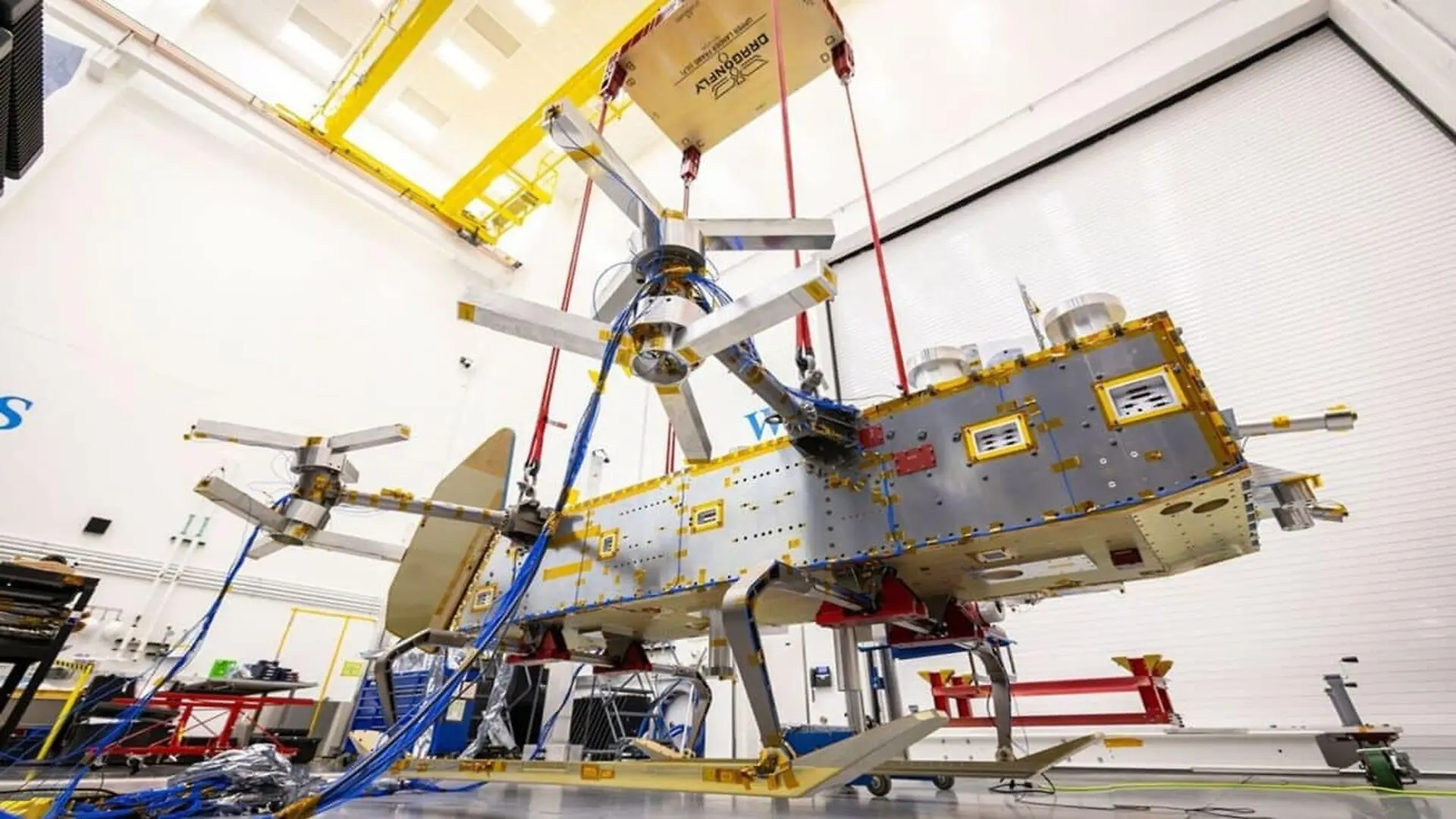
NASA’s Dragonfly rotorcraft has cleared a pivotal series of engineering examinations, confirming the spacecraft’s structural health as it moves toward integration and launch. The tests, completed by the team at Johns Hopkins Applied Physics Laboratory, demonstrate that the once‑theoretical design is now a concrete vehicle ready for the demanding Titan mission.
Blueprints Give Way to a Physical Lander
The recent verification campaign goes far beyond routine checks; it marks the moment when a digital concept became a tangible lander capable of withstanding the rigors of one of NASA’s most ambitious planetary missions. Engineers subjected the assembled structure to a battery of assessments that measured its strength, stability, and capacity to host additional hardware.
These evaluations simulated launch stresses, spaceflight loads, and the harsh flight environment anticipated on Saturn’s moon Titan. With structural milestones now achieved, the program can proceed to install avionics, scientific payloads, power modules, communications gear, insulation, and the intricate wiring that will transform the chassis into a fully operational explorer.
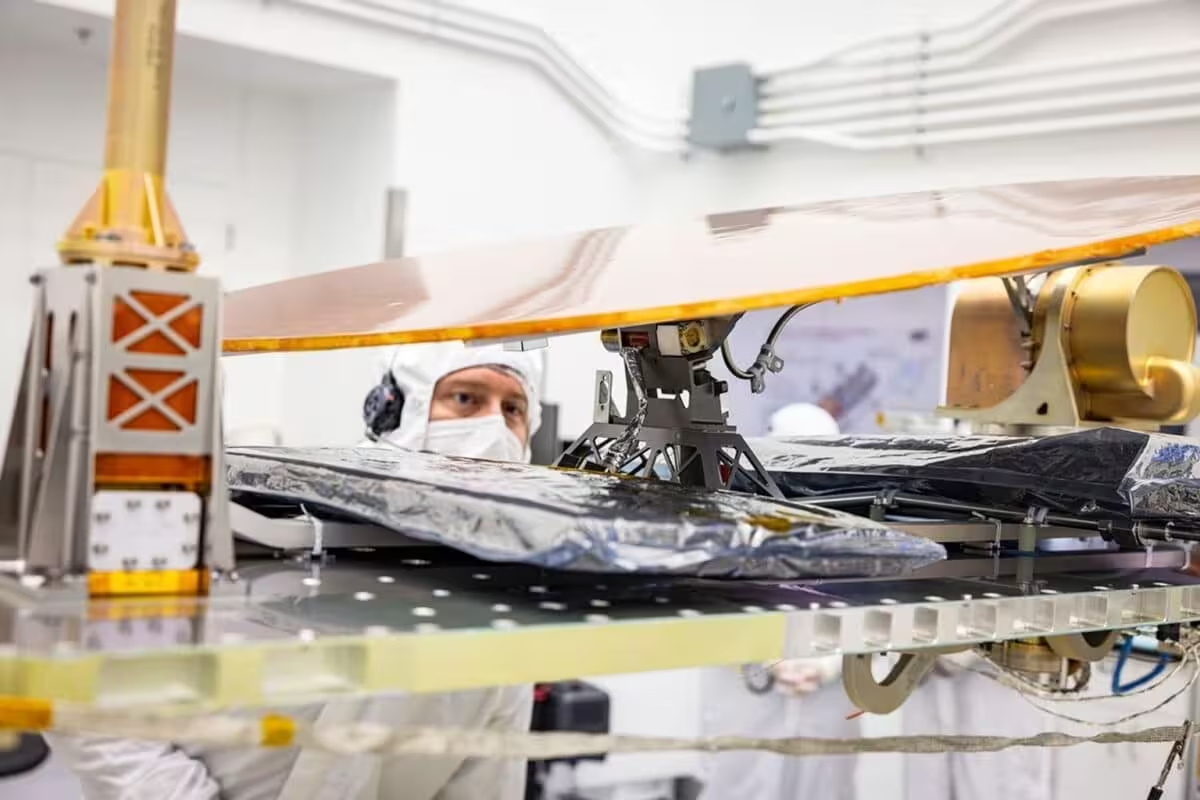
Reflecting on the milestone, Hunter Reeling, the thermal‑mechanical integration and test lead at APL, said,
“It was pretty awesome to see the lander, as we designed it, become real. From here, it’s about populating that structure with electronics boxes, instruments, wiring, insulation — everything that will enable its mission. It’s all about getting Dragonfly ready to launch.”
That transition from an engineering mock‑up to a flight‑ready craft reflects years of collaboration among hundreds of engineers, scientists, and technicians, all working toward a mission unlike any previously attempted by NASA.
Pushing Every Subsystem to Its Limits
NASA reports that the team performed an extensive suite of structural verification tests designed to mimic the extreme conditions Dragonfly will face on its journey to Titan. Each component needed to prove it could survive the intense vibrations of launch and remain reliable after years of deep‑space travel.
A focal point of the campaign was the high‑gain antenna, which will relay scientific data across more than a billion kilometers back to Earth. Engineers created a dedicated deployment mechanism that folds the antenna safely during inter‑site hops and then extends it for communications.
Jackson Banbury, the telecommunications mechanical and thermal lead at APL, explained the necessity of the design.
“Every time the lander prepares to fly to another location, we store the antenna so it survives the vibrations created during flight and prevents resonance that could interfere with the rest of the lander,” Banbury said.
Successful completion of these checks confirms that the communications system will operate safely throughout the mission while shielding the vehicle during repeated flights across Titan’s surface.
A Ground‑Based Flight Simulation
One of the most striking moments of the testing campaign involved a suspension test that let engineers watch how the spacecraft behaved while hanging freely. Although the lander hovered only a few centimeters above the floor, the setup reproduced the loads expected during powered flight on Titan.
The exercise gave the team a rare glimpse of force distribution within the rotorcraft as it essentially floated under its own support system, informing models that predict performance in Titan’s low gravity and dense atmosphere.
Mechanical systems engineer Gordon Maahs described the experience, stating,
“Suspended for a few hours during that test – even barely above the floor – was structurally akin to Dragonfly’s first flight. It gets the imagination going about what actual flight will look... I’ve never seen a test like it on any other spacecraft.”
The unique suspension test underscores how Dragonfly blends spacecraft engineering with advanced aviation technology, prompting novel verification methods for a vehicle that has never flown before.
Ensuring Survival in Titan’s Extreme Cold
Beyond structural soundness, engineers performed meticulous sealing examinations to confirm that the lander can protect its delicate electronics from contamination while preserving the thermal environment needed for a long‑duration mission.
Data from these tests will refine thermal models and help determine how efficiently Dragonfly retains heat on Titan’s frigid surface, where temperatures hover around minus 290 °F (minus 179 °C).
Maahs added,
“We get a total flow rate based off of the sealing test, and that feeds our thermal analysis to determine if we’re sealed enough.”
These assessments reduce uncertainties before final assembly and give confidence that Dragonfly’s internal systems will remain safeguarded throughout launch, cruise, atmospheric entry, and the eventual exploration of Titan’s diverse terrain.
This article has been fact checked for accuracy, with information verified against reputable sources. Learn more about us and our editorial process.
Last reviewed on .
Article history
- Latest version
Cite this page:
- Posted by Farah Siddiqui