South Pole Telescope Reveals 7,000+ Galaxy Clusters, Opening New Window on Dark Energy
Antarctic sky survey reveals thousands of galaxy clusters, offering an unprecedented look at the universe’s evolution across billions of years.
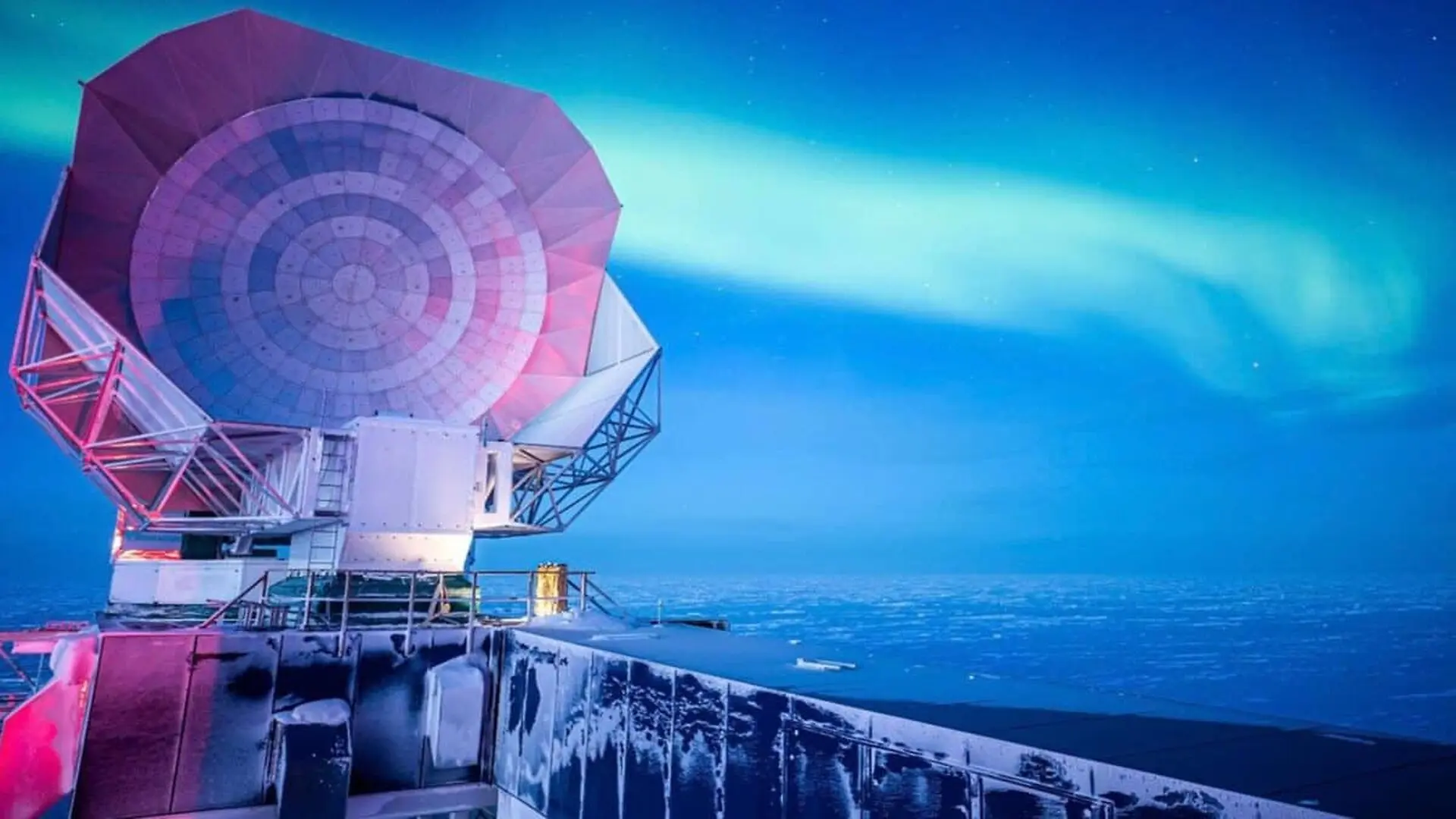
Lindsey Bleem, a physicist at Argonne National Laboratory and senior associate at the UChicago Kavli Institute for Cosmological Physics, highlighted the breakthrough: “Our analysis draws on the SPT-3G’s phenomenally deep cosmic microwave background data to open a new window onto the ancient universe. It’s a new milestone for cluster cosmology to have this catalog as a resource. It will be the core of many, many studies over the years to come.”
A comprehensive new catalog compiled from five years of observations with the South Pole Telescope at the Amundsen‑Scott South Pole Station now lists more than 7,000 confirmed galaxy clusters. The SPT‑3G camera surveyed roughly 1,600 square degrees—about 4 % of the sky—initially flagging 8,892 cluster candidates before confirming 7,190 through follow‑up optical and infrared work. The dataset, released as a preprint on arXiv, is already accessible to researchers worldwide.
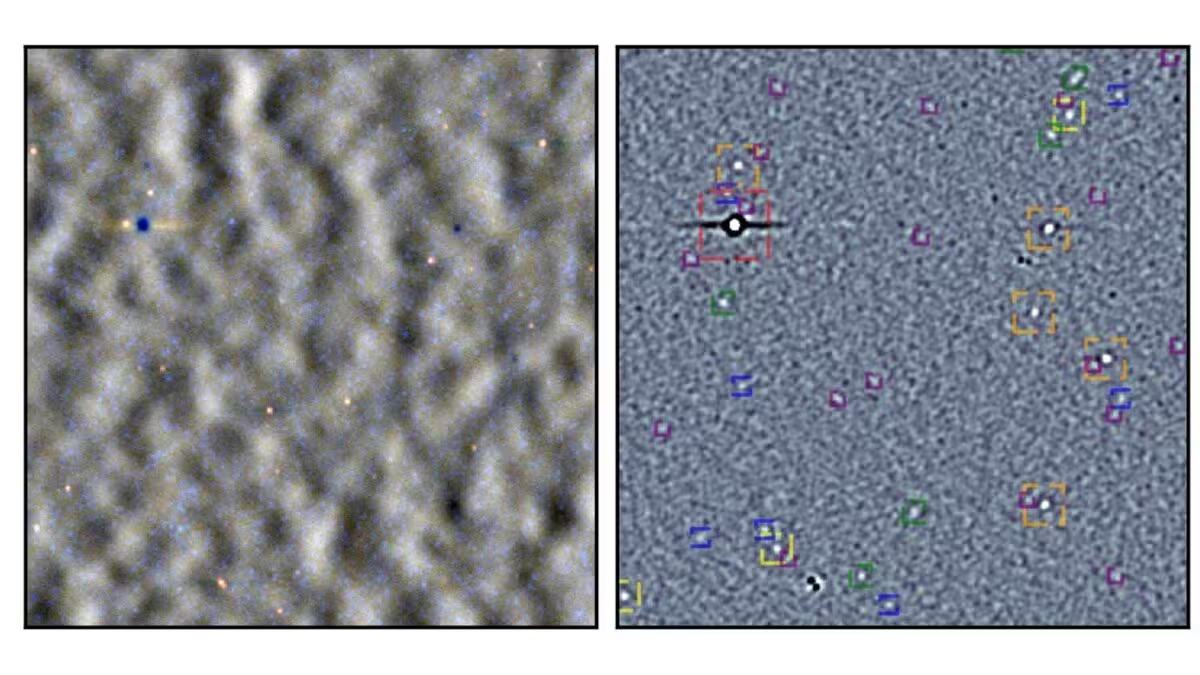
The survey’s power stems from its use of the cosmic microwave background—the faint afterglow of the Big Bang—as a backlight. When this ancient radiation traverses a massive cluster, high‑energy electrons in the hot gas imprint a subtle distortion known as the Sunyaev‑Zeldovich effect. These minute shadows appear regardless of the cluster’s distance, allowing the instrument’s roughly 16,000 detectors to spot structures that optical surveys often miss.
Kayla Kornoelje, a graduate student at the University of Chicago working at Argonne, explained the verification process: “Building a catalog like this takes a lot of careful checking behind the scenes. A big part of our work was making sure the detections are reliable so that this sample can be used with confidence in future cosmological studies.”
About 20 % of the confirmed clusters are absent from earlier compilations, and 4,824 represent the first detection of their hot‑gas component. The survey reaches back more than 7.8 billion years, encompassing roughly 1,800 clusters whose light has traveled across cosmic time. By mapping dust‑related emission trends in these distant environments, researchers have uncovered evidence that star‑forming activity and galaxy evolution differed markedly in the early universe’s dense regions.
Galaxy clusters, as the most massive gravitationally bound structures, are valuable probes of the universe’s expansion history and the influence of dark energy. Their abundance over time helps test cosmological models, while the new dataset offers a uniform basis for comparing clusters across epochs. Combining microwave‑derived detections with optical and infrared confirmations yields a uniquely versatile tool for both cosmology and galaxy‑evolution studies.
Sebastian Bocquet, senior staff scientist at the Ludwig Maximilian University Observatory in Munich and a member of the South Pole Telescope collaboration, anticipates broader impact: “With the SPT-3G cluster sample, we will probe the evolution of cosmic structure formation over the past 10 billion years.” Forthcoming surveys such as the Legacy Survey of Space and Time at the Vera C. Rubin Observatory and the European Space Agency’s Euclid mission will add complementary optical data, refining mass estimates and extending the reach to even more distant clusters. As these projects mature, the South Pole Telescope catalog is set to become a cornerstone for decoding the growth of the cosmic web.
This article has been fact checked for accuracy, with information verified against reputable sources. Learn more about us and our editorial process.
Last reviewed on .
Article history
- Latest version
Reference(s)
- mheslinga, “South Pole Telescope analysis releases new catalog of more than 7,000 galaxy clusters.”, July 6, 2026 University of Chicago <https://news.uchicago.edu/story/south-pole-telescope-analysis-releases-new-catalog-more-7000-galaxy-clusters>.
- Bleem, L.. “Galaxy Clusters Selected via the Sunyaev-Zel'dovich Effect in 5 year data from the SPT-3G Main Survey.” arXiv.org <https://arxiv.org/abs/2607.01175>.
Cite this page:
- Posted by Farah Siddiqui