Record-Breaking Barred Spiral Galaxy Discovered by JWST From
JWST reveals a distant early‑universe galaxy with unexpected features that upend traditional ideas of how galaxies form.
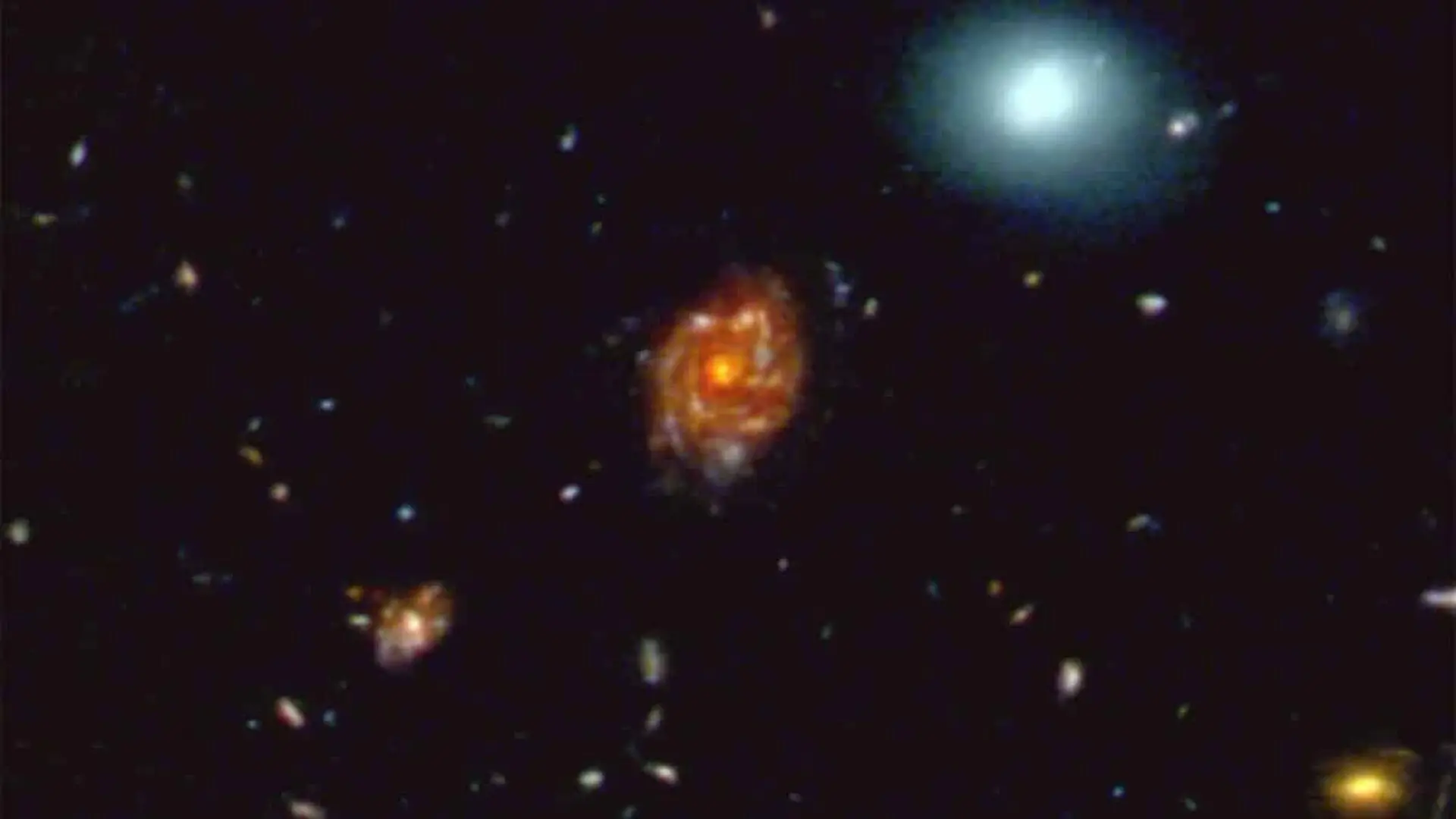
Using the James Webb Space Telescope, astronomers have identified a barred spiral galaxy that pushes the boundaries of how early such structures can appear. Designated M1149‑BSG‑z5, the object sits at a redshift of 5.1, establishing it as the most distant barred galaxy known to date. Its existence challenges earlier expectations that stellar bars would be scarce amid the turbulent conditions of the universe’s first billion years.
The discovery was made by an international collaboration headed by Xiaohan Wang of Tsinghua University, who employed JWST’s Near‑Infrared Imager and Slitless Spectrograph (NIRISS) during the telescope’s Cycle‑2 campaign.
M1149‑BSG‑z5 emerged from the imaging parallel field of the Medium‑band Astrophysics with the Grism of NIRCam in Frontier Fields program, a result reported on the arXiv preprint server on June 23.
A Barred Spiral From the Era of Reionization
Stellar bars are among the most recognizable components of spiral galaxies and are thought to influence long‑term galactic evolution by redistributing gas and stars within the disk. While such features are common in the nearby universe, theoretical models have suggested they should be rare when galaxies were first assembling. Earlier JWST observations have already revealed barred systems at redshifts around 4.0, comprising roughly 3 % to 7 % of the galaxies identified at a redshift of 3.5.
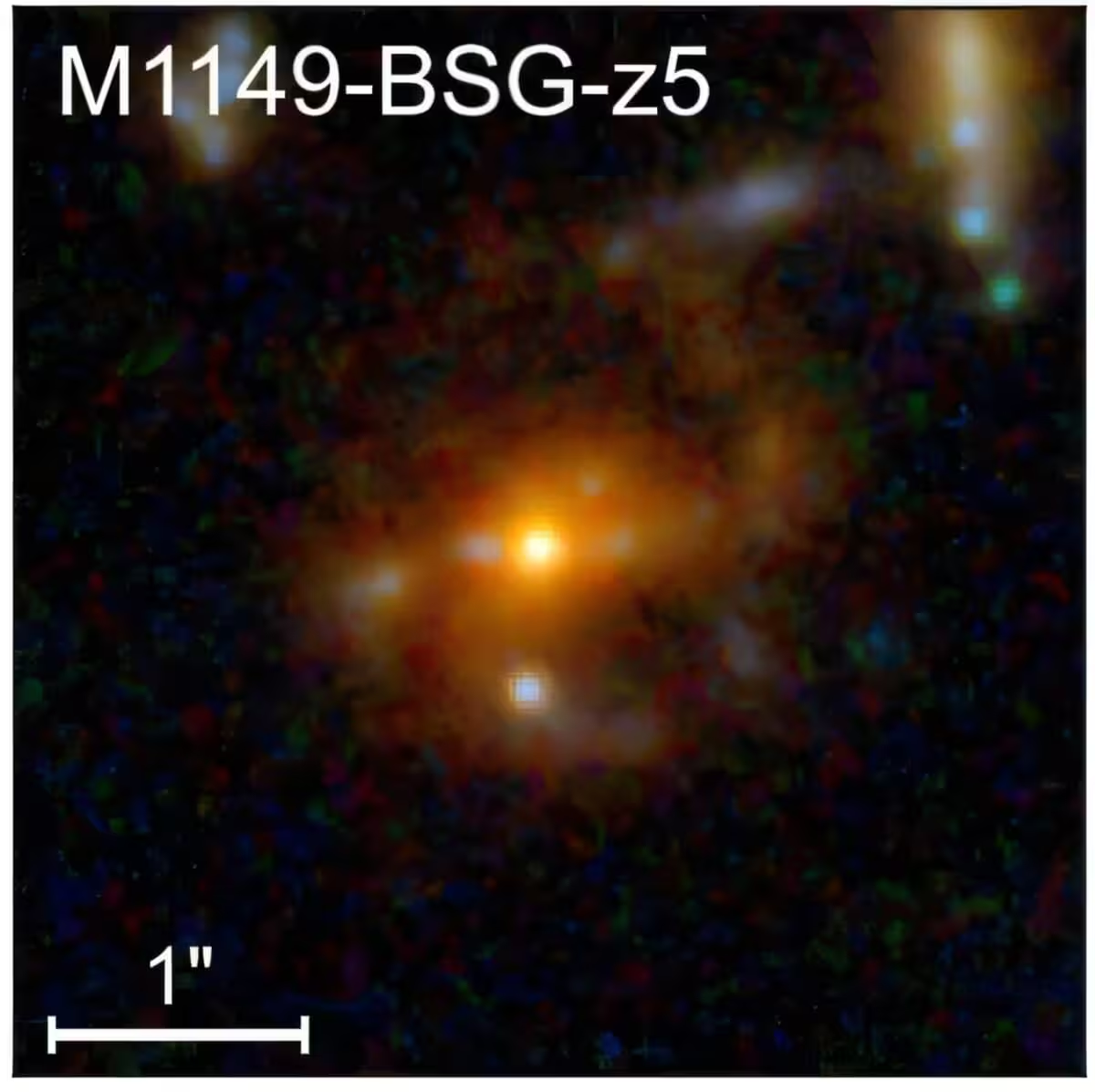
The newly catalogued galaxy hosts a stellar bar roughly 14,700 light‑years long, setting a new record for the highest‑redshift barred spiral identified so far.
Massive Structure and Vigorous Star Formation
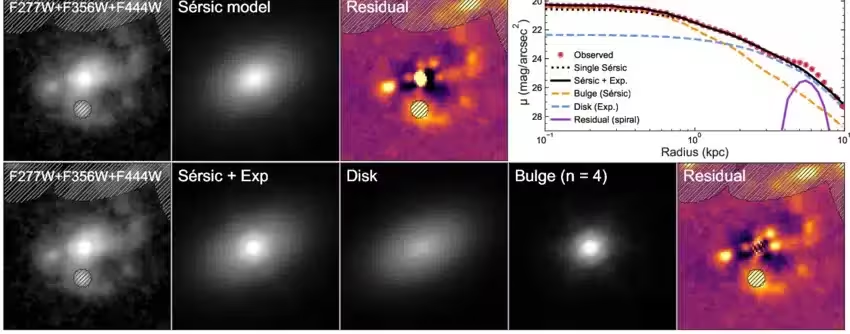
Analysis indicates that M1149‑BSG‑z5 is a substantial system, with an effective radius near 8,500 light‑years and spiral arms that reach about 17,900 light‑years. The team estimates a stellar mass of approximately 28 billion solar masses and a star‑formation rate of 144 solar masses per year, demonstrating that intense stellar birth continued even at this early epoch.
The researchers also detected an active galactic nucleus. The inferred black‑hole‑to‑stellar‑mass ratio of roughly 0.001 is lower than many high‑redshift AGNs and aligns with values observed in nearby active galaxies, according to the study.
Chemical Enrichment and Diagnostic Signatures
Beyond its morphology, M1149‑BSG‑z5 displays a metallicity of about half the solar value, indicating that earlier generations of stars had already seeded the interstellar medium with heavier elements despite the galaxy’s youth.
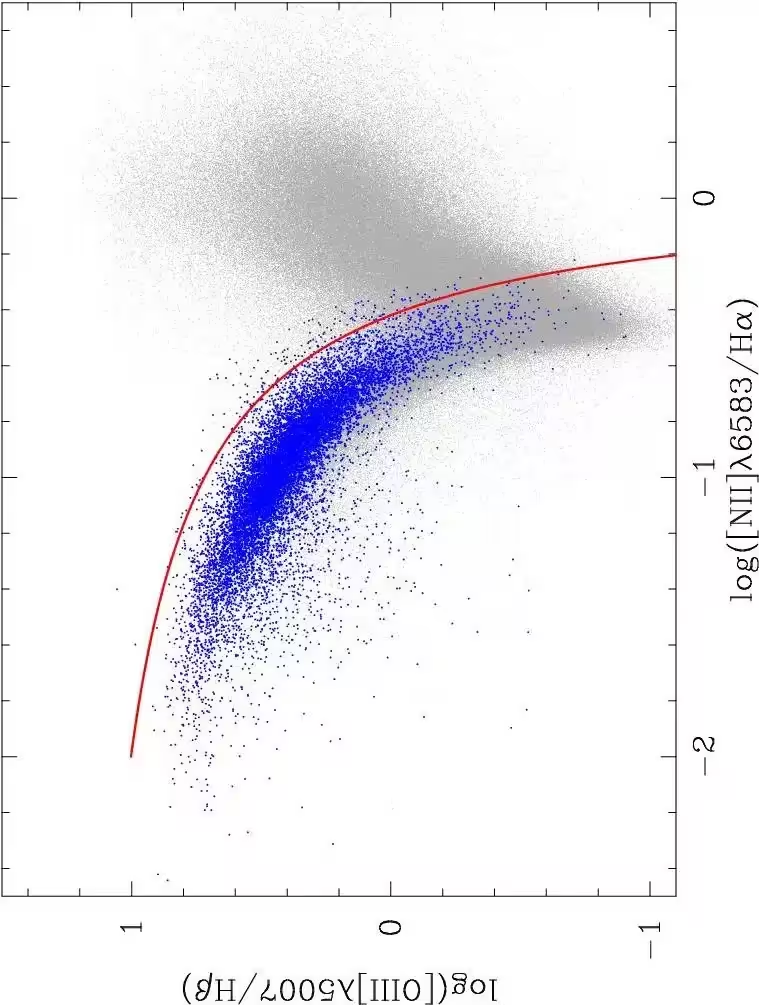
The team placed the object on the Baldwin, Phillips, and Terlevich (BPT) diagram, a diagnostic that separates ionization driven by star formation from that powered by an AGN. The galaxy’s position on this diagram, together with its metallicity and other physical characteristics, supports the view that it is a massive, chemically mature system at high redshift.
When compared with peers from the same epoch, M1149‑BSG‑z5 stands out for its size; it is larger than most galaxies observed at a redshift near 5, yet its dimensions resemble those of barred galaxies detected between redshifts 2 and 4. The authors also note a nearby companion roughly 69,000 light‑years away, raising the possibility that tidal interactions may have played a role in shaping the bar.
This article has been fact checked for accuracy, with information verified against reputable sources. Learn more about us and our editorial process.
Last reviewed on .
Article history
- Latest version
Reference(s)
- <https://www.researchgate.net/profile/Xiaohan-Wang-40>.
- Wang, Xiaohan. “A massive barred spiral galaxy at z = 5.102 discovered by JWST.” arXiv.org <https://arxiv.org/abs/2606.25022>.
Cite this page:
- Posted by Farah Siddiqui