Astronomers Warn Super‑Bright Satellites Could Drown Night Sky And Threaten Future Astronomy
A scientific assessment warns that a bold satellite plan could boost light pollution, jeopardizing astronomy and altering humanity’s night‑sky view.
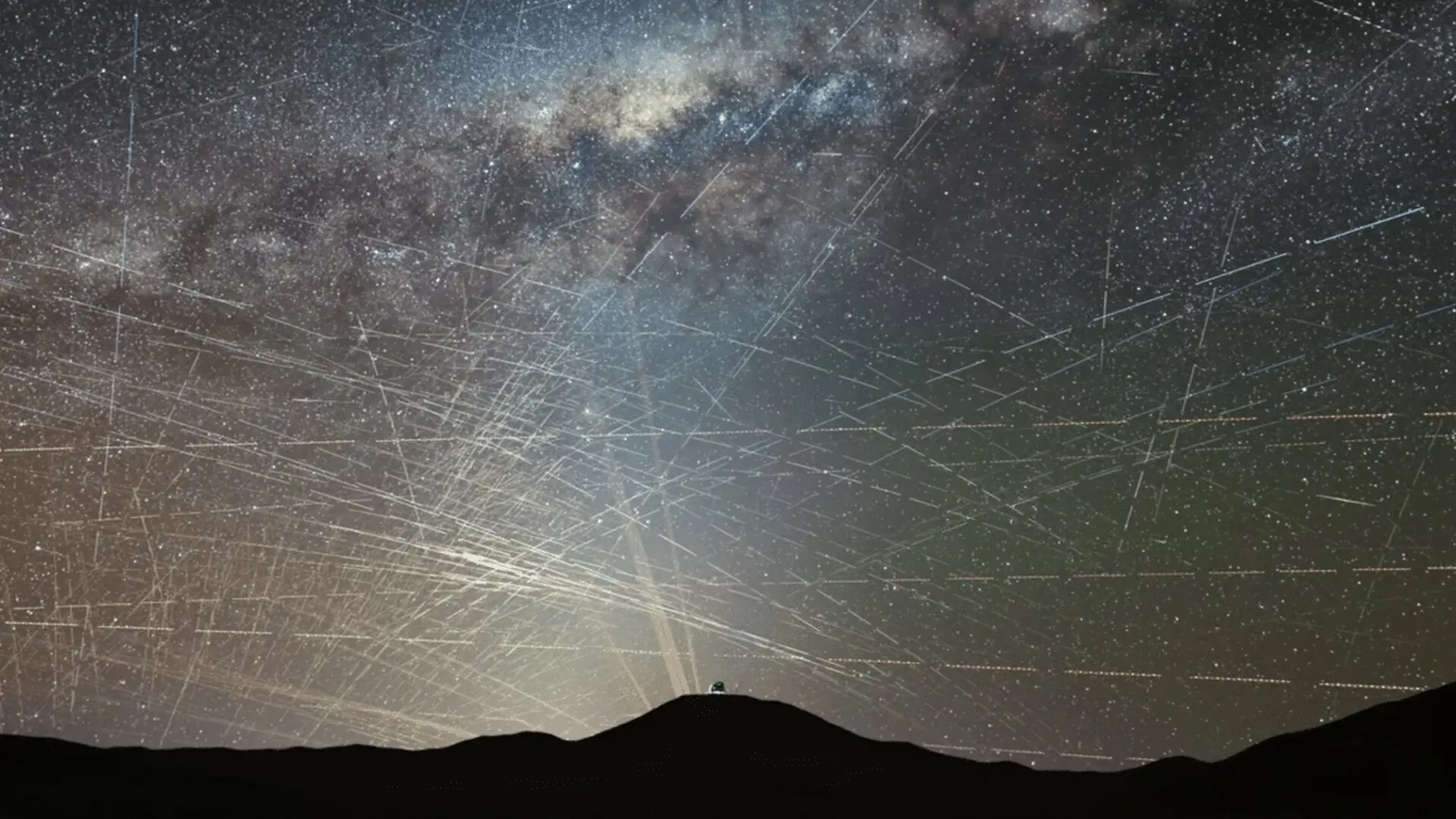
A recent analysis warns that the surge of ultra‑reflective satellites could swamp the night sky with artificial light, jeopardising the ability of astronomers to capture faint cosmic signals. The study, appearing in Astronomy & Astrophysics, underscores a growing tension between commercial space ventures and the need to preserve truly dark skies for scientific research.
Satellite Reflections May Render Telescopes Ineffective
Researchers examined the effects of deploying large fleets of mirrors designed to bounce sunlight toward Earth. Olivier Hainaut, director of operations at the European Southern Observatory (ESO) and lead author, told Space.com that the projected brightness could corrupt every observation, leaving “no point in operating the telescopes anymore because all the data will be corrupted. All. 100 percent.”
The problem goes beyond occasional streaks across images. When sunlight is reflected by thousands of satellites, the overall sky background brightens, diminishing the contrast needed to spot distant galaxies, dim stars and potentially habitable exoplanets. Observatories that rely on ultra‑dark conditions would face longer exposure times, higher operating costs and a reduction in the number of targets that can be studied each night.
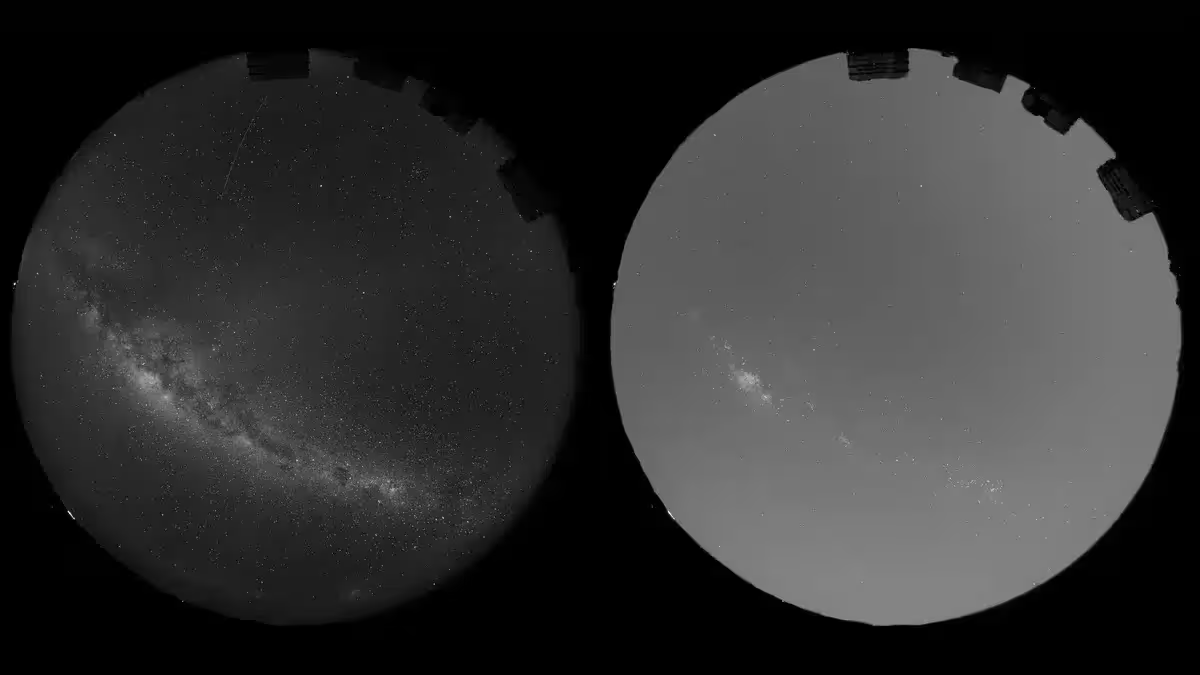
“If you increase the light pollution, it means that you will see fewer natural stars and you will see more of these satellites,” Hainaut explained. “For telescopes that means increasing exposure times. If you have a 10 percent increase in light pollution, you have to increase all the exposure times by 10 percent. It scales directly. For a 100 percent increase in light pollution, you have to increase all the exposures by 100 percent.”
Reflective Constellations Could Outshine Venus
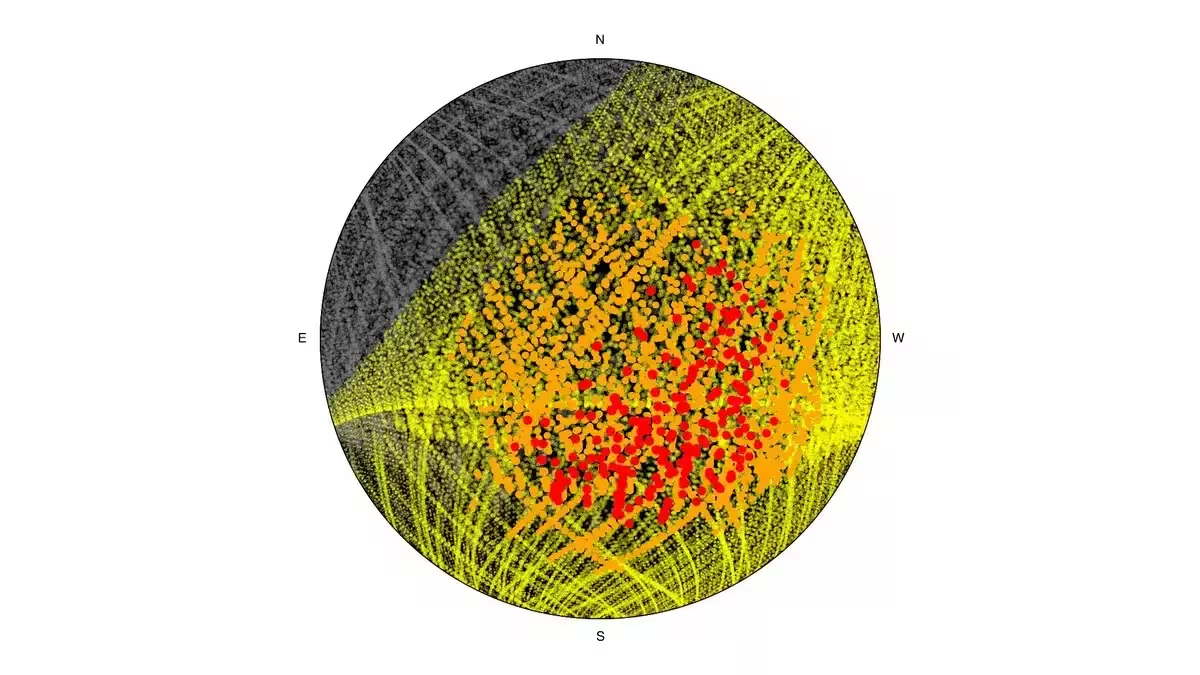
The proposed designs deliberately maximise reflected sunlight, making the satellites visible even when they are not directly illuminated. “What they propose would make our observations close to impossible. These are super bright satellites,” Hainaut said. He added that a single spacecraft could appear brighter than Venus, the brightest natural object after the Moon. “If they were to launch 50,000 of these space mirrors, there would be many hundred or even a few thousand of these super bright objects visible to observers anywhere on Earth.”
“Even outside the beam, the satellite will appear brighter than the planet Venus, which is the brightest object in the night sky after the moon,” Hainaut noted.
Current Mitigation Measures and Their Limits
Existing commercial operators have already taken steps to reduce ground‑based visibility, tilting reflective surfaces away from Earth and narrowing the spacecraft profile. “From the available information, we see that these satellites have been optimized to minimize the impact as seen from the ground,” Hainaut said. “The reflective surfaces are tilted away from Earth and the satellite itself is very narrow, pointing to Earth with its small end.” While these engineering tweaks demonstrate that mitigation is feasible, the study argues that intentionally bright mirrors represent a fundamentally different challenge.
Beyond Astronomy: Policy and Public Concerns
The issue is rapidly turning into a broader public policy debate. Robert Massey, deputy executive director of the Royal Astronomical Society, said the findings echo worries that have been building for years. “For astronomy, this would obviously be catastrophic,” he told Space.com. “It’s very difficult to imagine how you could mitigate that on this scale. But I am also concerned about the public impact. The public has not signed up for having an entirely transformed sky.”
“If it’s agreed by the FCC, this will be deeply regrettable,” Massey added. “This will say that we are in a world where large corporations can determine the view of the sky above our heads, just as they can transform the environment on Earth. But the transformation of the environment on Earth is subject to pretty tight regulations.”
He also highlighted that current space‑law frameworks were drafted before private companies began launching large constellations. “We now have to wait for the FCC to decide, because ultimately, the Outer Space Treaty was written at a time before we envisioned access to space by private entities,” Massey said.
As satellite networks proliferate and new reflective concepts emerge, the scientific community warns that choices made today will shape the feasibility of future discoveries. Balancing commercial ambition with the preservation of the night sky may become one of the most pressing challenges for space policy in the coming decades.
This article has been fact checked for accuracy, with information verified against reputable sources. Learn more about us and our editorial process.
Last reviewed on .
Article history
- Latest version
Cite this page:
- Posted by Farah Siddiqui