Giant Devonian Scorpion Over a Metre Long Unveiled From 16‑Centimetre Fossil Pincer
A 415‑million‑year‑old fossil claw reveals a giant predator that reshapes our view of life’s earliest move onto land.
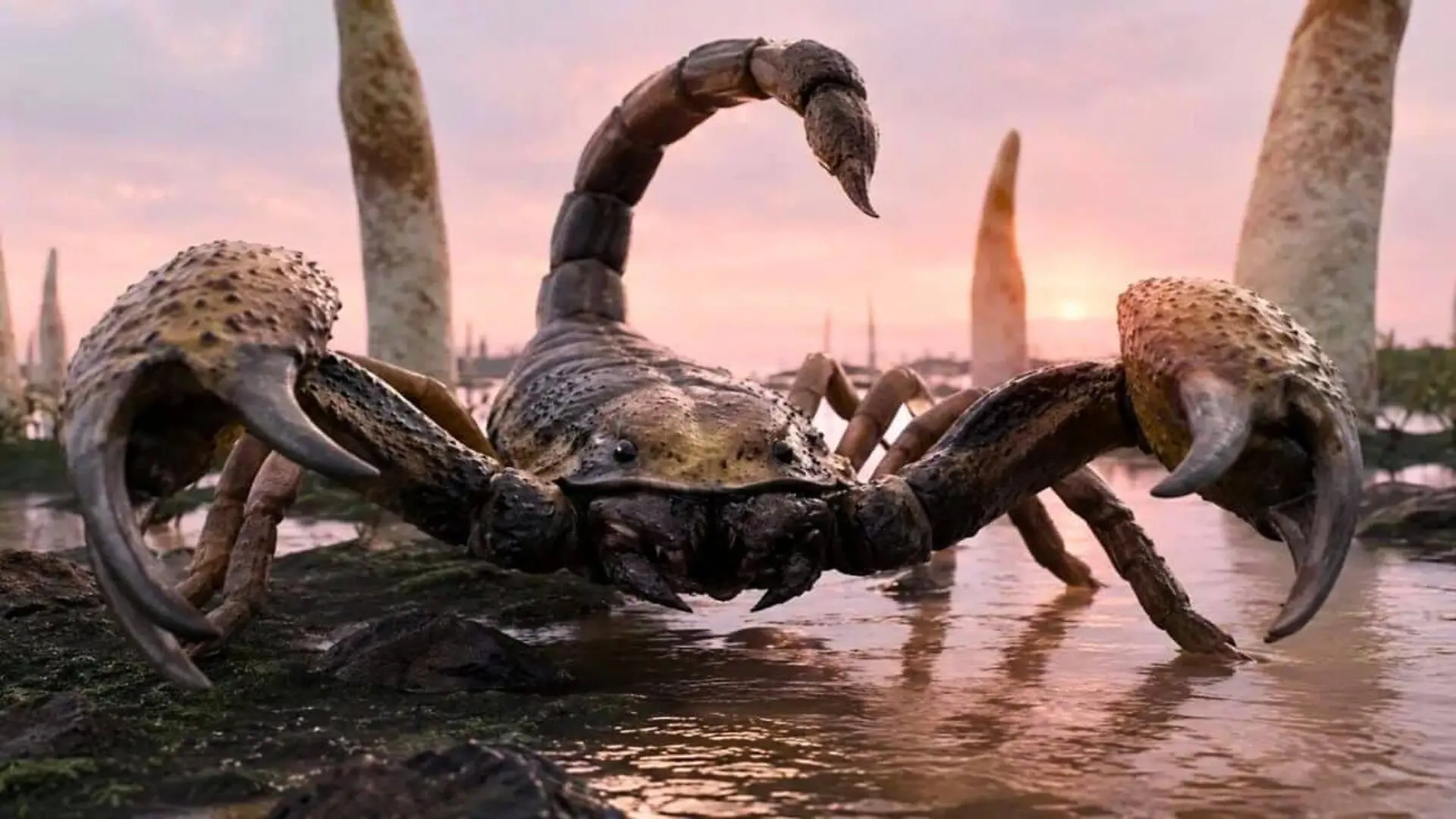
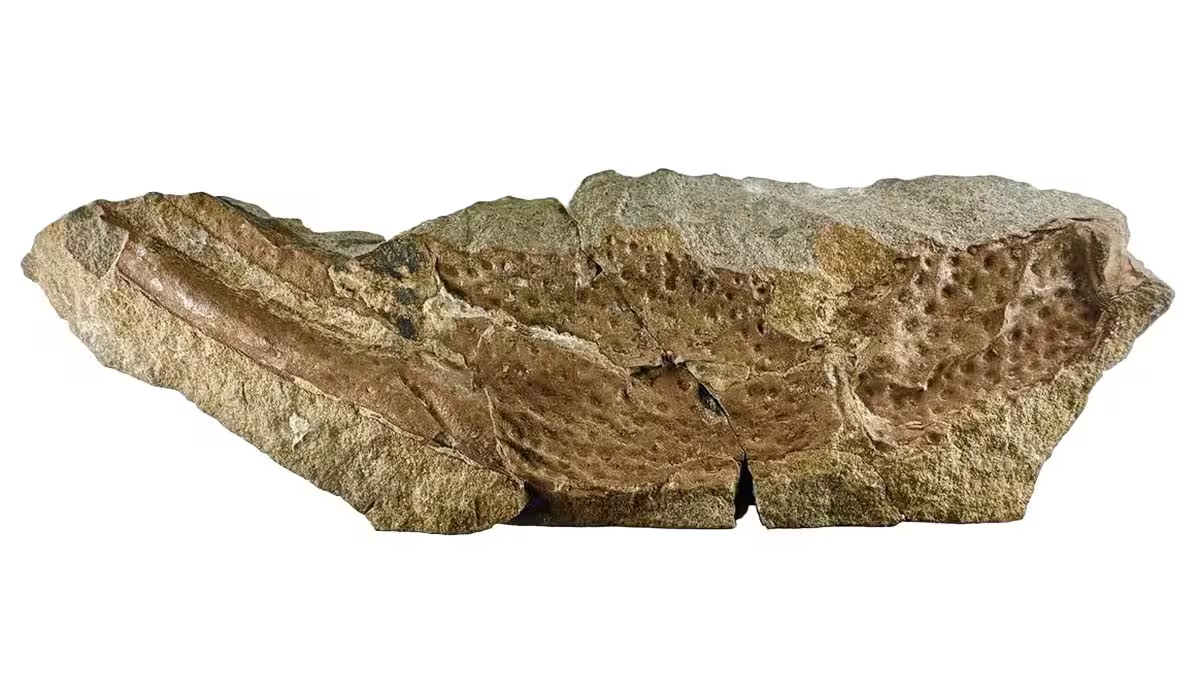
A 16‑centimetre claw discovered in the United Kingdom has finally settled a debate that has persisted for more than a hundred years: the fragment belongs to Praearcturus gigas, confirming it as the largest scorpion ever known to science. By scaling the proportions of the pincer against those of modern relatives, researchers calculated that the complete animal exceeded a metre in length, as reported in the journal Palaeontology.
The fossils date back roughly 415 million years to the Early Devonian, a period when vertebrate life had only just begun to venture onto dry ground. At that time, terrestrial ecosystems were dominated by low‑lying mosses, early vascular plants and simple fungi, with few animal groups having adapted to life on land. The discovery of a top‑predator of this size at such an early stage has sparked particular interest among paleontologists.
A Century‑Old Misidentification Finally Clarified
When Henry Woodward first described the organism in 1871, he interpreted it as a giant wood‑louse‑like crustacean, a view that lingered in the taxonomic name because “Arcturus” refers to a modern group of woodlice. The fragmentary nature of the material, especially the absence of a tail, prevented a more accurate placement at the time.
The idea that the creature might actually be a scorpion emerged in the 1980s, but only the 2015 description of a well‑preserved Devonian scorpion named Eramoscorpius from Canada provided the comparative framework needed to test the hypothesis.
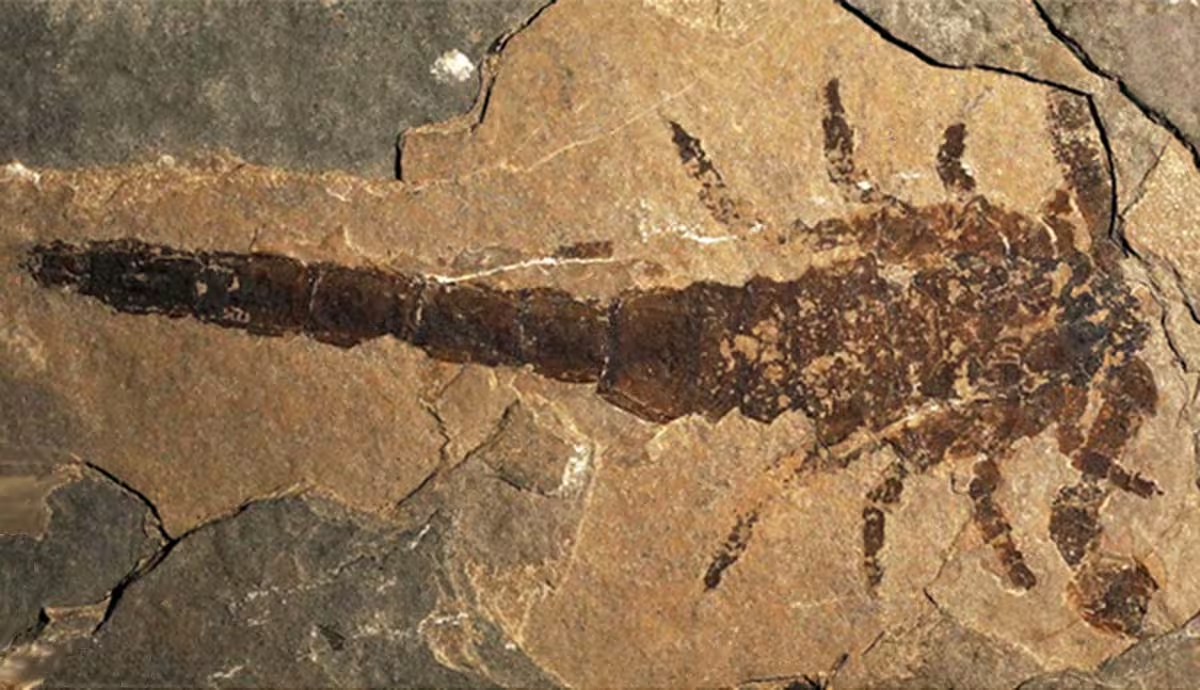
Richie Howard, curator of fossil arthropods at the Natural History Museum, London and lead author of the new study, explained that Eramoscorpius preserved a distinctive triangular sternum on the underside of its carapace. The same structure appears on the fragment attributed to Praearcturus, providing “undeniable proof that Praearcturus was a scorpion,” he said.
How One Claw Unlocks the Creature’s Gigantic Scale
Because no complete specimen of Praearcturus has ever been recovered, the team reconstructed its overall dimensions from isolated parts. The decisive element was a 16‑centimetre pincer, which they matched against claw‑to‑body ratios observed in related scorpions. This approach yielded an estimated total length of more than a metre, surpassing the previous record holder by a wide margin.
By comparison, the largest living scorpion, the Indian forest scorpion, reaches just 23 centimetres—roughly a quarter of the length inferred for Praearcturus. Modern size constraints are largely dictated by habitat: aquatic and semi‑aquatic arthropods can attain far greater dimensions because water supports their mass, a principle illustrated by the Japanese spider crab, whose leg span approaches four metres.
A Lone Apex Predator in an Early Terrestrial World
Devonian deposits such as Scotland’s Rhynie Chert record a landscape populated only by modest plants, fungi and tiny arthropods, lacking the complex food webs that would later develop. Howard points out that iconic giant arthropods like the six‑foot millipede Arthropleura or the griffin‑like dragonflies lived in the Carboniferous, at least 55 million years after Praearcturus, when terrestrial ecosystems were already more elaborate.
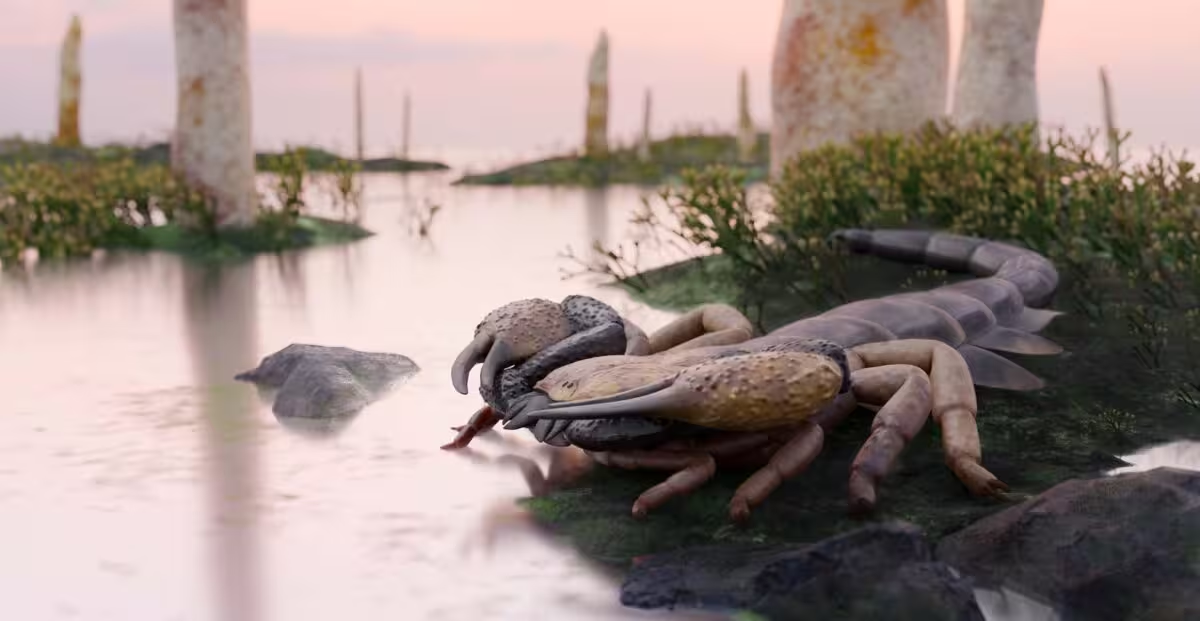
The scarcity of comparable terrestrial hunters likely allowed Praearcturus to attain its remarkable size. Howard suggests that, in the absence of other large predators, the scorpion could have expanded unchecked, dominating the limited prey base of small arthropods.
Evidence Points to a Semi‑Aquatic Lifestyle
Fossils recovered from Portishead in North Somerset hint that a close relative of Praearcturus may have persisted for an additional 40 million years, although the exact connection remains provisional. Specimens from Wales reveal flap‑like extensions called epimera, structures also seen on modern lobsters and crabs. Howard interprets these features as indicating that the animal likely spent part of its life in water, hunting fish and other sizable prey unavailable on the sparse early‑landscape.
Greg Edgecombe, a co‑author and specialist in fossil arthropods at the Natural History Museum, notes that molecular phylogenies place scorpions close to spiders and other arachnids that possess book lungs, implying an air‑breathing ancestor. If this scenario holds, Praearcturus may represent a lineage that initially colonised land only to return to an aquatic niche, exploiting the resources of shallow water habitats.
Further discoveries will be essential to determine how long this giant scorpion survived and what factors ultimately led to its extinction.
This article has been fact checked for accuracy, with information verified against reputable sources. Learn more about us and our editorial process.
Last reviewed on .
Article history
- Latest version
Reference(s)
- Howard, Richard J.., et al. “A revision of Praearcturus gigas : a giant scorpion from the Lower Devonian (Lochkovian) of Britain.” Palaeontology, vol. 69, no. 3, June 2, 2026 Wiley, doi: 10.1111/pala.70064. <https://onlinelibrary.wiley.com/doi/10.1111/pala.70064?utm_source=chatgpt.com>.
- “World’s largest scorpion revealed by 415-million-year-old fossils | Natural History Museum.” <https://www.nhm.ac.uk/discover/news/2026/june/worlds-largest-scorpion-revealed-415-million-year-old-fossils.html>.
Cite this page:
- Posted by Elizabeth Taylor