Rediscovered Megalodon Vertebra Confirms 24‑Meter Beast And Reveals Shark‑Sized Prey
A Danish museum’s dusty fossil box revealed the largest shark vertebra ever found, a lost specimen rediscovered by curator Bent Erik Kramer Lindow in 2017.
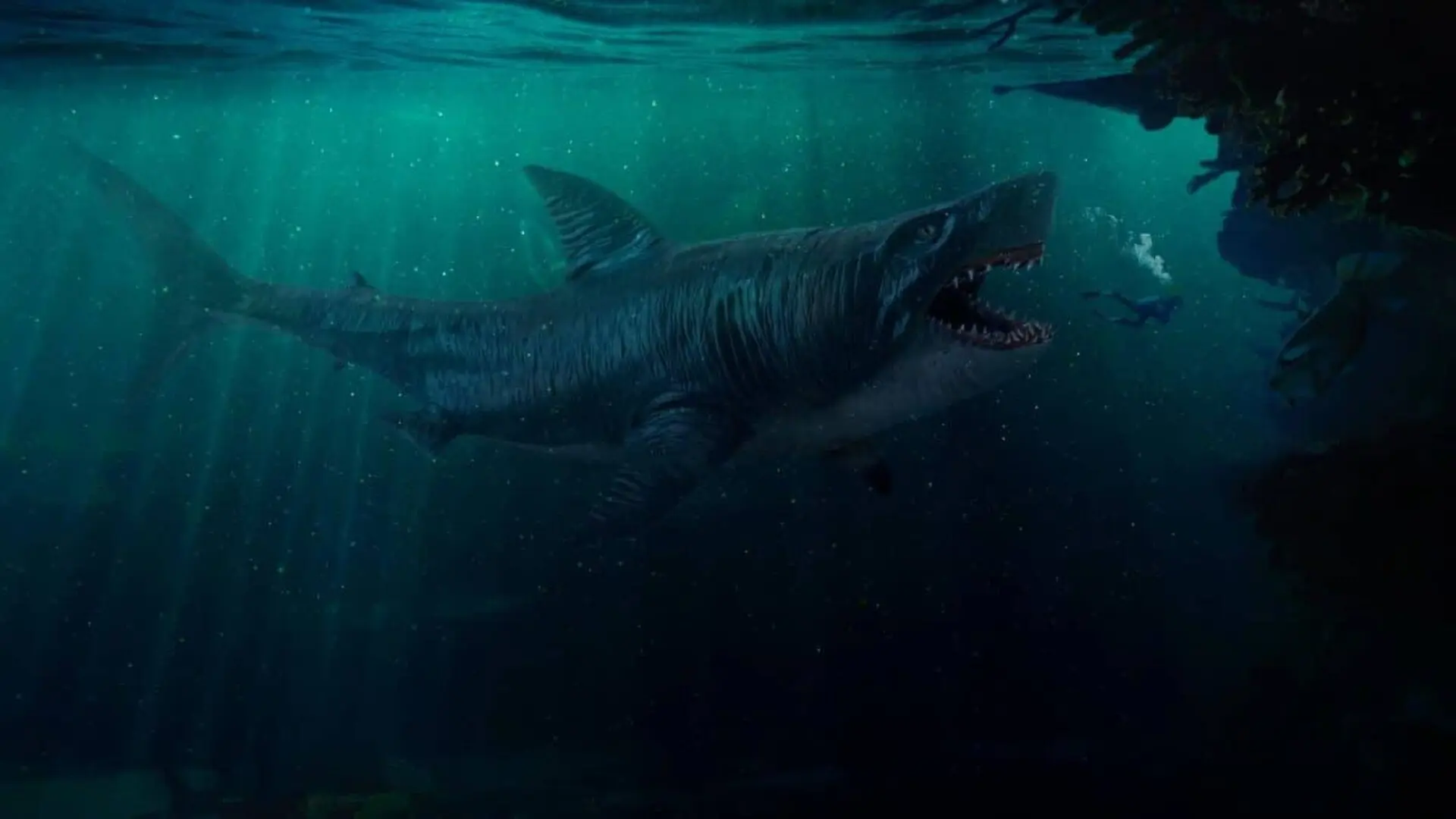
A long‑lost vertebra from a giant prehistoric shark has been recovered, and a new paper in Palaeontologia Electronica uses the specimen to reaffirm the extreme size estimates for Otodus megalodon, the apex predator that roamed the oceans of the Neogene.
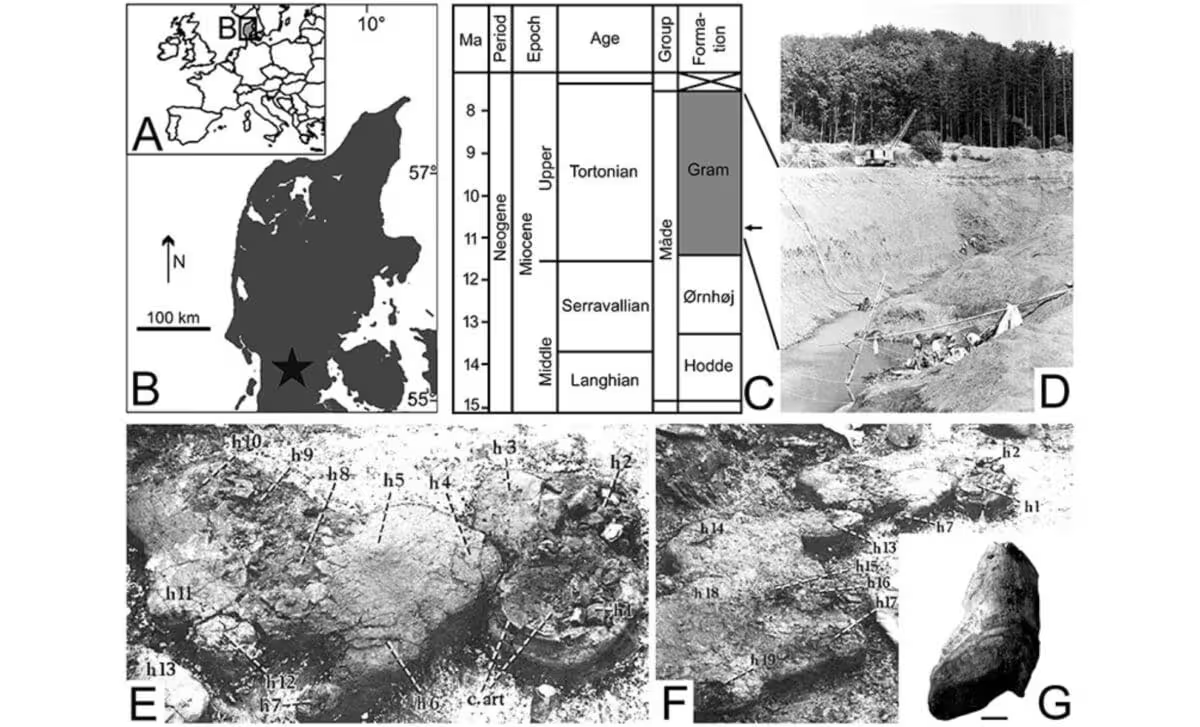
The bone was originally uncovered in 1978 at the Gram Clay Pits in Denmark, where a team of paleontologists recovered about twenty vertebrae belonging to a single megalodon. One of those centra measured 23 centimetres across, making it the widest shark vertebra ever recorded. A mishap during a 1989 relocation caused the specimen to break, and it was presumed missing, leaving scientists to rely on photographs for decades. The recent rediscovery finally lets researchers confirm the original dimensions on the spot.
New measurements cement the megashark’s colossal scale
The investigation, led by paleobiologist Kenshu Shimada of DePaul University, examined two partially intact vertebrae, more than 185 small fragments, and several rock pieces that preserve natural impressions of vertebral surfaces. Though incomplete, the material retains enough anatomy to verify a radius of 115 millimetres, which corresponds to a 230‑millimetre diameter—exactly the size reported from the 1978 dig.
That single datum underpins the widely cited maximum length of 24.3 metres for megalodon, a span comparable to two city buses placed end‑to‑end. Because earlier estimates rested solely on photographs, some uncertainty lingered. Shimada emphasises in the study that reproducibility is essential for scientific confidence, and the fresh measurement removes any remaining doubt about the vertebral width that supports the 24.3‑metre figure.
Growth rings preserved on one vertebra allowed the team to model the shark’s life history. Their calculations suggest a birth size near 3.6 metres and a theoretical upper bound approaching 28 metres, although the authors stress that these numbers are highly provisional due to the assumptions involved.
Fossil clues hint at an unexpected prey
Sediment taken from around the vertebrae revealed a dense assemblage of gill‑raker fragments and placoid scales identified as belonging to a basking shark, a large filter‑feeder that still swims today. The concentration was so localized that researchers infer the material originated from a single individual.
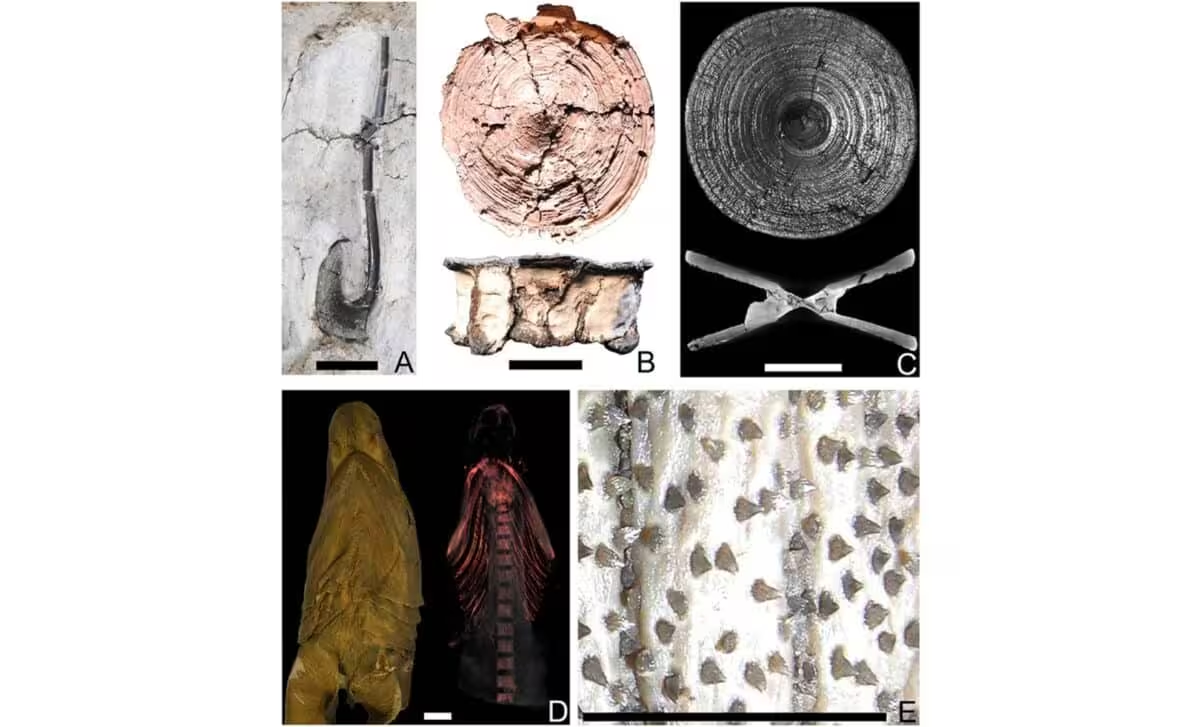
The authors argue that the basking‑shark fragments likely represent stomach contents, given the vertebrae’s position just above the stomach region. The proximity of cetorhinid material suggests the prey was only partially digested when the megalodon died and settled on the seafloor. This discovery adds to a growing body of evidence that the megashark was an opportunistic feeder capable of attacking large sharks as well as marine mammals.
The work also highlights the untapped potential of museum collections, where specimens that have lain dormant for decades can still yield groundbreaking insights. Shimada notes that many pivotal paleontological advances stem from material collected long ago, awaiting fresh examination.
This article has been fact checked for accuracy, with information verified against reputable sources. Learn more about us and our editorial process.
Last reviewed on .
Article history
- Latest version
Reference(s)
- “Kenshu Shimada.” <https://www.depaul.edu/faculty/kenshu-shimada>.
- Shimada, Kenshu. “Otodus megalodon vertebrae from Denmark.”, vol. 29, no. 2, June 28, 2026, pp. 1-25. Palaeontologia Electronica, doi: https://doi.org/10.26879/1674. <https://palaeo-electronica.org/content/2026/5872-otodus-megalodon-vertebrae-from-denmark>.
Cite this page:
- Posted by Elizabeth Taylor