Ancient Human DNA Retrieved From Iberian Cave Walls Reveals Hidden Artists
Scientists have extracted ancient human DNA from the walls of Spain and Portugal’s prehistoric cave art, even from spots with no visible traces.
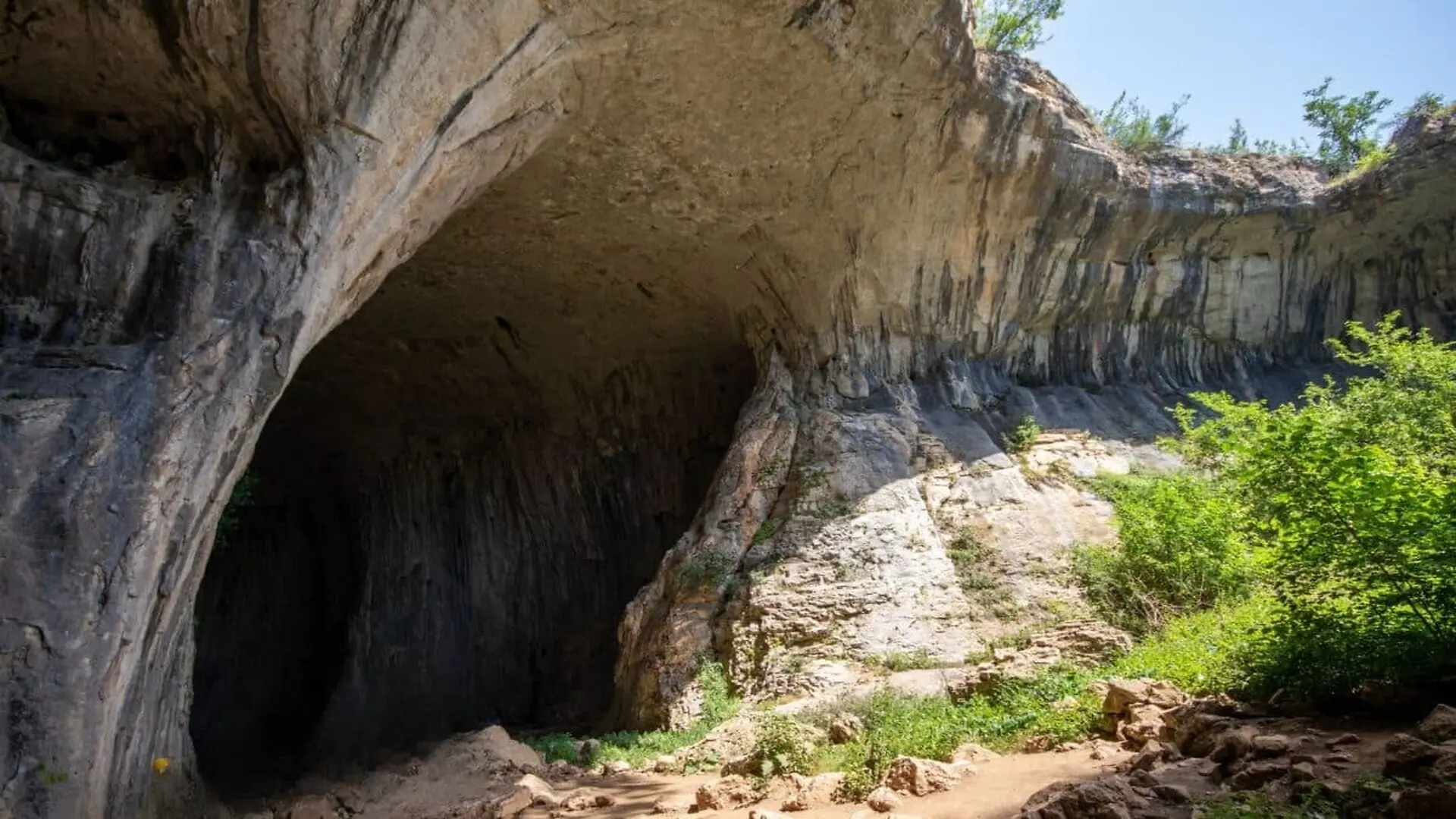
A team of researchers has succeeded in pulling ancient human DNA straight from the stone faces of Paleolithic cave art sites in Spain and Portugal, marking the first time such material has been recovered from these surfaces. The breakthrough offers a novel glimpse into the individuals who may have entered these subterranean chambers millennia ago.
For decades, the creators of the iconic cave paintings have remained invisible to science. While scholars have been able to analyze pigments, map outlines, and date mineral crusts, no direct biological evidence of the artists themselves has ever been found. A new paper in Nature Communications suggests that this gap could be closing.
Genetic Traces Embedded in Rock
The findings stem from the multidisciplinary First Art project, which aims to chronologically and chemically characterize cave pigments throughout the Iberian Peninsula. Experts from the Max Planck Institute for Evolutionary Anthropology joined the effort with a different question: might the rock have retained genetic material from people who touched it?
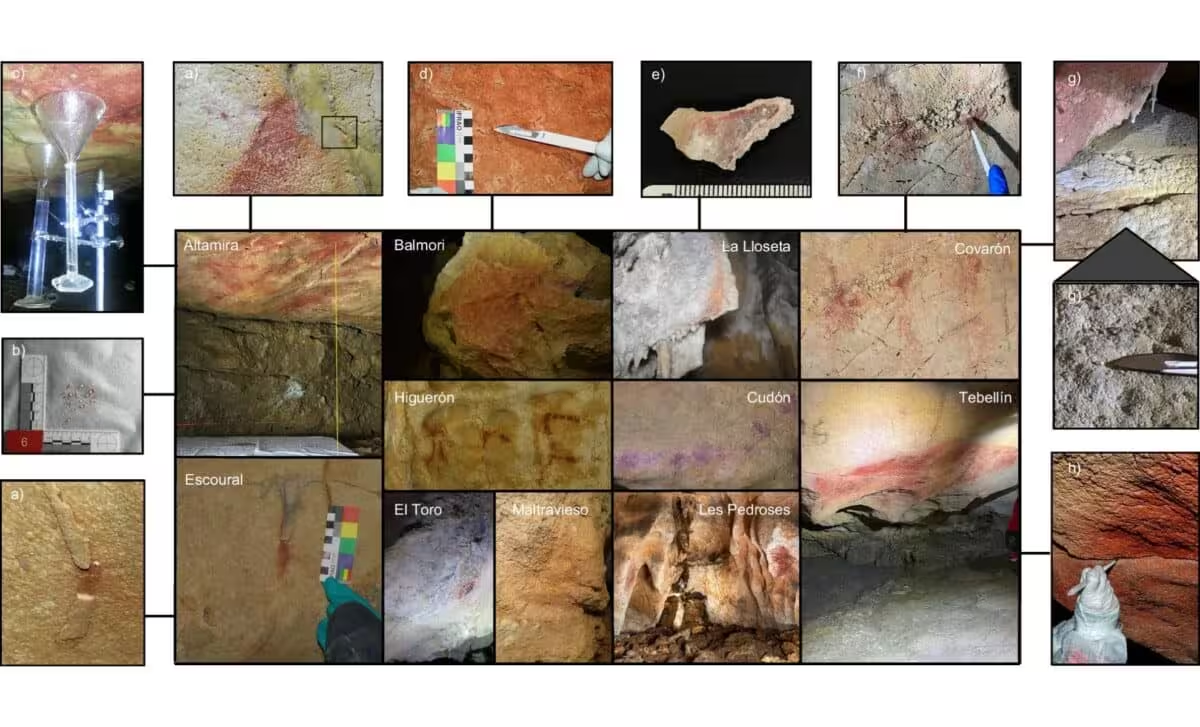
Researchers collected 54 samples from 24 panels across 11 caves, including painted calcite crusts, clean wall fragments, surrounding sediments, skeletal remains, and a rare bird‑bone implement that was likely used to apply red ochre. Only five specimens produced authentic ancient human DNA, underscoring how rare it is for organic molecules to survive on exposed stone over thousands of years.
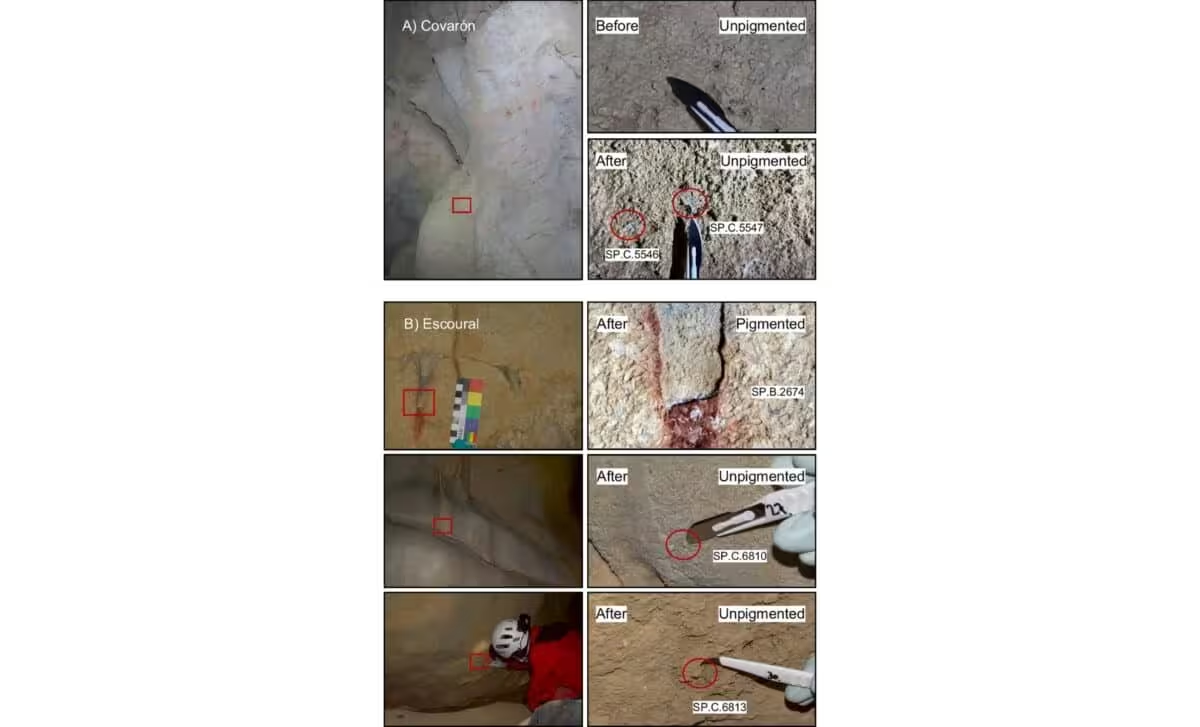
The most compelling result came from a pigmented calcite layer on Panel 11 in Portugal’s Escoural Cave. According to the study, this sample contained both mitochondrial and nuclear human DNA without any detectable animal DNA, a pattern that strongly indicates direct human contact—perhaps through skin contact or the deposition of saliva. In contrast, cave sediments usually contain mixed human and animal genetic signals, making this clean human signature highly unusual.
Blank Walls Reveal Hidden DNA
Surprisingly, some of the most informative genetic material was recovered from unpainted sections of the cave walls, which were originally collected as control samples under the assumption that they would be devoid of DNA. These sterile‑looking surfaces also contained ancient human genetic markers.
Two unpainted fragments from Covarón Cave in northern Spain yielded sufficient nuclear DNA for population‑level analysis. The authors report that the genetic profiles fall within the spectrum of Western European hunter‑gatherers, matching other ancient individuals from the same geographic and chronological context. Sex determination was possible for several specimens: three indicated a female genetic signature, while one suggested a male.
In contrast, a bird‑bone airbrush recovered from Altamira Cave—presumably used to blow pigment from the mouth—showed no ancient DNA. The researchers attribute this to extensive museum handling, which likely overlaid any prehistoric signal with modern contaminants.
Senior author Matthias Meyer emphasized that these results broaden the scope of where scientists can look for ancient DNA. Even walls lacking any visible signs of human activity may still retain genetic traces of past visitors.
Limits of the Current Evidence
The authors caution against over‑interpreting the data. Although the DNA from the Escoural painted crust could have originated from the artist who applied the pigment, no direct dating ties the genetic material to the artwork itself. It remains possible that the DNA and the paint were deposited by different individuals separated by centuries.
Determining the exact age of the DNA is challenging without direct radiocarbon dating. The team estimated minimum ages by examining molecular decay patterns and referencing each cave’s archaeological timeline. Most samples appear to be at least 2,000 years old; the sealed context of Escoural—undisturbed since the Chalcolithic and reopened only in 1963—suggests a minimum age of around 4,000 to 5,000 years.
The researchers present their work as a proof of concept rather than a final answer. Future investigations will aim to refine extraction protocols, broaden the range of sites and art styles examined, and identify the environmental factors that best preserve DNA, with the ultimate goal of linking a genetic profile to a specific hand that created a particular image on a cave wall.
This article has been fact checked for accuracy, with information verified against reputable sources. Learn more about us and our editorial process.
Last reviewed on .
Article history
- Latest version
Reference(s)
- Bossoms Mesa, Alba. “Investigating ancient human DNA preservation on cave walls and in rock art - Nature Communications.”, vol. 17, no. 1, June 23, 2026, pp. 5561 Nature, doi: 10.1038/s41467-026-74234-2. <https://www.nature.com/articles/s41467-026-74234-2>.
- “ORCID.” <https://orcid.org/0000-0002-4760-558X>.
Cite this page:
- Posted by Elizabeth Taylor