What Happened to Their Heads? Archaeologists Found 77 Headless Skeletons in a Pit at a 7,000-Year-Old Village
New Slovakian dig uncovers Neolithic burial practices, shedding light on why skeletons were interred in an unusual manner
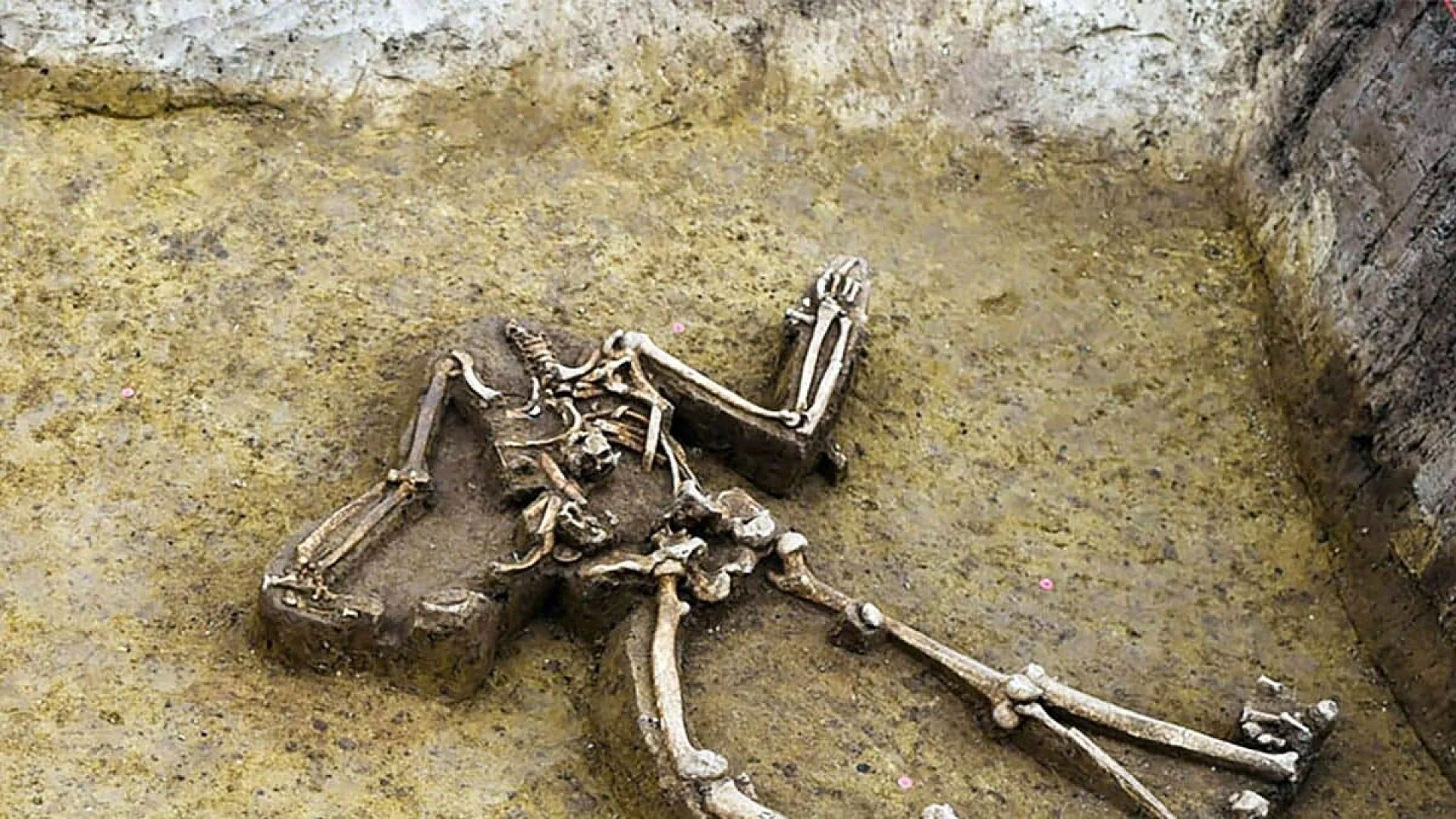
Excavations at the entrance of a 7,000‑year‑old settlement in present‑day Slovakia have revealed dozens of human remains arranged together, the majority of which are missing their heads.
The absence of skulls immediately sparked speculation about possible violence, mass killing, or other dramatic scenarios. Detailed analysis of the bones, their spatial context and the way they were placed, however, points toward a far more nuanced set of practices.
The site at Vráble is one of the key locations associated with the Linear Pottery culture (LBK). Archaeologists from Kiel University and the Slovak Academy of Sciences have been working there since 2012, and the newest discoveries shed light on how early European farming groups dealt with death and the human body.
Almost Eight Dozen Bodies Identified
Excavations carried out from 2022 onward have uncovered the remains of at least 78 individuals near an opening in the settlement’s ditch system. According to a report in Proceedings of the Prehistoric Society, 77 of those skeletons were missing their crania, while a single child was found with its head intact. The bodies lie in a variety of orientations, showing no obvious placement pattern.
The broader Vráble settlement ranks among the largest known LBK sites, with more than 300 house outlines across three neighbourhoods. Researchers estimate that up to 80 dwellings may have been occupied at the same time. The community persisted for several centuries, roughly between 5250 and 4950 BCE.
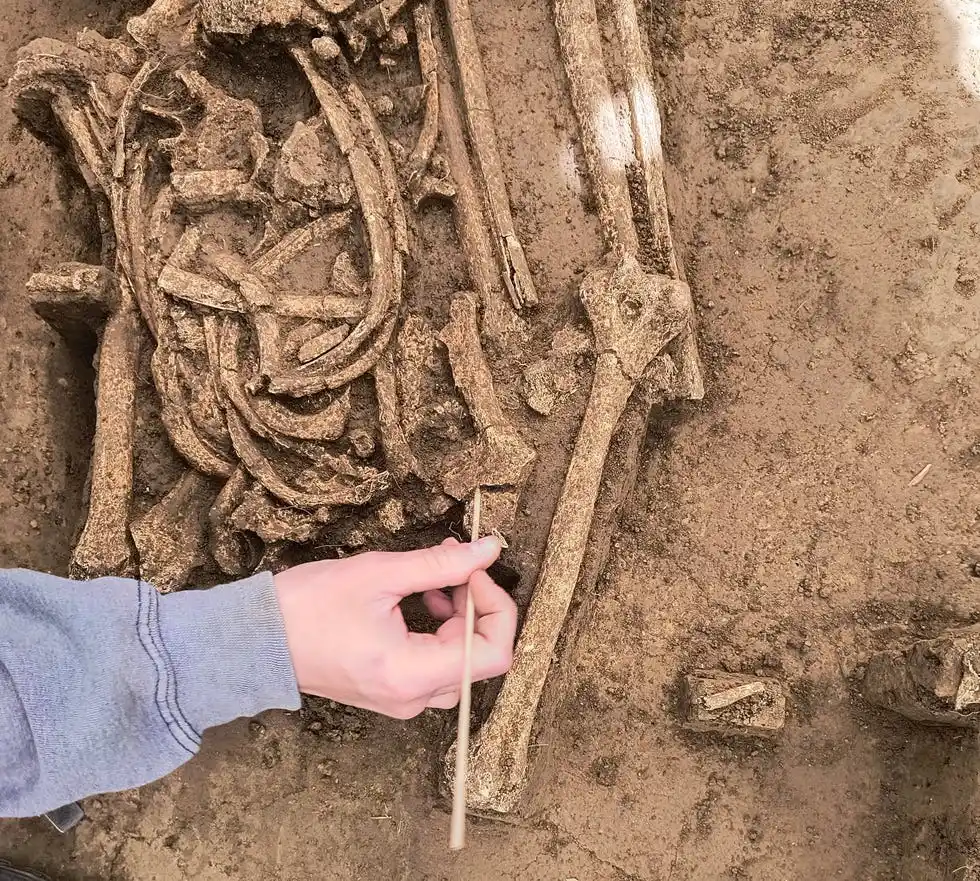
Further analysis indicates that the bodies were interred shortly after death, implying that the remains were not exposed for an extended period before burial.
Evidence of Intentional Body Modification
Although the missing crania initially suggested a violent episode, the research team found no signs of a large‑scale execution or systematic decapitation.
“The features clearly exhibit an intentional manipulation of the bodies,” Dr. Katharina Fuchs, a biological anthropologist at Kiel University and co‑author of the study, said.
Fuchs noted that early observations point to careful, deliberate removal of the skulls rather than violent trauma, indicating a skilled post‑mortem procedure.
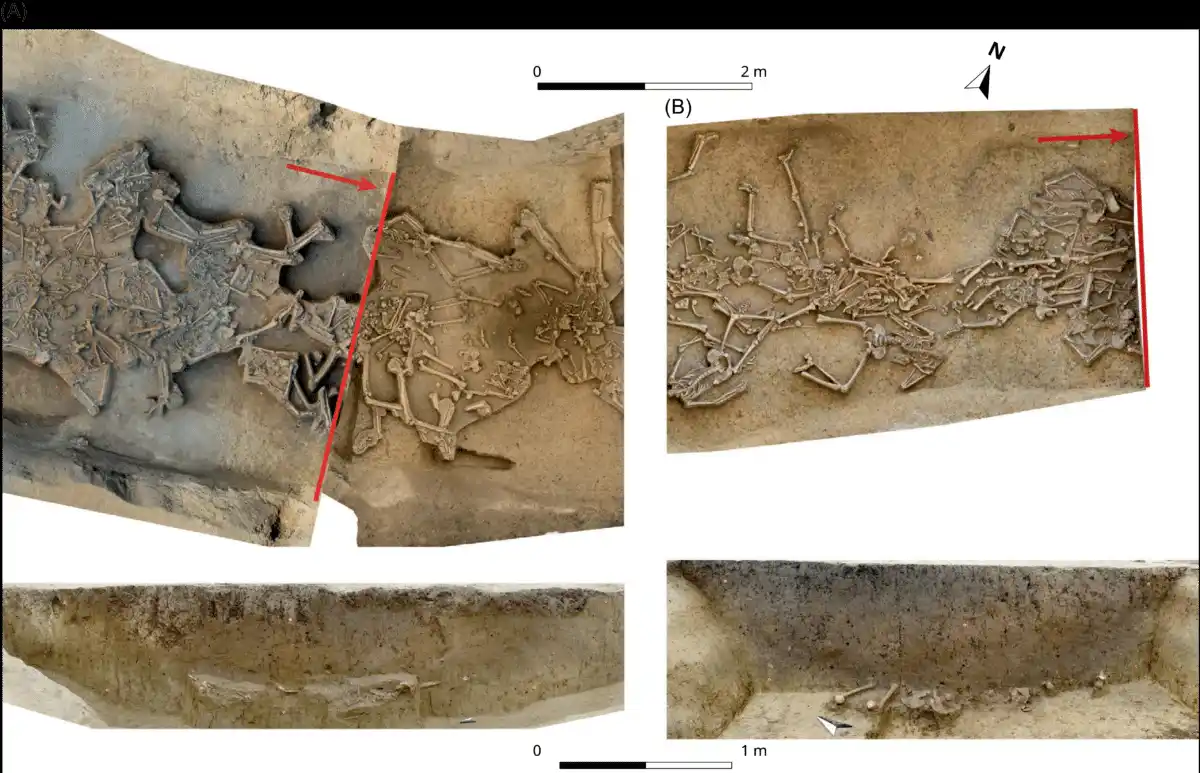
Why the heads were removed remains an open question. One scenario proposed by the investigators is that the skulls were kept apart after extraction, a practice documented at other prehistoric locales, though no direct evidence of such a custom has yet emerged at Vráble. Modifying human remains is not uncommon in Neolithic contexts, and comparable interventions have been recorded at several LBK sites, albeit with local variations.
Reassessing Conflict Narratives
Mass graves, ditch deposits and altered skeletons from the terminal LBK phase have often been read as indicators of warfare or societal collapse. The Vráble findings prompt the authors to reconsider that interpretation.
Dr. Nils Müller‑Scheeßel suggests that the arrangement of bodies and body parts may reflect recurring rituals with significant social meaning, rather than a response to a single crisis. Professor Martin Furholt, the lead author, adds that contemporary perspectives can make such ancient customs appear puzzling.
“The first results already show that Vráble is an exceptional excavation site,” said Furholt. “It provides us with the keys for the discussion of fundamental questions, for example, how were death and the body understood in the Neolithic and what role did the associated practices play in the social fabric of early farming societies?”
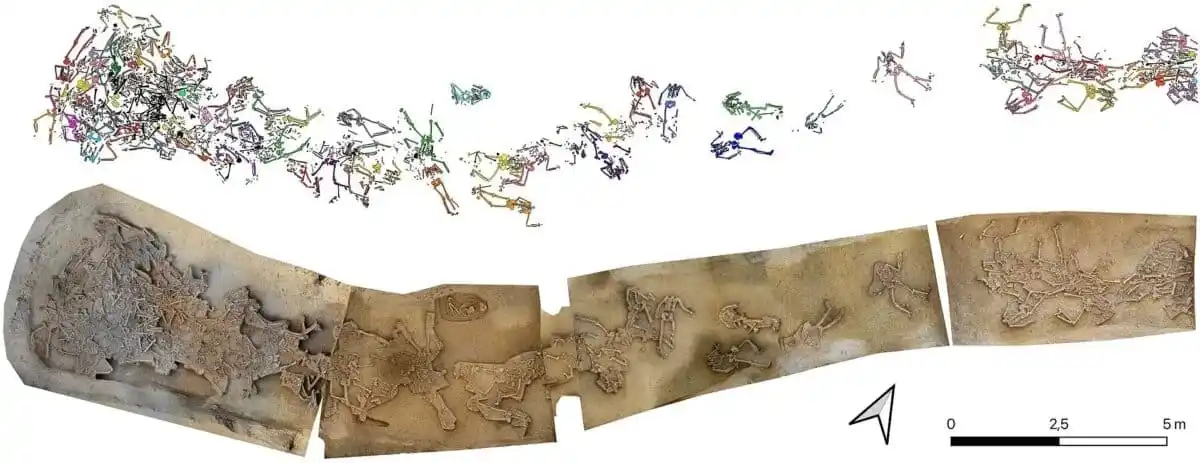
The investigation continues under the “Neolithic Bodies” project. Specialists are cataloguing the recovered bones, determining age and biological sex, and scrutinising cut marks on cervical vertebrae. Ongoing DNA and isotope analyses aim to clarify kinship patterns, dietary habits and geographic origins.
This article has been fact checked for accuracy, with information verified against reputable sources. Learn more about us and our editorial process.
Last reviewed on .
Article history
- Latest version
Reference(s)
- Furholt, Martin. “Neolithic Bodies in Vráble – 7000 year-old Headless Human Skeletons in an Enclosed LBK Settlement in South–West Slovakia | Proceedings of the Prehistoric Society | Cambridge Core.”, pp. 1-16. Cambridge Core, doi: 10.1017/ppr.2026.10082. <https://www.cambridge.org/core/journals/proceedings-of-the-prehistoric-society/article/neolithic-bodies-in-vrable-7000-yearold-headless-human-skeletons-in-an-enclosed-lbk-settlement-in-southwest-slovakia/F860F27623DE9579743145A7365684B1>.
- <https://www.researchgate.net/profile/Katharina-Fuchs-12>.
- “Dr. Nils Müller-Scheeßel.” Institut für Ur- und Frühgeschichte <https://www.ufg.uni-kiel.de/de/mitarbeiterinnen/wissenschaftliche-mitarbeiter/nils-mueller-scheessel>.
- “Prof. Dr. Martin Furholt.” Institut für Ur- und Frühgeschichte <https://www.ufg.uni-kiel.de/en/staff-directory/professors/martin-furholt>.
Cite this page:
- Posted by Elizabeth Taylor