Rent and Income Drive U.S. Homelessness, Major State-Level Study Reveals
Researchers map hidden economic feedback loops across 50 states, revealing how political context shapes housing insecurity.
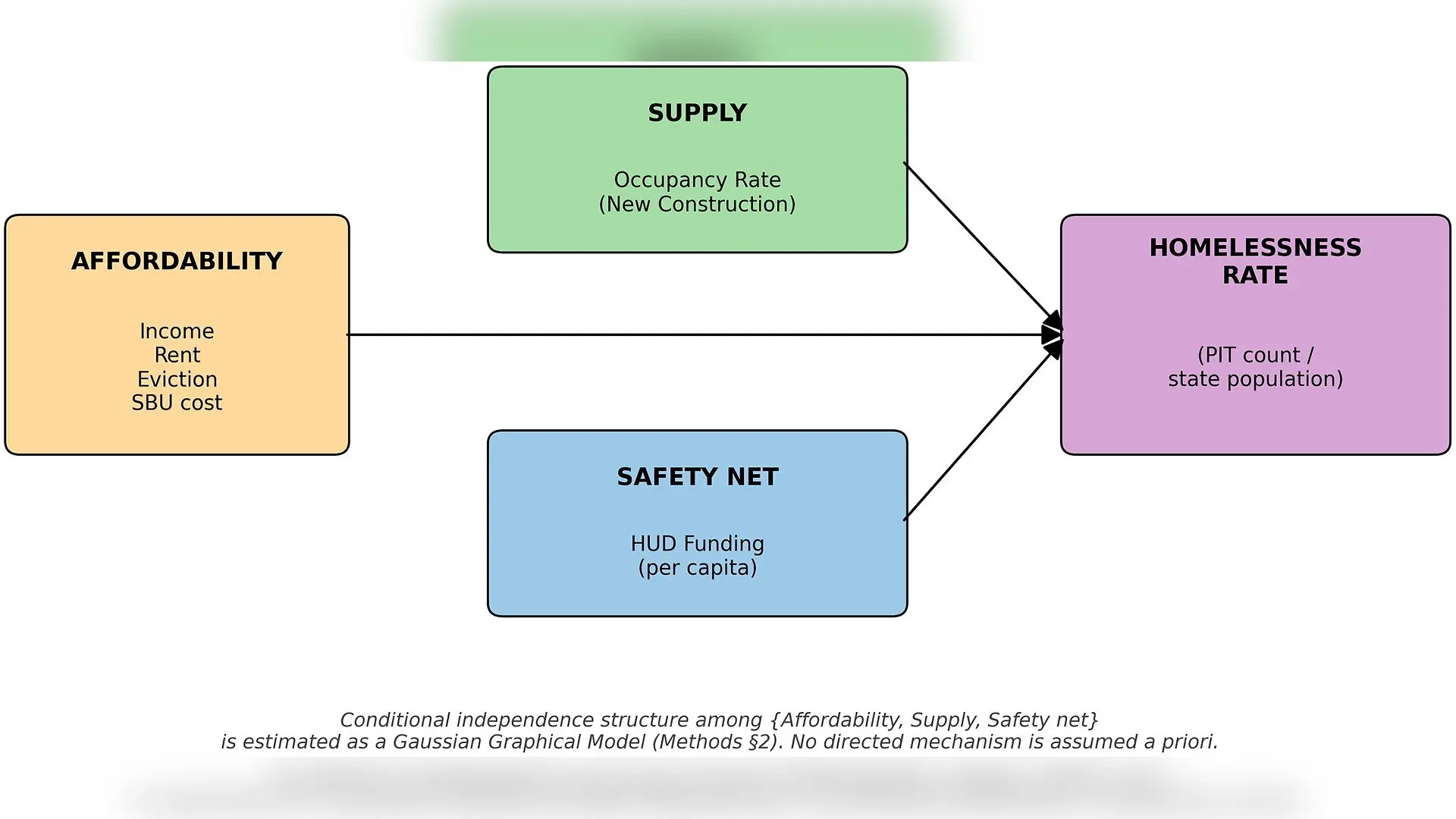
When urban housing markets shift, the daily commute and rent burdens of ordinary city residents change in profound ways, yet researchers have long debated which structural forces truly drive homelessness. A comprehensive state-level analysis tracking U.S. trends between 2007 and 2024 reveals that median rent, household income, and the availability of single-bedroom units are the most powerful predictors of homelessness rates nationwide. The study, published in PLOS One, applies advanced network mathematics to disentangle how economic factors interact across different state political environments.
How Math Maps the Hidden Roots of Urban Housing Crises
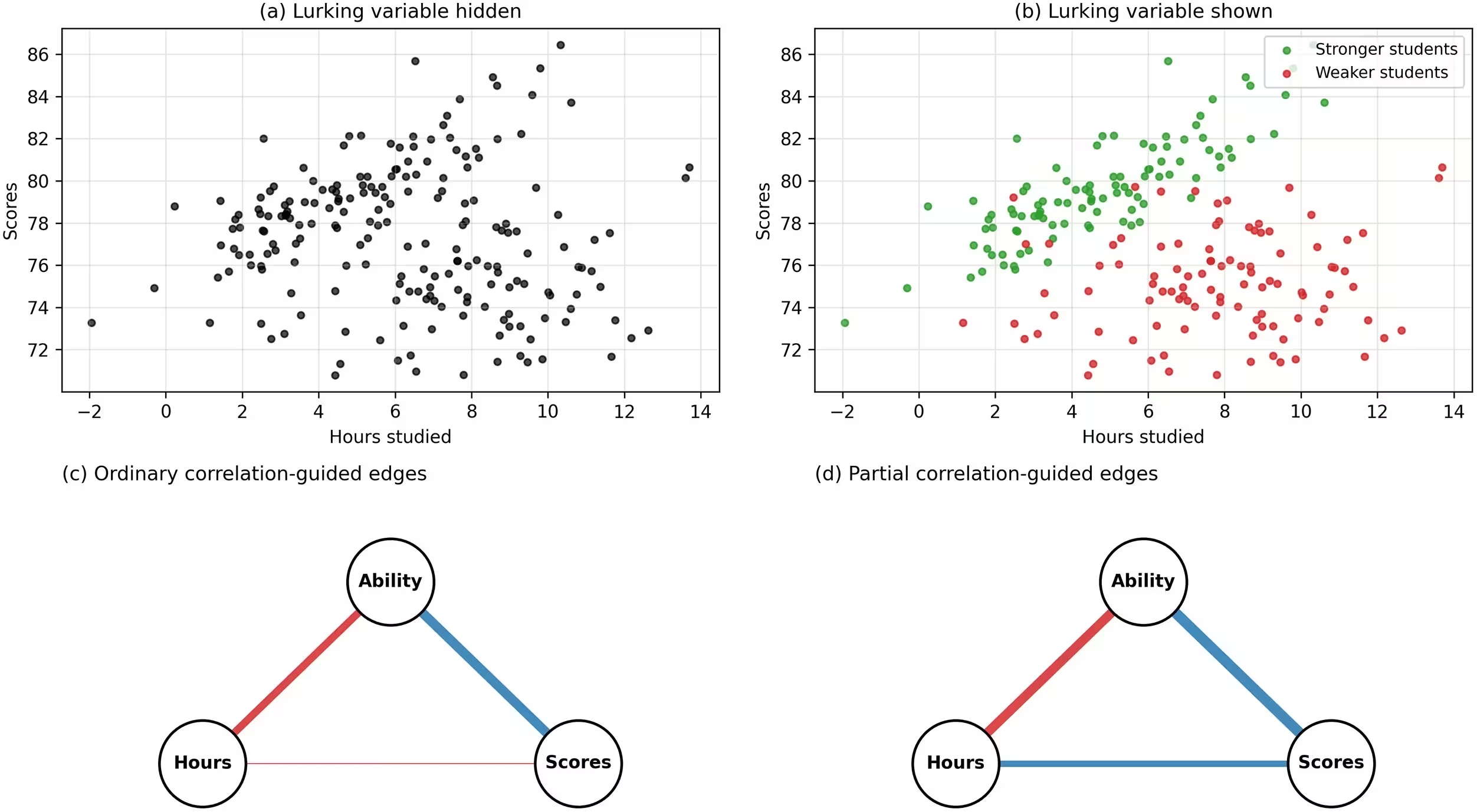
Led by Curtis Smith and Moinak Bhaduri of Bentley University, the research team sought to move beyond simple correlations that fail to account for overlapping economic pressures. Traditional studies often look at poverty or job markets in isolation, missing the complex web of factors that push families out of stable housing. To solve this, the authors deployed Markov random fields, which are undirected mathematical networks that estimate partial correlations between variables while controlling for everything else in the model. This statistical approach clarifies whether two factors, such as rent and eviction rates, maintain a true connection once other influences are removed.
The researchers compiled a massive public dataset spanning 50 states and Washington, D.C., incorporating information from the American Community Survey, the U.S. Department of Housing and Urban Development, Zillow, and the Princeton Evictions Lab. They organized these metrics around three core axes, namely housing affordability, housing supply, and the public safety net. Because raw funding figures can be heavily skewed by a state’s total population, the team adjusted financial metrics like federal housing allocations to a per-capita scale. They also applied two-way fixed-effects residualisation to absorb time-invariant state characteristics, such as local climate and historical zoning laws, ensuring the findings reflect true year-to-year shifts within states.
What Drives Homelessness Across Different Political Landscapes
The analysis demonstrates that rent prices and income levels exert the strongest structural pull on homelessness rates across the United States. Single-bedroom units also emerged as a critical factor, ranking second only to the income-rent relationship in overall statistical impact. The authors note that historical zoning decisions and the deliberate reduction of single-room occupancy housing over past decades severely restricted low-cost options, forcing vulnerable tenants into more expensive housing or overcrowding. Interestingly, the data showed that new home construction often correlates with higher rents rather than immediate relief, suggesting that newly built units frequently cater to higher-income renters rather than addressing the deficit in affordable housing.
When examining state governance, the researchers uncovered striking political contrasts in how structural variables interact. Using permutation tests to compare network structures, they found that Republican-led and Democratic-led states display different conditional dependence patterns. For instance, an exploratory lag-1 temporal network revealed a distinct feedback loop between federal housing funding and homelessness rates in Republican-led states, where prior funding predicted subsequent homelessness changes and vice versa. In contrast, that specific feedback loop was absent in Democratic-led states. The authors also observed that income-to-rent passthrough effects were stronger in Republican states, whereas rent and homelessness persistence showed higher stability in Democratic states.
Important Limitations and What the Future Holds
While the mathematical models provide robust descriptive maps of state-level associations, the authors emphasize several key limitations. The spatial scale is restricted to state-level aggregates, meaning the findings cannot be directly applied to individual cities or neighborhoods without falling victim to the ecological fallacy. Furthermore, observational network data cannot definitively prove unidirectional causation without stricter experimental frameworks. The dependent variable relied on HUD Point-in-Time counts, which notoriously undercount hidden populations such as doubled-up families or couch-surfing youth. Despite these constraints, the work provides a valuable framework for policymakers aiming to target the root economic causes of housing insecurity rather than treating only its surface symptoms.
The research was published in PLOS One on November 4, 2026.
This article has been fact checked for accuracy, with information verified against reputable sources. Learn more about us and our editorial process.
Last reviewed on .
Article history
- Latest version
Reference(s)
- Smith, Curtis., et al. “A structural analysis of U.S. homelessness through Markov random fields: Identifying predictors and potential causal links through permutation tests.” PLOS One, vol. 21, no. 11, November 4, 2026, pp. e0343842 Public Library of Science (PLoS), doi: 10.1371/journal.pone.0343842. <https://doi.org/10.1371/journal.pone.0343842>.
Cite this page:
- Posted by Mary Ellison