25 Karachi Shopkeepers Explain Why Banned Gutka Defies City Bans
Long shifts, severe addiction, and corrupt enforcement keep cheap smokeless tobacco flowing through urban markets despite severe oral cancer risks.
25 Karachi Cloth Shopkeepers Reveal Why Banned Gutka Is Impossible to Escape Inside Busy Urban Markets
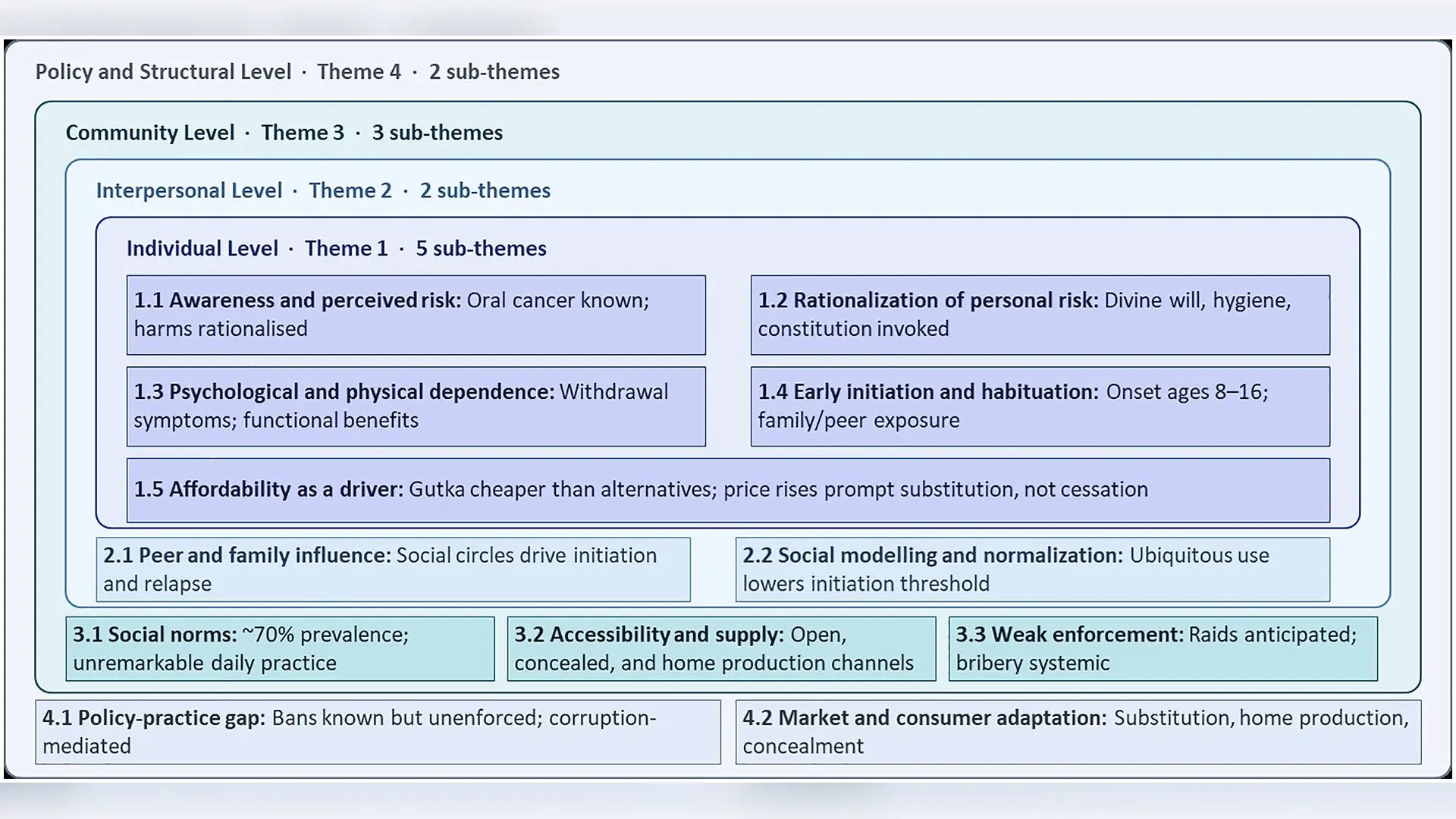
Inside the densely packed textile bazaars of Karachi, Pakistan, a potent smokeless tobacco mixture known as gutka remains an inescapable fixture of the daily shift. A team of public health researchers recently investigated the hidden ecosystem sustaining this habit among 25 male cloth shopkeepers across five major commercial zones, including Hyderi Market and Jama Cloth Market. Their findings reveal how long working hours, severe nicotine addiction, and an entrenched market culture keep the habit alive despite a strict regional ban.
Why 12-Hour Shifts and Cheap Prices Drive Constant Consumption
The study, published in PLOS Global Public Health, highlights that participating vendors averaged over 40 years of age and had worked in their respective markets for nearly a decade. For these shopkeepers, gutka serves a very specific occupational purpose. Operating fixed stalls for upwards of 12 hours a day with limited access to food, workers rely on the product’s powerful stimulants to suppress hunger, stave off fatigue, and maintain intense focus. Unlike casual users, these vendors experience a continuous workday routine where chewing is reinforced by the endless proximity of peers who share and offer the substance.
Affordability further entrenches the behavior. While traditional items like betel-leaf paan have grown costly, a day’s supply of gutka can be purchased for roughly one hundred rupees. Heavy users reported consuming up to 25 sachets daily. When commercial prices or enforcement pressures rise, shopkeepers simply adapt by switching to cheaper alternatives like naswar or mixing raw ingredients at home.
The Power of Early Initiation and Workplace Peer Pressure
Interviews with the vendors showed that addiction frequently takes root during childhood or adolescence. Many participants reported trying the substance between the ages of 8 and 16, often introduced by older family members or school friends. Once established, the habit becomes reinforced by the physical layout of Karachi markets. Adjacent shops and shared communal spaces create near-constant exposure, making it socially difficult for individuals to decline an offered sachet or maintain an attempt to quit.
Although participants readily acknowledged the severe health risks, pointing to terrifying outcomes such as restricted mouth opening and oral cancer among acquaintances, they relied on psychological rationalisation. Many externalized personal risk by attributing disease to divine destiny, genetic constitution, or poor oral hygiene rather than their own consumption.
Why Regional Bans Fail Against Informal Networks and Corruption
At the structural level, the research exposed a massive gap between policy and enforcement. Although regional laws explicitly ban gutka production and sales, the product remains widely available. Vendors described a system where police raids are routinely anticipated through informal communication networks, allowing shops to conceal items or pay bribes to continue operating openly. In some instances, adults even deployed young children as intermediaries to purchase supplies during police crackdowns to avoid suspicion.
The authors conclude that conventional prohibition strategies and broad public health campaigns focused solely on individual willpower are doomed to fail in environments where risk is structurally and socially embedded. Effective intervention will require targeted workplace cessation support, market-association partnerships, and tighter controls over the raw ingredients used in informal home preparation.
The research was published in PLOS Global Public Health on November 5, 2026.
This article has been fact checked for accuracy, with information verified against reputable sources. Learn more about us and our editorial process.
Last reviewed on .
Article history
- Latest version
Reference(s)
- Sameen, Sonia., et al. “Normalised, accessible, and addictive: Socioecological drivers of gutka consumption among urban cloth shopkeepers in Karachi, Pakistan.” PLOS Global Public Health, vol. 6, no. 11, November 5, 2026, pp. e0007567 Public Library of Science (PLoS), doi: 10.1371/journal.pgph.0007567. <https://doi.org/10.1371/journal.pgph.0007567>.
Cite this page:
- Posted by Ali Farooqui