Contraceptive Implants Surge Across Mesoamerican Households
A ten-year survey reveals climbing adoption rates for long-acting reversible contraception among young women in Honduras and Chiapas.
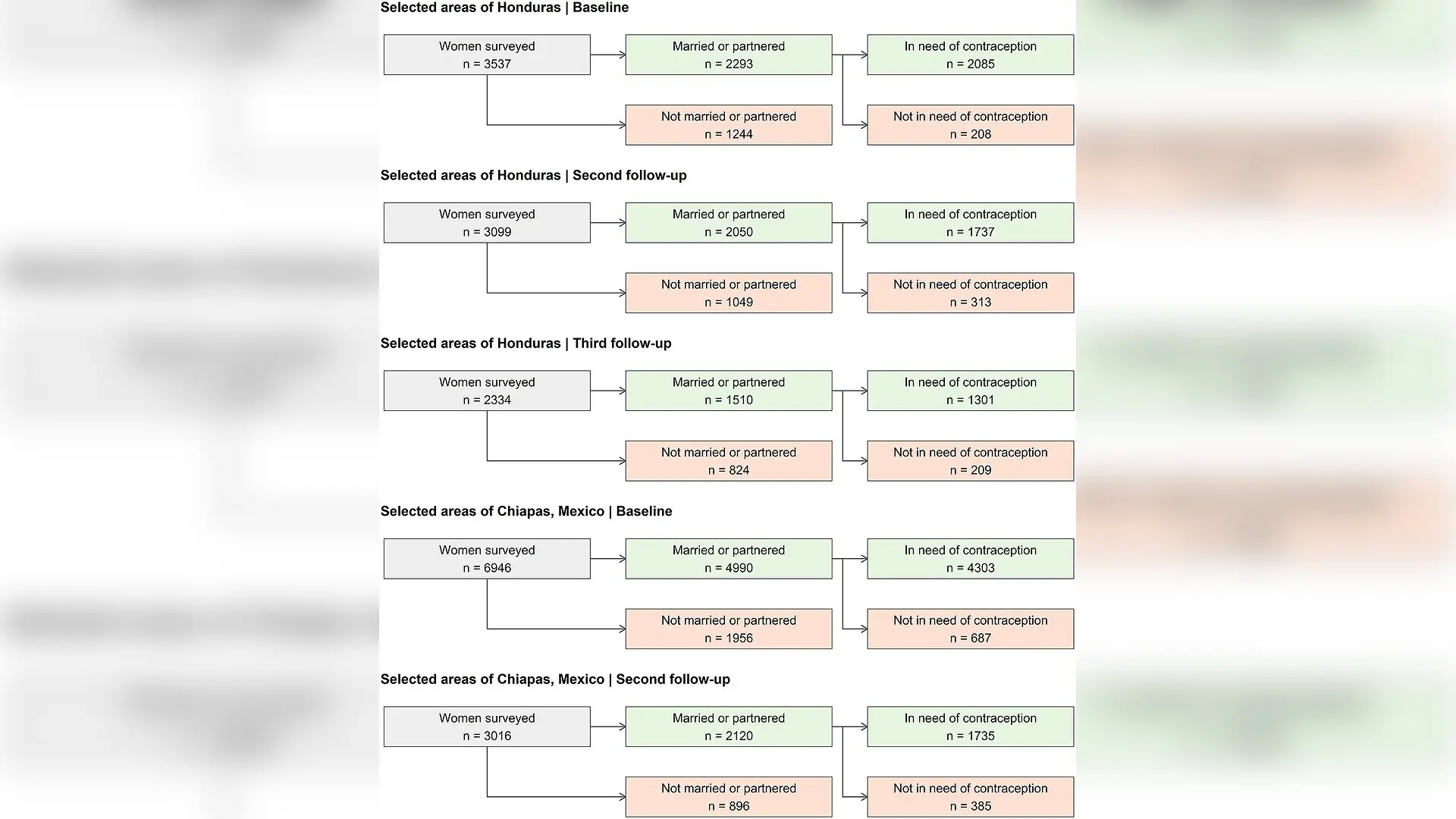
Long-acting reversible contraception is gaining traction across parts of Latin America, with household surveys revealing significant shifts in how women choose family planning methods over a decade of targeted public health programming. Subdermal contraceptive implants, which are small flexible rods placed under the skin of the upper arm to provide years of continuous protection against unintended pregnancies, saw a steady climb in adoption rates among women aged 15 to 49 living in disadvantaged municipalities in Honduras and Chiapas, Mexico.
The observational research evaluated data collected from repeated cross-sectional household surveys conducted between 2012 and 2022 within the framework of the Salud Mesoamérica Initiative. The findings were published in PLOS One, detailing how contraceptive practices evolved across multiple measurement rounds in these resource-constrained settings.
How Implant Adoption Grew Across Mesoamerica
During the study period, current implant use reached 7.9 percent in the selected areas of Honduras and 7.2 percent in Chiapas by the latest available household surveys. Retrospective monthly data further demonstrated that implant utilization increased progressively over the 24 months preceding each survey round. In Honduras, retrospective monthly use rose by 3.36 percentage points, while Chiapas experienced a statistically significant increase of 2.48 percentage points.
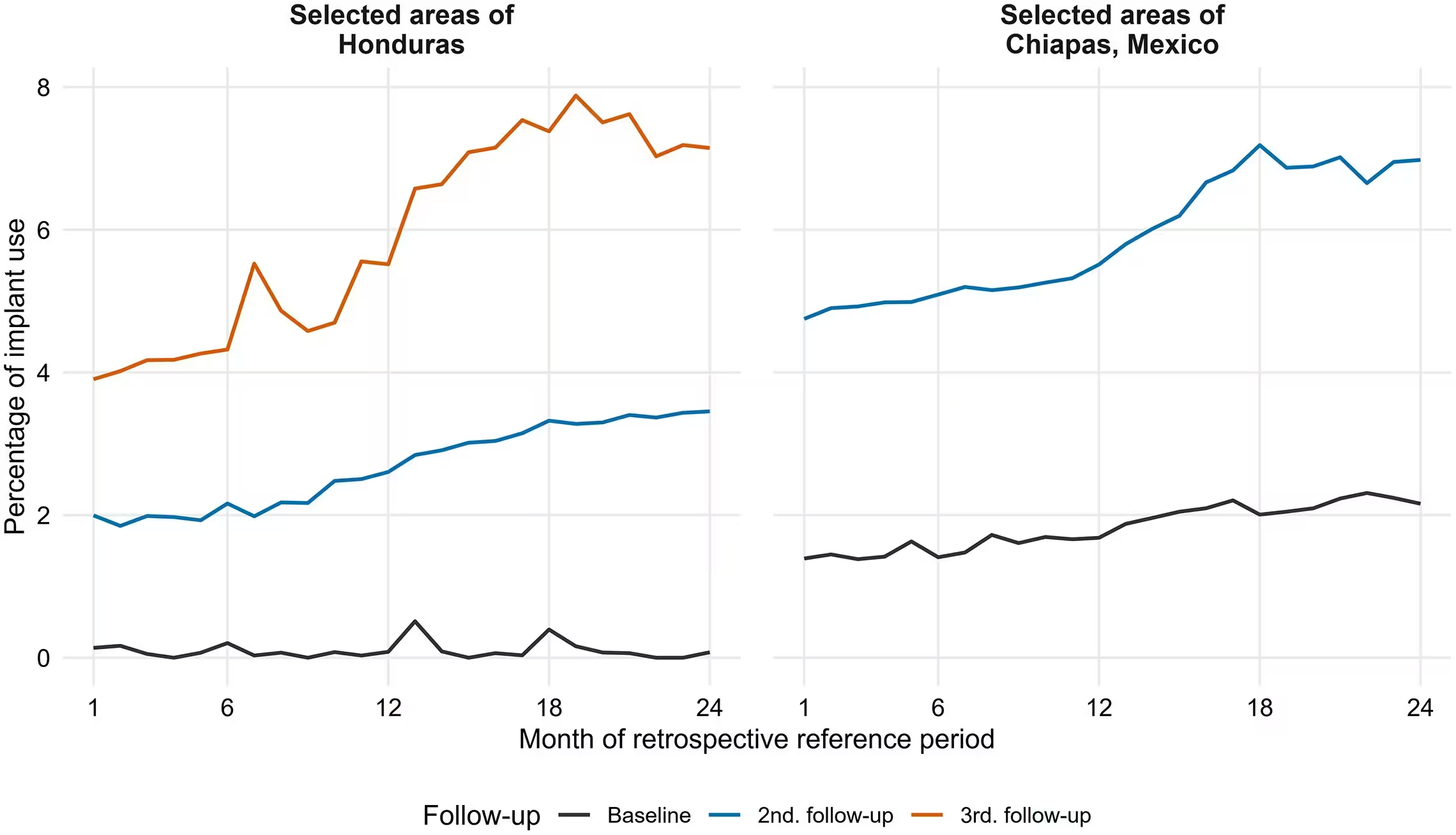
Baseline implant prevalence differed between the two regions, with Chiapas exhibiting higher starting figures of 2.32 percent compared to 0.37 percent in Honduras. Despite these different starting points, both areas maintained an upward trajectory in adoption. Researchers noted that these trends suggest sustained acceptance rather than an immediate plateau, pointing toward growing familiarity with the method among local populations.
Which Communities Showed the Highest Uptake Rates
The analysis uncovered clear demographic patterns regarding who chose the subdermal implants. Age emerged as a major factor, with younger participants demonstrating the highest utilization rates. In Honduras, by the third follow-up, women aged 15 to 19 recorded a 19.2 percent adoption rate, while those aged 20 to 29 reached 15.6 percent. A similar trend appeared in Chiapas during its second follow-up, where the 20 to 29 age group led with 12.9 percent adoption.
Literacy and educational attainment also correlated with higher uptake. Fully literate participants generally showed greater utilization numbers, reaching 9.0 percent in Honduras and 8.0 percent in Chiapas. However, the authors emphasized that women with no reported literacy also exhibited increased implant adoption over time, indicating that public health outreach successfully reached non-literate populations to varying degrees.
Understanding the Limitations of the Study
Because the investigation relied on an observational design and secondary data analysis, the authors cautioned that causal relationships between specific health programs and the observed increases in implant use cannot be definitively established. Self-reported questionnaires also introduce potential recall bias, particularly for retrospective monthly contraceptive histories spanning two years.
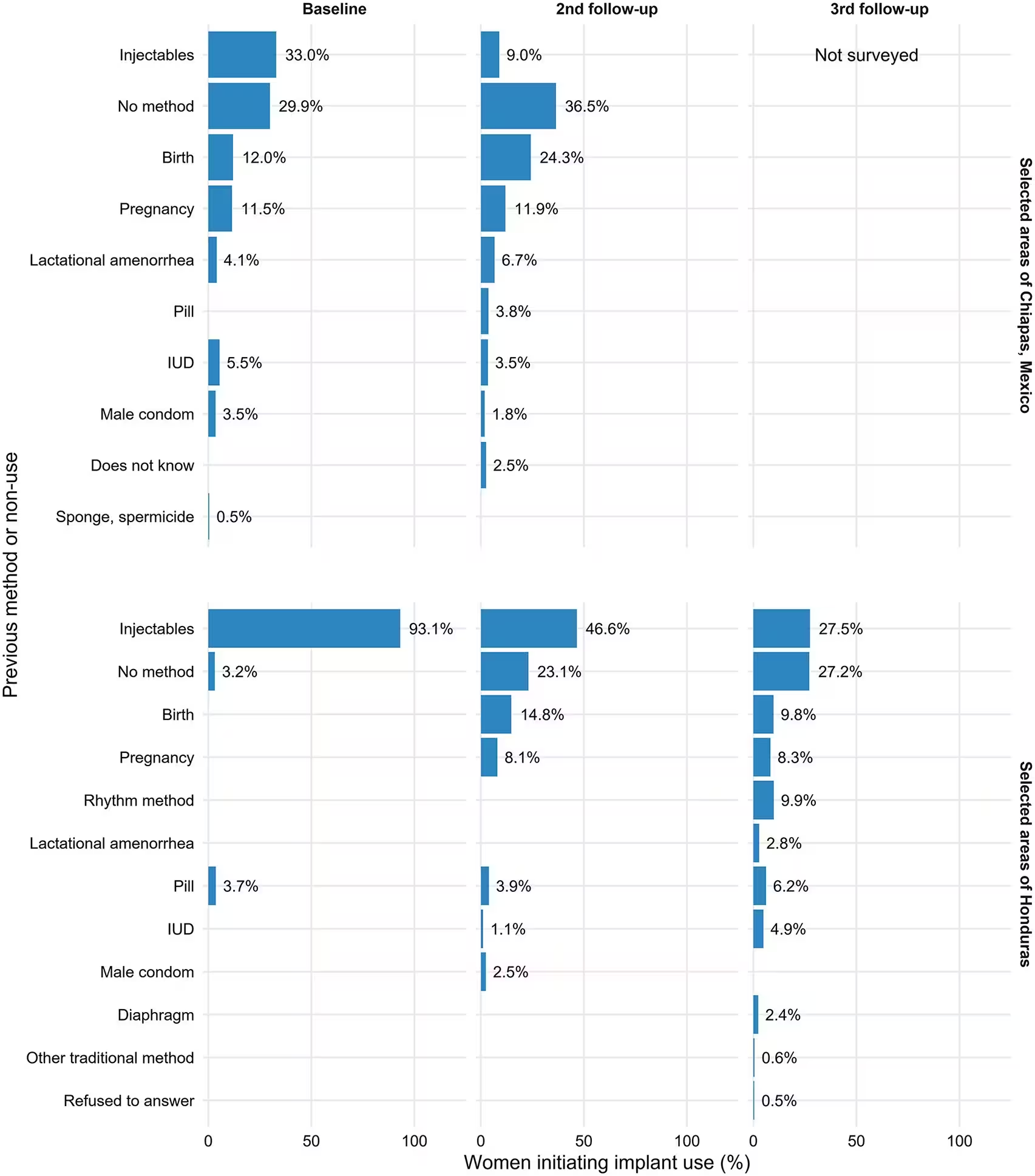
Additionally, data limitations prevented a reliable analysis of why individuals discontinued implants or switched to other methods, such as managing side effects like menstrual changes. The final survey round in Honduras also coincided with the COVID-19 pandemic, a global disruption that may have temporarily influenced healthcare access and health-seeking behaviors. Future prospective studies are necessary to evaluate long-term continuation rates and service-level factors like medical stock-outs.
The research was published in PLOS One on November 6, 2026.
This article has been fact checked for accuracy, with information verified against reputable sources. Learn more about us and our editorial process.
Last reviewed on .
Article history
- Latest version
Reference(s)
- Santoro, Adrián., et al. “Introduction of contraceptive implants as a family planning strategy in Honduras and Chiapas: Results from the Salud Mesoamerica Initiative (SMI).” PLOS One, vol. 21, no. 11, November 6, 2026, pp. e0362270 Public Library of Science (PLoS), doi: 10.1371/journal.pone.0362270. <https://doi.org/10.1371/journal.pone.0362270>.
Cite this page:
- Posted by Asif Iqbal