Deep Mine Hydraulic Columns Reveal Dangerous Stress Patterns
Mathematical models and physical tests uncover the mechanical forces that cause hydraulic cylinders to bulge and crack under heavy underground loads.
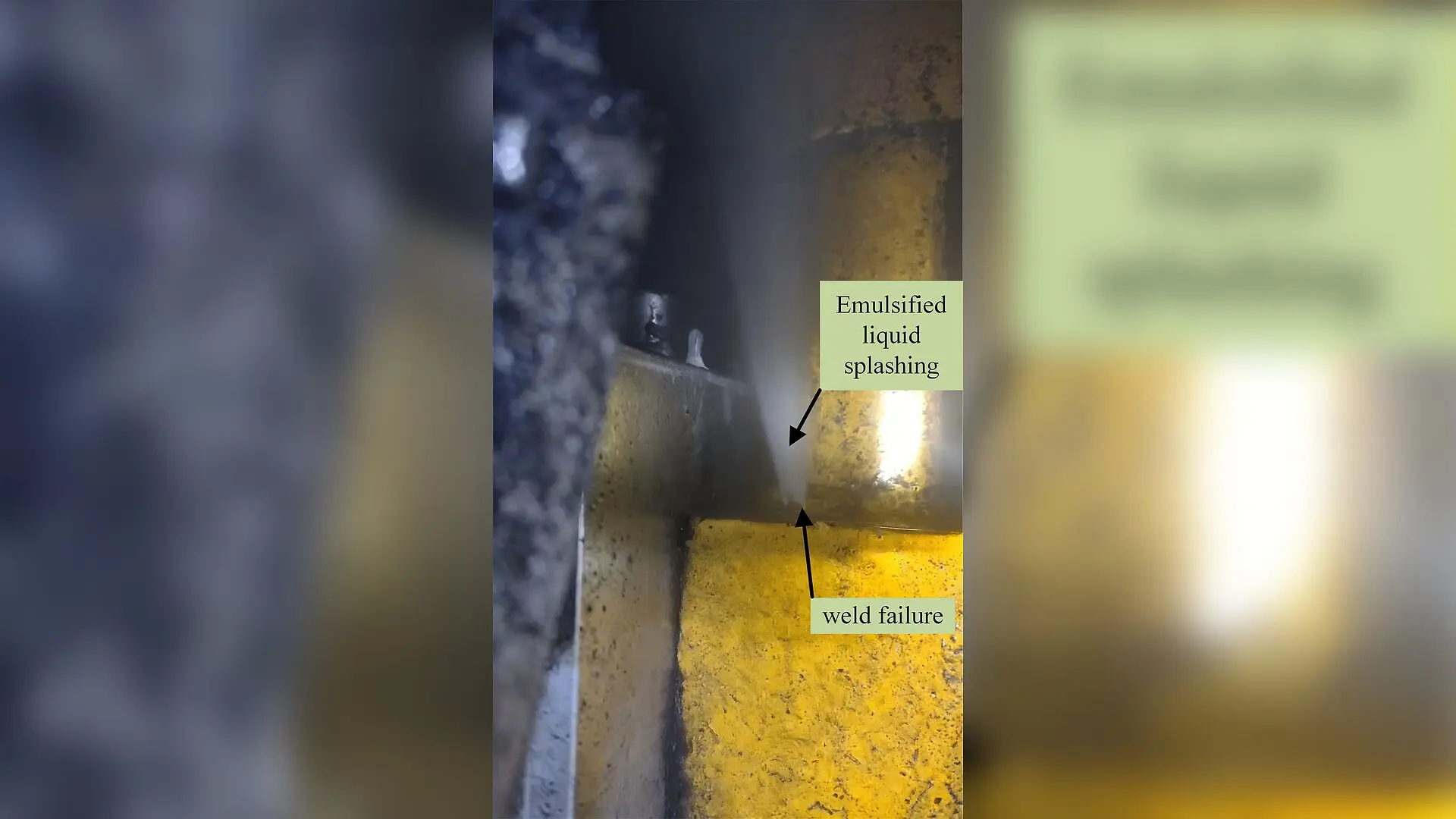
When heavy hydraulic columns inside deep coal mines face intense, recurring shock loads, their steel cylinder barrels can bulge and crack at the welded joints. A team of researchers has mapped out exactly how these damaging stress concentrations form along the interior and exterior walls. By combining classical thick-walled cylinder theory with the boundary edge effects of rotating shells, the investigators traced how internal liquid pressure and rigid end constraints interact to warp stress distribution. The study published in PLOS One details how physical dimensions and chamber heights dictate whether a cylinder will develop severe structural weaknesses.
Deciphering the M-Shaped Stress Profile
To understand why specific sections of the hydraulic column fail under high pressure, the authors analyzed how forces propagate through the steel barrel. The fundamental stress from internal emulsion pressure creates a relatively steady baseline in the middle of the cylinder. However, the rigid connection points at the bottom end cap and the piston create localized physical constraints. These constraints prevent natural radial expansion, generating additional edge forces and bending moments. When combined, these forces create a distinct M-shaped stress pattern along the axial length of the barrel, featuring high stress peaks near both ends and a lower stress valley in the middle.
The investigators performed finite element simulations using 35CrMnSiA steel, which has a density of 7850 kilograms per cubic meter, an elastic modulus of 210 gigapascals, and a Poisson ratio of 0.3. Under a static internal pressure of 40 megapascals and simulated dynamic impact loads reaching 1.256 million newtons, the model revealed sharp stress spikes. Under dynamic loading conditions, the maximum outer-wall stress reached 375.03 megapascals, while the inner-wall stress climbed to 480.45 megapascals.
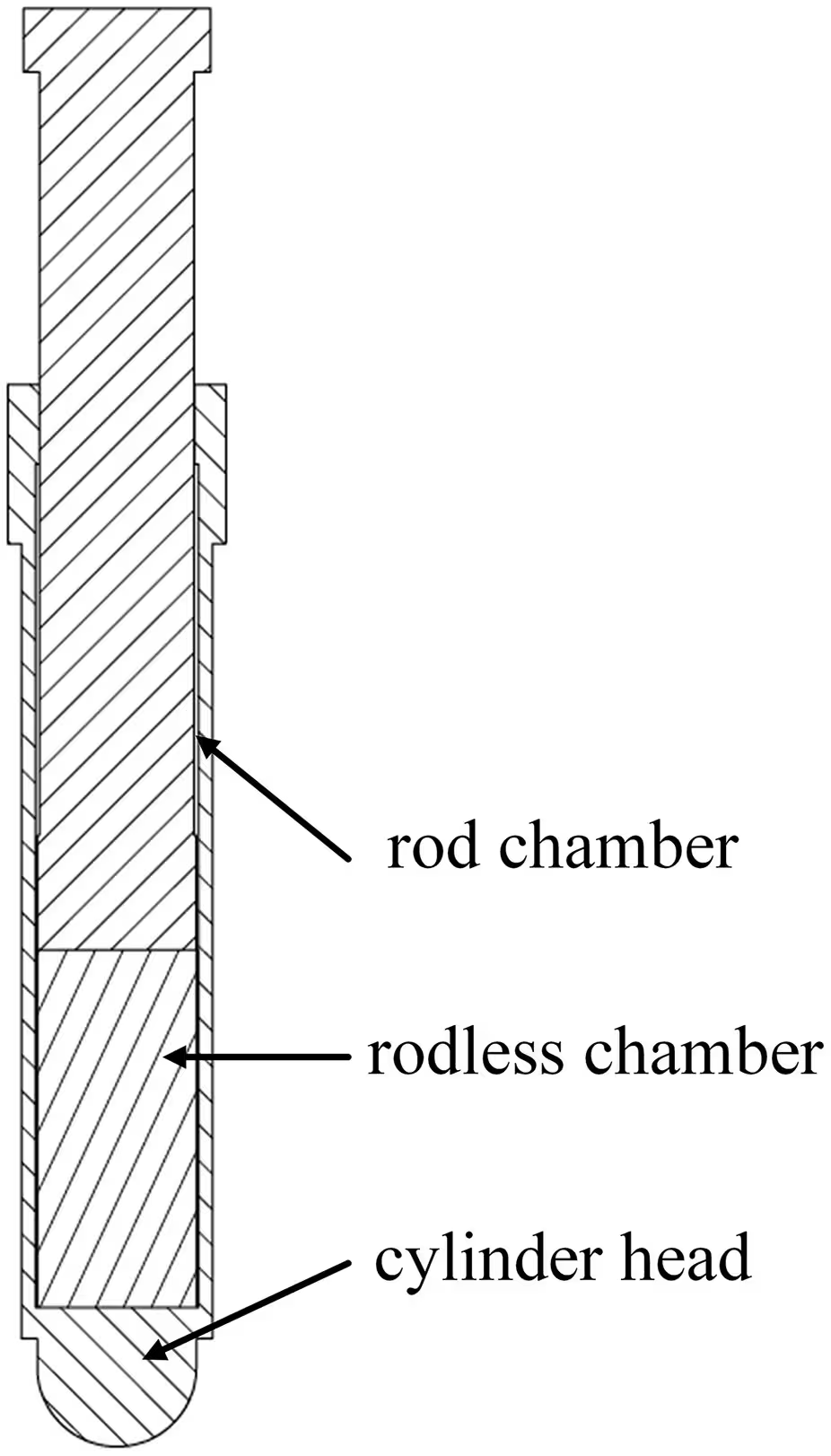
Testing the Model Against Full-Scale Loads
To verify the accuracy of the mathematical and numerical models, the team subjected a full-scale hydraulic column with a 200-millimeter inner diameter, a 21.5-millimeter wall thickness, and a 1000-millimeter stroke to physical testing. Using a 6500-kilonewton static-dynamic composite loading machine, they monitored axial strains across 12 distinct layers using 36 uniaxial foil resistance strain gauges sampled at 20,000 hertz. The physical tests confirmed the M-shaped stress distribution predicted by the theoretical model. Under static loading, the difference between numerical simulations and experimental data stayed within an average error of 3.60 percent. Under dynamic loading, the average error remained below 9.45 percent, confirming that the finite element model accurately mirrors real-world mechanical behavior.
Parametric Analysis of Cylinder Vulnerability
Using response surface methodology, the authors evaluated how variations in the inner diameter, wall thickness, and rodless chamber height influence the peak-to-valley stress differences. Their analysis established that the rodless chamber height exerts the most significant influence on stress inhomogeneity, followed by the cylinder inner diameter, while the wall thickness plays a relatively minor role. Specifically, configurations featuring a 230-millimeter inner diameter, a 20-millimeter wall thickness, and a 795-millimeter rodless chamber height produced pronounced stress concentration risks. The authors emphasize that this particular configuration represents a critical structural hazard rather than an optimal design, identifying vulnerable geometries that engineers should avoid to prevent cylinder expansion and high-pressure fluid leaks in deep underground mining environments.
The research was published in PLOS One on November 6, 2026.
This article has been fact checked for accuracy, with information verified against reputable sources. Learn more about us and our editorial process.
Last reviewed on .
Article history
- Latest version
Reference(s)
- Zhang, Jianzhuo., et al. “Research on impact dynamic characteristics of hydraulic column cylinder barrel.” PLOS One, vol. 21, no. 11, November 6, 2026, pp. e0348487 Public Library of Science (PLoS), doi: 10.1371/journal.pone.0348487. <https://doi.org/10.1371/journal.pone.0348487>.
Cite this page:
- Posted by Asif Iqbal