AI Intrusion Detector Secures Smart Grids in Milliseconds
A new graph-temporal deep learning model achieves 99.98 percent accuracy on benchmark cybersecurity datasets while running efficiently on edge hardware.
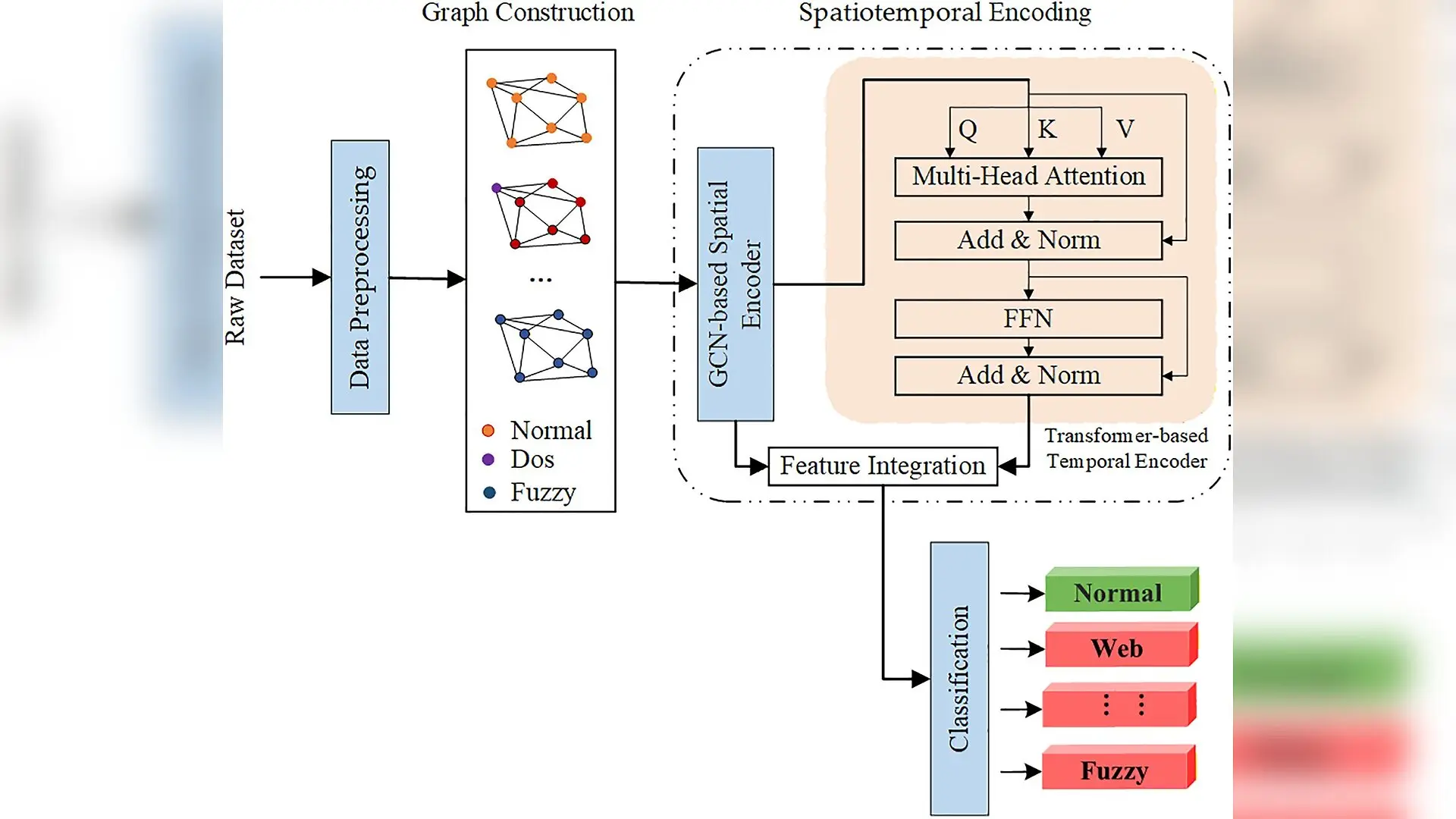
Cybersecurity researchers have developed a lightweight artificial intelligence framework that scans grid communication networks for malicious intrusions in just fractions of a millisecond while running on resource-constrained hardware. Modern power grids rely heavily on digital communication networks to coordinate power generation and distribution, making them increasingly vulnerable to cyberattacks that can manipulate measurement data or inject false commands. Traditional defense systems often fail to capture complex spatial and temporal attack patterns while maintaining the strict low-latency performance required by modern substations.
How the Spatiotemporal Detection Model Operates
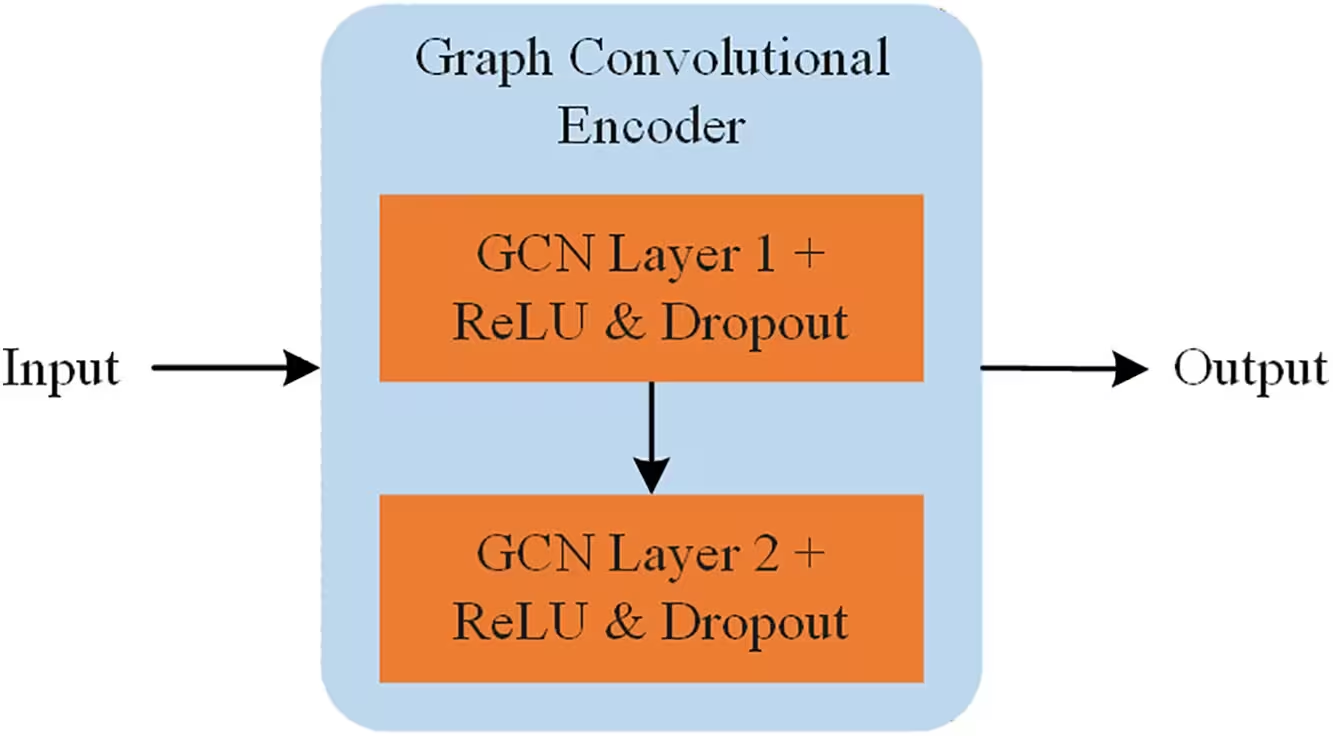
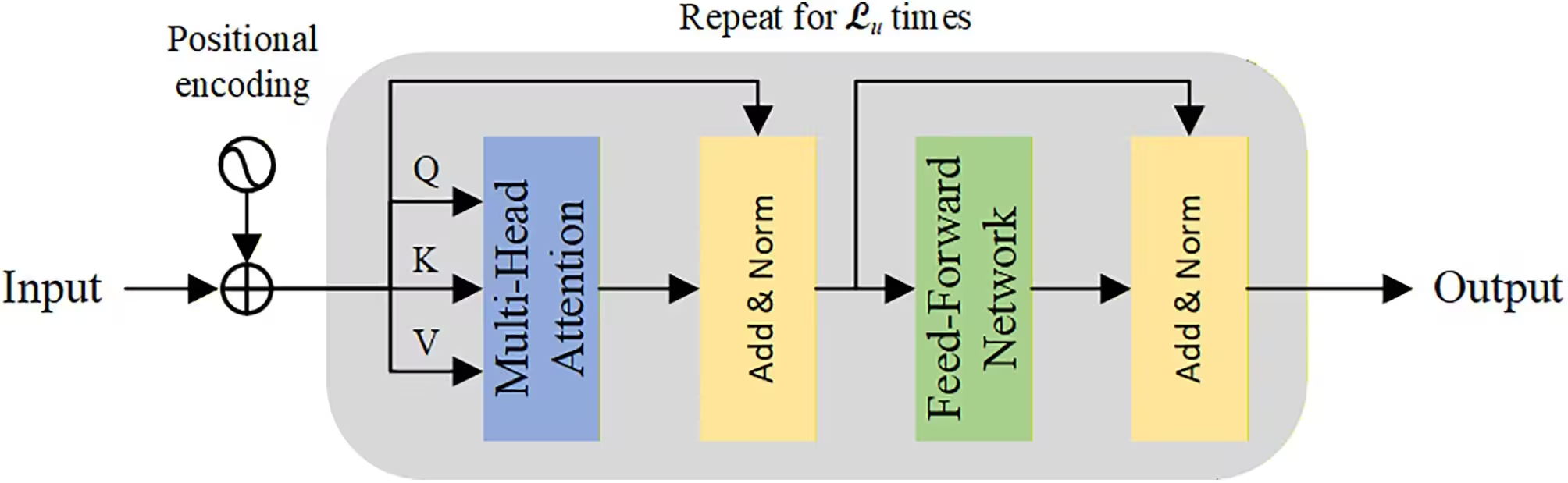
To overcome these limitations, a research team introduced a graph-temporal intrusion detection model known as GT-PNID. The system transforms raw sequential network traffic into a series of dynamic graph structures using a sliding window mechanism guided by feature similarity metrics. By combining graph convolutional networks with multi-layer Transformer encoders, the architecture simultaneously evaluates local neighborhood relationships among traffic flows and long-range temporal attack evolution across time windows. The detailed methodology and architectural design are available in the study published in PLOS One by Heng Zhou, Mianting Wu, Weixiong Chen, and Qiang Zhou.
The model processes input data through an integrated pipeline where node feature similarities dictate dynamic edge weights. A dual-criterion mechanism combining percentile-based thresholding and top-k sparsification ensures balanced graph connectivity across consecutive temporal snapshots. Global average pooling then fuses spatial and temporal representations before a final fully connected classification layer maps the features to specific intrusion categories.
Performance and Efficiency on Benchmark Datasets
The research team evaluated the framework on two established benchmark datasets, CICIDS2017 and NSL-KDD, representing diverse attack scenarios including denial-of-service, distributed denial-of-service, port scanning, and brute-force attempts. Experimental results indicate that GT-PNID achieves accuracy and F1-scores exceeding 99.98 percent on both datasets, significantly outperforming traditional machine learning classifiers and standalone deep learning architectures. The model maintained an extremely low false-positive rate, which is critical in power grid environments to prevent operator alarm fatigue and accidental protective tripping.
In terms of computational efficiency, the network comprises only 424,478 trainable parameters and requires just 9.13 million floating-point operations. The on-disk model size totals 2.21 megabytes, allowing it to fit comfortably within the memory limits of embedded substation hardware. During benchmark evaluations, the per-sample inference time reached approximately 0.09 milliseconds on standard hardware.
Edge Platform Validation and Real-World Constraints
To confirm practical engineering feasibility, the authors deployed and tested the detection model on an NVIDIA Jetson TX2 embedded edge platform acting as an on-site safety monitor. Running in default PyTorch mode, the edge device recorded a per-sample inference time of 3.21 milliseconds, which dropped to 1.68 milliseconds when accelerated using TensorRT half-precision floating-point format. GPU memory consumption remained low between 110 and 168 megabytes, demonstrating efficient hardware utilization.
Despite these promising edge performance metrics, the authors acknowledge several limitations that require further investigation. The current evaluation relies on generic cybersecurity benchmarks rather than proprietary power system protocols such as IEC 61850 GOOSE, MMS, or DNP3. Furthermore, while edge inference speeds easily satisfy supervisory monitoring cycles, achieving sub-millisecond latency for ultra-fast protection functions will require additional compression techniques like quantization and pruning.
The research was published in PLOS One on November 6, 2026.
This article has been fact checked for accuracy, with information verified against reputable sources. Learn more about us and our editorial process.
Last reviewed on .
Article history
- Latest version
Reference(s)
- Zhou, Heng., et al. “GT-PNID: A lightweight graph-temporal network integrating GCN and transformer for power network intrusion detection.” PLOS One, vol. 21, no. 11, November 6, 2026, pp. e0360854 Public Library of Science (PLoS), doi: 10.1371/journal.pone.0360854. <https://doi.org/10.1371/journal.pone.0360854>.
Cite this page:
- Posted by James Whitmore