New AI Model Predicts Railway Accident Risks With 89 Percent Accuracy
Researchers combine advanced machine learning and cloud models to decode complex train accident reports and human hesitation.
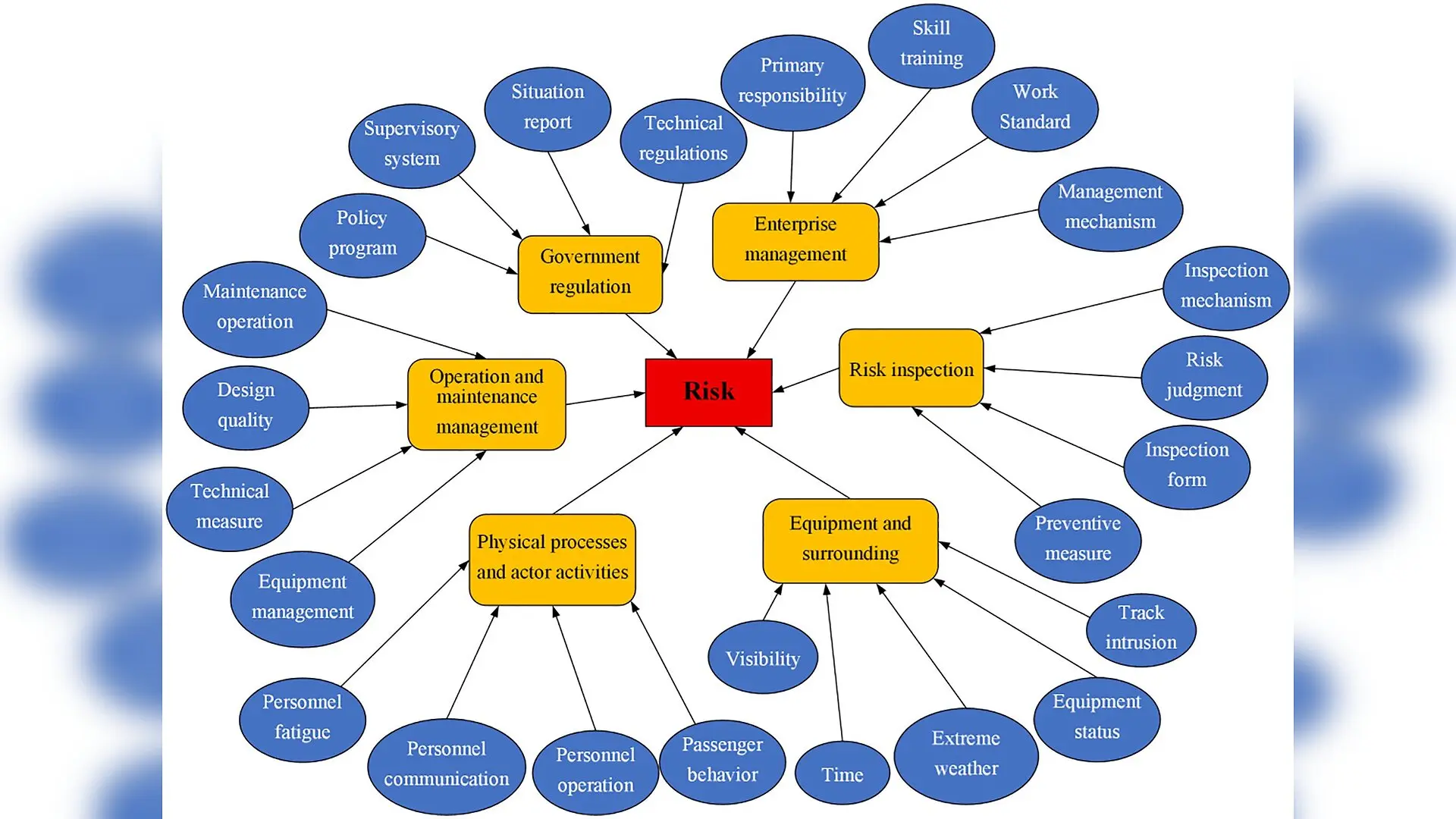
Railway safety managers can now better predict serious accidents by combining machine learning with expert evaluations, achieving an 89.65% prediction accuracy across historical train incidents.
Modern railway networks face growing operational pressures as train speeds increase and passenger demand surges. To understand the root causes of these incidents, researchers have turned to advanced data modeling. The study is published in PLOS One and details a novel framework that bridges the gap between historical data and expert judgment.
How Machine Learning Balances Railway Data
Historical accident records often suffer from severe imbalances, as minor incidents vastly outnumber catastrophic collisions or derailments. To solve this data skew, the authors integrated the Adaptive Synthetic Sampling algorithm, known as ADASYN. This computational tool generates representative synthetic samples for minority classes without distorting the underlying data distribution.
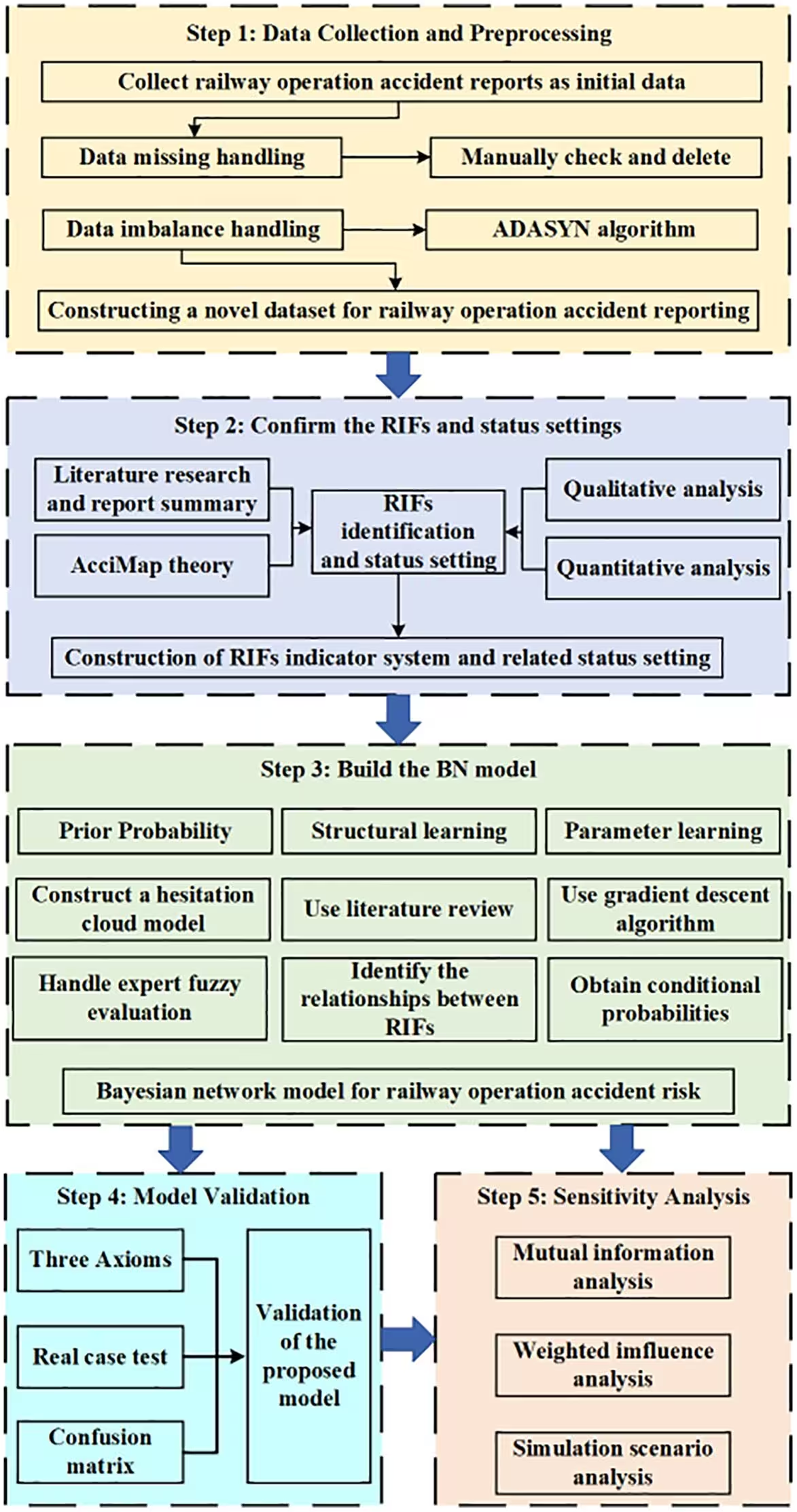
The research team analyzed 143 official railway accident reports from 2015 to 2024. After cleaning the dataset and excluding incomplete records, they divided the data into an 80% training set and a 20% testing set to ensure unbiased validation. This preprocessing step established a reliable foundation for evaluating 25 distinct risk-influencing factors.
Processing Expert Hesitation Through Cloud Models
Many risk factors in railway operations lack fully structured numerical data and rely heavily on qualitative expert evaluations. Human experts often experience cognitive hesitation, conflicting opinions, and semantic vagueness when assessing complex hazards. Traditional probability models struggle to process these subjective uncertainties without introducing severe bias.
To overcome this limitation, the authors introduced a hesitant cloud model that merges hesitant fuzzy sets with traditional cloud theory. This approach translates qualitative linguistic feedback into quantitative expectation, entropy, and hyper-entropy values. By aggregating judgments from multiple experts, the system derives robust prior probabilities for subjective network nodes while minimizing individual cognitive outliers.
Identifying Critical Risk Factors in Train Operations
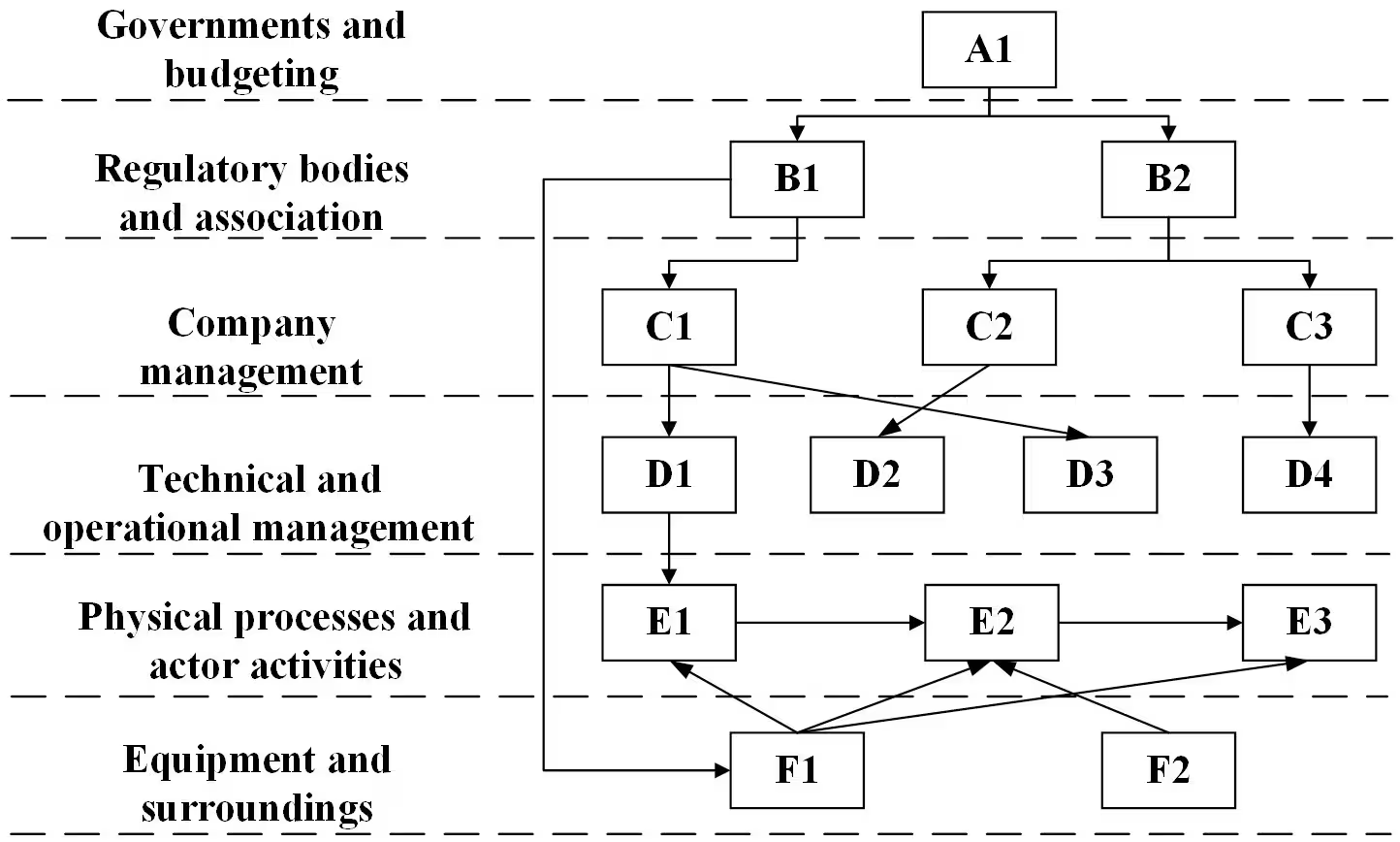
Using a Bayesian network structured around the AcciMap sociotechnical framework, the researchers mapped out the causal pathways linking organizational management, physical processes, and environmental conditions. Mutual information and weighted influence analyses identified the dominant drivers of railway risk.
- Extreme weather: Ranked as the highest mutual information factor at 0.4128, severely impacting operational safety.
- Track intrusion: Unidentified foreign objects on the tracks posed major escalation risks.
- Personnel operation: Human actions and operational standardization remained central to accident severity.
- Management mechanisms: Organizational oversight played a decisive role in preventing cascading failures.
When researchers tested the model against a real railway accident that occurred on the Beijing-Guangzhou Line, the system successfully predicted a major-to-serious accident risk probability of 90%. This high degree of accuracy confirms that the framework can assist safety authorities in deploying timely preventative measures before hazards escalate into disasters.
The research was published in PLOS One on November 6, 2026.
This article has been fact checked for accuracy, with information verified against reputable sources. Learn more about us and our editorial process.
Last reviewed on .
Article history
- Latest version
Reference(s)
- Yang, Rui., et al. “Data-driven risk assessment framework for railway operation accidents based on an improved Bayesian network.” PLOS One, vol. 21, no. 11, November 6, 2026, pp. e0361856 Public Library of Science (PLoS), doi: 10.1371/journal.pone.0361856. <https://doi.org/10.1371/journal.pone.0361856>.
Cite this page:
- Posted by Asif Iqbal