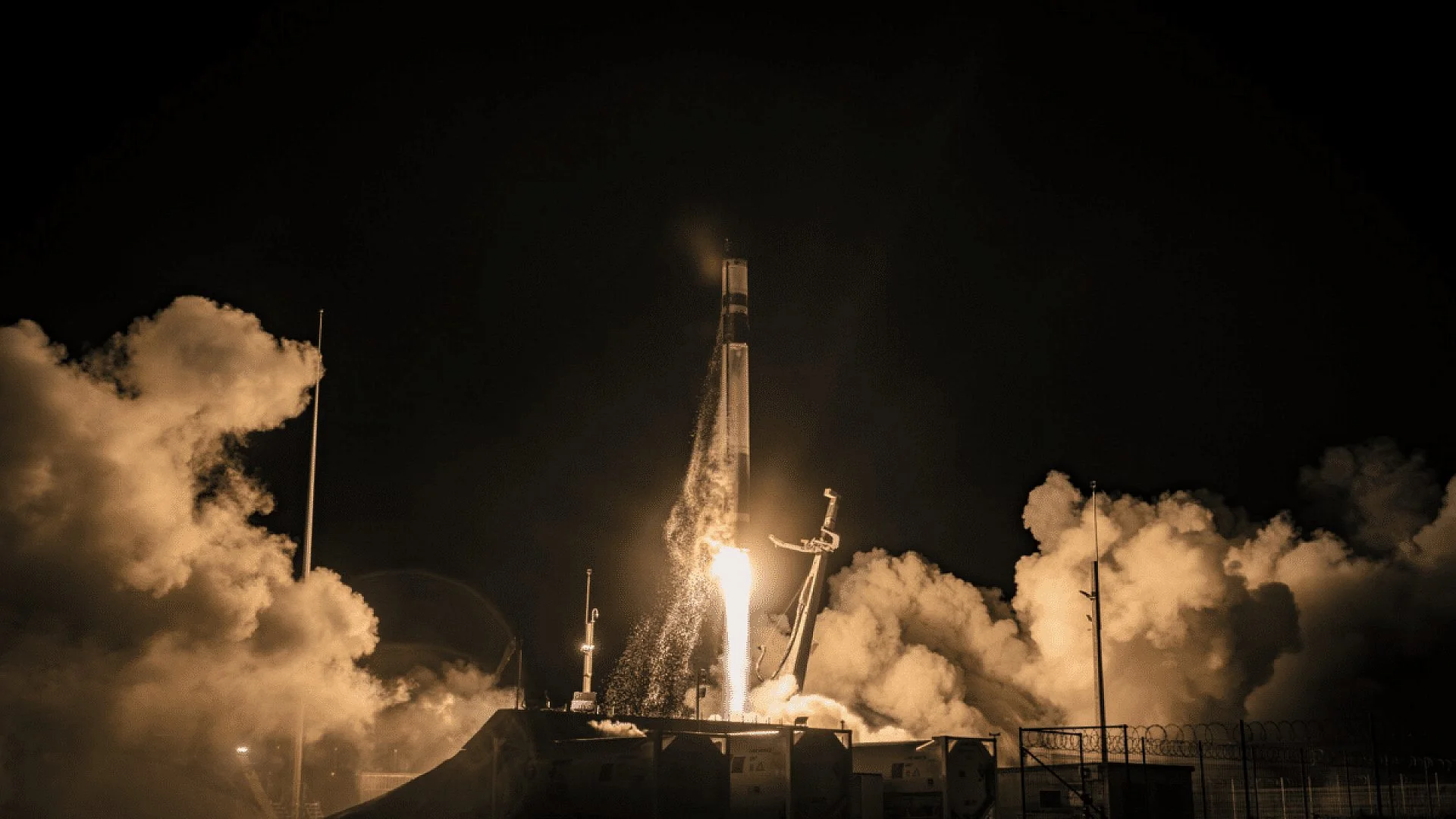
Rocket Lab placed a Japanese Earth-observing satellite into orbit early Friday, a milestone that expands Japan’s capacity to track environmental changes and critical infrastructure. The flight, named Viva La Strix, carried a radar‑based satellite built for Synspective, a company that specializes in synthetic aperture radar (SAR) imaging. (Source: Rocket Lab)
New Zealand Launch Delivers High‑Resolution Radar Platform
At 5:33 a.m. EDT (9:33 p.m. local time in New Zealand) on 22 May, Rocket Lab’s Electron rocket ignited from its launch complex on the North Island, lofting one of Synspective’s Strix spacecraft. The vehicle inserted the payload into a low‑Earth orbit roughly 355 miles (572 kilometres) above the planet, meeting all mission objectives and handing the satellite over to its operators for activation.
The Strix unit, named after a group of owls, employs SAR technology that can penetrate cloud cover and operate in darkness, giving Synspective a continuous view of the surface. This ability is especially useful where conventional optical sensors are blocked by weather or the lack of sunlight.
Constellation deployment made simple with Electron: frequent launches, proven reliability, and precision on orbit
Mission success once again for @synspective on Electron’s 88th launch. Nine missions complete and 18 more to go to finish Synspective’s SAR constellation by… pic.twitter.com/wf51yo9wmY
Synspective Grows SAR Network for Urban and Disaster Monitoring
According to Rocket Lab, “Synspective is building out a synthetic aperture radar (SAR) imaging constellation over Japan that provides data for urban development planning, construction and infrastructure monitoring, and disaster response.” The recent launch marks the ninth Electron‑based flight for Synspective, with a larger schedule of missions planned.
Space.com notes that the constellation is intended to serve urban planners and disaster management teams by delivering frequent, high‑resolution radar images. By tracking alterations in city layouts, infrastructure health, and post‑event conditions, the network aims to shorten response times and improve decision‑making during emergencies.
Electron Remains a Workhorse for Small‑Satellite Deployments
Rocket Lab’s Electron stands 59 feet (18 metres) tall and is optimized for delivering small payloads to orbit. Since its inaugural flight in May 2017, the vehicle has completed 78 successful missions. Synspective has relied exclusively on Electron for its constellation since 2020, with 18 additional launches booked through 2030.
The company also operates a sub‑orbital version called HASTE, which tests hypersonic technologies in a space‑like environment. This flexibility has made Rocket Lab a preferred partner for commercial and governmental customers worldwide.
All‑Weather Radar Supports Japan’s Planning and Safety Goals
SAR imaging delivers a distinct advantage for monitoring urban expansion, construction projects, and critical infrastructure. Because the sensor works day and night and in any weather, it supplies reliable data for public safety and urban efficiency. The imagery from Synspective’s Strix fleet is expected to inform Japan’s development policies and disaster‑readiness strategies.
The name Strix, referencing owls, highlights the satellite’s capacity to see through obstacles and darkness, underscoring the mission’s focus on persistent observation. By pairing advanced radar capability with a growing constellation, Synspective positions itself as a key player in Japan’s Earth‑observation market.
Fact Checked
This article has been fact checked for accuracy, with information verified against reputable sources. Learn more about us and our editorial process.
Johnson, Mary. “Rocket Lab Deploys Japanese Radar Satellite to Advance Urban Planning and Disaster Response.” BioScience. BioScience ISSN 2521-5760, 23 May 2026. <https://www.bioscience.com.pk/en/subject/urban-studies/rocket-lab-deploys-japanese-radar-satellite-to-advance-urban-planning-and-disaster-response>.
Johnson, M. (2026, May 23). “Rocket Lab Deploys Japanese Radar Satellite to Advance Urban Planning and Disaster Response.” BioScience. ISSN 2521-5760. Retrieved May 23, 2026 from https://www.bioscience.com.pk/en/subject/urban-studies/rocket-lab-deploys-japanese-radar-satellite-to-advance-urban-planning-and-disaster-response
Johnson, Mary. “Rocket Lab Deploys Japanese Radar Satellite to Advance Urban Planning and Disaster Response.” BioScience. ISSN 2521-5760. https://www.bioscience.com.pk/en/subject/urban-studies/rocket-lab-deploys-japanese-radar-satellite-to-advance-urban-planning-and-disaster-response (accessed May 23, 2026).