Denmark Just Switched Off White Streetlights and Turned a Road Red to Solve a Nighttime Urban Crisis Most Cities Still Ignore
The peculiar shift observed near Copenhagen highlights how common streetlights can trigger unforeseen outcomes after sunset, prompting one municipality to opt for red lighting as a safer solution.
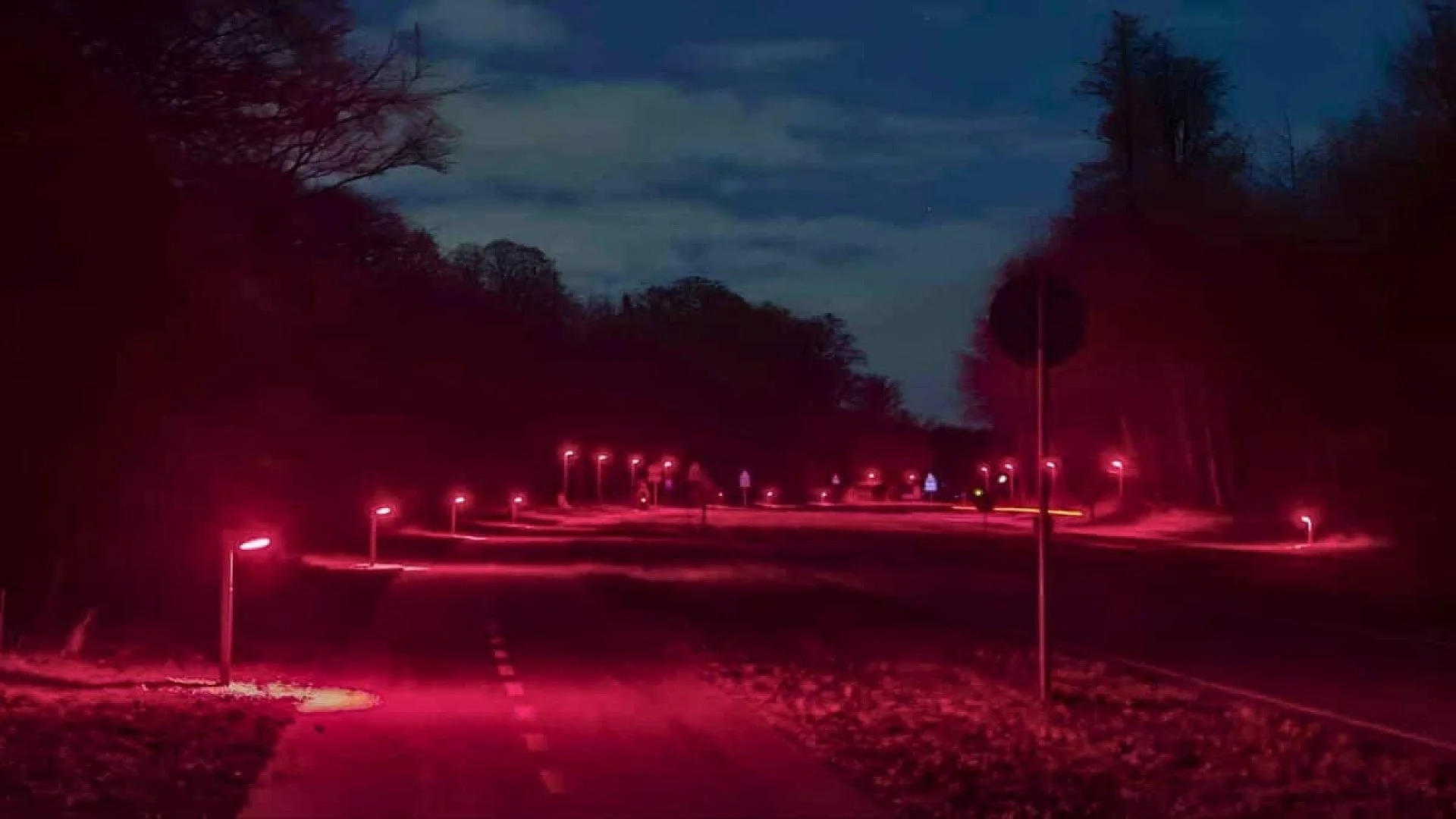
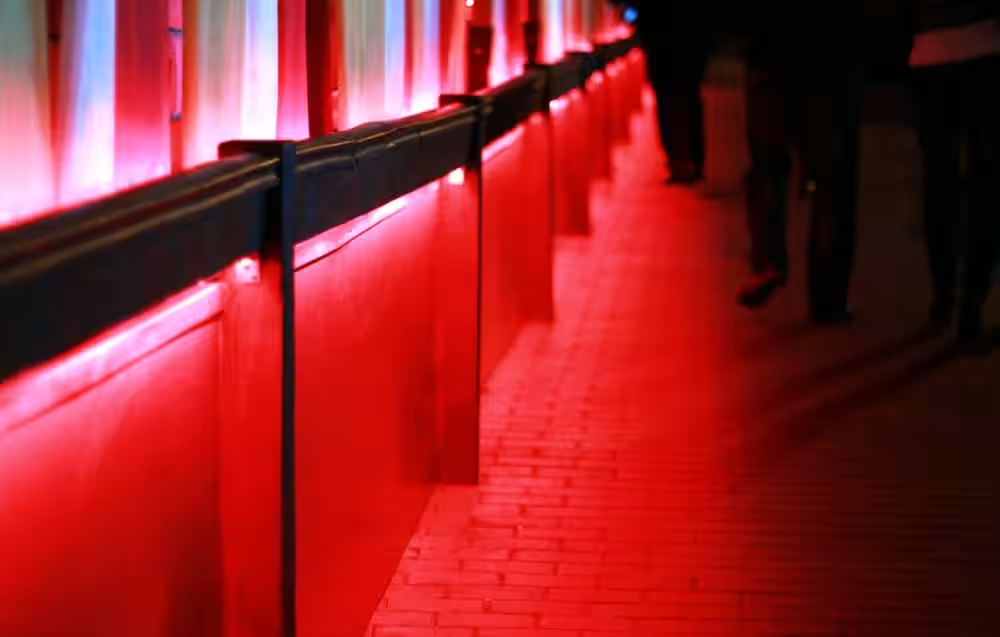
Motorists on Frederiksborgvej, a major thoroughfare in the municipality of Gladsaxe, just outside Copenhagen, noticed a striking change on February 8, 2026. The familiar white-blue glow of standard city lighting had been replaced by a deep, saturated crimson hue, transforming the road into a visual anomaly against the surrounding urban grid.
The change was not merely decorative. The red light cast a steady, functional glow over the pavement and adjacent foliage, concentrated in a section where suburban development meets dense vegetation. Local residents observed that the new lighting appeared without prior public announcement, and its specific placement suggested a targeted purpose rather than a citywide redesign.
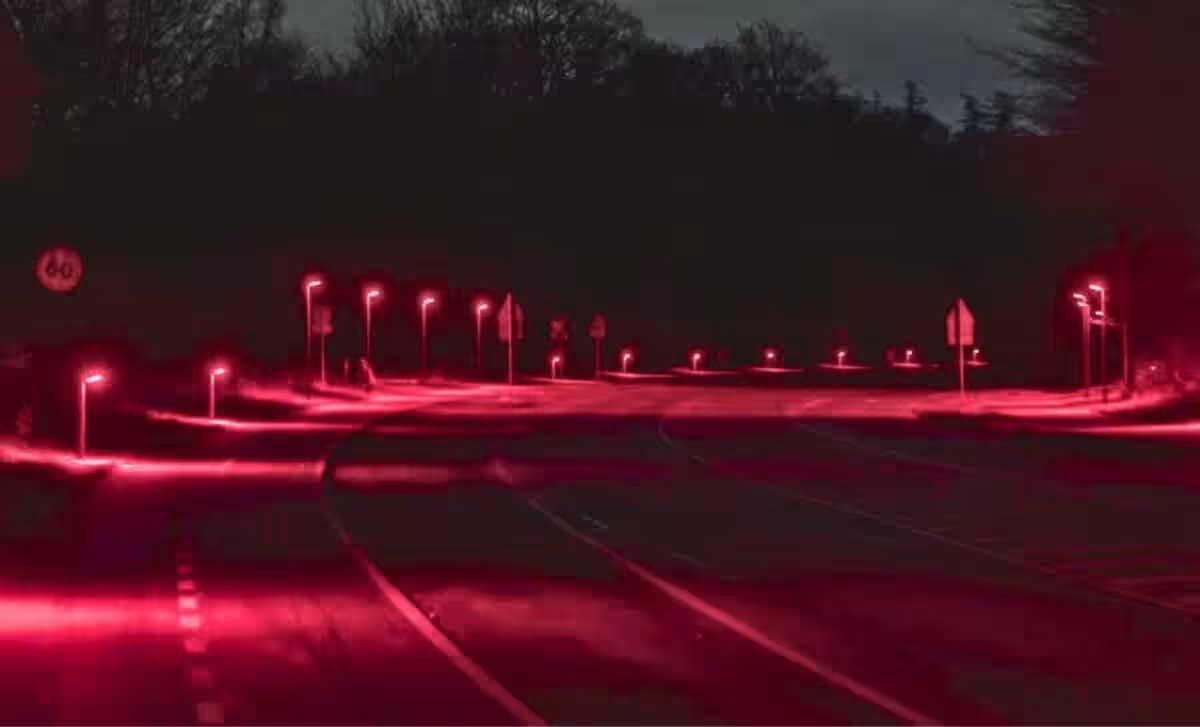
The installation was strategically placed near a known bat colony to mitigate the impact of artificial light on the nocturnal ecosystem. By shifting the wavelength of the light, the city sought to maintain road safety for drivers while protecting the natural behaviors of local wildlife, according to a press release from Gladsaxe Municipality.
The Light Targets a Specific Biological Problem
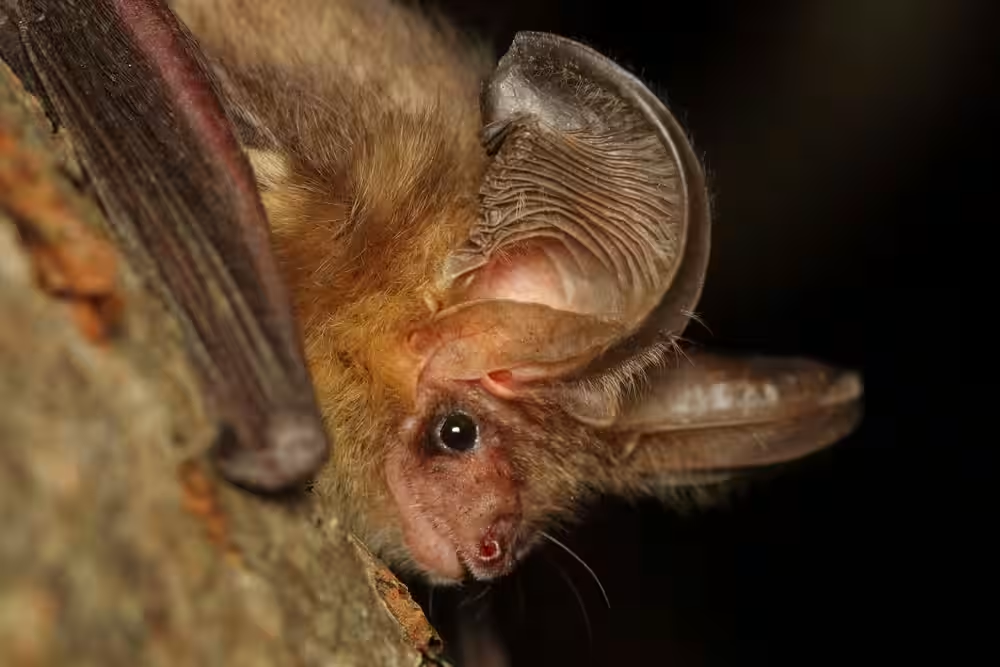
The project identified the common pipistrelle and the brown long-eared bat as the primary species targeted by this conservation effort. These animals rely on dark corridors for navigating between roosting sites and feeding grounds. When traditional white light spills into these areas, it can create light barriers that the bats are unwilling to cross, effectively shrinking their available habitat.
Research underpinning the project shows that many bat species do not perceive red light as a threat or a barrier in the same way they perceive white or blue light. A five-year study led by the Netherlands Institute of Ecology (NIOO-KNAW), published in Proceedings of the Royal Society B, found that red light has no effect on bat activity. Principal researcher Kamiel Spoelstra reported that light-shy bats were equally active in red light and in darkness, while white and green light substantially reduced their activity.
“The lack of effect of red light on both the rarer, light-shy species and the more common non-light-shy bats opens up possibilities for limiting the disruption caused by external, artificial lighting in natural areas,” Spoelstra said in the 2017 study. The research used light intensity entirely suitable for use on country roads, making the findings directly applicable to the Gladsaxe project.
The Design Balances Human and Wildlife Needs
The Danish Road Directorate provided technical guidance, focusing on the intersection of human infrastructure and biological hotspots. Light Bureau part of AFRY, worked with Gladsaxe Municipality to design a compromise that addresses both traffic safety and ecological sensitivity, as detailed in the project case study.
The installation uses 30 low armatures, each one meter high and placed 30 meters apart. This wide spacing creates dark corridors for light-shy animals that move along the ground and require complete darkness to hide from predators, while still keeping the cycle path sufficiently lit.
At points where cyclists and pedestrians cross the road, the design shifts. Twelve armatures on 3.5-meter-high masts emit warm white light to signal that the surroundings are changing, increasing visibility and safety at these intersections.
Philip Jelvard, a lighting designer at Light Bureau who worked on the project, stated: “Overall, we hope that everyone welcomes the new lighting and that the red light not only has functional value, but also symbolic value. The red light should make passers-by aware that this is a special natural area that we want to protect.”
The Project Fits a Wider Sustainability Strategy
The transformation is part of the EU-funded Lighting Metropolis – Green Mobility program, which brings together cities across Denmark and Sweden to test sustainable lighting solutions. The red light installation on Frederiksborgvej serves as a real-world laboratory, providing data on how such changes affect both energy consumption and local biodiversity.
Gladsaxe is Denmark’s first World Goal Municipality, having incorporated the UN Sustainable Development Goals into its overarching strategy. The municipality’s official page on biodiversity features the bat-friendly lighting alongside other efforts such as preserving veteran trees and introducing natural grazing.
According to the municipality, seven bat species have been registered at the Frederiksborgvej site near Skovbrynet. None are assessed as threatened or red-listed, but the common pipistrelle and the brown long-eared bat face the greatest risk of negative impact from roads.
Jonas Jørgensen, a road engineer with Gladsaxe Municipality’s Traffic and Mobility department, explained the decision: “We wanted lighting that affects the bats and nature as little as possible, without compromising on traffic safety. No light or switched-off light would be the best light for the bats, but since that is not possible, red light is the best, and we have therefore chosen it on the part of the stretch where the bats live.”
The red LED streetlights also function as a permanent visual marker of the city’s environmental priorities. The distinct color alerts drivers that they are entering a sensitive ecological zone, potentially encouraging more cautious driving behavior in areas where wildlife is active.
Light Bureau said it plans to collaborate further with biologists over the coming year to evaluate whether the solution has had the intended effect and to gather data for future projects.
This article has been fact checked for accuracy, with information verified against reputable sources. Learn more about us and our editorial process.
Last reviewed on .
Article history
- Latest version
Reference(s)
- “Ny vejbelysning i Gladsaxe udviklet til flagermus | Gladsaxe Kommune.”, December 14, 2021 <https://via.ritzau.dk/pressemeddelelse/13638658/ny-vejbelysning-i-gladsaxe-udviklet-til-flagermus>.
- “Red light has no effect on bat activity.”, May 31, 2017 <https://nioo.knaw.nl/en/news/red-light-has-no-effect-on-bat-activity>.
- Welcome, “Gladsaxe Municipality in Denmark switches to bat-friendly lighting.”, April 14, 2022 Light Bureau <https://lightbureau.com/gladsaxe-municipality-in-denmark-switches-to-bat-friendly-lighting/>.
- “Design af flagermusvenlig vejbelysning.” <https://afry.com/da-dk/case/projekt-ny-flagermusvenlig-belysning-i-gladsaxe>.
- “Vild natur og biodiversitet.” Gladsaxe Kommune <https://gladsaxe.dk/borger/miljoe-og-klima/naturgenopretning-og-biodiversitet/vild-natur-og-biodiversitet>.
Cite this page:
- Posted by Mary Johnson