Giant Viking Hall Unearthed in Ireland: Could Be Country’s Largest Norse Structure Yet
New finds at an Irish Viking site reveal unexpected material, complicating settlement theories, though the full scope remains unknown.
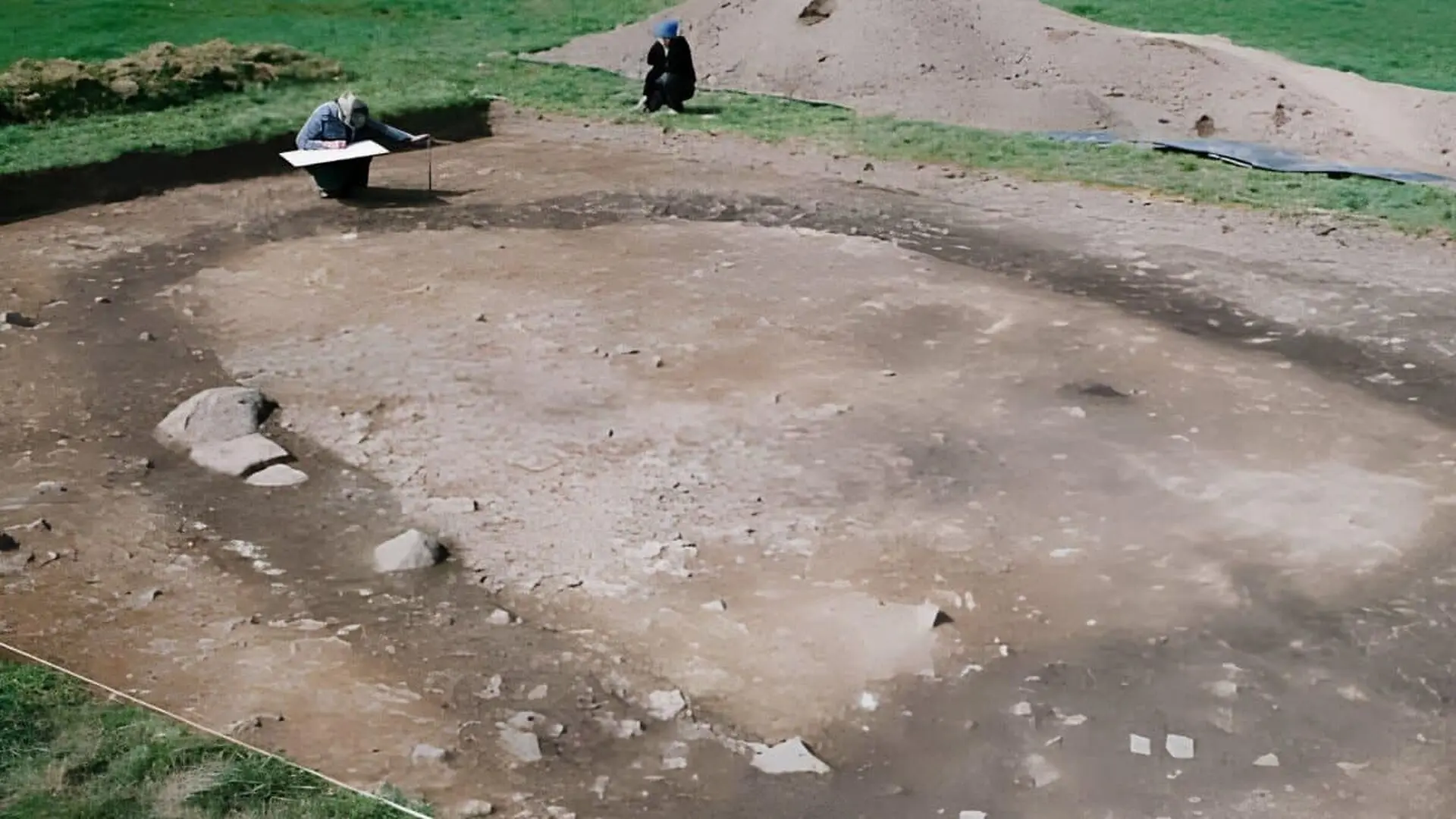
Archaeologists digging near the River Suir, just outside Waterford, have uncovered a massive buried feature that could become the biggest Viking‑era building ever recorded in Ireland. The ongoing work at the Woodstown site, long concealed beneath farmland, is revealing a settlement that appears to have survived untouched for centuries.
Because the area escaped the continuous rebuilding that reshaped later Viking towns such as Dublin and Waterford, its early medieval layers remain largely in situ. This rare preservation offers a snapshot of a community that may have functioned far beyond a transient camp.
The first signs of Woodstown emerged in 2003 during construction of the N25 Waterford bypass. Initial digs by Waterford City & County Council exposed ditch enclosures, evidence of craft activity and a high‑status Viking warrior burial, hinting at a far‑reaching settlement now being explored in greater depth.
Enormous Hall Detected at Settlement Core
A recent geophysical survey highlighted a striking anomaly at the heart of the site, prompting researchers to open a large trench. The feature’s size and shape stand out clearly in the data, suggesting a substantial building.
Professor Kristin Armstrong‑Oma of the University of Stavanger’s Museum of Archaeology interprets the remains as a “very longhouse or large hall,” a type of structure that in Viking societies often served as a communal gathering place, administrative hub, and storage centre.
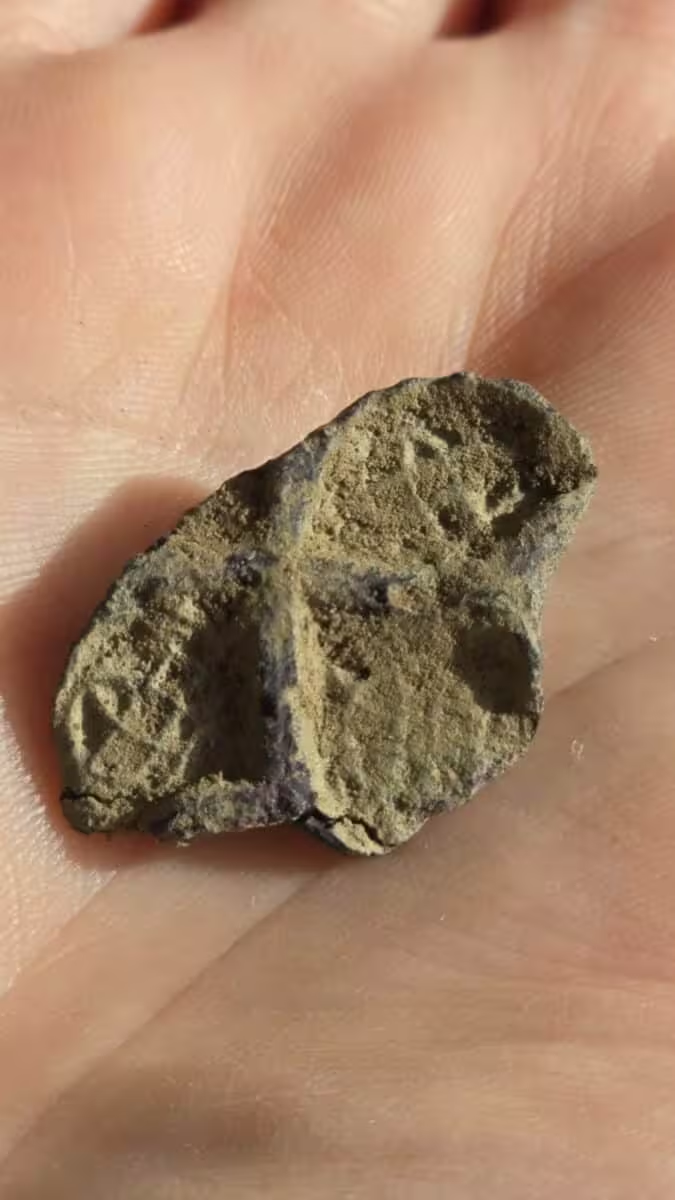
If further analysis confirms this interpretation, the building could become the largest Viking‑period hall identified in Ireland to date. A University of Stavangerstatement from the research team emphasizes that such a structure would reinforce the view of Woodstown as a permanent, organized settlement rather than a short‑lived encampment.
Craft Production and Trade Along the Suir
Earlier phases of excavation uncovered a suite of metal‑working evidence, including silver weighing scales, crucibles, raw metal fragments and slag, all pointing to sophisticated production and exchange activities.
Professor Håkon Reiersen, also of the University of Stavanger’s Museum of Archaeology, notes that the assemblage reflects active participation in the wider Viking Age trading networks that moved silver, textiles, livestock and metal goods across the Irish Sea.
The settlement’s riverside location would have facilitated inland travel while maintaining connections to maritime routes leading toward Britain and Scandinavia.
Irish‑Norwegian Connections Through Artifacts
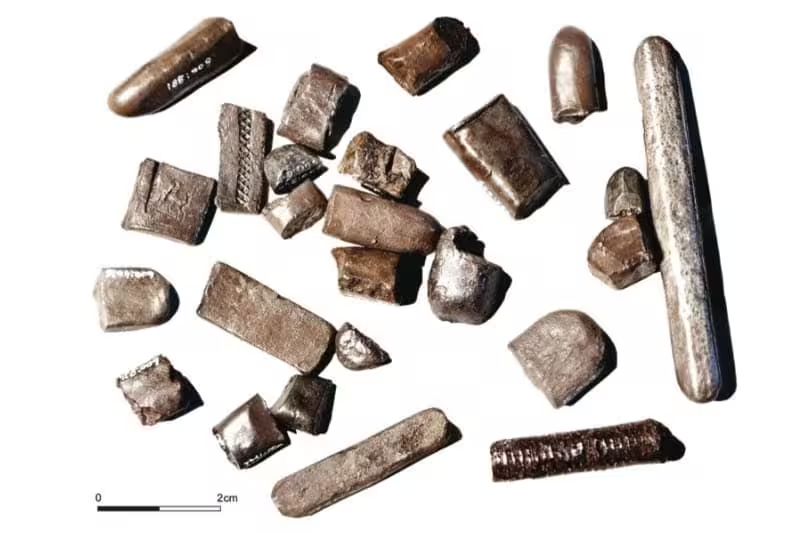
Among the most intriguing finds is a decorative metal fitting, likely salvaged from a church or monastic context. Researchers point out that similar pieces are common in Rogaland, a region of southwest Norway.
“We have found a type of object that is very commonly found in Rogaland: a fragment of metal fittings from a cross, a reliquary, or a manuscript from a church or monastic setting,” Armstrong‑Oma explained.
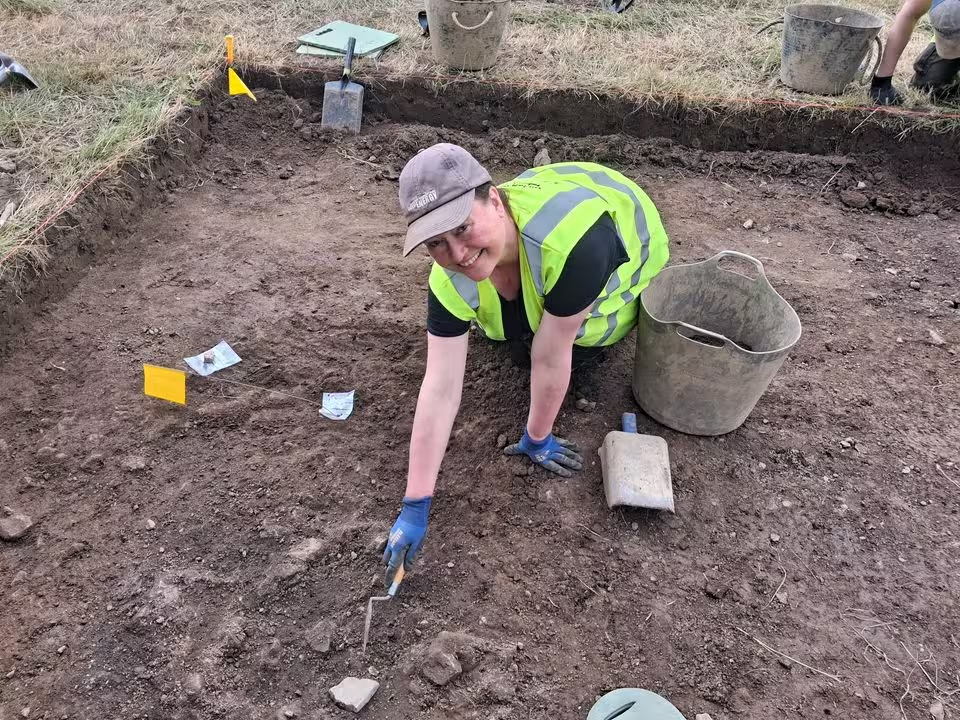
Fragments of a soapstone vessel were also recovered. While soapstone was a common material for heat‑resistant cooking pots in Norway, it is scarce in Irish contexts.
“Such objects are evidence of plundering or extortion. This establishes a direct link between Woodstown and Rogaland and suggests that Woodstown served as an intermediary between Norway and Ireland at that time,” she concluded.
This article has been fact checked for accuracy, with information verified against reputable sources. Learn more about us and our editorial process.
Last reviewed on .
Article history
- Latest version
Reference(s)
- “Kristin Armstrong-Oma | Universitetet i Stavanger.” <https://www.uis.no/nb/profile/kristin-armstrong-oma>.
- “Arkeologer har trolig funnet Irlands største vikingbosetning | Universitetet i Stavanger (UiS).”, June 12, 2026 <https://kommunikasjon.ntb.no/pressemelding/18948479/arkeologer-har-trolig-funnet-irlands-storste-vikingbosetning?publisherId=17847884&lang=no>.
- <https://www.researchgate.net/profile/Hakon-Reiersen>.
Cite this page:
- Posted by Mary Johnson