Underwater Tunnel Gasket Weakens From Inside, Cutting Expected Lifespan By 35%
Real‑world stress testing of a century‑old underwater tunnel seal uncovers a weakness older models never predicted.
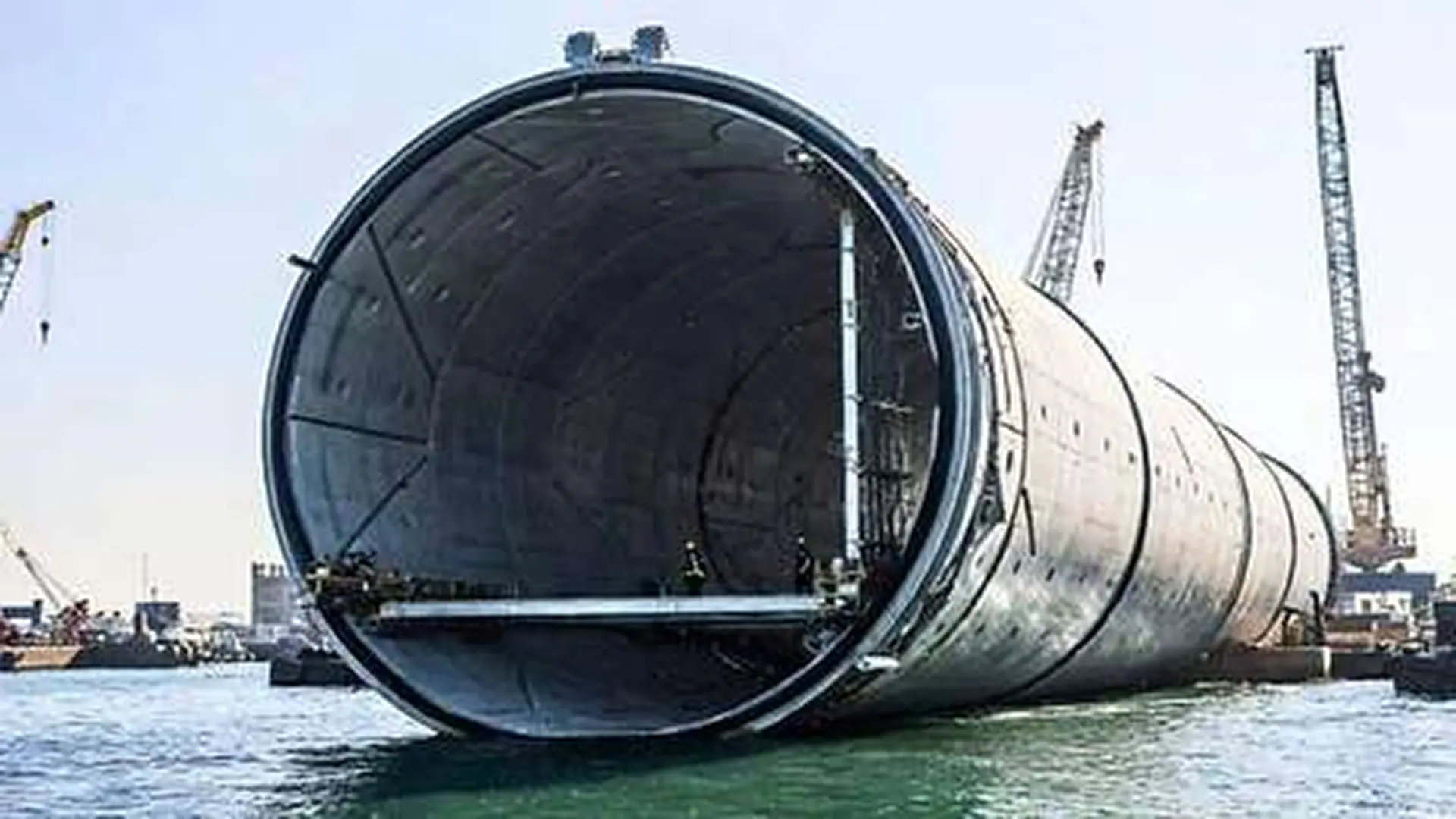
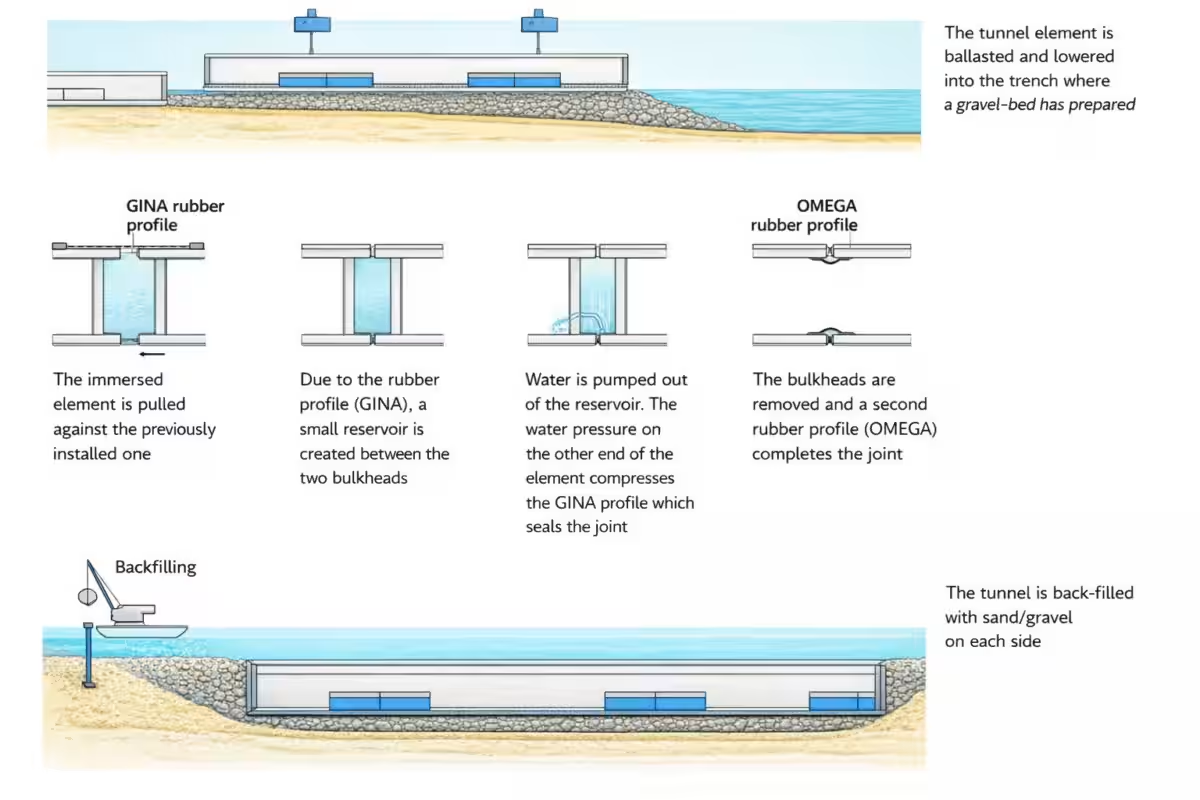
Beneath the waves, a stretch of engineered rubber—known as the GINA gasket—has been entrusted to keep water out of immersed tunnel joints for a century. Recent laboratory work in China shows that the material may lose its sealing capacity far sooner than designers anticipated.
Researchers from Shijiazhuang Tiedao University extracted samples from the Yuliangzhou tunnel and subjected them to a dual‑stress regime that reproduces both seawater exposure and the relentless compression exerted by adjoining steel sections. Their findings, published in Tunnelling and Underground Space Technology, indicate that the 100‑year sealing pressure forecast should be reduced by roughly 35 %.
Missing Factors in Prior Longevity Models
Immersed tunnels are built from prefabricated concrete segments that are floated, lowered into a trench, and pressed together underwater. The GINA gasket sits between the steel faces of adjacent segments, and the compression it endures generates the contact stress that prevents water ingress. Earlier durability studies considered only seawater exposure, projecting a residual sealing pressure of about 2.32 MPa after a century.
The Chinese team devised a custom compression rig that mimics the constant mechanical load experienced in real joints, then combined it with salt‑water conditions. Under these more realistic circumstances, the predicted pressure after 100 years dropped to 1.51 MPa, reflecting a total loss of sealing force of 67.66 %.
“The hundred‑year waterproofing safety of the entire project is directly determined by the GINA gasket as the core barrier for waterproofing of immersed tunnel joints,” the authors wrote.
Hardening Rubber Conceals Declining Performance
A troubling aspect of the study is that the gasket’s degradation is not obvious on the surface. Over time, the material’s hardness rose by 14.18 % and its density increased by 5.88 %, giving inspectors a false impression of robustness. Microscopic analysis revealed that polymer chains were breaking, weakening the network that enables the rubber to compress and rebound.
The temperature at which the rubber began to stiffen shifted upward by roughly 5.8 °F, indicating that the material was losing elasticity—the very property that creates the contact stress needed to block leaks. The researchers identified three phases of decline: an initial rapid drop in sealing force, a slower middle stage, and a final tapering period. Accelerated aging tests detected internal structural changes within 90 days, suggesting that a substantial portion of performance loss can occur well before routine inspections would flag a problem.
Lower Edge Becomes the Weakest Link
Stress is not distributed uniformly across the gasket; the lower edge bears less contact pressure than the central region. As the material ages, this asymmetry grows critical. Earlier observations in the Yuliangzhou tunnel showed that waterproofing fails once the gap between tunnel sections exceeds about 1.85 inches. Joint rotation further aggravates the issue by altering the seal’s orientation and diverting stress away from the already vulnerable lower edge.
Because aging manifests through changes in internal structure rather than surface hardness alone, a gasket may appear intact while no longer delivering sufficient contact stress to prevent water ingress. Although the revised 100‑year projection of 1.51 MPa still exceeds the minimum threshold identified by the researchers (0.61 MPa), the safety margin is considerably slimmer than originally assumed, and the onset of degradation occurs earlier than previous models suggested. Consequently, inspection intervals and maintenance plans based on older forecasts may need to be updated.
The full study is available in Tunnelling and Underground Space Technology through ScienceDirect. The research was conducted at Shijiazhuang Tiedao University.
This article has been fact checked for accuracy, with information verified against reputable sources. Learn more about us and our editorial process.
Last reviewed on .
Article history
- Latest version
Reference(s)
- Mao, Hongtao., et al. “Aging mechanism and life prediction of GINA gasket on immersed tunnel under the combined action of compression load and seawater environment: A multi-scale experimental analysis.” Tunnelling and Underground Space Technology, vol. 169, March 1, 2026, pp. 107252 Elsevier BV, doi: 10.1016/j.tust.2025.107252. <https://www.sciencedirect.com/science/article/abs/pii/S0886779825008909>.
- <https://english.stdu.edu.cn/>.
Cite this page:
- Posted by Bilal Abbasi