Ancient 8-Meter Giant Prototaxites Proven Not a Fungus, Belongs to Extinct Lineage
New study of a 400‑million‑year‑old giant fossil reveals Prototaxites was not a fungus but a distinct, extinct lineage of complex organisms.
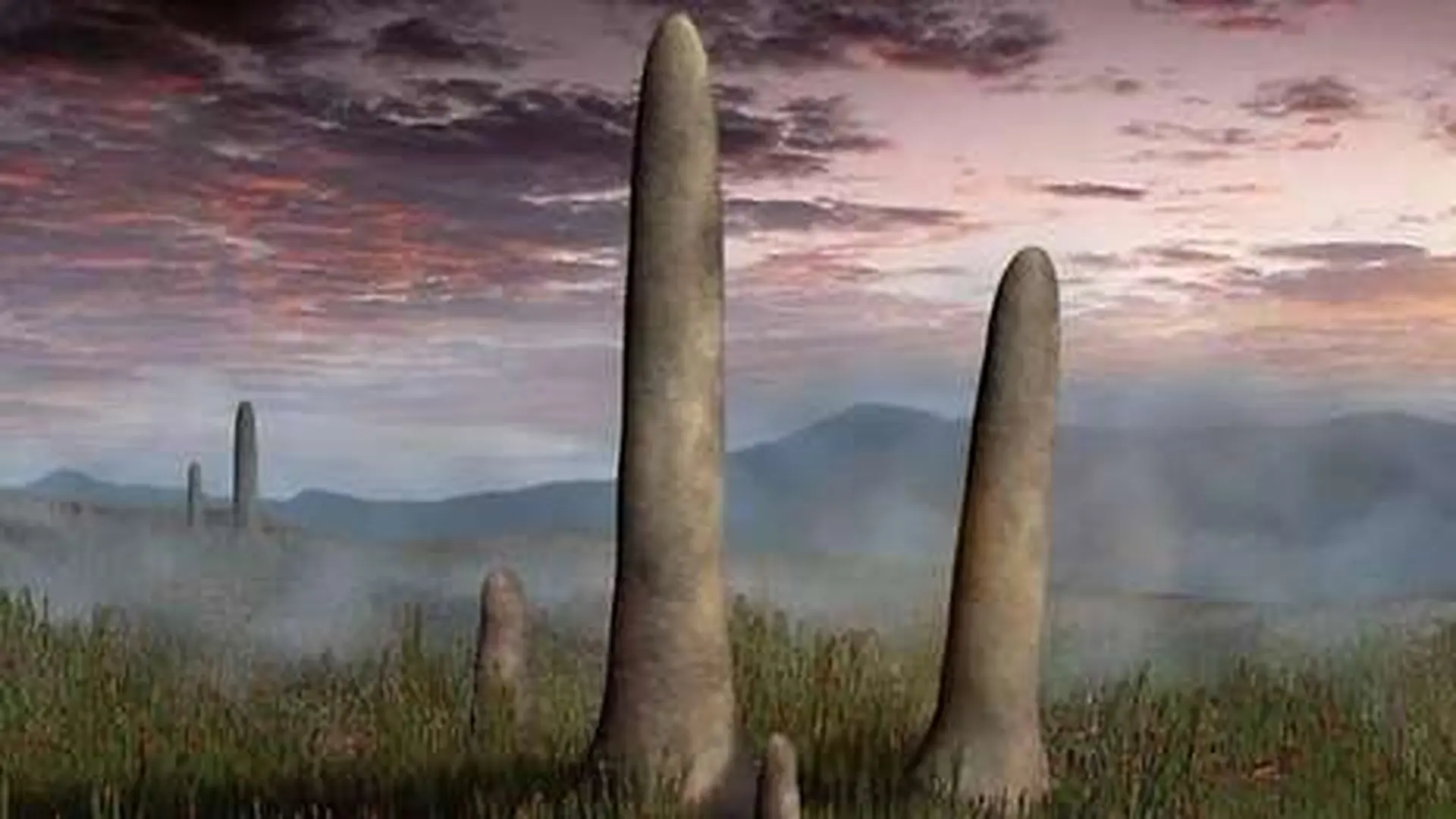
A fresh analysis of a 407‑million‑year‑old fossil from Scotland suggests that the iconic Silurian‑Devonian organism Prototaxites does not belong to any known fungal group. Instead, the study places it in an entirely extinct branch of complex life, overturning a debate that has persisted for more than a century and a half.
A Pre‑Tree Giant That Shaped Early Land Ecosystems
Emerging in the Late Silurian and persisting into the Devonian, roughly 420–370 million years ago, Prototaxites reached lengths of up to 8 meters (26 feet). Its towering columnar forms predate the rise of forests and likely played a key ecological role as a food source for contemporary arthropods.
Groundbreaking Study from Edinburgh and Scotland’s National Museums
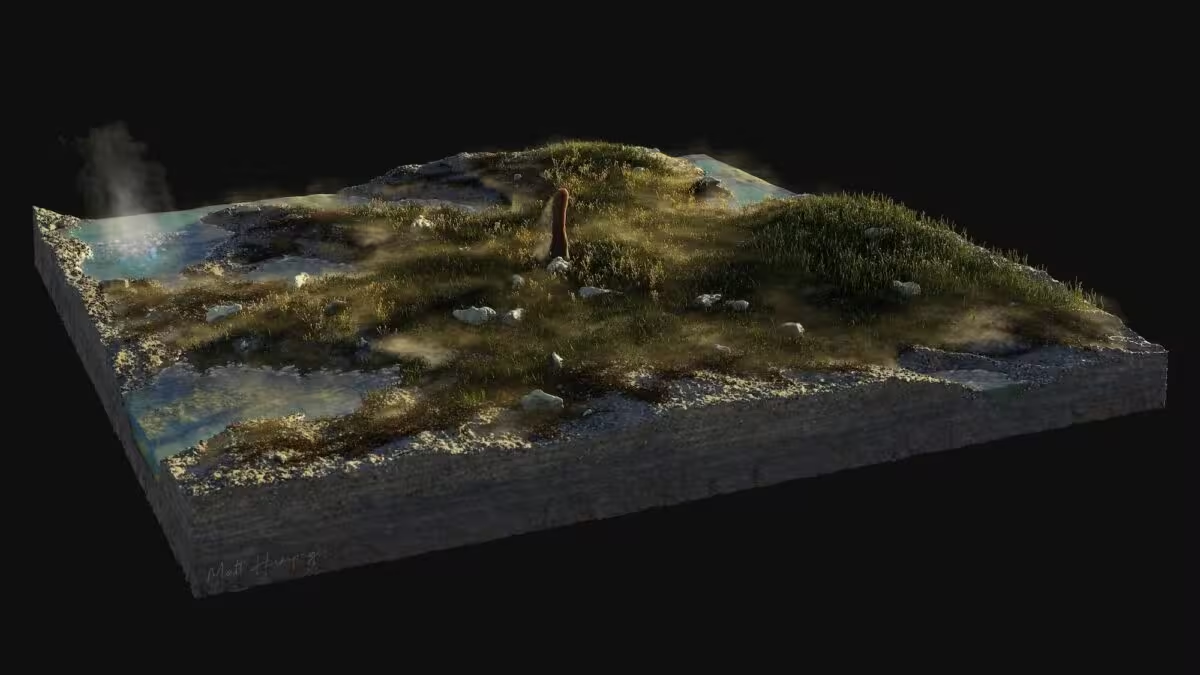
Researchers from the University of Edinburgh and National Museums Scotland examined a new specimen of Prototaxites taiti preserved in the celebrated Rhynie chert, one of the world’s oldest fossilised terrestrial ecosystems. The work, published in Science Advances, leveraged both detailed anatomical observation and advanced chemical profiling.
“The Rhynie chert is incredible. It is one of the world’s oldest fossilised terrestrial ecosystems and because of the quality of preservation and the diversity of its organisms, we can pioneer novel approaches such as machine learning on fossil molecular data,” said study lead Corentin Loron. “There is a lot of other material from the Rhynie chert already in museum collections for comparative studies, which can add important context to scientific results.”
Internal Architecture Defies Fungal Classification
Microscopic analysis of the new P. taiti specimen revealed three distinct tubular elements. The largest tubes possess thick walls with annular banding and house dense spherical clusters known as medullary spots. These spots contain intricate three‑dimensional networks of interconnected tubes—an arrangement not observed in any documented fungal lineage.
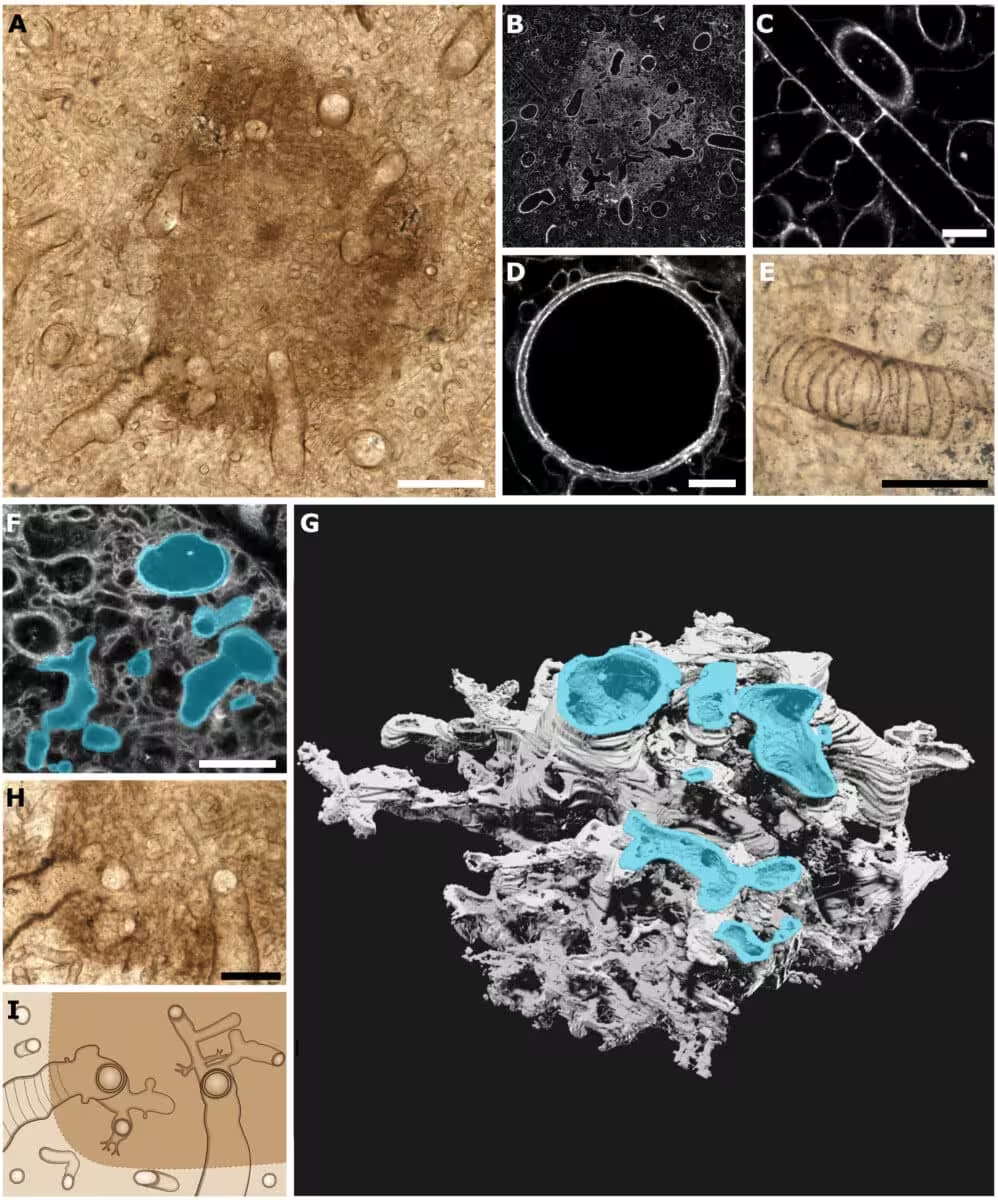
When compared with co‑occurring fossil fungi from the same chert, the internal tissue organization of Prototaxites stood out as fundamentally different, reinforcing the idea that it followed an independent evolutionary trajectory.
“It’s really exciting to make a major step forward in the debate over Prototaxites, which has been going on for around 165 years,” noted Dr. Sandy Hetherington, senior author of the paper.
Molecular Signature Excludes Known Biological Groups
Infrared spectroscopy coupled with machine‑learning classification was used to compare Prototaxites’ chemical fingerprint against those of fossil fungi, plants, arthropods, and bacteria from the Rhynie chert. The analysis detected no signals associated with chitin‑rich cell walls, a hallmark of fungal biology, nor the pigment‑related biomarker perylene that appears in other chert fossils.
“Our study, combining analysis of the chemistry and anatomy of this fossil, demonstrates that Prototaxites cannot be placed within the fungal group,” explained Laura Cooper, co‑author of the research.
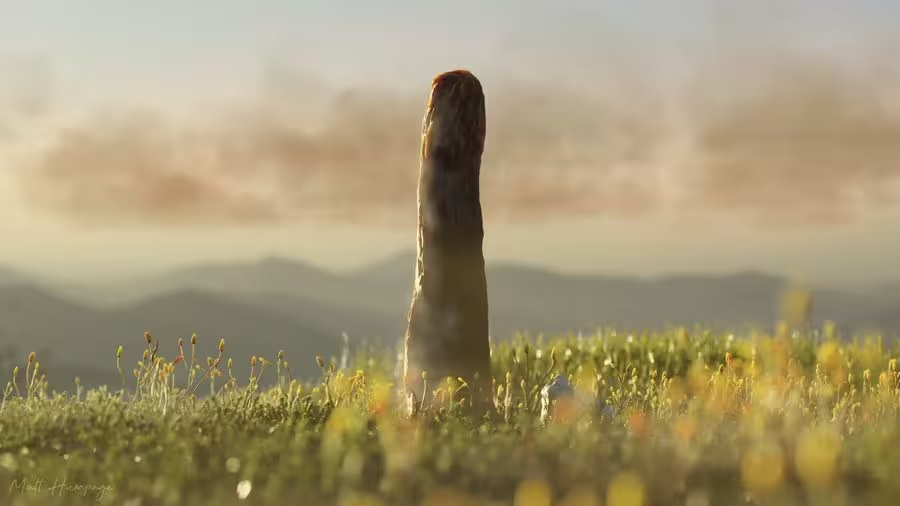
The authors conclude that Prototaxites represents a distinct, now‑extinct lineage of large terrestrial organisms—a unique evolutionary experiment that left only rare fossil traces of its once‑dominant presence on early Earth.
This article has been fact checked for accuracy, with information verified against reputable sources. Learn more about us and our editorial process.
Last reviewed on .
Article history
- Latest version
Reference(s)
- Loron, Corentin C.., et al. “Prototaxites fossils are structurally and chemically distinct from extinct and extant Fungi.” Science Advances, vol. 12, no. 4, January 23, 2026 American Association for the Advancement of Science (AAAS), doi: 10.1126/sciadv.aec6277. <https://www.science.org/doi/10.1126/sciadv.aec6277>.
- <https://www.researchgate.net/scientific-contributions/Corentin-C-Loron-2157661003>.
- “Dr Sandy Hetherington.”, March 21, 2025 The University of Edinburgh <https://edwebprofiles.ed.ac.uk/profile/dr-sandy-hetherington>.
- <https://www.science.org/authored-by/Cooper/Laura+M>.
Cite this page:
- Posted by Bilal Abbasi