Ancient Martian Meteorite Bridges 2‑Billion‑Year Gap With Chondritic Neodymium Signature
Algerian meteorite reveals a missing chapter of Mars’ geology, offering fresh clues about the Red Planet’s ancient history.
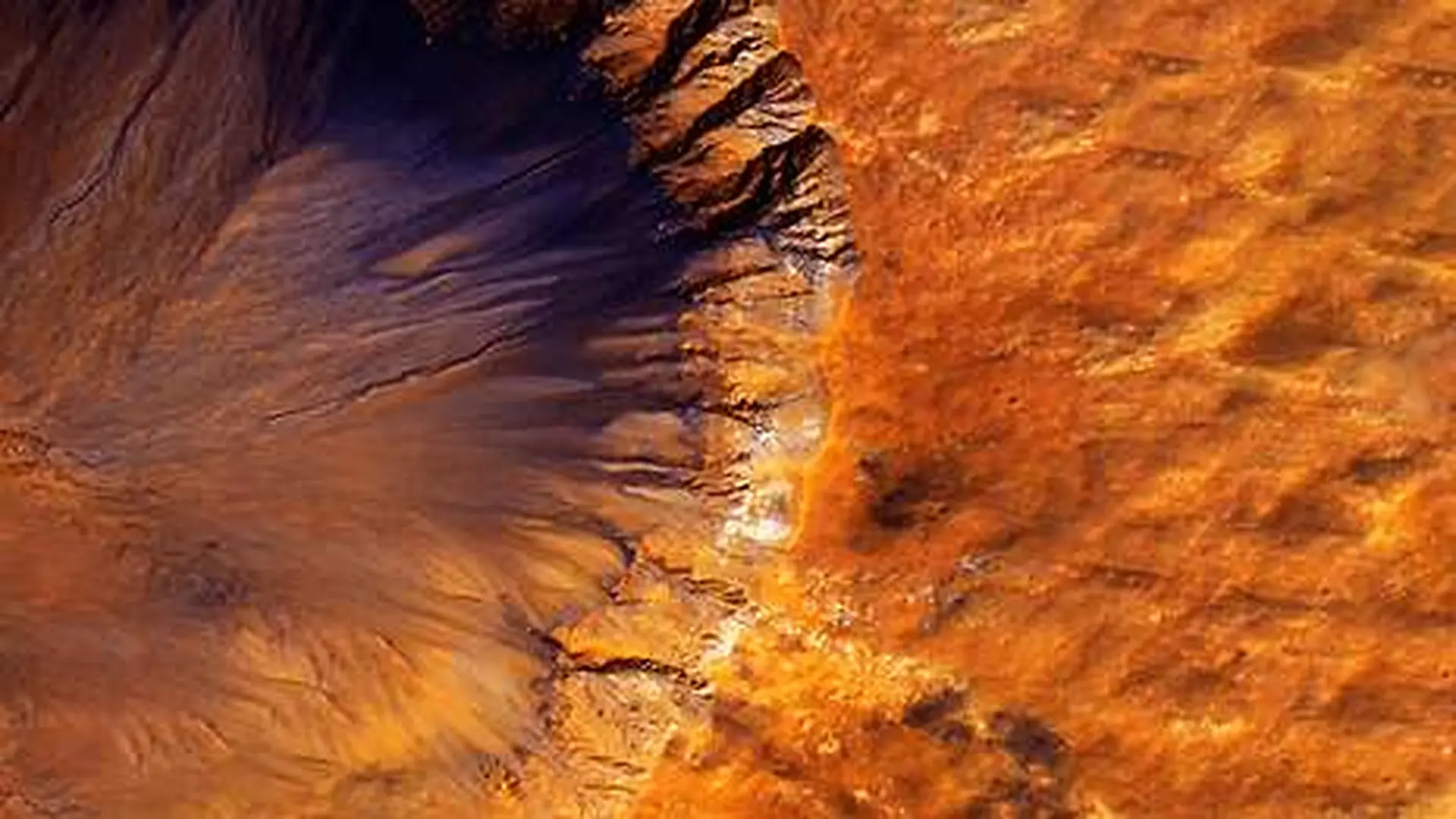
Researchers have identified a Martian rock that fell in Algeria and dated it to roughly 1.273 billion years ago, providing the first shergottite from a long‑standing blank spot in Mars’ volcanic record. The study, appearing in Geochimica et Cosmochimica Acta, also uncovers a distinctive neodymium isotope pattern that points to a deep‑seated Martian source preserving the early solar system’s signature.
Filling a Vast Temporal Void in Martian Igneous History
Because no rover can retrieve rocks from every era on the Red Planet, scientists rely on the handful of Martian meteorites that naturally reach Earth. An impact must first launch material into space, after which some fragments intersect Earth’s orbit and survive atmospheric entry. To date, fewer than 400 Martian meteorites have been catalogued, leaving the planet’s deep history unevenly sampled.
Among these, the shergottites—igneous rocks crystallized from Martian magma—have historically clustered into two age groups: a younger cohort under about 600 million years and an older set around 2.4 billion years. The interval between them has lacked any shergottite evidence, obscuring a key phase of Martian volcanism.
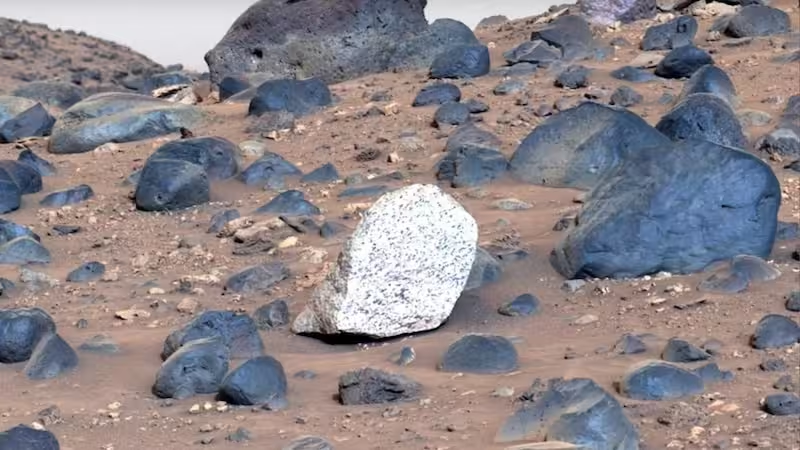
The specimen at the center of the new analysis, Northwest Africa 13441 (NWA 13441), was recovered from Algeria in 2019. A small portion was supplied to Boston College, where a collaborative team—including researchers from the Scripps Institution of Oceanography and The Open University—examined its composition, age, and Martian provenance.
“The properties of this rock were completely unexpected,” noted Ethan Baxter, founder of the Boston College Center for Isotope Geochemistry. “No other Martian meteorite we know of dates to 1.27 billion years.”
A New Chronological Anchor for Mars
Using high‑precision radiogenic isotope methods, the team determined that NWA 13441 crystallized about 1.273 billion years ago, positioning it squarely between the two previously documented shergottite age clusters. This timestamp provides a tangible record of volcanic activity during a period that had been absent from the shergottite archive.
Other Martian meteorite groups—the nakhlites and chassignites—have yielded ages near 1.3–1.4 billion years, but their chemistry differs from shergottites and cannot substitute for a missing shergottite data point. Consequently, NWA 13441 supplies a crucial missing piece for this specific class of Martian rocks.
“Most shergottites are either younger than 600 million years or around 2.4 billion years old,” explained co‑author Dylan M. Seal, a doctoral candidate at Boston College. “Our 1.273‑billion‑year result bridges a roughly two‑billion‑year gap in the shergottite record, offering fresh insight into Mars’ magmatic and volcanic history.”
The existence of this rock does not imply that Mars lacked volcanism during the intervening era; rather, it highlights how the terrestrial meteorite collection reflects only the fragments that were ejected, survived transit, and were eventually found.
Neodymium Isotopes Reveal an Untouched Martian Reservoir
Beyond its age, the meteorite’s neodymium isotope composition sets it apart. Neodymium, a rare‑earth element with seven stable isotopes, serves as a powerful tracer of planetary processes. The researchers found that the initial neodymium isotopic ratio of NWA 13441 matches the chondritic value—characteristic of the primordial material that formed the solar system roughly 4.56 billion years ago.
Such a chondritic signature had never been recorded in shergottites, suggesting that the magma from which NWA 13441 crystallized tapped a Martian reservoir that retained an early‑solar‑system composition, largely untouched by later differentiation events.
Mars is thought to have assembled within five million years of the Sun’s birth, after which internal melting, crust formation, and other processes reshaped its interior. The preserved chondritic signature implies that a portion of the planet’s mantle may have escaped extensive re‑processing, maintaining a relatively pristine chemical fingerprint over billions of years.
Thus, the meteorite offers a dual perspective: its crystallization age documents a specific volcanic episode 1.273 billion years ago, while its isotopic makeup provides a window into the planet’s formative era.
This article has been fact checked for accuracy, with information verified against reputable sources. Learn more about us and our editorial process.
Last reviewed on .
Article history
- Latest version
Cite this page:
- Posted by Bilal Abbasi