Scientists Capture Ultraweak Light Emitted by Living Mice, Which Fades After Death
Researchers detected a faint glow in living bodies that disappears after death, revealing an invisible signal unseen by the naked eye.
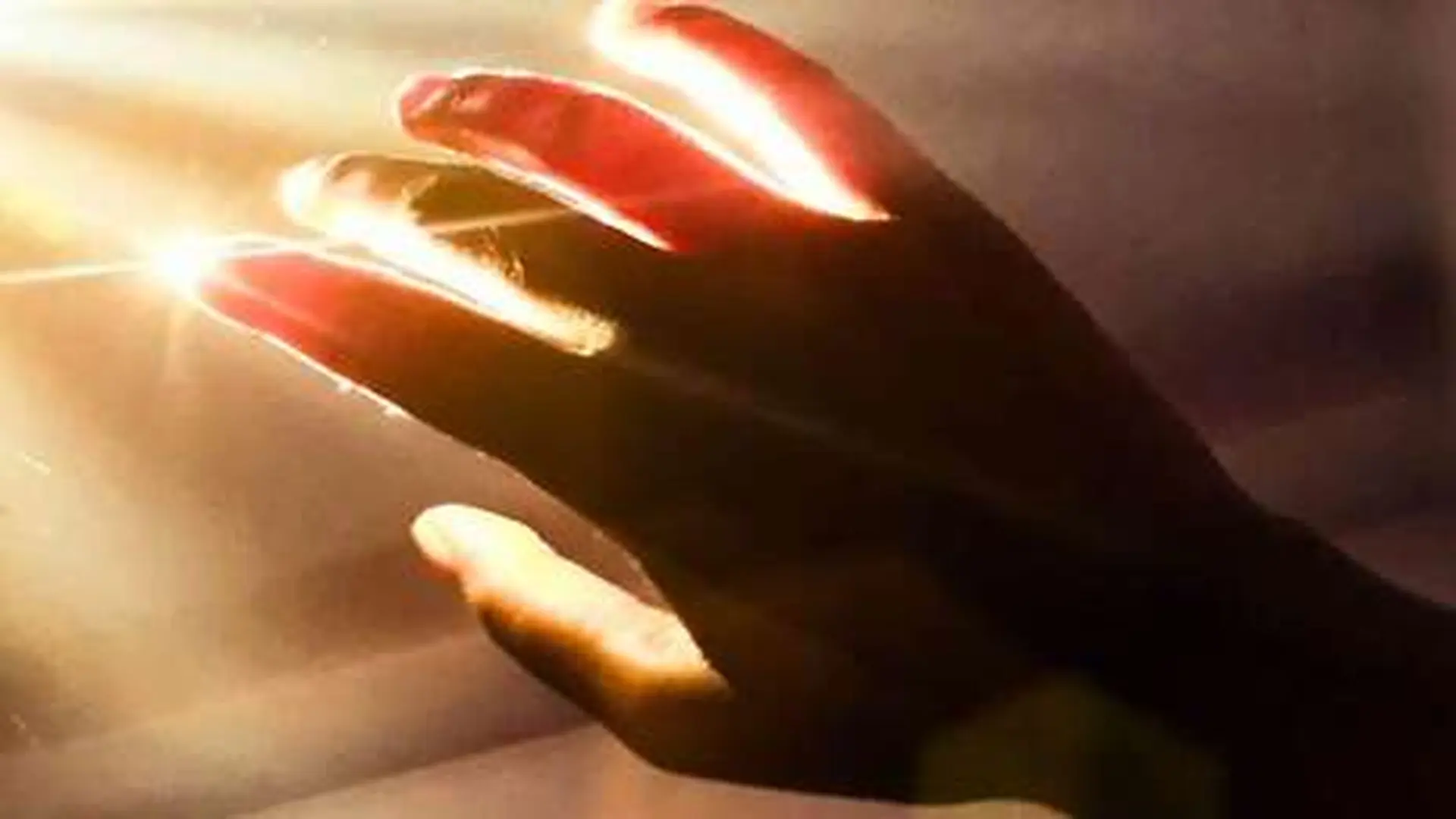
In a sealed, dark enclosure a highly sensitive camera monitored a mouse whose body emitted a barely perceptible glow. Although the animal showed no visible illumination, the detector logged a steady stream of individual photons—light particles far too weak for human eyes.
The imaging system was capable of registering single‑photon events across the visible portion of the spectrum. Because the light intensity lay well beneath the threshold of ordinary vision, only specialized equipment could translate the faint signal into a usable picture.
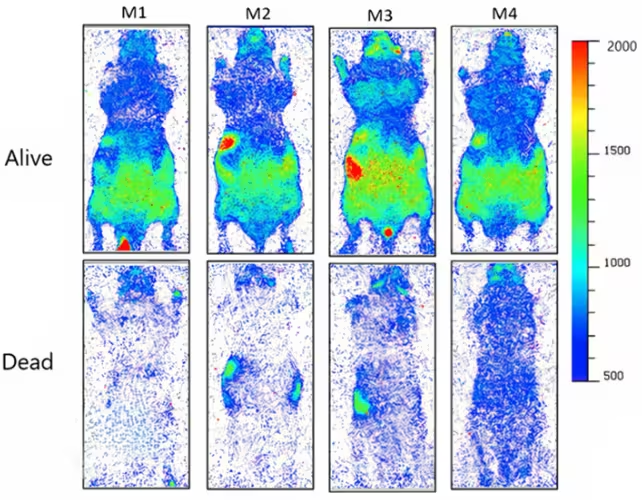
When the mouse was euthanized, the photon pattern altered dramatically. In research published in The Journal of Physical Chemistry Letters, the authors reported a marked reduction in ultraweak photon emission after the death of four mice, confirming that living tissue produces more of this dim light than recently deceased tissue kept at near‑physiological temperature.
Measuring Light from Living and Deceased Mice
Each mouse was placed in a light‑tight chamber and imaged for an hour while alive. Following euthanasia, the same protocol continued for another hour under identical conditions, with body temperature maintained to rule out simple cooling as the cause of any signal decline.
Photons were still detectable after death, but at a substantially lower rate. The observation reflects a gradual postmortem drop rather than an abrupt disappearance, as residual chemical reactions persist briefly after circulation and coordinated metabolism cease.
To capture such a faint signal the team employed an electron‑multiplying charge‑coupled device (EMCCD) camera. These detectors amplify the electric charge generated when photons strike the sensor, allowing single‑photon events to rise above electronic background noise.
According to Oxford Instruments, EMCCD cameras can detect and quantify single‑photon events. The technology does not illuminate the subject; it merely records light that ordinary cameras and the human eye would miss.
Why Visible Light Can Remain Undetectable
NASA defines visible light as the narrow band of the electromagnetic spectrum that human eyes normally perceive, roughly between 380 and 700 nanometers. This range specifies wavelength, not the intensity required for detection.
A single photon within this band can remain effectively invisible because sight depends on photon flux. The mouse emissions were so weak that researchers needed complete darkness, prolonged exposure times, and a detector optimized for ultra‑low‑light imaging. NASA’s overview of visible light places this narrow window within the broader electromagnetic spectrum.
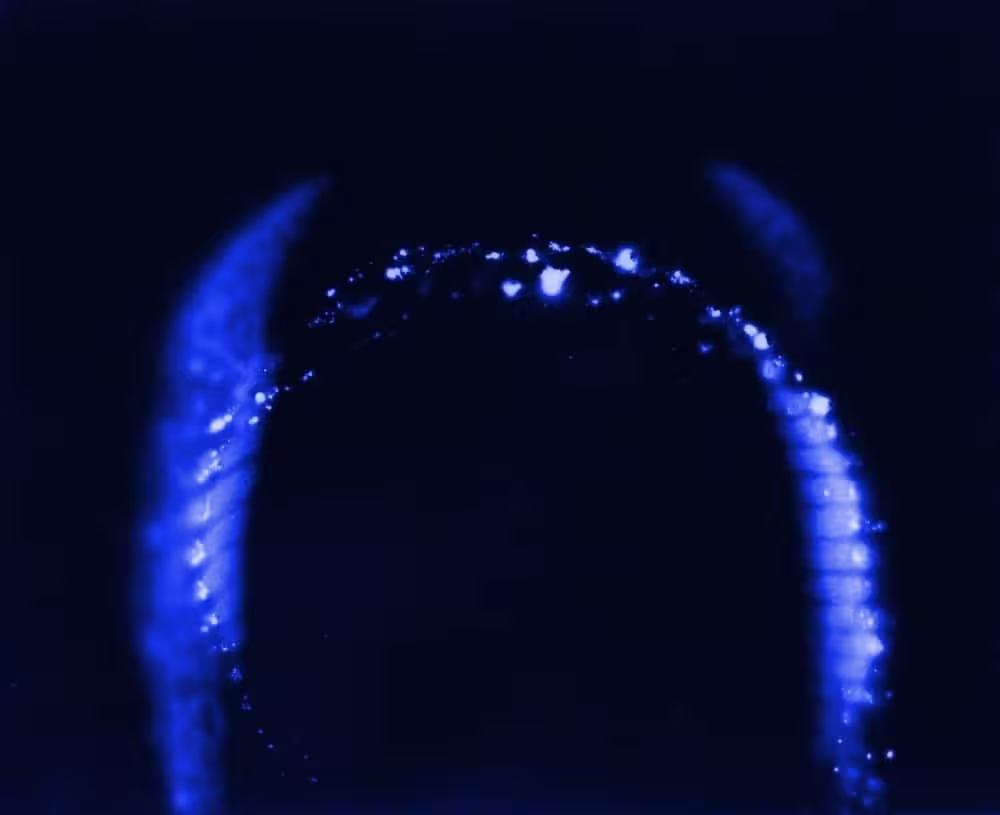
The phenomenon, often called biophoton emission but more accurately described as ultraweak photon emission, has been observed in plants, animal tissues, bacteria, and other living systems.
A separate investigation in MicrobiologyOpen linked faint photon production in bacterial cultures to metabolic activity, underscoring that these signals are orders of magnitude dimmer than the bioluminescence of fireflies or jellyfish.
Stress‑Induced Chemical Reactions Generate Faint Photons
The weak light appears to stem from reactions involving reactive oxygen species, unstable molecules generated during metabolism that increase under cellular stress or injury. When these species interact with lipids, proteins, and other cellular components, they can leave molecules in an excited state.
As excited molecules relax to lower‑energy configurations, they release the excess energy as photons. Living tissue sustains a steady flow of such reactions, while the overall rate diminishes after death.
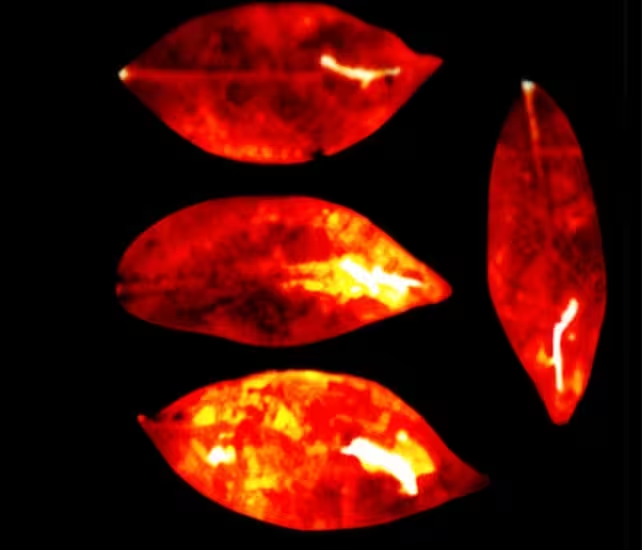
The researchers extended the approach to leaves of thale cress (Arabidopsis thaliana) and the dwarf umbrella tree (Heptapleurum arboricola). By damaging specific leaf sections and applying chemical treatments, they monitored photon output for 16 hours.
Injured zones emitted noticeably brighter light than intact tissue. “Our results show that the injury parts in all leaves were significantly brighter than the uninjured parts,” the authors noted, as cited in ScienceAlert’s coverage of the work. The imaging captured localized stress rather than a single aggregate measurement for each leaf.
Distinguishing Biological Photon Imaging from Kirlian Techniques
The study should not be confused with Kirlian photography, a high‑voltage method that produces corona discharges around objects placed near photographic film. Variables such as moisture, pressure, voltage, grounding, and ambient humidity influence the resulting patterns.
In contrast, the mouse and plant experiments omitted any high‑voltage field. Subjects were kept in darkness, and photons that naturally emerged from biochemical activity were recorded with a sensitive detector. This technique, often termed biological photon imaging, captures ultraweak light linked to internal chemical reactions.
The published data encompass four mice and leaves from two plant species, demonstrating stronger photon emission in living mice, a measurable decline after death, and heightened signals from damaged plant tissue under controlled laboratory conditions.
This article has been fact checked for accuracy, with information verified against reputable sources. Learn more about us and our editorial process.
Last reviewed on .
Article history
- Latest version
Reference(s)
- Salari, V.., et al. “Imaging Ultraweak Photon Emission from Living and Dead Mice and from Plants under Stress.” The Journal of Physical Chemistry Letters, vol. 16, no. 17, April 24, 2025, pp. 4354-4362. American Chemical Society (ACS), doi: 10.1021/acs.jpclett.4c03546. <https://doi.org/10.1021/acs.jpclett.4c03546>.
- “What is an EMCCD Camera? — Oxford Instruments Learning Centre.” Oxford Instruments Learning Centre <https://andor.oxinst.com/learning/view/article/electron-multiplying-ccd-cameras>.
- Cermak, Alicia. “Visible Light - NASA Science.”, August 10, 2016 NASA <https://science.nasa.gov/ems/09_visiblelight/>.
- Tessaro, Lucas W. E.., et al. “Bacterial biophotons as non‐local information carriers: Species‐specific spectral characteristics of a stress response.” MicrobiologyOpen, vol. 8, no. 6, October 31, 2018 Wiley, doi: 10.1002/mbo3.761. <https://doi.org/10.1002/mbo3.761>.
- McRae, Mike. “We Emit a Visible Light That Vanishes When We Die, Surprising Study Says.”, January 6, 2026 ScienceAlert <https://www.sciencealert.com/we-emit-a-visible-light-that-vanishes-when-we-die-surprising-study-says>.
Cite this page:
- Posted by Bilal Abbasi